2027 Should You Apply to More Than One Type of School?

Co-Founder and Chief Data Scientist
Choosing whether to apply to community colleges, public universities, private colleges, and online programs is now a financial and academic strategy, not just a backup plan. College Board's 2024 pricing data shows published tuition and fees ranging from about $4,050 at public two-year colleges to $43,350 at private nonprofit four-year colleges before housing and aid. This guide is for high school students, transfer applicants, and working adults who want a smarter application list. You'll learn how to compare school types, balance risk, avoid costly mistakes, and choose options that fit your goals.
Key Things You Should Know
- Most applicants benefit from applying to more than one type of school because cost, admissions odds, transfer options, and program availability can vary more than prestige alone suggests.
- A balanced list usually includes a mix of reach, match, and likely schools across formats, with College Board 2024 tuition data showing a gap of more than $39,000 between typical public two-year and private nonprofit four-year published tuition and fees.
- School type should not be the only deciding factor; accreditation, major fit, transfer policies, aid, licensing approval, and career outcomes often matter more than whether a college is public, private, online, or campus-based.
How many different types of colleges should you include on your application list?
Yes, many students should apply to more than one type of school, especially if they are still comparing cost, major choice, learning format, or admissions competitiveness. The goal is not to apply everywhere; it is to create a list that gives you realistic academic, financial, and career options.
For many applicants, a strong list includes 6 to 10 schools, but the right number depends on application fees, time, scholarship deadlines, and how specialized your intended major is. Students applying to highly selective programs, nursing tracks, performing arts programs, or competitive scholarships may need a wider list, while transfer students with a clear articulation agreement may need fewer applications.
The table below shows how different applicant situations can shape the number and variety of schools to consider. Use it as a planning tool, not a strict rule, because your academic record, budget, location, and career goal should guide the final list.
| Applicant situation | Suggested mix of school types | Why it can work |
| Cost-sensitive first-year student | Community college, in-state public university, one or two private colleges with strong aid | Creates lower-cost options while still allowing comparison of grants and scholarships. |
| Strong applicant seeking selective admission | Public flagship, private selective colleges, honors colleges, realistic match schools | Balances ambition with admission and affordability safeguards. |
| Working adult | Online college, hybrid public university program, local campus with evening options | Compares flexibility, transfer credit, and employer tuition benefits. |
| Career-specific applicant | Accredited program providers in the target field, including public, private, and online options | Keeps the focus on licensure, clinical placement, internships, and employer recognition. |
One common mistake is building a list only around brand names. A better approach is to ask whether each school adds a distinct advantage, such as lower net price, stronger major fit, easier commuting, better transfer pathways, or a more flexible schedule.
What are the main types of schools (community college, public, private, online) to consider?
The main school types to consider are community colleges, public colleges and universities, private colleges and universities, and online colleges or online divisions of established institutions. These categories can overlap: for example, a private university may be nonprofit or for-profit, and a public university may offer fully online degrees.
Each type serves a different purpose in an application strategy. Students comparing majors with long-term earnings potential may also want to review resources on the best 4-year degrees, then use that career information to decide which institutions offer the strongest pathway.
The table below compares common school types by best-fit use case. It focuses on decision factors that usually matter more than reputation alone.
| School type | Often best for | Key trade-off |
| Community college | Lower-cost general education, associate degrees, technical certificates, transfer preparation | May require a transfer plan if the goal is a bachelor's degree. |
| Public university | In-state affordability, broad major selection, research opportunities, large alumni networks | Popular majors may be capacity-limited or require secondary admission. |
| Private nonprofit college or university | Smaller classes, institutional grants, specialized programs, residential experience | Published prices can be high, so net price after aid is essential. |
| Private for-profit institution | Career-focused formats, accelerated schedules, adult learner convenience | Students should closely check accreditation, outcomes, transferability, and total cost. |
| Online college or online program | Working adults, rural students, caregivers, military learners, students needing schedule flexibility | Requires strong self-management and careful verification of accreditation and support services. |
The best type of school is the one that fits the credential you need, the support you will actually use, and the cost you can manage. A school that is excellent for one student may be a poor fit for another if it lacks the right major, transfer policy, clinical placement, or schedule.
How should you balance reach, match, and safety schools when applying?
A balanced application list usually includes reach, match, and likely schools. These labels describe your relative admissions odds based on grades, course rigor, test scores if used, portfolio quality if relevant, and the school's selectivity; they are not guarantees.
To balance your list, start with academic fit and then apply the same test to cost and program fit. A school should not be considered "safe" if it is unaffordable, lacks your major, or does not meet licensing requirements for your intended career.
A practical list often includes the following categories, adjusted for your budget and competitiveness:
- Reach schools where your profile is below or near the lower end of typical admitted students, or where the program is highly selective even for strong applicants.
- Match schools where your academic profile and preparation align closely with admitted students and the program is realistically accessible.
- Likely schools where admission is probable and the school is also financially and academically workable.
- Financial safety schools where the net price, commute, transfer plan, or guaranteed aid makes enrollment realistic if other offers fall short.
Do not confuse a high admission rate with a guaranteed program seat. Nursing, engineering, business, computer science, education, and performing arts programs can have separate requirements after general university admission.
What are the pros and cons of applying to multiple types of schools?
Applying to multiple types of schools can protect you from uncertainty, but it also adds work. The strongest strategy is to apply broadly enough to compare real offers while avoiding random applications that do not support your academic or career plan.
The table below summarizes the major benefits and drawbacks. Use it to decide whether adding another school type would improve your options or simply increase application fatigue.
| Factor | Potential advantage | Potential drawback |
| Cost comparison | You can compare net price across public, private, community college, and online options. | Published tuition can mislead you if you do not compare financial aid packages carefully. |
| Admissions risk | You reduce the chance of having only unaffordable or unavailable options. | Too many applications can weaken essays, interviews, and scholarship follow-up. |
| Program fit | You may find a stronger major, clinical placement, internship pipeline, or transfer pathway. | Different schools may use different course sequences, which can complicate transfers. |
| Flexibility | Online, hybrid, evening, and local options can make enrollment more realistic. | Flexible formats may require more self-discipline and fewer campus-based experiences. |
Common red flags include applying without checking whether credits transfer, assuming private colleges are always unaffordable, assuming online programs are always cheaper, and ignoring graduation requirements for your major. A better habit is to compare net price, completion path, accreditation, and career relevance before paying another application fee.
How do admission requirements differ across various types of colleges and universities?
Admission requirements differ widely by school type and program. Community colleges often use open-access admissions for many programs, while selective universities may review course rigor, essays, recommendations, activities, portfolios, auditions, or supplemental materials.
The table below explains typical admissions differences. Always verify the current requirements directly with each school because program-level rules can be stricter than general admission rules.
| School or program type | Common admissions requirements | What to watch carefully |
| Community college | High school diploma, GED, placement process, residency documentation for in-district tuition | Selective health, technical, or limited-enrollment programs may require prerequisites. |
| Public four-year university | High school coursework, GPA, optional or required test scores, essays for some campuses | Competitive majors may require higher grades or separate admission after enrollment. |
| Private college or university | Holistic review, essays, recommendations, activities, interviews at some institutions | Scholarship deadlines may be earlier than general admission deadlines. |
| Online bachelor's completion program | Prior college credits, minimum GPA, transcripts, sometimes work experience | Transfer credit limits can affect both cost and time to degree. |
| Graduate or professional program | Bachelor's degree, prerequisites, resume, statement of purpose, references, test scores if required | Licensure fields may require accredited prior coursework or supervised experience. |
Students often make mistakes by applying to a university without checking admission to the major, or by assuming test-optional means "less competitive." If a program is popular or capacity-limited, your transcript, prerequisites, and demonstrated preparation still matter.
How do online, hybrid, and campus-based programs compare in cost and program length?
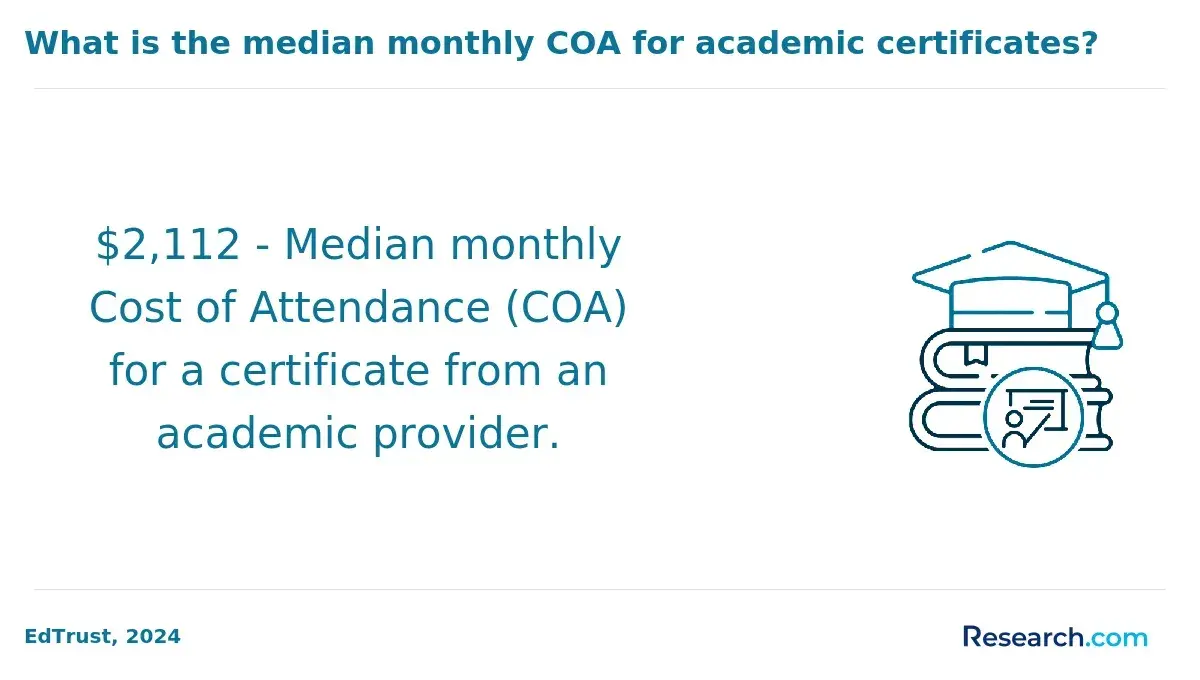
Online, hybrid, and campus-based programs differ in cost, time, support, and learning experience. Online programs can reduce commuting and housing costs, but they are not automatically cheaper once technology fees, course loads, and transfer credit rules are included.
College Board's 2024 published tuition and fee figures show why format and institution type both matter: public two-year colleges averaged about $4,050, in-state public four-year institutions about $11,610, out-of-state public four-year institutions about $30,780, and private nonprofit four-year institutions about $43,350. For students who need flexibility, comparing online college classes at your own pace can help identify programs that match work and family schedules.
The table below compares formats by the factors most likely to affect completion. Cost can vary substantially by residency, aid, credit transfer, and whether the program charges online learners a separate rate.
| Format | Typical strengths | Common cost or time considerations |
| Online | High schedule flexibility, no campus commute, accessible for working adults | May require strong self-pacing; fees and limited transfer credit can raise total cost. |
| Hybrid | Combines online convenience with some campus interaction or labs | Travel requirements can affect work schedules and transportation costs. |
| Campus-based | Direct access to labs, faculty, clubs, housing, advising, and peer networks | Housing, transportation, meal plans, and campus fees may increase total cost. |
| Accelerated | Shorter calendar time for students who can handle intensive pacing | Heavy course loads can be risky for students working full time. |
| Part-time | More manageable for workers, caregivers, and students paying as they go | Longer time to completion can delay career changes or increase fee exposure. |
Before choosing a format, ask whether courses are asynchronous or live, how exams are proctored, whether tutoring is available online, whether internships or labs are local, and how often required courses are offered. These details often affect graduation more than the word "online" or "hybrid" on the brochure.
How does accreditation vary among different types of schools and why does it matter?
Accreditation is one of the most important checks when comparing different types of schools. Institutional accreditation evaluates the college or university as a whole, while programmatic accreditation evaluates specific fields such as nursing, education, business, counseling, social work, engineering, or allied health.
Accreditation matters because it can affect federal financial aid eligibility, credit transfer, graduate admission, employer recognition, and licensure eligibility. A school can be legitimate but still not have the specific programmatic approval needed for a regulated profession.
Use this checklist before applying to any school type, especially online or career-focused programs:
- Confirm institutional accreditation through the U.S. Department of Education's recognized accreditor database or the school's accreditor listing.
- Check whether your specific program has programmatic accreditation if your field commonly requires it.
- Ask whether credits transfer to public universities or graduate programs you may attend later.
- Verify state authorization if you will study online from a different state than the school's main campus.
- For licensed fields, confirm approval with the state licensing board where you plan to work, not only with admissions staff.
Red flags include vague accreditation claims, pressure to enroll quickly, unclear total cost, poor disclosure of graduation or placement outcomes, and refusal to explain whether the program meets state requirements. Accreditation should be verified before you submit deposits or commit to loans.
How do career outcomes, salaries, and job stability differ by school type and degree level?
Career outcomes differ more by field, degree level, experience, location, and employer than by school type alone. A low-cost community college pathway that leads to a strong transfer major can produce a better return than a more expensive option with weak completion or career support.
BLS 2024 education-and-earnings data shows that median weekly earnings were higher at higher education levels, with bachelor's degree holders at $1,543 and master's degree holders at $1,840. This does not mean every degree pays off equally; it means applicants should compare program cost against realistic outcomes in their intended field.
The table below summarizes how school type and degree level can affect career planning. Use it to think about fit, not as a salary prediction.
| Path | Career outcome considerations | Best-fit student profile |
| Certificate or diploma | Can support entry into technical, healthcare support, IT, or skilled roles when employer-recognized | Students seeking faster workforce entry or a stackable credential. |
| Associate degree | Can lead directly to some technical and healthcare roles or transfer into a bachelor's program | Students balancing cost control with career or transfer goals. |
| Bachelor's degree | Common baseline for many professional, business, education, technology, and public-sector roles | Students seeking broad career mobility and graduate school options. |
| Master's degree | May support advancement, licensure, specialization, or career change depending on the field | Working professionals with a clear advancement or credential goal. |
| Doctoral or professional degree | Often tied to advanced practice, research, leadership, academia, or regulated professions | Students whose target role explicitly requires advanced credentials. |
Some working professionals consider accelerated graduate options, including a master degree in 6 months, but speed should never be the only factor. Accreditation, learning quality, workload, employer recognition, and whether the credential matches your intended role are more important than finishing quickly.
When do licensing or certification rules make one school type a better choice than others?
Licensing and certification rules can make one school type clearly better than another. This is especially true in fields where state boards or professional bodies control eligibility, such as nursing, teaching, counseling, social work, accounting, engineering, law, allied health, and some public safety roles.
In these fields, the "best" school is often the one that meets the exact approval requirements for the state where you plan to work. A flexible online program can be excellent for one student and inappropriate for another if it does not arrange approved clinical hours, student teaching, supervised practice, or exam eligibility in the student's state.
Before applying to a licensed or certified field, follow these steps:
- Identify the exact job title you want and the state where you expect to work.
- Find the licensing board or certifying body that controls eligibility for that role.
- Confirm the required degree level, programmatic accreditation, supervised hours, exams, and background checks.
- Ask each school to provide written confirmation that the program meets requirements in your state.
- Compare placement support for clinicals, internships, practicums, student teaching, or supervised fieldwork.
At the doctoral level, students sometimes compare flexible options such as an online PhD no dissertation, but licensure-focused fields may require specific doctoral structures, supervised practice, or accredited professional programs. Always separate academic convenience from legal eligibility to practice.
How can you decide which mix of school types best fits your academic and career goals?
The best mix of school types is the one that gives you realistic choices after admission decisions and financial aid offers arrive. Instead of asking whether public, private, community college, or online is universally best, ask which combination gives you the strongest route to your target credential at a manageable cost.
The table below shows sample application mixes for different goals. These are starting points that should be adjusted for location, grades, transfer credits, major availability, and financial aid.
| Goal | Useful school-type mix | Main decision factor |
| Earn a bachelor's degree affordably | Community college transfer pathway, in-state public university, private college with strong aid | Net price and transfer credit protection. |
| Enter a licensed profession | Programs with required accreditation and state approval, regardless of institution type | Eligibility for exams, supervised hours, and licensure. |
| Change careers while working | Online, hybrid, evening, and accelerated programs with strong advising | Schedule fit and employer-recognized credential value. |
| Prepare for graduate study | Four-year colleges with research, advising, prerequisites, and strong faculty support | Academic preparation and recommendation strength. |
| Pursue advanced credentials quickly | Accredited accelerated or flexible graduate programs | Quality, accreditation, workload, and career relevance. |
If you are comparing advanced options, resources on the shortest doctoral programs can be useful, but only after you confirm that the credential fits your career goal. A shorter program is not automatically better if it lacks the right specialization, accreditation, or employer recognition.
Use this decision process to narrow your final list:
- Define your target outcome: transfer, bachelor's degree, job entry, licensure, graduate admission, promotion, or career change.
- Set a maximum affordable net price based on aid estimates, savings, family contribution, work income, and borrowing limits.
- Eliminate schools that lack your major, required accreditation, state approval, or realistic completion format.
- Compare graduation path details, including transfer credits, course availability, prerequisites, and required field experiences.
- Keep a balanced list with academic, financial, and practical safety options.
- Review final offers by net price, debt, program fit, support services, and career relevance before choosing.
The smartest application list gives you choices you would actually be willing and able to attend. If a school is too expensive, lacks your required program, or does not fit your life, it is not a useful option no matter how impressive it looks.
Other Things You Should Know About
Yes, if cost, transfer flexibility, or admissions uncertainty matters to you. Community college can be a strong lower-cost starting point, while four-year universities may offer direct access to majors, housing, research, and campus networks.
It can be. Too many applications can lead to rushed essays, missed scholarship deadlines, and poor comparison of aid offers. Apply only to schools that fit your academic goal, budget, location needs, and preferred learning format.
Sometimes, but not always. Admissions selectivity depends on the institution and program. Some online programs are open-access or transfer-focused, while others have GPA minimums, prerequisites, professional experience requirements, or limited seats.
Not automatically. Compare net price, loan amount, graduation timeline, accreditation, major fit, and career outcomes. A larger aid package is not always the better deal if the remaining cost or debt is still higher.
References
- Online vs Hybrid vs Campus Learning in Healthcare: Which Is Right for You? https://www.edumed.org/articles/online-vs-hybrid-vs-campus/
- Public vs. Private Schools: Differences, Similarities and What to Know | ACE Blog https://ace.edu/blog/public-vs-private-schools/
- How to choose between the different subjects https://flexiacademy.com/blog/education/how-to-choose-between-different-subjects
- How many colleges should I apply to? How many reaches? Safety schools? https://www.unigo.com/admissions-advice/how-many-colleges-should-i-apply-to-how-many-reaches-safety-schools
- 4 Reasons to Apply to Multiple Colleges https://www.iowastudentloan.org/articles/students/reasons-to-apply-to-multiple-colleges.aspx
- Career earnings by college major - The Hamilton Project https://www.hamiltonproject.org/data/career-earnings-by-college-major/
- How to Choose High School Courses That Align With Your Dream Career https://riseglobaleducation.com/blogs/how-to-choose-high-school-courses-that-align-with-your-dream-career
- Georgia Lawmakers Say Online College Learning Is Cheaper. Are They Right? https://www.encoura.org/resources/wake-up-call/georgia-lawmakers-say-online-college-learning-is-cheaper-are-they-right/
- College Admissions Glossary (Categories)) — Elite Educational Institute https://eliteprep.com/college-admissions-glossary-categories
- Campus vs Online vs Hybrid Doctor of Education (EdD) Programs https://www.onlineeddprograms.com/faqs/campus-online-hybrid-edd-programs