2027 Do Colleges Still Require Essays?

Co-Founder and Chief Data Scientist
College applicants often wonder whether they can skip essays without weakening their chances. The answer depends on the school, program, major, and scholarship path. Common App reported that more than 1.3 million first-year applicants used its platform in 2024, showing how widely standardized applications still shape admissions. This guide explains when essays are required, optional, or unnecessary, and helps high school students, transfer applicants, online learners, and adults decide where to invest their time for the strongest application.
Key Things You Should Know
- Many colleges still require at least one essay, especially selective universities, honors colleges, competitive scholarships, and programs in nursing, engineering, education, business, or the arts.
- No-essay applications are common at community colleges, open-admission institutions, many online programs, and schools using streamlined admissions, but applicants still usually need transcripts and may need placement or program-specific materials.
- For test-optional schools, essays can carry more weight because they help admissions teams evaluate fit, motivation, context, and communication skills when SAT or ACT scores are missing.
Do colleges still require admission essays, and how common are no-essay applications today?
Yes, many colleges still require admission essays, but no-essay applications are also common. The pattern is not random: the more selective or specialized the college or program is, the more likely it is to ask for writing. The more open-access, transfer-friendly, or workforce-focused the pathway is, the more likely it is to waive essays for general admission.
An admission essay is a written response used to evaluate qualities that transcripts alone cannot show, such as motivation, maturity, communication skills, resilience, goals, and fit with the college. A no-essay application does not mean "no review"; it usually means the college relies more heavily on academic records, minimum GPA thresholds, prerequisite coursework, residency status, placement testing, or program capacity.
The growth of application platforms has made the landscape more mixed. Common App's 2024 end-of-season reporting for the 2023-24 cycle showed more than 8 million applications submitted through the platform. That volume matters because students often apply to many schools at once, and essay requirements can become a major time-management issue. A student applying to ten colleges may face one shared personal statement, several supplemental essays, and a few no-essay options in the same list.
The practical takeaway is simple: do not assume that "college applications require essays" or that "essays are outdated." Both assumptions can cost you time or opportunities. Instead, separate colleges into three categories before you begin writing.
| Application type | What it usually means | Best fit for | Main caution |
| Required essay | The college will not consider the application complete without a written response. | Selective colleges, holistic review, honors admission, competitive majors. | Weak or generic writing can reduce the impact of otherwise strong credentials. |
| Optional essay | The college allows applicants to add context, explain goals, or strengthen fit. | Students with special circumstances, borderline credentials, or a strong story to tell. | Submitting a rushed optional essay may be worse than not submitting one. |
| No-essay application | The college evaluates admission mainly through records, eligibility rules, or program requirements. | Community college, many adult learner programs, online degrees, open-admission schools. | Program admission, scholarships, or financial aid appeals may still require writing. |
If you are building a low-friction college list, no-essay options can reduce stress, but they should not be the only factor. Accreditation, graduation rates, transfer pathways, total cost, and program fit matter more than whether the application is easy.
Which types of colleges are most likely to waive admission essay requirements?
Colleges are most likely to waive essays when admission is based on access, eligibility, or clear academic thresholds rather than intensive holistic review. This is especially common when institutions serve large numbers of transfer students, working adults, part-time learners, or students pursuing career-focused credentials.
Essay waivers are most common in the following situations, but applicants should still check program-level rules because competitive majors can add requirements after general admission.
- Community colleges: Most use open-admission policies for degree-seeking students, though selective health, aviation, public safety, or allied health programs may require separate materials.
- Open-admission four-year colleges: Some regional public or private institutions admit students who meet published GPA, curriculum, or transfer-credit standards.
- Online colleges and adult learner programs: Many prioritize transcripts, prior college credits, work history, or proof of high school completion over personal essays.
- Transfer-friendly institutions: Applicants with completed college credits may be evaluated more on college GPA and course completion than first-year-style essays.
- Non-degree and certificate pathways: Shorter workforce credentials often focus on eligibility, prerequisites, and seat availability rather than narrative writing.
Students who want a simpler application process should still avoid choosing a college only because it does not require an essay. A no-essay school can be a strong choice when it is accredited, affordable, transparent about transfer credit, and aligned with your career goal. For applicants comparing lower-barrier online options, guides to easy degrees to get online can help identify programs that may be more flexible while still requiring serious academic work.
A common mistake is assuming "no essay" means "no standards." Many colleges that waive essays still require official transcripts, minimum course preparation, English or math placement, immunization records, residency documents, or FAFSA information. If you are applying to a limited-enrollment major, general admission may only be the first step.
How can I find out if a specific college or program requires an application essay?
The most reliable way to confirm essay requirements is to check the college's official application instructions for your applicant type. Requirements can differ for first-year, transfer, international, readmission, online, graduate, honors, and scholarship applicants at the same institution.
Use this step-by-step process before you start writing so you do not waste time on essays that are not needed or miss essays that are required for a program you care about.
- Go to the college's official admissions page and select your applicant type, such as first-year, transfer, adult learner, online, or graduate applicant.
- Open the application checklist and look for wording such as "personal statement," "writing supplement," "statement of purpose," "essay," "short answer," or "additional information."
- Check whether the essay is required, optional, recommended, or only required for certain majors, scholarships, honors programs, or test-optional applicants.
- If the school uses Common App, Coalition Application, ApplyTexas, or a state system, preview the college-specific writing questions before submitting.
- Contact admissions if the website is unclear, and ask whether essay requirements differ by campus, major, entry term, or scholarship deadline.
When comparing online colleges, also check whether the application has a fee, whether transcripts must be official at the time of application, and whether there are separate program admission steps. Some students prioritize online universities with no application fee to reduce upfront costs, but fee-free does not always mean essay-free.
A useful red flag is vague admissions language. If a website says an essay "may be requested," ask when and why. That phrase can mean the college uses essays for applicants below a GPA threshold, students with disciplinary history, international applicants, or competitive program review.
What's the difference between personal statements, supplemental essays, and no-essay applications?
Personal statements, supplemental essays, and no-essay applications serve different purposes. Understanding the difference helps you decide how much time to invest and how to reuse writing without submitting generic responses.
The table below explains the main application writing formats and what each one tells admissions reviewers. This matters because a strong essay strategy is not just about writing well; it is about answering the exact question being asked.
| Format | Typical purpose | Common length | What admissions may evaluate |
| Personal statement | A broad essay about background, identity, growth, goals, or a meaningful experience. | Often several hundred words, depending on platform or school. | Voice, maturity, self-reflection, communication, readiness for college. |
| Supplemental essay | A school- or program-specific response, such as "Why this college?" or "Why this major?" | Often shorter than the main personal statement. | Fit, research, motivation, academic alignment, institutional interest. |
| Short-answer response | A brief response to a targeted prompt about activities, values, leadership, or challenges. | Usually concise and highly focused. | Clarity, priorities, judgment, ability to be specific. |
| No-essay application | An application that does not require narrative writing for general admission. | Not applicable. | Transcript, GPA, prerequisites, test scores if used, transfer credits, eligibility. |
A personal statement should not read like a resume. It should show how you think, what you have learned, and why you are ready for college-level work. A supplemental essay should not simply praise the school; it should connect specific academic, professional, or community goals to what that college offers.
No-essay applications can be efficient, especially for students who are applying to access-oriented programs or returning to school after time away. However, applicants should still prepare a short written explanation of their goals. Even if it is not required for admission, it may help with advising, scholarships, employer tuition benefits, or appeals.
Do competitive, selective, and test-optional schools still rely heavily on application essays?
Competitive and selective schools often continue to rely on essays because they use holistic review. Holistic review means admissions officers evaluate the full application context rather than making decisions only from GPA or test scores. Essays can help explain intellectual curiosity, personal background, leadership, persistence, values, and fit.
Essays can be especially important at test-optional schools. When a student does not submit SAT or ACT scores, admissions readers may place more emphasis on the transcript, course rigor, recommendations, activities, and writing. The essay does not replace academic preparation, but it can help distinguish applicants with similar grades and course profiles.
At highly selective colleges, the essay rarely works as a magic fix for weak academics. Instead, it helps answer questions that numbers cannot. These are the kinds of questions selective admissions teams often need to resolve.
- Does the applicant show readiness for challenging academic work beyond grades alone?
- Can the applicant communicate clearly and reflect thoughtfully?
- Does the student understand why this college, curriculum, or community fits their goals?
- Has the applicant added meaningful context about obstacles, responsibilities, or unusual circumstances?
- Does the writing feel authentic rather than polished into a generic admissions formula?
The current test-optional trend has made essays more visible, not less. Many colleges adopted or expanded test-optional policies in recent admissions cycles, and some continue to evaluate whether standardized tests should be required. Applicants should read each college's policy carefully because "test-optional," "test-free," and "test-flexible" do not mean the same thing.
The best decision is strategic: submit optional test scores if they strengthen your application under the school's guidance, and treat essays as required-quality work even when they are technically optional at selective institutions.
How do essay requirements differ for online programs, community colleges, and adult learners?
Online programs, community colleges, and adult learner pathways usually place less emphasis on traditional personal essays for general admission. These schools often serve students who need flexibility, transfer credit evaluation, career advancement, or an affordable route back to education.
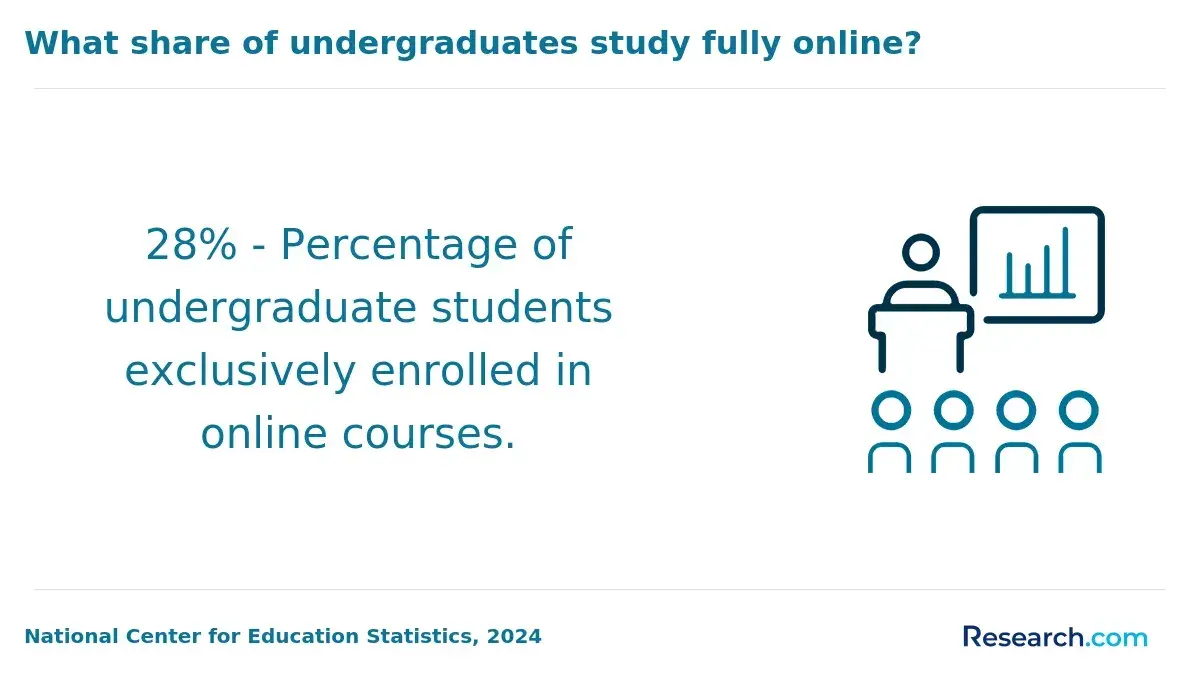
The National Center for Education Statistics reported that U.S. postsecondary institutions continue to serve millions of students through distance education, making online admissions processes a mainstream part of higher education rather than a niche option. For applicants, this means colleges have strong incentives to simplify enrollment while still verifying readiness and eligibility.
Requirements often differ by pathway. The table below compares common expectations so applicants can predict where essays are least and most likely to appear.
| Pathway | Essay likelihood | What usually matters more | When writing may still appear |
| Community college | Low for general admission. | Residency, high school completion, placement, program prerequisites. | Selective health programs, scholarships, honors, appeals. |
| Online bachelor's degree | Low to moderate, depending on school. | Transcripts, transfer credits, GPA, proof of graduation. | Competitive majors, prior conduct review, credit appeals. |
| Adult degree completion | Usually low for admission. | Prior college credit, work experience, advising fit, academic standing. | Personal goal statements, employer-sponsored programs, scholarships. |
| Online graduate program | Moderate to high. | Bachelor's degree, GPA, resume, prerequisites, recommendations. | Statement of purpose, professional goals essay, writing sample. |
Adult learners should pay special attention to total cost, transfer-credit policies, and time to completion. Some accelerated options reduce opportunity cost by helping students finish faster, but they may require stronger time management. If speed is a priority, compare formats such as 1-year master's programs online against part-time programs that may be easier to balance with work or caregiving.
Applicants with prior academic difficulty should not avoid essays automatically. A short, well-written explanation can help clarify what changed, what support systems are now in place, and why the applicant is more prepared than before. When a college offers an optional statement, adult learners may benefit from using it thoughtfully.
Are essays required for scholarships, honors programs, or specialized professional majors?
Yes, essays are commonly required for scholarships, honors programs, and specialized professional majors even when the main college application is essay-free. This is one of the biggest surprises for applicants who choose no-essay colleges to save time.
Scholarship committees and program faculty often need more than a transcript because they are awarding limited seats, funding, or professional preparation opportunities. The U.S. Department of Education set the maximum Federal Pell Grant at $7,395 for the 2024-25 award year, but many students still need institutional scholarships, state grants, or private awards to close affordability gaps. Essays help committees decide how limited funding aligns with merit, need, leadership, service, or career goals.
Expect additional writing in these situations. Each prompt has a different purpose, so applicants should tailor responses rather than recycle the same essay everywhere.
- Merit scholarships: Essays may ask about leadership, academic goals, community impact, or why the student deserves funding.
- Need-based or emergency aid: Applicants may need to explain financial circumstances clearly and respectfully.
- Honors colleges: Prompts often assess intellectual curiosity, interdisciplinary thinking, service, or readiness for advanced coursework.
- Nursing, education, social work, and allied health programs: Essays may evaluate professional motivation, ethics, patient or client service orientation, and readiness for fieldwork.
- Business, engineering, computer science, and arts programs: Some programs use essays, portfolios, project descriptions, or goal statements to assess fit and preparation.
Cost-sensitive students should treat scholarship essays as part of their financial strategy. If graduate study is the goal, comparing affordable master's degrees online can also help reduce reliance on scholarships that may be competitive or uncertain.
A common mistake is submitting the same scholarship essay to every funder. Strong scholarship essays usually connect the applicant's goals to the specific award criteria. If the scholarship values service, write about service. If it supports a profession, explain your preparation for that profession.
If a college doesn't require essays, what admission factors matter most instead?
If a college does not require essays, the admissions review usually shifts toward objective eligibility and academic readiness. That does not always mean admission is automatic. It means the college may use other evidence to decide whether you qualify for general admission, a specific major, or placement into college-level coursework.
The most important factors usually fall into a few categories. Applicants should verify these early because missing documents can delay admission even when the school has no essay requirement.
- Official transcripts: Colleges use high school and college transcripts to confirm completion, GPA, courses, credits, and academic standing.
- Course prerequisites: Competitive majors may require specific math, science, writing, or general education courses before program entry.
- GPA thresholds: Some schools publish minimum GPA requirements for admission, transfer, scholarships, or specific majors.
- Test scores or placement measures: Even test-optional colleges may use placement exams, prior coursework, AP scores, or dual-enrollment credits for advising.
- Transfer credit evaluation: Adult learners and transfer students should check how many credits apply to the degree, not just how many are accepted by the institution.
- Background checks or conduct review: Some professional programs and campus policies require additional review, especially for field placements, licensure tracks, or clinical experiences.
Applicants with criminal records should be especially careful to distinguish college admission from program eligibility, field placement, licensing, and employment. Some schools are accessible, but certain careers may have separate restrictions. Resources on degrees felons can get can help applicants think through program fit before investing time and money.
A no-essay application can be a good option if your academic record is straightforward and your goal is clear. It may be less ideal if your transcript needs context, you changed schools often, your GPA dipped because of documented hardship, or your intended major is selective. In those cases, an optional statement or direct conversation with admissions can help.
How should students decide whether to submit optional essays to strengthen their applications?
Students should submit an optional essay that adds meaningful, relevant information that is not already clear elsewhere in the application. They should skip it when the essay is rushed, repetitive, generic, or unrelated to the college's review criteria.
A useful decision rule is this: optional does not mean unimportant, but it also does not mean mandatory. The value of an optional essay depends on what it helps the admissions team understand. Consider submitting one in the situations below.
- You need to explain a grade dip, school change, family responsibility, illness, work obligation, or other context that affected your record.
- You are applying to a test-optional school without scores and want to strengthen the personal and academic context of your application.
- You have a specific reason for choosing the college, major, faculty strength, location, learning format, or support service.
- You are near the lower end of the school's published academic profile and can provide evidence of readiness or improvement.
- You have a distinctive experience, project, responsibility, or goal that is not obvious from your activities list or transcript.
There are also times when skipping the optional essay is reasonable. If your application is already strong, the prompt is very broad, and you cannot add anything specific, a weak essay may dilute your overall presentation. Admissions readers can usually recognize filler.
Before submitting an optional essay, ask yourself three questions: Does this answer the prompt directly? Does it add new information? Does it make the admissions decision easier? If the answer is yes, write it carefully. If the answer is no, spend the time improving required materials instead.
What strategies help applicants write strong college essays when they are required?
Strong college essays are specific, reflective, and connected to the application goal. They do not need dramatic life events. Many effective essays focus on ordinary experiences that reveal character, growth, curiosity, responsibility, or direction.
Use the following process when an essay is required. It keeps the writing focused and helps avoid the most common admissions essay mistakes.
- Read the prompt twice and identify what the college is actually asking, such as identity, challenge, academic interest, community, major fit, or personal growth.
- Choose one clear story or theme instead of trying to summarize your entire life.
- Show evidence through concrete details, such as a project, decision, responsibility, conversation, failure, job, class, or community role.
- Explain why the experience matters now and how it connects to college readiness or your future direction.
- Revise for clarity and remove sentences that could appear in any applicant's essay.
- Ask one or two trusted readers for feedback, but keep the final voice your own.
- Proofread carefully and confirm that the essay fits the exact word limit and prompt.
Applicants should also understand how artificial intelligence affects essay writing. AI tools can help brainstorm, outline, or identify unclear wording, but colleges expect submitted work to reflect the applicant's own thinking and voice. Some institutions have policies on AI-assisted writing, and misrepresenting authorship can create ethical or conduct concerns.
Common mistakes include writing what you think admissions officers want to hear, overusing trauma without reflection, repeating the resume, exaggerating accomplishments, ignoring the prompt, and submitting an essay that names the wrong school. The better alternative is to write a focused essay that makes one clear point about who you are and why you are ready for the next step.
A strong admissions essay does not need to make you sound perfect. It should make you sound prepared, self-aware, and real.
Other Things You Should Know About
Yes. Many community colleges, open-admission schools, transfer-friendly institutions, and online programs do not require essays for general admission. However, scholarships, honors programs, selective majors, or appeals may still require writing.
No. At many test-optional colleges, essays may become more important because admissions teams have fewer standardized data points. The transcript remains central, but essays can add context, fit, and personal evidence.
Submit it if it adds useful information, explains context, or strengthens your fit with the school. Skip it if it is generic, rushed, repetitive, or does not answer the prompt directly.
Sometimes. Many transfer applications emphasize college GPA, completed credits, prerequisites, and academic standing. Selective universities, competitive majors, scholarships, and some private colleges may still require a transfer essay or personal statement.
References
- Excessive college essay requirements decrease access and diversity — Admissions Madness. https://www.admissionsmadness.com/blog/excessive-college-essay-requirements-decrease-access-and-diversity
- Why Many Top Colleges are Sticking with Test-Optional Admissions https://www.future-ed.org/why-many-top-colleges-are-sticking-with-test-optional-admissions/
- Should I Complete Optional College Essays? https://www.collegetransitions.com/blog/should-i-complete-optional-college-essays/
- My Secret Tip for Writing an Unforgettable College Essay https://www.saraharberson.com/blog/secret-tip-for-writing-an-unforgettable-college-essay
- Crafting Your Story: How to Write a Compelling College Application Essay https://www.envisionexperience.com/blog/how-to-write-a-compelling-college-application-essay
- Should I submit optional essays for college applications? https://www.sundialessayreview.com/questions/3584/should-i-submit-optional-essays-for-college-applications
- Schools that do not require essay https://talk.collegeconfidential.com/t/schools-that-do-not-require-essay/3642639
- What We’ve Learned about Test-Optional and Test-Required Admissions https://www.applerouth.com/blog/what-weve-learned-about-test-optional-and-test-required-admissions
- What Do Colleges Look For in Students? https://www.collegedata.com/resources/getting-in/what-do-colleges-look-for-in-students
- Colleges Without Supplemental Essays - Top Tier Admissions https://toptieradmissions.com/colleges-without-supplemental-essays/