2027 Last-Minute College Application Guide

Co-Founder and Chief Data Scientist
When deadlines are close, the hardest part is not working faster. It is deciding what matters most. Common App reported nearly 1.4 million distinct first-year applicants in the 2023-24 cycle, showing how crowded the admissions process can be.
This guide is for high school seniors, transfer students, adult learners, and graduate applicants who still want realistic options. You will learn how to prioritize schools, essays, documents, costs, accreditation, and outcomes so you can submit complete applications without wasting time on low-value tasks.
Key Things You Should Know
- A last-minute application is still viable when you focus first on deadline status, program fit, accreditation, total cost, and required documents rather than rankings alone.
- College Board's 2024-25 data shows published tuition and fees average $11,610 for in-state public four-year colleges and $43,350 for private nonprofit four-year colleges, so cost comparisons should happen before you submit.
- The 2024-25 maximum Federal Pell Grant is $7,395, but aid depends on eligibility, timing, school policies, and whether your application and FAFSA records are complete.
What counts as a last-minute college application and who is it right for?
A last-minute college application is any application started close enough to the deadline that you no longer have time for extended campus visits, multiple essay rewrites, or slow document follow-up. For many students, that means the final two to four weeks before a regular decision, rolling admission, transfer, adult-degree, or graduate program deadline.
Applying late can still make sense if your academic record is ready, your goals are reasonably clear, and the school is still accepting applications. It is less ideal if you need major test preparation, have unresolved transcript problems, or are applying to highly selective programs with extensive supplemental requirements.
Use the following decision filter before investing time in any application:
- Apply if the deadline is still open, the program admits students in your intended term, and you can submit all required materials on time.
- Apply if your grades, prerequisites, or work experience are close to the school's typical expectations, even if the school is somewhat competitive.
- Pause if the program requires auditions, portfolios, interviews, prerequisite courses, or licensure checks you cannot complete before the deadline.
- Skip if the school is not accredited, does not offer your intended major or concentration, or has unclear cost and aid information.
Graduate applicants should be especially strategic because short deadlines can tempt people into choosing convenience over fit. If you are comparing quick graduate pathways, resources on the easiest master's degree options can help you understand workload, admissions flexibility, and career alignment before you apply.
How can I quickly build a balanced college list with reach, match, and safety schools?
A balanced college list reduces risk. At the last minute, you do not need a long list; you need a realistic one that includes schools where admission, affordability, and program fit all make sense. For most applicants, five to eight well-chosen applications are stronger than a rushed list of 15.
The table below shows how to classify schools quickly. The goal is not to predict admission perfectly, but to avoid a list made entirely of highly competitive or poorly matched options.
| Category | What it means | Best last-minute use | Main risk |
| Reach | Your profile is below or near the lower end of typical admitted students, or the admit rate is very selective. | Use for dream programs that clearly fit your goals. | Too many reach schools can leave you without affordable options. |
| Match | Your academic record and requirements align with the school's typical expectations. | Make these the center of your list. | Admissions is still not guaranteed, especially for capped majors. |
| Safety | You appear to exceed typical requirements and the school has capacity or rolling admission. | Use to protect your timeline and financial options. | A school is not a true safety if it is unaffordable or lacks your program. |
| Financial safety | The school is likely affordable after grants, scholarships, family contribution, and loans. | Include at least one option you could realistically attend. | Sticker price alone can mislead you if aid is uncertain. |
Build your list in a fixed order so you do not lose time debating every possible college. This sequence keeps your attention on the schools most likely to produce usable admission decisions.
- Start with your intended major, career goal, location preference, format preference, and maximum realistic cost.
- Remove schools with closed deadlines, missing programs, unclear accreditation, or requirements you cannot complete.
- Choose two to three match schools, one to two likely or safety schools, and one to two reach schools if time allows.
- Check whether each school has application fees, fee waivers, scholarship deadlines, and separate program deadlines.
- Confirm that each school accepts your application platform, transcript format, test policy, and recommendation timeline.
Do not assume institution type alone determines quality or value. Many public, private nonprofit, and private for-profit institutions serve different student needs, and applicants should compare accreditation, completion support, program outcomes, and total cost. If you want online options with a nonprofit structure, reviewing accredited non profit colleges can help you narrow the list without relying only on brand recognition.
What are the essential components of a complete application I must prioritize first?
A complete application is more than the form itself. Admissions offices usually need the submitted application, fee or waiver, transcript, essays or personal statement, recommendation letters if required, test scores if submitted, and any program-specific materials. Missing one required item can delay review even if the application form was submitted on time.
When time is short, prioritize materials based on whether they block submission or require another person's action. Documents controlled by counselors, registrars, testing agencies, or recommenders should be handled before optional polish tasks.
- Highest priority: application form, program selection, term selection, required essays, application fee or waiver, and official transcript request.
- Second priority: recommendation letters, school report, test score orders, residency documentation, and prerequisite verification.
- Third priority: optional resume, optional test scores, additional recommendation letters, portfolio items, and demonstrated interest activities.
- Final polish: minor wording edits, activity descriptions, formatting consistency, and final proofread.
One common mistake is spending hours refining a supplemental essay while a transcript request remains unsubmitted. Another is assuming "submitted" means "complete." Many portals show separate statuses for the application, transcript, recommendations, test scores, financial aid, and department review.
Before you move to the next school, create a one-page tracker for every application. Include the deadline, portal login, required documents, recommender names, transcript status, test policy, fee waiver status, scholarship deadline, and confirmation date. This is the simplest way to prevent avoidable missing-material problems.
How do I streamline my college essay process when deadlines are very close?
Last-minute essays should be clear, specific, and reusable without sounding generic. Your goal is not to write the most literary essay possible; it is to present evidence of fit, maturity, contribution, and readiness in a way an admissions reader can understand quickly.
Use a modular essay strategy. Build one strong main essay and a small set of adaptable paragraphs for "why this school," "why this major," "community," and "challenge" prompts.
- Choose one main story that shows growth, responsibility, curiosity, leadership, resilience, or intellectual engagement.
- Write a direct thesis in the first few sentences so the reader understands the point of the essay early.
- Use concrete details: a project, problem, conversation, job responsibility, family role, class, lab, performance, or community need.
- Connect the story to what you will do in college, not just what happened in the past.
- Create a short school-specific paragraph using the program curriculum, faculty work, learning format, campus resource, or career pathway.
- Proofread for names, word count, tone, and copied language before each submission.
AI tools can help you brainstorm, outline, and check clarity, but they should not replace your voice. Admissions essays that sound polished but vague are often weaker than essays with a clear personal point of view. Never submit fabricated experiences, exaggerated hardship, or school-specific paragraphs that could apply to any campus.
For very tight deadlines, limit yourself to two essay revision rounds. In the first round, fix structure and specificity. In the second, fix grammar, word count, and school names. Endless rewriting can reduce the time available for transcripts, aid forms, and recommendations.
How can I maximize my activities and honors sections when applying at the last minute?
Your activities and honors sections should explain how you spent your time, what you contributed, and what level of responsibility you held. At the last minute, the biggest mistake is listing too many vague memberships and too few outcomes.
Prioritize quality over quantity. Admissions readers can understand impact faster when each entry includes role, scope, action, and result. Consider the following:
- Lead with your strongest commitments, such as paid work, caregiving, research, leadership, athletics, arts, community service, entrepreneurship, military service, or long-term club involvement.
- Use action verbs such as led, trained, organized, designed, tutored, managed, performed, coded, researched, translated, fundraised, repaired, assisted, or coordinated.
- Include measurable scope only when accurate, such as hours per week, people served, team size, event scale, award level, revenue handled, or projects completed.
- Do not inflate titles, invent awards, or turn a one-time event into a long-term commitment.
- Group related smaller activities when the application allows it, especially if you are short on space.
Honors do not need to be national to matter. School, district, regional, employer, military, community, and industry recognitions can all add context. The key is to label the level clearly so the reader understands the achievement without guessing.
For applicants with fewer traditional extracurriculars, work and family responsibilities are valid. A student who works 20 hours per week, cares for siblings, translates for family members, or supports a household should describe those responsibilities with the same seriousness as club leadership.
What's the fastest way to confirm recommendation letters, transcripts, and test scores are submitted?
The fastest way to confirm documents is to stop relying on memory and use direct status checks. Recommendations, transcripts, and test scores often move through separate systems, so one confirmation email does not mean the entire application file is complete.
Use a short, respectful communication sequence with every person or office involved. Clear messages reduce delays and make it easier for others to help you quickly. Follow these steps:
- Check the college portal first and record which items are missing, received, waived, or pending.
- Email your counselor or registrar with the exact college name, deadline, application ID if available, and transcript delivery method.
- Message recommenders with the deadline, submission link status, program name, and a brief reminder of what you hope they can emphasize.
- Confirm test-score policy before paying to send scores, especially if the school is test-optional or self-reported scores are accepted.
- Recheck the portal 24 to 72 hours after each submission because processing can lag behind delivery.
- Save screenshots or confirmation emails for application forms, transcript requests, fee waivers, score orders, and recommendation submissions.
A strong recommender reminder is polite, specific, and easy to act on. Include the deadline in the subject line, thank them, attach or summarize your resume, and explain that you understand if they cannot complete it on short notice. If the letter is optional and the deadline is extremely close, submitting without it may be better than missing the application entirely.
For transcripts, distinguish "requested," "sent," and "received." A transcript can be requested by you, sent by your school, and still not yet processed by the college. If the deadline is near, ask whether the college accepts unofficial transcripts for initial review and official transcripts after admission.
How do online, hybrid, and campus-based programs differ when I'm applying under time pressure?
Online, hybrid, and campus-based programs differ most in schedule flexibility, required travel, student support, and how quickly you can begin. Under time pressure, the best format is the one you can complete successfully, not simply the one with the fastest application.
The table below compares common formats for last-minute applicants. Use it to identify trade-offs before choosing a program based only on convenience.
| Format | Best fit | Speed advantage | Watch for |
| Online | Working adults, caregivers, military students, rural students, and students needing schedule flexibility. | May offer multiple start dates and asynchronous coursework. | Confirm accreditation, state authorization, technology requirements, and field placement rules. |
| Hybrid | Students who want some campus access but cannot attend full time in person. | Can reduce commuting while preserving labs, networking, or advising access. | Check required campus days before enrolling. |
| Campus-based | Students who want residential life, labs, studios, athletics, or in-person advising. | May have clearer traditional admissions calendars and campus services. | Housing, deposits, travel, and orientation deadlines can be tight. |
| Accelerated or short-session | Students with strong time management and a clear plan. | Can help students complete credits faster. | Condensed courses can be demanding and may affect work-life balance. |
Adult learners and older applicants should also consider support services, credit for prior learning, transfer policies, and course pacing. Guides to degrees for seniors can be useful when comparing flexible programs designed for students returning to school after a long break.
Do not assume online means easier. Online programs often require strong reading, writing, time management, and technology skills. If you struggle without live structure, a hybrid or campus-based option may be the better last-minute choice even if it requires more planning.
How can I verify accreditation and program quality quickly before submitting applications?
Accreditation is a basic quality check, not a guarantee of personal success. In the U.S., institutional accreditation means a recognized accrediting agency has reviewed the school. Programmatic accreditation may also matter in fields such as nursing, education, counseling, social work, engineering, business, and allied health.
Before submitting a last-minute application, verify quality through official and practical signals:
- Check institutional accreditation through the U.S. Department of Education's recognized accreditation databases or the school's official accreditation page.
- Confirm programmatic accreditation if your field requires or strongly prefers it for licensure, certification, graduate admission, or employment.
- Review whether the program is authorized to enroll students in your state if you plan to study online.
- Ask whether the curriculum meets licensure requirements in the state where you intend to work.
- Look for transparent information on graduation rates, retention, transfer credit, faculty qualifications, student support, and career services.
- Be cautious if admissions pressure is high, costs are unclear, credits are unlikely to transfer, or job-placement claims sound guaranteed.
Program quality also depends on fit. A well-accredited school can still be a poor choice if it lacks your major, has weak advising for transfer students, does not support internships, or offers a schedule you cannot sustain.
For licensure fields, do not rely only on an admissions representative's verbal answer. Ask for the program's written licensure disclosure and compare it with your state board's rules. Requirements can vary by state and may change over time.
What tuition, financial aid, and scholarship steps should I handle right before deadlines?
Right before deadlines, financial aid work is not optional. A school that admits you but is unaffordable may not be a practical choice. College Board's 2024-25 published price data shows why: in-state public four-year tuition and fees average $11,610, while private nonprofit four-year tuition and fees average $43,350 before grants and scholarships. The real comparison should be net price, not sticker price.
The table below summarizes major cost items to compare. It helps you avoid the common mistake of focusing only on tuition while ignoring the full cost of attendance.
| Cost item | Why it matters | Last-minute question to ask |
| Tuition and fees | This is the core academic charge, but it may not include all required costs. | Is tuition charged by credit, term, year, or program? |
| Housing and food | These can change the value of campus-based options significantly. | Are housing deposits or meal plan deadlines earlier than enrollment deadlines? |
| Books, supplies, and technology | Online and technical programs may require software, equipment, or lab kits. | Which costs are required in the first term? |
| Transportation | Commuting, parking, flights, or clinical travel can add up. | How often must I be on campus or at placement sites? |
| Lost work time | A faster schedule can reduce earning hours. | Can I realistically keep my job with this course load? |
Handle aid and scholarship tasks in a specific order. This helps you protect eligibility without getting distracted by low-probability awards first.
- Submit or update the FAFSA as soon as possible and list every school still under consideration.
- Check each college's priority aid deadline, scholarship deadline, and required institutional aid forms.
- Ask whether late applicants are still considered for merit scholarships, need-based aid, departmental awards, or transfer scholarships.
- Use each school's net price calculator, but treat the result as an estimate rather than a final aid offer.
- Compare grants, scholarships, work-study, federal loans, private loans, payment plans, and out-of-pocket costs separately.
- Do not pay a nonrefundable deposit until you understand the refund policy and your expected aid package.
Some students consider short sessions to earn credits quickly before transfer or degree completion. If that is part of your cost plan, compare workload, transferability, and aid eligibility carefully when looking at 5 week college courses online.
How do I evaluate career outcomes, salaries, and job outlook for programs I apply to late?
Career outcomes should influence where you apply, especially if you are deciding quickly. A program does not need to lead to the highest-paying job to be worthwhile, but it should connect logically to your goals, required credentials, and local or national labor demand.
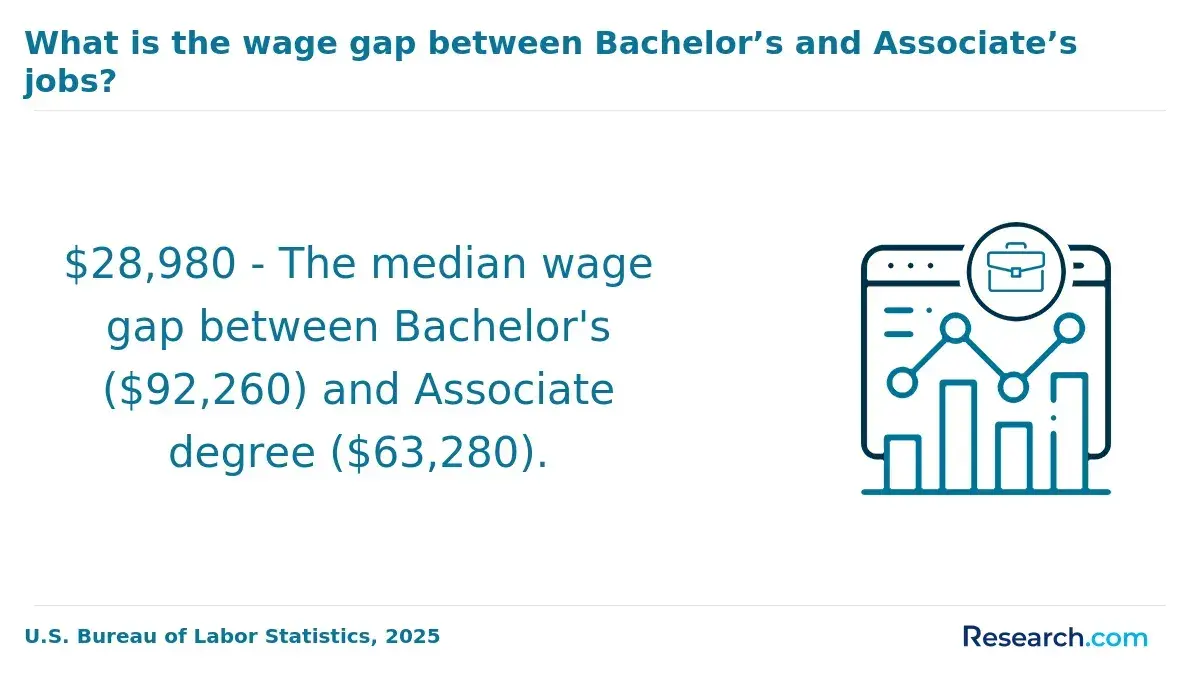
Use salary and job outlook data as context, not as a promise. The U.S. Bureau of Labor Statistics reported a May 2024 median annual wage of $49,500 for all occupations, which gives applicants a baseline for comparing fields that require certificates, associate degrees, bachelor's degrees, or graduate education. Programs tied to licensure, technical skills, or strong internship pipelines may have different risk and reward profiles depending on the occupation.
The table below shows how to compare program outcomes without relying on marketing claims. It is designed to help you ask better questions before committing.
| Outcome factor | Why it matters | How to interpret it |
| Required credential | Some careers require a specific degree, license, certification, or supervised experience. | If the program does not meet the requirement, admission alone is not enough. |
| Median wage context | Salary data helps you compare debt risk and opportunity cost. | Use national data as a baseline, then check regional employer demand. |
| Internships or clinical placements | Hands-on experience can affect employability in applied fields. | Ask whether placements are guaranteed, competitive, remote, or student-arranged. |
| Transfer and graduate pathways | Credits should support your next step if you plan to continue. | Confirm transfer agreements and graduate prerequisite alignment. |
| Career services | Advising, employer connections, and resume support can matter more for career changers. | Look for services specific to your field, not just general job boards. |
Before applying, connect each program to a realistic next step. This is especially important for majors with broad outcomes, such as psychology, biology, communication, business, criminal justice, or general studies.
- If the career requires licensure, verify the exact education pathway and state rules before submitting.
- If the career values experience, prioritize schools with internships, co-ops, labs, clinicals, practicums, portfolios, or employer partnerships.
- If you are unsure about a full degree, compare lower-cost pathways such as community college, transfer programs, apprenticeships, or certificate programs online.
- If you need a fast career change, evaluate time to completion, total debt, and whether the credential is recognized by employers in your target field.
A final red flag is any program that advertises guaranteed employment or unusually high salaries without transparent evidence. Strong programs can explain typical roles, licensing alignment, graduate outcomes, and employer relationships without promising a result for every student.
Other Things You Should Know About Choosing a College
Yes, if the deadline is still open and you can submit a complete application. Your best chances are usually with rolling-admission schools, transfer-friendly colleges, less selective programs, and schools where your academic record is a clear fit.
Submit the application form, required essay, fee or waiver, and transcript request first. Then confirm recommendations, test scores if needed, and portal status. Do not spend all your time polishing optional materials while required documents remain missing.
It depends on whether your scores strengthen your application and whether the school accepts self-reported scores. If official score delivery will miss the deadline or your scores are below the school's typical range, test-optional may be the better choice.
Most last-minute applicants should focus on five to eight realistic schools: a few match options, at least one likely admission option, and at least one financially realistic option. A smaller, better-researched list is usually stronger than many rushed applications.
References
- Top Financial Aid Tips and Tricks [Infographic] https://www.umassglobal.edu/blog-news/top-financial-aid-tips-and-tricks
- Reach, Match, Safety: How to Build a Balanced College List https://himmahprep.com/blog/reach-match-safety-schools-college-list
- Hybrid class vs. online: Choosing the best for your student https://www.asuprepdigital.org/blog/hybrid-class-vs-online/
- Accreditation processes for technical programs https://edquip.co/blog/accreditation-processes-for-technical-programs
- How to prioritize when every issue is top priority | Nulab https://nulab.com/learn/project-management/how-to-prioritize-when-every-issue-is-top-priority/
- How to Build a Balanced List of Colleges to Apply To https://riseglobaleducation.com/blogs/how-to-build-a-balanced-list-of-colleges-to-apply-to
- College Application Essays: Don’t Miss the Deadline https://www.collegeessayadvisors.com/if-youre-not-done-with-your-college-application-essays-right-now-youre-late/