2027 What to Do If You Get Accepted but Can't Afford It

Co-Founder and Chief Data Scientist
Getting accepted is exciting until the financial aid offer shows a gap your family cannot cover. College Board's 2024 pricing data shows average published tuition and fees of $11,610 at public in-state four-year colleges and $43,350 at private nonprofit four-year colleges, before housing and other costs.
This guide is for admitted students, parents, and adult learners deciding whether to appeal, borrow, defer, transfer, or choose another school. You'll learn how to compare real costs, protect long-term finances, and still move toward your degree or career goal.
Key Things You Should Know
- Use net price, not sticker price, the 2024-25 average published tuition and fees were $11,610 for public in-state four-year colleges and $43,350 for private nonprofit four-year colleges, but grants and scholarships can change what you actually pay.
- For 2024-25, the maximum Pell Grant is $7,395 and the dependent first-year federal student loan limit is $5,500, so a large remaining gap often requires institutional aid, earnings, savings, or risky private borrowing.
- Declining an unaffordable offer can be the smartest choice when the remaining cost would require high-interest private loans, debt above realistic early-career earnings, or sacrificing a lower-cost accredited path to the same credential.
What immediate steps should you take if you're accepted to a college you can't afford?
If you were accepted but cannot afford the school, do not panic or immediately decline. Your first job is to calculate the real funding gap, confirm deadlines, and ask the financial aid office what can still change.
Start by separating the college's cost of attendance from your net price. Cost of attendance includes tuition, fees, housing, food, books, transportation, and personal expenses. Net price is what remains after grants and scholarships, but before loans and work-study are treated as actual payment sources.
The table below clarifies the terms you will see in an aid letter. Understanding these labels helps you avoid mistaking loans or part-time work for free money.
| Term on aid letter | What it means | Why it matters |
| Cost of attendance | The school's estimated full-year cost, including direct and indirect expenses | This is the number to use when planning the full budget, not just tuition |
| Grants and scholarships | Money that usually does not need to be repaid | This is the strongest aid because it directly lowers your net price |
| Loans | Borrowed money that must be repaid with interest | Loans can make enrollment possible but increase future financial risk |
| Work-study | Eligibility to earn wages through approved part-time work | It is not paid upfront and may not cover a bill due before the semester starts |
| Unmet need or gap | The amount left after available aid and expected resources | This is the amount you must solve before committing |
Once you know the gap, take these immediate steps in order. The goal is to preserve your admission while giving yourself enough time to compare safer choices.
- Accept nothing that creates a financial obligation until you understand deposit refund rules, housing contracts, and enrollment deadlines.
- Download the full financial aid offer and compare it with the school's published cost of attendance for your intended housing and enrollment status.
- Ask the financial aid office whether your offer is complete, whether any documents are missing, and whether institutional aid is still available.
- Check whether the college has an appeal process for changed income, job loss, medical expenses, family separation, or unusually high dependent-care costs.
- Compare at least one lower-cost admitted option or transfer pathway before making an emotional decision.
A common mistake is focusing only on the deposit deadline. A school may be willing to extend a decision deadline, but you usually need to ask before the deadline passes and explain that you are waiting for financial aid clarification.
How can you appeal or negotiate your financial aid offer after acceptance?
You can appeal a financial aid offer after acceptance, but it is not the same as haggling over a purchase. Colleges usually review appeals when there is new, corrected, or more detailed information about your family's financial situation.
A strong appeal is specific, documented, and respectful. It should explain why the current offer does not reflect your ability to pay and ask whether the school can reconsider need-based aid, merit aid, or a one-time institutional grant.
Use this sequence to make the appeal easier for the financial aid office to review.
- Call or email the financial aid office and ask for the school's exact appeal form, deadline, and documentation requirements.
- Write a short appeal letter that states the gap, the reason the original FAFSA or aid file is incomplete, and the amount that would make enrollment possible.
- Attach documentation such as layoff notices, recent tax information, medical bills, child support changes, death certificates, or proof of one-time income that will not continue.
- If another college offered a better package, ask whether the school reviews competing offers, but avoid sounding entitled or threatening.
- Request the revised offer in writing and confirm whether additional aid is renewable for future years.
The biggest red flag is an appeal that only says, "This is my dream school." Emotional commitment can support your message, but financial aid offices need verifiable facts to change an award.
Also ask about renewal rules. A larger first-year grant may not help if it disappears later because you fall below a GPA threshold, change majors, move off campus, or fail to complete a required number of credits.
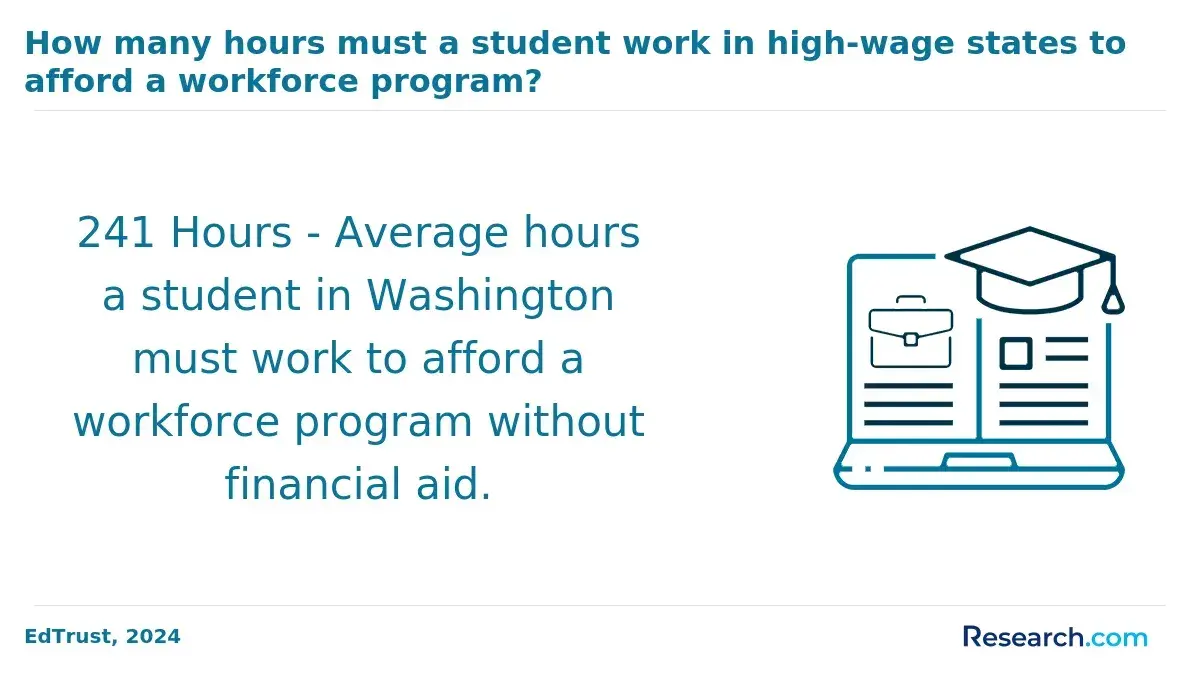
When is it financially wise to decline an offer from your dream school?
It is financially wise to decline a dream-school offer when the remaining cost would create a debt burden that limits your housing, career, graduate school, or family choices after graduation. A school can be excellent and still be the wrong financial fit.
College Board's 2024-25 data places the average estimated full student budget at about $29,910 for public in-state four-year students living on campus and about $62,990 for private nonprofit four-year students living on campus. That gap matters because housing, food, transportation, books, and personal expenses can make an already high tuition bill much harder to manage.
The table below summarizes warning signs that an offer may be financially unsafe. Use it as a reality check before borrowing or signing contracts.
| Warning sign | Why it is risky | Better question to ask |
| The gap requires private loans every year | Private loans often have fewer protections than federal loans | Can I complete the same degree with mostly grants, savings, earnings, and federal loans? |
| The aid is mostly non-renewable | Your cost may rise sharply after the first year | What aid is guaranteed for all four years, and under what conditions? |
| You are relying on unrealistic work hours | Too much work can reduce grades, credits completed, and time to graduation | Can I afford this while working a manageable schedule? |
| The major has uncertain or low early-career earnings | Debt repayment may crowd out rent, transportation, or graduate study | What are typical entry-level roles and pay ranges for this field? |
| The school is not needed for licensure or the career goal | You may be paying a premium without a clear professional advantage | Is there a cheaper accredited route to the same credential? |
A practical rule is to compare your likely total debt with realistic first-year earnings in your field, not with your hoped-for salary ten years later. If the only way to attend is to assume best-case outcomes, the financial risk is probably too high.
What alternative, lower-cost pathways can lead to the same degree or career goal?
Lower-cost pathways can lead to the same bachelor's degree, graduate admission, or entry-level career when you plan transfer credits carefully. The key is to choose an accredited route that keeps your options open instead of simply picking the cheapest school.
Community college is often the most powerful cost-reduction tool. College Board's 2024-25 data lists average published tuition and fees at public two-year colleges at $4,050, which can make the first 30 to 60 credits much less expensive than starting at a residential four-year campus.
The table below compares common alternatives when an accepted school is out of reach. It focuses on fit, not just price, because the cheapest route is not always the most efficient route.
| Pathway | Best fit | Main trade-off |
| Community college to four-year transfer | Students with strong local options and clear transfer agreements | You must verify that credits apply to your major, not just general electives |
| In-state public university | Students who want a traditional campus at a lower net price | Admission to competitive majors may require separate requirements |
| Online bachelor's program | Working adults, parents, military students, or students with completed credits | You need self-discipline and must check accreditation and support services |
| Employer-supported education | Students already working for companies with tuition benefits | Benefits may require staying with the employer or choosing approved programs |
| Certificate-to-degree pathway | Students entering fields where stackable credentials are accepted | Some certificates do not transfer into degree programs |
If your goal is a flexible undergraduate credential rather than a highly prescribed licensed major, researching the easiest bachelor's degree to get can help you identify programs where transfer credit, prior learning assessment, and manageable course sequencing may reduce time and cost.
Avoid assuming that all credits transfer automatically. Before enrolling in a lower-cost pathway, ask the receiving university for a written degree audit or transfer equivalency review whenever possible.
How do scholarships, grants, work-study, and loans realistically fill a funding gap?
Scholarships, grants, work-study, and loans can help close a funding gap, but they are not interchangeable. Free aid lowers your cost, work-study requires earned wages over time, and loans shift today's bill into future repayment.
The 2024-25 maximum Pell Grant is $7,395, which is valuable but often not enough by itself to cover a residential four-year college's full cost of attendance. That is why students should stack aid sources in a careful order rather than treating every aid line as equal.
The table below shows how each funding source usually works. It can help you decide whether the gap is realistically bridgeable or whether you need a lower-cost option.
| Funding source | How it helps | Limit to watch |
| Institutional grants | Can significantly reduce the school's own price | May depend on GPA, full-time enrollment, housing status, or annual renewal rules |
| Federal Pell Grant | Need-based aid that generally does not require repayment | Maximum awards rarely cover the full cost of attendance |
| Outside scholarships | Can fill targeted gaps for tuition, books, or living costs | Some schools reduce institutional aid when outside awards are reported |
| Work-study | Allows eligible students to earn wages through approved jobs | It is paid as you work and may not help with upfront bills |
| Federal student loans | Offer borrower protections that private loans may not provide | Annual limits may be much lower than the total gap |
| Private loans | May cover remaining costs after other aid | Often require credit checks or cosigners and can be difficult to repay |
Use this order when deciding how to fill a shortfall. It prioritizes money that does not create long-term repayment risk.
- Ask for additional institutional grants or merit aid first because this is usually the most direct way to reduce the school's price.
- Apply for local scholarships from community foundations, employers, civic groups, religious organizations, and professional associations.
- Use federal grants and federal student loans before considering private loans.
- Estimate realistic work earnings only after accounting for class time, commuting, sleep, and study hours.
- Treat parent loans, private loans, and credit cards as last-resort options, not routine gap fillers.
If you are undecided and the cost gap remains large, comparing flexible easy degrees may help you find programs where scheduling, transfer credits, and lower living costs make completion more realistic without overborrowing.
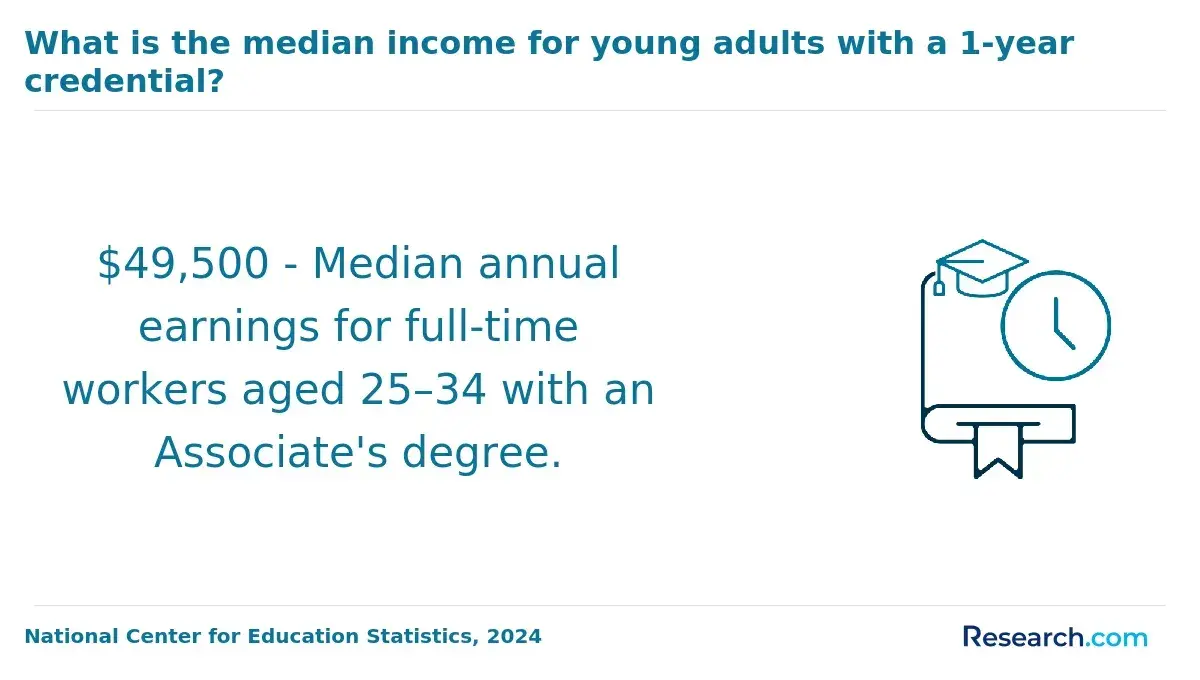
Can you defer enrollment, take a gap year, or start at community college to save money?
Deferring enrollment, taking a gap year, or starting at community college can save money, but each option has rules. The right choice depends on whether you can preserve admission, improve aid eligibility, earn transferable credits, or build savings without losing momentum.
A deferral means the college lets you postpone your start date, often for one semester or one year. A gap year is broader: you may work, volunteer, complete military service, care for family, or reapply to colleges. Community college enrollment means you begin credits elsewhere, which may change your status from first-year applicant to transfer applicant.
Before choosing one of these routes, ask the school direct questions. Small policy details can determine whether the plan saves money or creates new barriers.
- Will my admission and merit scholarship be held if I defer?
- Can I take college credits during the deferral period, or would that make me a transfer student?
- Will my financial aid be recalculated next year, and could it increase or decrease?
- Are housing deposits, orientation fees, or enrollment deposits refundable?
- Does the college have transfer agreements with specific community colleges?
- Will my intended major accept transfer students, and are there prerequisite courses I must complete?
Students who reopen their college search should also reduce application costs wherever possible. Applying through colleges with a free online college application can make it less expensive to compare new affordable options.
The main risk of a gap year is losing academic structure. If you take time off, create a written plan with monthly savings goals, application deadlines, FAFSA reminders, and a target start date.
How should you compare financial aid packages across schools to choose an affordable option?
To compare financial aid packages, put every school into the same format. Colleges use different award letter layouts, and some make loans or work-study look like they reduce the bill even though they do not function like grants.
The most important number is the amount you must cover through savings, current income, federal loans, private loans, or family contributions after subtracting grants and scholarships. Compare that number for one year and for the full expected time to graduate.
The table below gives you a clean comparison format. Build your own version using each school's official aid offer and cost of attendance.
| Comparison item | School A | School B | School C |
| Published cost of attendance | Enter full yearly cost | Enter full yearly cost | Enter full yearly cost |
| Grants and scholarships | Enter gift aid only | Enter gift aid only | Enter gift aid only |
| Net price before loans | Cost minus gift aid | Cost minus gift aid | Cost minus gift aid |
| Federal loans offered | List separately | List separately | List separately |
| Work-study offered | List separately | List separately | List separately |
| Estimated annual gap | Amount still uncovered | Amount still uncovered | Amount still uncovered |
| Renewal requirements | GPA, credits, major, housing | GPA, credits, major, housing | GPA, credits, major, housing |
When online study is on the table, compare student support, accreditation, transfer policies, and total fees rather than assuming online automatically means cheaper. Reviewing the most popular online colleges can help you identify institutions to evaluate, but your final choice should still depend on net price and program fit.
One common mistake is comparing a four-year residential offer with a two-year transfer plan using only the first-year cost. Instead, estimate the cost of the full credential, including transfer years, summer courses, commuting, technology, and any credits that may not apply.
What budgeting and cost-cutting strategies make an otherwise expensive college more manageable?
Budgeting will not fix a massive funding gap, but it can make a borderline offer more manageable. The best cost-cutting strategies reduce recurring expenses without increasing dropout risk or delaying graduation unnecessarily.
Start with the largest controllable costs: housing, meal plans, transportation, books, and course load. Small savings help, but switching housing options or completing credits faster often has a bigger impact than skipping occasional personal purchases.
Use the following strategies only after confirming they will not interfere with academic progress or aid eligibility.
- Choose the lowest safe housing option allowed by the school, including commuting from home if transportation is reliable and the time cost is reasonable.
- Compare meal plans carefully because the cheapest plan is not always cheaper if you must buy most meals separately.
- Ask whether used books, open educational resources, library reserves, or inclusive-access course materials can reduce textbook costs.
- Take enough credits to graduate on time, because adding extra semesters can erase savings from part-time enrollment.
- Consider summer community college courses only if the four-year school confirms in writing that the credits will transfer into your degree plan.
- Look for paid internships, campus jobs, resident assistant roles, or employer tuition benefits that align with your schedule.
If your degree goal is flexible, choosing a major with manageable requirements can reduce schedule conflicts and extra semesters. Researching easy degrees should not mean choosing a weak program; it should mean finding an accredited path you can complete efficiently while meeting your career goals.
A major red flag is planning to work so many hours that your grades, health, or course completion suffer. A cheaper semester that leads to failed classes can become more expensive than a realistic plan from the start.
How do accreditation, licensure needs, and program quality factor into cheaper alternatives?
Cheaper is only better if the program is legitimate, transferable, and aligned with your career goal. Accreditation, licensure eligibility, and program quality determine whether a lower-cost option actually protects your future.
Accreditation is a quality review process used to evaluate institutions and, in some fields, specific programs. For many students, institutional accreditation affects transfer credit, federal financial aid eligibility, graduate admission, and employer recognition. For fields such as nursing, teaching, counseling, social work, accounting, and engineering, programmatic accreditation or state approval may also matter.
The table below highlights quality checks that are especially important when choosing a lower-cost alternative. These are decision factors, not just administrative details.
| Quality factor | What to verify | Why it affects your decision |
| Institutional accreditation | The college is accredited by an agency recognized by the U.S. Department of Education | It can affect aid eligibility, transfer, employer recognition, and graduate school options |
| Programmatic accreditation | The specific program meets field standards where required | Some licensed or technical careers require it |
| State licensure alignment | The curriculum meets requirements in the state where you plan to work | Online and out-of-state programs may not satisfy every state's rules |
| Transfer agreements | Credits apply to your intended major at the receiving school | Transferred elective credits may not shorten time to graduation |
| Student outcomes | Graduation rates, retention, loan repayment, and job placement where available | Low price is less useful if many students do not complete the program |
| Academic support | Advising, tutoring, career services, disability services, and technology support | Support can affect persistence, especially in online or commuter programs |
Do not assume a college is better or worse based only on whether it is public, private nonprofit, or private for-profit. Institution type can influence cost and governance, but your decision should be based on net price, accreditation, completion likelihood, transfer rules, and career alignment.
What are the long-term career, salary, and debt implications of choosing an unaffordable school?
Choosing an unaffordable school can affect more than monthly loan payments. It can influence whether you can take a lower-paid entry-level job, move for an internship, attend graduate school, buy reliable transportation, or build emergency savings after graduation.
BLS 2024 education earnings data shows that workers with a bachelor's degree had median weekly earnings of $1,543, compared with $930 for workers whose highest credential was a high school diploma. That wage premium is meaningful, but it does not mean every degree at every price is financially wise; major, location, work experience, internships, and local labor markets still matter.
Use the table below to think about return on investment in a realistic way. The goal is not to predict your future perfectly, but to avoid a decision that requires everything to go right.
| Factor | What to consider | Why it matters |
| Expected total debt | Federal loans, parent loans, private loans, unpaid balances, and interest | The real burden is the total borrowed amount, not just the first-year loan |
| Field of study | Typical entry-level roles, licensure needs, and internship access | Some majors have clearer earnings pathways than others |
| Time to completion | Four years, transfer years, part-time enrollment, or extra semesters | Each added term can increase cost and delay earnings |
| Graduate school plans | Whether the career requires a master's, doctorate, or professional degree | Undergraduate debt can limit future education choices |
| Technology and AI exposure | Data skills, digital tools, communication, and field-specific software | Employers increasingly value graduates who can adapt to changing workflows |
| Geographic flexibility | Cost of living and job availability where you plan to work | A salary that works in one region may be tight in another |
If your long-term plan includes graduate study, protect your borrowing capacity now. Students considering accelerated or online PhD programs later should be especially cautious about taking on undergraduate debt that could restrict future enrollment choices.
A good college choice should leave you with academic opportunity and financial flexibility. If the dream-school offer would force high-risk borrowing while another accredited option gets you to the same career path, the affordable option may be the stronger investment.
Other Things You Should Know About
Yes. Many colleges allow financial aid appeals after acceptance, especially if your family has job loss, medical expenses, income changes, or other documented circumstances. Ask for the school's appeal process and submit evidence before the deadline.
Be careful. Before accepting, confirm deposit refund rules, housing contract terms, and whether accepting affects your appeal. If possible, ask for a deadline extension while your financial aid review is pending.
A cheaper accredited college is often safer if private loans would be needed every year. Private loans may have fewer protections than federal loans, and borrowing heavily for an undergraduate degree can limit future choices.
Yes, when credits transfer into your intended major and the receiving university accepts them toward graduation requirements. Always verify transfer agreements, prerequisite courses, and major admission rules before enrolling.
References
- 10 Cost-Cutting Strategies for Colleges and Universities https://www.claconnect.com/en/resources/articles/10-costcutting-strategies-for-colleges-and-universities
- How to Pay for College When Your Financial Aid Isn’t Enough: A Step-by-Step Guide - Ascent Funding https://www.ascentfunding.com/blog/how-to-pay-for-college-when-your-financial-aid-isnt-enough-a-step-by-step-guide/
- How To Successfully Negotiate a Financial Aid Package: What Every Family Should Know https://www.onlineu.com/magazine/how-to-negotiate-a-financial-aid-package
- Choosing the future of your college. - Collegiate Consulting https://collegiateconsulting.com/career-pathways-vs-traditional-curriculum/
- Three easy ways for college students to cut expenses — and the biggest mistake when budgeting https://www.cnbc.com/2021/02/24/three-easy-ways-for-college-students-to-cut-expenses.html
- 7 Overlooked Strategies That Cut College Costs https://www.cuofco.org/resources/7-overlooked-strategies-cut-college-costs
- 6 alternatives to college: Why your future doesn't need a degree. https://standtogether.org/stories/future-of-work/alternatives-to-college-why-your-future-doesnt-need-a-degree
- Types of Financial Aid: Loans, Grants, and Work-Study Programs https://angelo.campusesp.com/posts/1141
- Saying No to a Dream College: A Success Story - The College Solution https://thecollegesolution.com/saying-no-to-a-dream-college-a-success-story/
- The Top 4 Best Ways to Pay for College – How to Fill the Funding Gap https://aacreditunion.studentchoice.org/the-top-4-best-ways-to-pay-for-college--how-to-fill-the-funding-gap/