2027 Can You Get Into College With a Low GPA?

Co-Founder and Chief Data Scientist
A low GPA can limit your college options, but it does not end them. Common App reported about 1.43 million first-year applicants in the 2023-24 cycle, up 7%, which means applicants need a smarter strategy-not just more applications. This guide is for high school students, returning adults, and transfer hopefuls who need realistic options.
You will learn what "low GPA" means, which colleges may still admit you, how to improve your application, and how to choose a path that protects your time, money, and long-term goals.
Key Things You Should Know
- You can still get into college with a low GPA, especially through community colleges, open-admission colleges, less selective four-year schools, probationary admission, or transfer pathways.
- A GPA below 3.0 is often considered low for selective admissions, while GPAs below 2.5 usually require a stronger explanation, improved recent grades, or an alternative starting point.
- Cost matters: College Board's 2024 Trends in College Pricing reported average published tuition and fees of $4,050 at public two-year colleges versus $11,610 for in-state public four-year colleges, making community college a lower-risk starting option.
Can you still get into college with a low high school GPA?
Yes. A low high school GPA makes admission harder at selective colleges, but many U.S. colleges admit students whose grades are not perfect. The key is to stop treating "college" as one category. Admission standards vary widely among community colleges, regional public universities, private colleges, online programs, and career-focused institutions.
A low GPA usually matters most when a college has more qualified applicants than seats. At less selective colleges, admissions teams may focus more on whether you can succeed with support, whether your grades improved over time, and whether you meet minimum course requirements. Some schools also offer conditional admission, summer bridge programs, academic probation starts, or first-year support programs for students whose academic records need context.
Before you decide where to apply, separate your options into realistic categories. This helps you avoid spending time and application fees on schools that are unlikely to admit you while still keeping ambitious choices on the list.
| College option | How it usually treats a low GPA | Best fit |
| Community college | Often open admission for students with a high school diploma or equivalent | Students who want a lower-cost reset and transfer path |
| Regional public university | May admit students near or below average if other factors are strong | Students with improving grades, strong local fit, or solid test scores |
| Less selective private college | May review essays, recommendations, interviews, and personal circumstances closely | Students who can explain academic challenges and show readiness |
| Highly selective college | Low GPA is a major obstacle unless there is exceptional context or achievement | Students with unusual strengths, major upward trend, or special talent |
| Online degree program | Requirements vary; some are flexible, while others mirror campus standards | Working adults, returning students, or students needing schedule flexibility |
Your goal is not to hide the GPA. Your goal is to show that the GPA does not fully represent your current readiness, habits, or potential.
What GPA do colleges typically require for admission, and what counts as low?
There is no single GPA cutoff for all colleges. Some schools publish minimum requirements, while others review applications holistically. In general, a GPA below 3.0 may be considered low for many four-year colleges, below 2.5 may limit options more sharply, and below 2.0 may require a community college, GED-based pathway, or conditional admission route.
College cost should also influence how much risk you take. College Board's 2024 Trends in College Pricing reported average published tuition and fees of $11,610 for in-state students at public four-year colleges and $43,350 at private nonprofit four-year colleges. If your GPA makes graduation risk higher, choosing a lower-cost first step can reduce financial pressure while you rebuild your transcript.
The table below gives a practical way to interpret GPA ranges. These are not universal rules, but they can help you build a balanced application list.
| GPA range | How colleges may view it | Practical application strategy |
| 3.5 and above | Competitive for many colleges, though selective schools still consider rigor and fit | Apply across reach, match, and safety schools |
| 3.0 to 3.49 | Generally acceptable at many moderately selective institutions | Highlight rigor, activities, essays, and major fit |
| 2.5 to 2.99 | Often considered low for selective admission but workable at many colleges | Target less selective four-year schools, community colleges, and conditional programs |
| 2.0 to 2.49 | May fall below many four-year admission preferences | Prioritize open-admission or transfer pathways and show recent improvement |
| Below 2.0 | May not meet minimum requirements for many degree programs | Start with adult education, community college advising, certificate options, or academic recovery |
Also remember that GPA is not always read the same way. Colleges may recalculate GPA using core academic courses, weigh honors and Advanced Placement classes differently, or focus on junior and senior year performance. A 2.8 GPA with a strong upward trend can look better than a 3.1 GPA that declined sharply.
How do holistic admissions help applicants with a low GPA?
Holistic admissions means the college reviews more than grades alone. Admissions readers may consider course difficulty, grade trends, family responsibilities, work hours, personal challenges, essays, recommendations, extracurricular activities, interviews, test scores, and evidence of maturity. This approach can help if your GPA is low for reasons that do not reflect your current ability.
Holistic review is not a free pass. A college still needs confidence that you can handle college-level reading, writing, deadlines, and independent study. Your application should make that case directly and with evidence.
Use the following steps to make a holistic review work in your favor instead of simply hoping the college overlooks your GPA.
- Explain the reason for the low GPA briefly, honestly, and without blaming teachers, schools, or family members.
- Show what changed, such as improved attendance, better grades in later semesters, tutoring, time-management systems, or reduced outside obligations.
- Connect your strengths to college success, such as steady employment, leadership, caregiving, technical skills, or strong performance in a specific subject.
- Ask recommenders to comment on your growth, reliability, and readiness rather than only your personality.
- Apply to colleges where your profile is close to the admitted student range or where support programs are clearly available.
Common mistakes include writing an essay that sounds like an excuse, applying only to highly selective schools, or assuming a dramatic personal story will outweigh weak academic preparation. A better strategy is to combine context with proof that you are now ready to do the work.
Which types of colleges are more likely to accept students with low GPAs?
Colleges that are less selective, mission-driven toward access, or designed for transfer pathways are usually more realistic for students with low GPAs. This does not mean they are low-quality. It means their admissions model is built around opportunity, academic support, and student progress after enrollment.
For many students, the most practical choice is a community college or open-admission institution where they can begin an associate's degree, earn strong grades, and later transfer to a four-year program. This path can be especially useful if your high school GPA does not reflect your current effort level.
As you compare schools, look beyond whether they might admit you. You also need to know whether they can help you stay enrolled and complete your credential.
- Community colleges: Often the most accessible option, with placement testing, advising, transfer agreements, and lower tuition.
- Regional public universities: Good options when your GPA is near the lower end of their admitted range and you meet core course requirements.
- Private colleges with higher acceptance rates: May offer personal review, smaller classes, and academic support, but net price can vary widely.
- Career-focused colleges: May be flexible, but you should carefully verify accreditation, transferability, graduation outcomes, and total cost.
- Adult-serving online colleges: May consider work experience, prior college credit, or alternative readiness indicators.
A major red flag is any school that pressures you to enroll quickly without explaining accreditation, total program cost, transfer credit rules, financial aid, or graduation requirements. Accessibility is valuable, but it should come with transparency.
How can test scores, essays, and recommendations offset a low GPA?
Test scores, essays, and recommendations can help, but they work best when they show readiness for college-level work. Many colleges remain test-optional, which means a strong SAT or ACT score may help if it is above the school's typical range, while a weak score can often be withheld at test-optional institutions.
If your GPA is low, each application component should answer a specific concern. Colleges are asking: Can this student read, write, manage time, persist through difficulty, and succeed without constant supervision?
| Application component | What it can prove | When it helps most |
| Strong test score | Academic readiness despite uneven grades | Your score is above the college's middle range or your grades were affected by temporary circumstances |
| Personal essay | Reflection, maturity, motivation, and growth | You explain what happened and show concrete changes |
| Recommendation letter | Work ethic, improvement, character, and classroom behavior | The recommender knows your recent performance well |
| Activity record | Leadership, discipline, responsibility, or talent | Your activities connect to your intended major or show strong commitment |
| Recent grades | Upward trend and current readiness | Your junior or senior year grades are stronger than earlier grades |
Do not rely on one "miracle" component. A great essay cannot fully repair a transcript with no signs of improvement. A better approach is to build a pattern: recent grades, clear explanation, strong recommendation, and a realistic school list all pointing in the same direction.
Is starting at a community college a good pathway with a low GPA?
Starting at a community college is often one of the strongest options for students with a low GPA. It gives you a fresh academic record, lower tuition, smaller introductory classes in many cases, and a chance to transfer based on college performance rather than high school grades.
Cost is a major reason this route is attractive. College Board's 2024 pricing report listed average published tuition and fees of $4,050 at public two-year colleges, far below the average at four-year institutions. For a student rebuilding academic confidence, that lower starting cost can reduce the risk of taking on debt before proving college readiness.
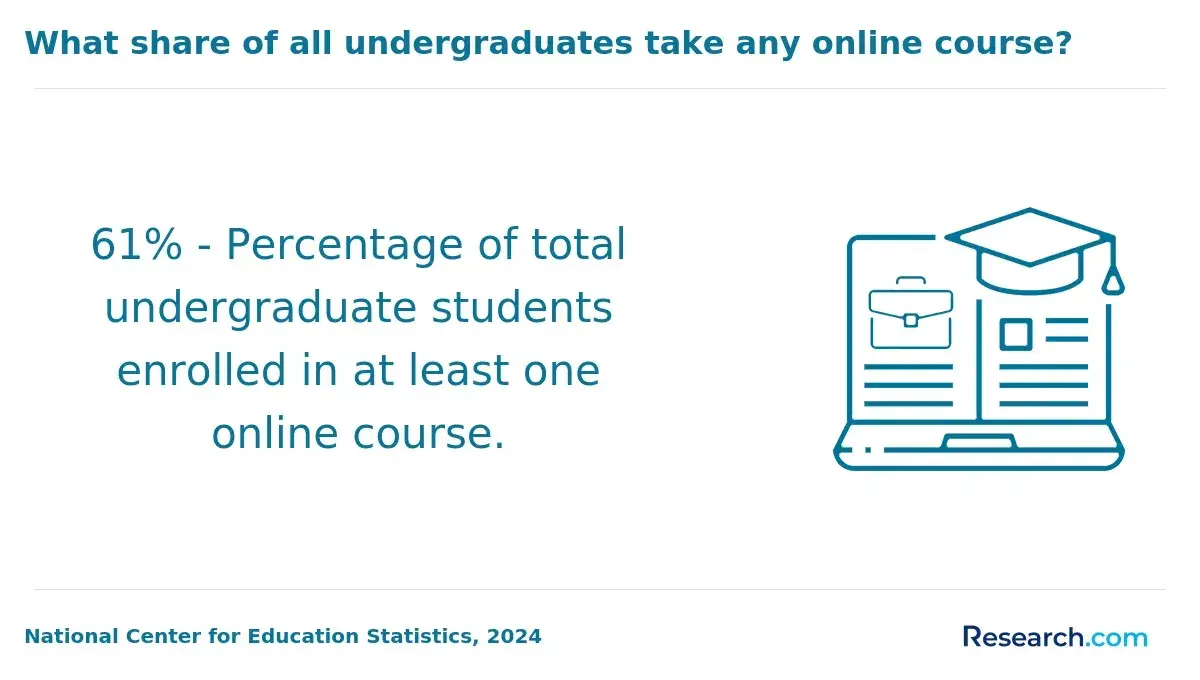
If you need schedule flexibility, an associate's degree online may also help you balance school with work or family responsibilities, but you should still check whether credits transfer to your intended bachelor's program.
To make the community college path work, treat it as a transfer plan from day one rather than a fallback.
- Meet with an academic advisor before registering for classes and name your intended transfer major.
- Choose courses that satisfy both associate degree requirements and the transfer school's bachelor's degree prerequisites.
- Ask whether your state has guaranteed transfer agreements or common course numbering.
- Protect your GPA early by taking a manageable course load instead of overloading your first semester.
- Use tutoring, writing centers, office hours, and academic coaching before you are in trouble.
- Track application deadlines for transfer scholarships and limited-admission majors.
The biggest mistake is taking random classes without confirming how they apply to a degree. That can waste time, financial aid eligibility, and money.
Are online degree programs more flexible for students with lower GPAs?
Online degree programs can be more flexible, but "online" does not automatically mean easier or less selective. Some online programs use the same admissions standards as campus programs. Others are designed for working adults, transfer students, or students returning after a break, and may offer more flexible entry points.
Online learning can be a good fit if your low GPA was partly caused by scheduling conflicts, transportation issues, health needs, or work responsibilities. It may be a poor fit if your main challenges were procrastination, weak study habits, or difficulty asking for help, because online courses often require strong self-management.
Students comparing the best degrees to get online should focus on program quality and support, not just speed. A fast program that lacks advising, tutoring, or career services may not solve the problems that led to the low GPA.
| Format | Potential advantage | Potential drawback |
| Fully online | Maximum schedule flexibility and no commute | Requires strong self-discipline and reliable technology |
| Hybrid | Combines online convenience with some in-person support | May still require travel at fixed times |
| On campus | More face-to-face structure, tutoring access, and peer contact | Less flexible for students who work or have family obligations |
| Competency-based | May allow faster progress through material you already know | Not ideal for students who need frequent instructor structure |
Before enrolling online, ask how often instructors respond, whether tutoring is included, how exams are proctored, what technology is required, and whether credits transfer. These details matter more than the label "online."
How does accreditation affect college choices for students with a low GPA?
Accreditation is one of the most important checks for any student, especially if you are choosing among flexible or low-barrier programs. Institutional accreditation means a recognized accreditor has reviewed the school's academic quality, governance, finances, and student support systems. It can affect federal financial aid eligibility, credit transfer, graduate school admission, employer recognition, and licensure pathways.
A low GPA may make you more vulnerable to schools that advertise easy admission but provide poor outcomes. Do not confuse "willing to admit me" with "a good investment." The right school should be both accessible and credible.
Use this checklist before you apply or enroll. It can help you avoid programs that are expensive, hard to transfer from, or poorly matched to your career goal.
- Confirm the school's institutional accreditation through the U.S. Department of Education or the Council for Higher Education Accreditation databases.
- For licensed fields such as nursing, teaching, counseling, or social work, check whether the specific program meets your state's licensing requirements.
- Ask whether credits transfer to public universities in your state and request written transfer guidance.
- Review total cost, fees, books, technology expenses, and refund policies before signing enrollment documents.
- Look for student support services, including tutoring, advising, disability services, career coaching, and academic probation support.
- Be cautious if admissions staff guarantee transfer, employment, licensure, or salary outcomes.
Accreditation does not guarantee that a school is the best choice, but lack of recognized accreditation is a serious warning sign. If you are using college as an academic reset, you need credits that other institutions and employers will take seriously.
What majors, careers, and salary outcomes remain accessible with a low GPA?
A low high school GPA does not permanently block most careers. It can affect where you start, how quickly you move, and whether you need to prove yourself through community college grades, certificates, portfolios, apprenticeships, or entry-level work. Many fields care more about completed credentials, technical skills, licenses, experience, and performance than high school GPA once you move past initial college admission.
Salary should be used as context, not a promise. The U.S. Bureau of Labor Statistics reported in its 2024 Occupational Outlook Handbook that the median annual wage for all U.S. occupations was $48,060 in May 2023. Programs tied to careers above that benchmark may offer strong value, but only if you complete the credential, keep debt manageable, and choose a field that fits your skills.
If your GPA is low, consider majors and pathways that let you demonstrate ability through projects, certifications, clinical hours, internships, or portfolios. Some students start with short-term certificate programs before committing to a longer degree.
| Pathway | Examples of accessible fields | What matters after admission |
| Career certificate | Medical assisting, phlebotomy, HVAC, IT support, bookkeeping | Licensure rules, hands-on skills, employer recognition, certification exams |
| Associate degree | Business administration, criminal justice, early childhood education, health sciences | Transfer planning, internships, GPA improvement, practical experience |
| Bachelor's degree | Information technology, communication, public administration, psychology, marketing | Portfolio, internships, networking, writing ability, quantitative skills |
| Skilled trades or apprenticeship | Electrical, plumbing, advanced manufacturing, construction management | Work ethic, safety training, technical competence, state requirements |
| Graduate pathway later | Education, counseling, business, healthcare administration | Strong college GPA, prerequisites, experience, and program-specific standards |
Be careful with majors that have strict GPA gates after admission. Nursing, engineering, education, accounting, and some health programs may require minimum college GPAs, prerequisite grades, background checks, clinical placements, or licensing exams. You can still pursue them, but you need an early academic plan and realistic backup options.
How can you build a long-term education and transfer plan with a low GPA?
The best plan with a low GPA is staged. Instead of trying to solve everything with one application, build a path that lets you prove readiness, earn credits that count, control cost, and keep future options open. This is especially important if you eventually want a competitive major, graduate school, or a licensed profession.
Think of your first college step as evidence-building. You are creating a new academic record that can matter more than high school grades when you apply as a transfer student or pursue advanced education. If graduate school is a later goal, research master's degrees that are worth it only after confirming the bachelor's pathway, prerequisites, and expected career return.
A strong long-term plan should include both academic recovery and career direction. Use these steps to turn a low GPA into a manageable planning problem.
- Identify your target career first, then work backward to the credential, major, license, or transfer degree required.
- Choose an affordable starting institution where you are likely to succeed, not just one that will admit you.
- Ask for a written degree map showing which courses apply to graduation and transfer.
- Set a first-year GPA target and use tutoring, advising, and instructor office hours from the beginning.
- Retake or replace weak prerequisite courses when allowed, especially for selective majors.
- Build career evidence through part-time work, volunteering, internships, projects, or certifications.
- Reassess after 15 to 30 college credits to decide whether to transfer, continue, change majors, or add a certificate.
Avoid the mistake of chasing prestige before stability. The right first school is the one that helps you build momentum, earn transferable credits, and move toward a career you can realistically complete and afford.
Other Things You Should Know About
It depends on the school. Some community colleges have open admission for students with a high school diploma or equivalent, while many four-year colleges prefer at least a 2.0 to 3.0 GPA. Selective colleges usually expect much stronger grades.
Yes, if there is useful context. Keep the explanation brief, take responsibility where appropriate, and focus on what changed. Colleges respond better to evidence of growth than to excuses.
It can help, especially if the score shows stronger academic ability than your transcript suggests. However, it usually works best alongside improved recent grades, strong recommendations, and a realistic college list.
If your GPA is only slightly below a school's range, applying to some four-year colleges may make sense. If your GPA is far below admission standards or cost is a concern, community college can be a smarter way to rebuild your record and transfer later.
References
- I get the "holistic" admissions concept but do many schools "pre-screen" with GPA and ACT/SAT? https://talk.collegeconfidential.com/t/i-get-the-holistic-admissions-concept-but-do-many-schools-pre-screen-with-gpa-and-act-sat/3643407
- What Does Holistic Admissions Really Mean? | Xello https://xello.world/en/resources/blog-posts/holistic-admissions/
- Do Community Colleges Care About My GPA? (Requirements) - Unmudl https://unmudl.com/blog/community-college-gpa
- What GPA Do You Need For College? Real Admission Thresholds https://gradecalculatortools.com/blog/gpa-requirements-college-admissions/
- Will a high SAT scorea and strong extracurriculars be enough ... https://ehindsight.com/questions/view/178/will-a-high-sat-scorea-and-strong-extracurriculars-be-enough-to-make-up-for-a-lower-gpa
- Can I Get Into College With a Low GPA? https://www.onlineu.com/resources/college-planning/can-i-get-into-college-with-a-low-gpa
- How to Make Up for a Low GPA in College Applications https://empowerly.com/applications/how-to-make-up-for-a-low-gpa-in-college-applications/
- Transfer with a Low GPA: What Families Should Know — Lantern College Counseling https://www.lanterncollegecounseling.com/insights/transfer-with-low-gpa
- Colleges That Accept Low GPA Scores | Find Options https://www.educationconnection.com/resources/colleges-that-accept-low-gpa/
- How can a low GPA affect job opportunities for a recent college graduate? https://www.physicsforums.com/threads/how-can-a-low-gpa-affect-job-opportunities-for-a-recent-college-graduate.162821/