2027 How to Choose Where to Apply to College

Co-Founder and Chief Data Scientist
Choosing where to apply to college is a financial, academic, and career decision, not just a list-making exercise. The stakes are high: the U.S. Bureau of Labor Statistics reported in 2024 that workers with a bachelor's degree had median weekly earnings of $1,543, compared with $930 for high school graduates.
This guide is for students, transfer applicants, and families who want a practical way to compare schools, avoid costly mistakes, and build an application list that fits their goals, budget, and admissions profile.
Key Things You Should Know
- A strong college list usually includes reach, target, and safety schools, but each school should also pass basic checks for accreditation, affordability, academic fit, and realistic completion time.
- College Board's 2024-25 data shows average published tuition and fees of $11,610 for in-state public four-year colleges, $30,780 for out-of-state public colleges, and $43,350 for private nonprofit four-year colleges, so cost comparisons should happen before applications are submitted.
- The maximum Federal Pell Grant for 2024-25 is $7,395, which can reduce net price for eligible students but rarely covers the full cost of attendance by itself.
What factors should you compare when choosing colleges to apply to?
The best colleges to apply to are the ones where your academic goals, admissions chances, finances, and preferred learning environment overlap. Rankings can be useful as a starting point, but they should not replace a school-by-school comparison of what you will actually study, pay, and experience.
The table below summarizes the main factors to compare before adding a college to your application list. Use it to separate schools that look attractive on the surface from schools that are truly aligned with your goals.
| Factor | What to compare | Why it matters |
| Academic fit | Majors, concentrations, faculty expertise, undergraduate research, honors options, advising model | A school is a poor fit if it is well known but weak in the field you actually want to study. |
| Admissions fit | GPA range, course rigor, test policy, portfolio or audition requirements, acceptance patterns | This helps you build a balanced list instead of applying only to highly selective schools. |
| Financial fit | Net price, aid policies, merit scholarships, housing, transportation, fees, loan expectations | The cheapest sticker price is not always the lowest real cost after financial aid. |
| Location and format | Campus setting, commute, online or hybrid delivery, clinical or lab requirements, internship access | Your environment affects persistence, networking, and how easily you can complete requirements. |
| Student support | Advising, tutoring, mental health services, career services, disability services, transfer support | Support services can be especially important for first-generation, working, online, and transfer students. |
| Career outcomes | Internship pipelines, licensure pass rates, employer partnerships, alumni network, graduate school placement | Career alignment is a major part of return on investment, especially in fields with licensing rules. |
A common mistake is choosing colleges because of brand recognition alone. A more reliable approach is to ask whether each school offers the right program, at a manageable net cost, with enough support to help you finish.
How do you build a balanced list of reach, target, and safety schools?
A balanced college list includes schools with different admissions probabilities while keeping quality and fit high across the entire list. "Reach" means admission is uncertain even for a strong applicant, "target" means your profile is close to the school's typical admitted student range, and "safety" means you are likely to be admitted and would be willing to attend.
Use this sequence to build a list that is realistic without being too cautious. The goal is not to collect as many acceptances as possible; it is to preserve good choices after decisions and financial aid offers arrive.
- Start with your intended major, preferred location or format, budget limit, and any nonnegotiables such as disability services, ROTC, religious affiliation, athletics, or family responsibilities.
- Identify colleges where your GPA, course rigor, and test scores, if submitted, fall above, within, or below the school's recent admitted student profile.
- Classify each school as reach, target, or safety only after confirming that it offers the program, support, and affordability you need.
- Include at least one financial safety, meaning a school that is likely to admit you and likely to be affordable based on its net price calculator or guaranteed aid policies.
- Remove any school you would not seriously attend, even if it improves the appearance of your list.
For many applicants, a practical list might include two to four reach schools, three to five target schools, and two or more safety schools. The right number depends on application fees, essay workload, selectivity, and whether your intended major has extra screening.
Be careful with "safety" schools in competitive majors such as nursing, computer science, engineering, architecture, music, or fine arts. You may be admissible to the university but not automatically admitted to the major, which can change the real risk level.
How do you check a college's accreditation before applying?
Accreditation is an external quality review that helps verify whether a college or program meets recognized standards. It matters because federal financial aid, transfer credit, graduate school admission, employer recognition, and professional licensure can depend on attending an appropriately accredited institution or program.
Before applying, check both institutional accreditation and programmatic accreditation when your field requires it. This is especially important for nursing, education, counseling, social work, engineering, architecture, law, medicine, and allied health programs.
- Look for the college's institutional accreditor on the school's official accreditation page, not just in marketing materials.
- Confirm that the accreditor is recognized by the U.S. Department of Education or the Council for Higher Education Accreditation.
- For licensed fields, check whether the specific program has the programmatic accreditation expected by state boards or employers.
- Ask whether online, branch campus, accelerated, and degree-completion versions of the program are covered by the same approval.
- Save documentation from the school and licensing board before enrolling, especially if you may move to another state.
Red flags include vague statements such as "accreditation pending," pressure to enroll quickly, unclear ownership information, very limited transfer acceptance, or refusal to identify the accrediting agency. If accreditation is unclear, do not rely on verbal assurances from an admissions representative.
How do online and campus programs compare for your goals?
Online and campus programs can both be high quality, but they serve different needs. The right format depends on your schedule, learning style, major, access to technology, need for campus resources, and whether your program requires labs, studios, fieldwork, or clinical placements.
The table below compares online, hybrid, and campus formats so you can decide which one supports your life and goals instead of choosing based only on convenience.
| Format | Best fit | Potential trade-off |
| Fully online | Working adults, parents, military students, rural students, and learners who need schedule flexibility | Requires strong self-management and may offer less informal networking unless the program builds it in. |
| Hybrid | Students who want flexibility but still need occasional labs, campus meetings, advising, or peer interaction | Travel days can create hidden costs, especially if campus visits are frequent or mandatory. |
| On campus | Recent high school graduates, residential students, lab-heavy majors, studio fields, athletes, and students who want full campus life | Housing, transportation, meal plans, and relocation can make the total cost much higher than tuition alone. |
If cost and flexibility are your main concerns, compare tuition structure, technology fees, exam proctoring costs, and transfer policies. Students who want maximum schedule control can also research the cheapest self-paced online college options, but they should confirm accreditation and whether self-paced courses fit their motivation style.
A common mistake is assuming online means easier. In reality, strong online programs often require the same outcomes as campus programs, just with different delivery methods, deadlines, discussion formats, and support systems.
What should you look for in a college major or academic program?
Your major should connect your interests, strengths, academic preparation, and career direction. You do not need to know your exact job title before applying, but you should understand whether the program leads to flexible career options, a licensed profession, graduate school prerequisites, or a narrow occupational pathway.
Before choosing a college because it offers a major name you like, compare the substance of the program. The table below shows program features that often matter more than the major label itself.
| Program feature | What to look for | Why it matters |
| Curriculum depth | Required courses, electives, concentrations, capstone projects, and research options | Two schools can use the same major name but prepare students for different types of work. |
| Experiential learning | Internships, co-ops, clinicals, student teaching, labs, simulations, or portfolio work | Applied experience can help you test a career direction before graduation. |
| Advising quality | Major maps, prerequisite planning, transfer evaluation, and early alert systems | Poor sequencing can delay graduation, especially in STEM, health, and education programs. |
| Career alignment | Employer partnerships, licensure preparation, graduate school placement, and alumni outcomes | The best academic fit supports what you want to do after the degree. |
| Flexibility | Double majors, minors, stackable certificates, online courses, and prior learning credit | Flexibility helps if your goals change or you enter with transfer credits. |
Competency-based education is another option for students who already have relevant knowledge, work experience, or strong independent study skills. If you want to move based on demonstrated mastery rather than a fixed semester schedule, compare the best competency-based colleges and ask how tuition, pacing, faculty access, and employer recognition work.
Do not choose a major only because it sounds lucrative. Some high-earning paths require graduate school, licensure, relocation, strong math or science preparation, or competitive internships, so the better question is whether you are willing and able to complete the full pathway.
What admission requirements do colleges usually expect from applicants?
College admission requirements vary by institution and program, but most schools evaluate whether you are prepared for college-level work and likely to contribute to the campus or online learning community. Selective colleges usually review applications more holistically, while open-admission and broad-access colleges may focus mainly on graduation status, placement, and program prerequisites.
Most applicants should prepare the following materials early because missing or rushed items can weaken an otherwise strong application:
- High school transcript, GED, or prior college transcript showing completed coursework and grades
- Application form with personal, academic, and residency information
- Application fee or approved fee waiver, when required
- Standardized test scores if required or if submitting them strengthens your application
- Personal essay, short answers, or statement of purpose for schools that use holistic review
- Letters of recommendation, counselor forms, portfolios, auditions, interviews, or resumes when required by the college or major
- FAFSA or other financial aid forms if you want federal, state, institutional, or need-based aid consideration
Test-optional policies remain common, but "optional" does not always mean irrelevant. If your scores are above a school's typical range, submitting them may help; if they are below the range and the school is truly test-optional, withholding them may be reasonable.
Artificial intelligence has also changed the application process. Many colleges allow limited help with brainstorming or editing, but submitting AI-generated essays as your own work can violate integrity policies, so your final application should sound like you and reflect experiences you can discuss in an interview.
How much does it cost to apply and attend college?
College costs include more than tuition. Application fees, enrollment deposits, housing, meals, books, transportation, health insurance, technology, lab fees, and lost work hours can all affect affordability.
College Board's 2024-25 published tuition and fee averages provide a useful baseline for comparing school types. These are sticker prices, not the final amount every student pays after grants, scholarships, and tax benefits.
- Public two-year college, in district: $4,050
- Public four-year college, in state: $11,610
- Public four-year college, out of state: $30,780
- Private nonprofit four-year college: $43,350
The maximum Federal Pell Grant for 2024-25 is $7,395 for eligible students, but the award depends on financial need, enrollment intensity, and program eligibility. Because aid varies, compare net price rather than assuming the lowest tuition is automatically the best deal.
The table below shows common cost categories that can change the real price of attending one college versus another. Use it to ask better questions before committing to an application or enrollment deposit.
| Cost category | What to check | Why it can change your decision |
| Tuition and mandatory fees | Per-credit rates, flat-rate tuition, program fees, online fees, and annual increases | A low advertised rate may exclude required charges. |
| Housing and meals | On-campus housing, commuter costs, meal plans, rent, utilities, and lease length | Living costs can exceed tuition at some public colleges. |
| Books and supplies | Textbooks, software, art supplies, lab kits, uniforms, and equipment | Major-specific supplies can make two programs with similar tuition very different in cost. |
| Transportation | Parking, transit, fuel, flights, campus visits, and clinical site travel | Commuting or required placements can add recurring expenses. |
| Opportunity cost | Reduced work hours, unpaid internships, relocation, and time away from caregiving | The least expensive program on paper may not be the most affordable in real life. |
To avoid overborrowing, run each school's net price calculator, compare renewable scholarship rules, ask whether aid changes after the first year, and estimate total debt at graduation rather than only first-year cost.
How long does each college pathway typically take to complete?
Completion time affects cost, debt, work plans, and how quickly you can enter or advance in a career. A shorter program is not always better if it overloads your schedule, limits internships, or prevents you from meeting licensure prerequisites.
The table below compares common U.S. college pathways and the students they often fit. Actual timelines depend on transfer credit, enrollment intensity, course availability, placement results, and program sequencing.
| Pathway | Typical full-time length | Often fits students who |
| Certificate | Several months to 1 year | Want targeted job skills, career exploration, or a faster route into entry-level work |
| Associate degree | 2 years | Want a lower-cost start, technical training, or a transfer pathway to a bachelor's degree |
| Bachelor's degree | 4 years | Need broad undergraduate preparation for professional, technical, managerial, or graduate-school pathways |
| Accelerated bachelor's degree | About 2 to 3 years when credits and pacing allow | Have transfer credits, prior learning, or the ability to study year-round |
| Master's degree | 1 to 3 years | Need advanced preparation, career advancement, or entry into fields requiring graduate education |
Students with prior college credit should compare transfer policies before applying because generous credit evaluation can save more time than an accelerated calendar. If speed is a top priority, research 2-year bachelor degree programs, but confirm whether the pace is realistic with your work, family, and financial aid situation.
A common mistake is assuming "accelerated" always means cheaper. Fast programs can reduce living costs and time away from work, but they may also require heavier course loads, fewer breaks, and less time for internships or part-time employment.
What careers can your chosen major lead to after graduation?
Your chosen major can lead to several careers, but the connection is not always one-to-one. Some majors prepare students for a specific licensed occupation, while others build transferable skills such as writing, analysis, data interpretation, communication, design, leadership, or problem-solving.
BLS 2024 education-and-earnings data shows that bachelor's degree holders had median weekly earnings of $1,543, but this figure is an overall labor-market measure, not a promise for any one major. Your outcome can vary by field, location, internships, economic conditions, experience, and whether you complete additional credentials.
The table below shows how different academic interests can connect to career directions. Use it to think beyond the name of the major and evaluate the skills, experience, and credentials employers may expect.
| Academic area | Possible career directions | What to verify before applying |
| Business | Marketing, finance, human resources, operations, sales, entrepreneurship | Internship access, analytics coursework, accreditation, and employer recruiting presence |
| Computer science and IT | Software development, cybersecurity, data analysis, systems administration, cloud support | Project portfolio opportunities, math requirements, lab access, and industry certification preparation |
| Health sciences | Nursing, public health, healthcare administration, allied health, pre-professional pathways | Clinical placements, licensure eligibility, prerequisite sequencing, and programmatic accreditation |
| Education | Teaching, instructional support, curriculum work, youth programming, education technology | State approval, student teaching requirements, testing rules, and reciprocity options |
| Social sciences and humanities | Public service, communications, research support, nonprofit work, law-related roles, graduate study | Advising quality, writing-intensive experience, internships, and career services for nontechnical fields |
| Skilled technical fields | Manufacturing technology, automotive, HVAC, medical assisting, welding, network support | Equipment quality, industry partnerships, certification alignment, and job placement support |
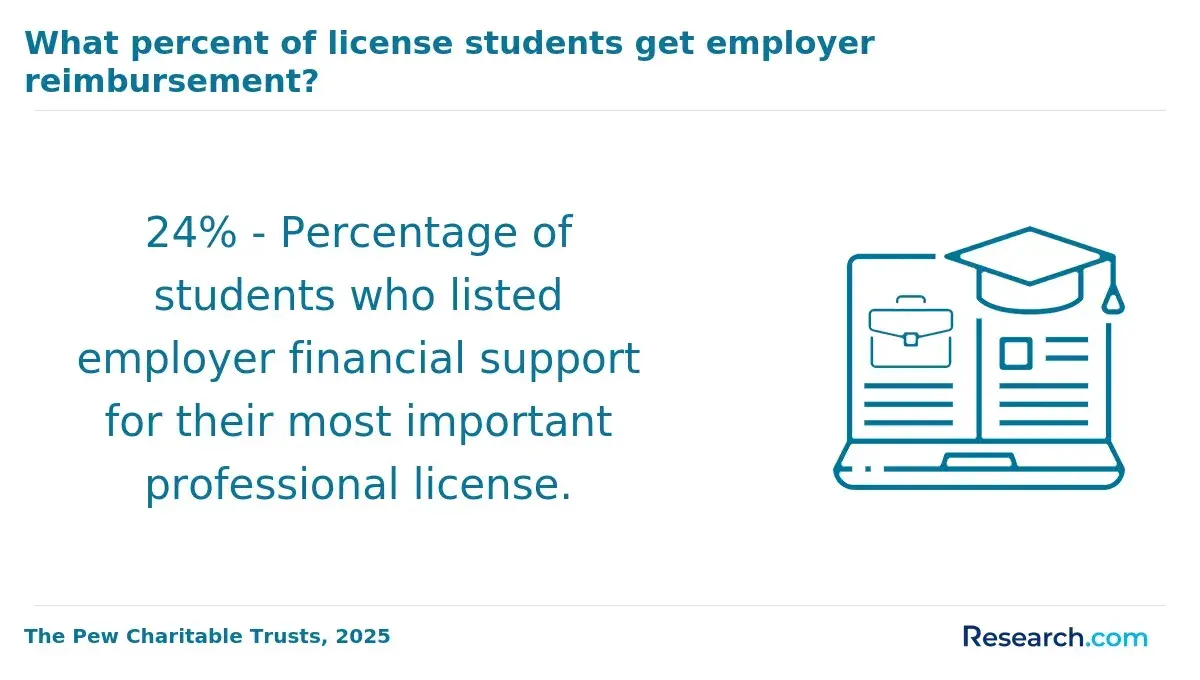
If you want a faster or lower-cost entry point before committing to a degree, compare jobs that only require a certificate. This can be a smart option for students who need income quickly, want to test a field, or plan to stack credentials over time.
AI and automation are also changing career planning. Majors that build adaptable skills, quantitative reasoning, ethical judgment, communication, and hands-on experience may age better than programs focused only on tools that could change quickly.
How do licensing and certification requirements affect your college choice?
Licensing and certification requirements can determine which colleges are acceptable for your career goal. If you plan to become a teacher, nurse, counselor, engineer, architect, accountant, social worker, therapist, pilot, or allied health professional, you should check state and professional rules before applying.
Requirements vary by state, employer, and licensing board, so do not assume that any degree with the right title will qualify you. The safest approach is to work backward from the credential you need.
- Identify the exact job title or license you may pursue, such as registered nurse, licensed teacher, professional engineer, CPA, or licensed professional counselor.
- Check the licensing board in the state where you plan to work and confirm required degree level, accreditation, exams, supervised hours, and background checks.
- Ask each college whether its program meets educational requirements in your state and request that information in writing.
- Confirm whether field placements, clinicals, student teaching, internships, or supervised hours are arranged by the school or must be secured by the student.
- If you may move, ask about reciprocity, compact participation, or additional coursework required in other states.
Graduate education can also affect your college choice as an undergraduate. If your target field eventually requires a master's degree, compare prerequisites, GPA expectations, research or clinical experience, and program workload early. Guides to the easiest master's degrees can help you understand how graduate program structures differ, although "easy" should never replace accreditation and career fit.
The biggest red flag is a program that markets a career outcome without clearly explaining licensure eligibility. Before you enroll, verify whether graduates are eligible for required exams and whether the program publishes pass rates or placement information when the field expects them.
Other Things You Should Know About Choosing a College
Many students apply to about six to ten colleges, but quality matters more than quantity. Your list should include realistic reach, target, and safety options that you would actually attend and can likely afford.
Rankings can help you discover schools, but they should not drive the final decision. Program quality, net price, accreditation, graduation support, location, and career fit are usually more important for your personal outcome.
Neither is automatically better. Public colleges may have lower in-state tuition, while private colleges may offer institutional aid that lowers the net price. Compare your actual aid offers before deciding.
A major mistake is applying without checking total cost, accreditation, and whether the program fits the intended career. This can lead to unnecessary debt, transfer problems, or a degree that does not meet licensing or employment requirements.
References
- Top 10 Factors for Choosing a College https://www.concordiacollege.edu/stories/details/top-10-factors-for-choosing-a-college/
- Top 10 College Majors https://www.princetonreview.com/college-advice/top-ten-college-majors
- How to Choose a College: Top 10 Factors to Consider | Tiffin University https://www.tiffin.edu/news/how-to-choose-a-college-top-10-factors-to-consider/
- What Do Colleges Look For in Students? https://www.collegedata.com/resources/getting-in/what-do-colleges-look-for-in-students
- About Accreditation | Council for Higher Education Accreditation https://www.chea.org/about-accreditation
- Cost of College by Country [2025]: Average Tuition Fees https://educationdata.org/average-cost-of-college-by-country