2027 Biology Degrees That Open the Most Biotech and Research Career Doors

Co-Founder and Chief Data Scientist
Facing a saturated job market with more than 7% projected growth in biotech and research roles by 2030, aspiring biologists must navigate the challenge of choosing degrees that genuinely improve employability rather than simply fulfill traditional academic criteria. The rise of remote study options, now accounting for 45% of science and engineering enrollments according to the National Center for Education Statistics, demands programs that balance flexibility with hands-on experience.
This shifting education landscape pressures students to identify biology degrees that not only open doors but also integrate practical skills employers seek in advanced research and biotech innovation. This article analyzes the biology degrees best aligned with these career realities to help readers make informed, strategic educational choices.
Key Things You Should Know
- Specialized biology degrees with integrated biotech internships increase full-time offer rates by 18% post-graduation, yet require 20% longer study duration, impacting total cost and delayed workforce entry.
- Employers prioritize candidates with quantitative bioinformatics and molecular biology skills, causing traditional general biology graduates to face 12% lower hiring odds in top-tier biotech firms.
- Degrees balancing lab-intensive coursework with remote data analysis control access barriers but may reduce hands-on experience valued by 63% of life science R&D employers, influencing long-term career advancement opportunities.
What biology degrees lead to biotech and research jobs?
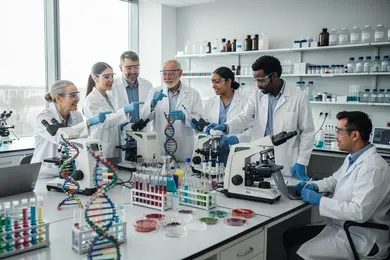
Specialized degrees in molecular biology, biochemistry, genetics, and biotechnology form the most direct pathway to biotech and research roles, emphasizing laboratory expertise, data analysis, and experimental design critical for biological technicians and medical scientists. For instance, molecular biology graduates are positioned for biotech firms advancing gene therapies, whereas biochemistry graduates commonly enter pharmaceutical development or diagnostic research.
The U.S. Bureau of Labor Statistics projects a 5% growth in life, physical, and social science occupations, adding 85,600 new positions through 2032, largely due to the biotech sector demand. Those targeting research job opportunities for biology graduates should prioritize programs with internships or co-op arrangements involving biotech companies or research institutions, as these experiences correlate with quicker employment and stronger starting salaries.
Degrees in environmental biology or general biology often require supplementary coursework in computational biology or bioinformatics to remain competitive. Students can explore 'What can you do with an environmental science major?' to understand alternative or complementary career avenues. Tradeoffs exist between applied biology degrees focused on research, with less emphasis on ecological or evolutionary breadth, and broader degrees demanding post-graduate skill development.
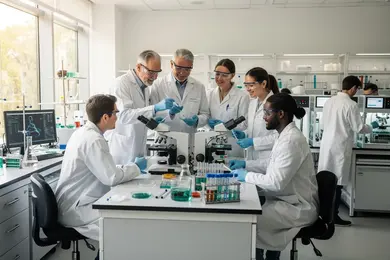
Employers favor candidates demonstrating practical lab proficiency, familiarity with good laboratory practices (GLP), and competence in data science tools, which influences hiring and career trajectory. Recognizing these factors is essential for aligning education with realistic biotechnology career paths with biology degrees and securing relevant industry roles.
Which biology majors have the strongest job outlook?
The strongest job outlook for biology majors in the US centers on molecular biology and biotechnology, fields where medical scientist employment is expected to grow 10% through 2032-double the average rate across all occupations. This segment demands hands-on expertise in gene editing, protein engineering, and bioinformatics, with employers favoring candidates who have practical skills directly applicable to pharmaceutical development, genetic research, and clinical trials.
Compared to other biology paths, such as environmental biology, molecular biology and biotechnology offer more consistent job prospects and higher median salaries, often around $99,930. Graduates in environmental biology must navigate unstable government funding and frequently pursue additional certifications to secure employment, whereas cellular and molecular specializations better align with rigorous lab standards and employer expectations in biotech.
Students should weigh the investment required for laboratory internships and graduate certifications against starting salary advantages and career stability. For example, professionals aiming to enter pharmaceuticals must master regulatory compliance and experimental reproducibility, highlighting the real-world training demands of these roles.
For those interested in a strategic educational pivot, pursuing a fast-track computer science degree alongside their biology foundation can expand interdisciplinary opportunities in bioinformatics and computational biology, fields increasingly integral to biotech innovation.
What careers can you get with a biology degree?
Graduates with a biology degree in 2026 navigate diverse sectors like biotechnology, research, healthcare, environmental science, and bioinformatics, each demanding distinct qualifications and strategic educational choices. Biotechnology jobs emphasize product development, quality assurance, and regulatory compliance, frequently within pharma or agricultural firms, where sharp analytical and lab skills are non-negotiable.
Research roles span academia, government, and private labs, with employers expecting proficiency in experimental design and complex data interpretation. Positions in healthcare, such as clinical laboratory technologists or physician assistants, typically require additional credentials beyond a bachelor's degree, impacting both time and cost investments for students.
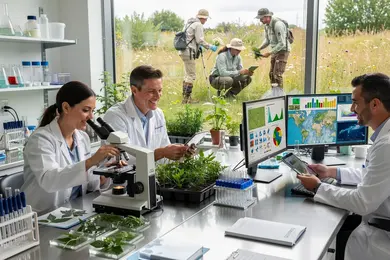
Environmental biology careers blend fieldwork with regulatory knowledge and GIS competency but often necessitate specialized training or graduate education for advancing into policy or conservation planning roles. Notably, bioinformatics and computational biology offer accelerated employment growth, driven by demand for managing biological datasets and applying machine learning in biotech.
According to the U.S. Bureau of Labor Statistics, data scientist roles for bioinformatics graduates are projected to grow 35% from 2022 to 2032, with a median wage of $108,020 in 2024. However, these paths require robust programming and statistical skills, creating a skill acquisition hurdle for many biology degree jobs in biotechnology and research sectors.
Students targeting top careers with a biology degree in biotech industries must weigh the tradeoff between immediate entry-level positions and investing time in advanced degrees or certifications that align with workforce demands. Evaluating one's readiness to pursue a graduate path or specialized nutrition school online alongside biology is a practical consideration for those aiming at computational or healthcare-related roles.
Is an online biology degree respected by employers?
An online biology degree employer recognition largely depends on an institution's accreditation and the rigor of its science curriculum, paired with tangible lab experience. Biotechnology employers tend to value candidates who demonstrate practical skills and verified competencies, often through hybrid models or partnerships that provide controlled lab access.
For example, a 2024 report identifies over 250 job titles for biotech graduates, including roles with starting salaries between $45,000 and $65,000, underscoring that practical validation outweighs delivery format. Yet, purely online programs frequently face the challenge of restricted in-person networking and limited hands-on lab hours, which can hinder entry into more experimental biotech positions.
Candidates pursuing roles in pharmaceutical research or industrial biotech must show proficiency in regulated environments and quality standards, generally requiring synchronous lab sessions or local internships to meet employer expectations. Technical positions such as quality control analyst may remain accessible with strong remote training and demonstrated soft skills.
To address the value of an online biology degree in biotech careers effectively, students should supplement coursework with real-world lab experiences or carefully selected hybrid programs. Strategic planning to fill experiential gaps is essential for competing in specialized fields by 2026. For those considering alternate science pathways, comparing options such as an MLIS degree may reveal different workforce implications and skill requirements in related sectors.
What should accredited biology programs include?
Biology programs that fail to weave rigorous molecular, genetic, and biochemical training with practical laboratory experience risk leaving graduates unprepared for critical entry-level roles. Employers increasingly demand candidates adept with techniques like PCR, chromatography, and spectrophotometry, as well as data analysis skills in languages such as Python or R - competencies vital for managing large biological datasets in fields like genomics and biologics development.
Embedding computational biology alongside foundational coursework directly correlates with employability, particularly in research-heavy environments. For example, applicants lacking bioinformatics literacy face limited options, given the complexity of modern experimental design and the volume of data interpretation required.
Specializations in biochemistry and structural biology align with labor market growth; the U.S. Bureau of Labor Statistics projects a 7% increase in biochemist and biophysicist employment through 2032, with a median wage exceeding $108,000. This trajectory reflects durable demand in pharmaceuticals, diagnostics, and academia but also underscores the necessity of mastering chemical and structural analytical methods.
Students who omit cooperative education or internships often encounter extended job searches or must pursue additional certifications to bridge experience deficits. Programs incorporating professional development in communication, ethics, and regulatory frameworks better prepare candidates to navigate biotech career environments that are both technically and administratively complex.
Which biology courses matter most for biotech careers?
Technical proficiency in microbiology and immunology remains essential for biotech employment, underscored by the projected 5% growth in microbiologist roles through 2032 and a median wage of $87,830. This demand prioritizes coursework that directly correlates to key laboratory functions across research, pharmaceutical, and public health sectors.
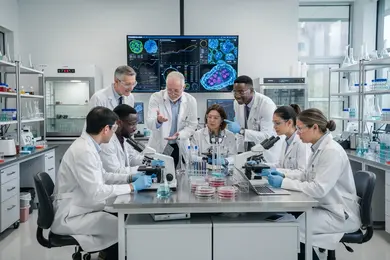
Practical lab skills are non-negotiable: microbial culturing, DNA sequencing, and immunoassays form the backbone of work in both drug development, where molecular cloning and CRISPR speed target validation, and public health settings focused on pathogen detection. Bioinformatics increasingly transforms data handling, emphasizing computational literacy to analyze genome sequencing and proteomic datasets critical for personalized medicine and industrial scale-up.
Students must weigh specialization against foundational breadth. Clinical biotech tracks benefit from stronger immunology and microbiology emphasis, whereas industrial biotech demands knowledge in bioprocess engineering and metabolic pathways. Courses in systems biology and genetics support understanding of cellular mechanisms and gene therapy applications, sharpening analytical problem-solving.
Employers seek candidates who can navigate complex biological data and laboratory techniques with rigorous accuracy. The balance between specialized electives and core technical knowledge influences professional versatility and job market adaptability.
How long does a biology degree take to finish?
Completing a bachelor's degree in biology sets a practical baseline for workforce entry but limits access to specialized roles in biotechnology and genomics that increasingly demand advanced expertise. The typical four-year timeframe covers foundational courses and essential lab skills, yet securing competitive positions frequently requires augmenting the curriculum with internships or research projects.
Graduate education length varies notably by career objectives. Master's programs usually extend the timeline by 1.5 to 2 years, emphasizing research methodologies and laboratory management critical for technical roles. For example, genetic counseling mandates specialized graduate training, clinical experience, and certification, often encapsulated within this two-year master's phase.
Doctoral studies add 4 to 6 more years, necessary for independent research and leadership roles, but present a significant time and financial investment. Students face a tradeoff: entering the labor market sooner with a bachelor's versus investing time in advanced degrees that open doors to higher-level responsibilities and innovation-focused positions.
Part-time and accelerated programs can adjust timelines but may complicate progress and delay income generation. Planning should incorporate pragmatic considerations like internship opportunities, career-specific certifications, and employer expectations in genomics and biotech sectors to align education duration with realistic employability outcomes.
How much do biology degree programs cost?
Annual costs for biology degree programs in the U.S. vary widely, generally ranging from $10,000 to $60,000 depending on residency and institution type. Public universities offer the most affordable in-state tuition, typically $10,000-$25,000, but out-of-state students face $25,000-$40,000. Private colleges push annual expenses into the $40,000-$60,000 bracket.
Graduate-level master's programs, particularly in specialized fields like biotechnology or systems biology, often exceed $30,000 yearly, which demands careful consideration given the tradeoffs between upfront investment and subsequent earning potential. For instance, according to Johns Hopkins University's 2024 biotechnology career analysis, graduates with master's degrees in synthetic biology and bioprocessing can secure starting salaries from $90,000 to $120,000 within a few years.
This underlines the significant wage premium tied to advanced degrees, although entry-level roles in biotech can be accessed with bachelor's qualifications supplemented by targeted certifications. Prospective students should evaluate financial aid options such as employer tuition assistance, as well as program delivery formats-accelerated or hybrid-to balance cost, time, and career goals.
Hidden expenses like lab fees, specialized software licenses, and unpaid internships add to the total investment, sometimes several thousand dollars annually. Decision-makers need to weigh these cumulative costs against individual program outcomes and local employment markets to optimize return on investment in degree pathways.
What salaries do biology graduates earn in biotech?
Starting salaries for biology graduates entering biotech roles vary widely, typically ranging from $50,000 to $85,000. Real-world wages depend heavily on the specific position, type of employer, and location. For instance, bioengineers and biomedical engineers working in medical device companies report a median annual wage of $99,550, consistent with a 5% projected employment growth through 2032.
Yet, this higher pay usually requires specialized skills beyond a general biology background. Entry-level roles in laboratory research or quality control often pay less, between $50,000 and $65,000. Moving into specialized areas like genetic engineering or bioinformatics can elevate salaries above $90,000 but often demands graduate education or certification. Graduates must balance immediate earnings against time and cost for further training.
Employer expectations emphasize hands-on experience with industry-standard lab equipment, data analysis tools, and regulatory compliance. Those transitioning from a pure biology focus will find early investment in these skills decisive for reaching median biomedical salaries and securing promotions.
Regional salary differences also influence financial outcomes. Biotech hubs such as Boston and San Francisco offer starting salaries 10-20% above the national average but with higher living costs, making relocation decisions complex.
How do you choose a biology program for research careers?
Biology programs that fail to balance broad curricula with substantial lab experience limit graduates' employability in specialized biotech roles. The most effective programs emphasize core areas-molecular biology, genetics, biochemistry, and computational biology-while offering extensive experimental design and regulatory training critical for roles like pharmaceutical research assistants.
For example, hiring managers in biotech firms expect new hires to navigate both wet lab protocols and data interpretation confidently, a skill set seldom acquired through theory-only coursework. Prospective students should evaluate programs based on faculty research activity and accessible hands-on opportunities, as these foster practical problem-solving abilities and industry networking essential for entry-level roles.
Geographic location remains a pragmatic factor; institutions near biotech innovation clusters such as Boston or San Francisco provide stronger pipelines to internships and careers, particularly in niche sectors like health tech UX research. Students targeting flexibility benefit from programs incorporating interdisciplinary courses in data analytics and scientific communication, which employers highly value for roles that require translating complex science for nontechnical stakeholders.
Moreover, specialized tracks in synthetic biology or bioinformatics align with emerging job markets but may reduce overall career versatility. Decisions should weigh accreditation, workforce outcome transparency, and industry ties over prestige alone to maximize post-graduate placement in increasingly competitive biotech sectors.
Other Things You Should Know About Biology
Undergraduate research is essential to gaining practical skills and demonstrating hands-on experience to biotech employers, who prioritize applicants with lab proficiency and familiarity with experimental procedures. Programs lacking structured research components may leave students less prepared for technical entry-level roles, increasing the need for post-graduate training or internships. Students should prioritize biology programs with mandatory or easily accessible lab research projects to enhance employability directly after graduation.
Integrating data analysis and computational skills into a biology degree is increasingly critical as biotech fields rely heavily on large datasets and bioinformatics. Graduates lacking these competencies risk limited access to cutting-edge roles and lower initial salary offers. Programs that embed coding, statistics, or machine learning into their curriculum provide a competitive advantage, so students aiming for research-driven or biotech jobs should prioritize these interdisciplinary offerings.
Large research universities often provide more extensive lab resources, diverse faculty expertise, and networking opportunities with biotech companies, but may involve larger classes and less individualized mentoring. Smaller colleges tend to offer closer student-faculty interaction and tailored support but may lack the breadth of research projects or advanced equipment employers expect. Prospective students should prioritize large universities for access to cutting-edge research and internships, while smaller institutions may suit those preferring personalized guidance and less competitive environments.
References
- Accreditation https://www.rsb.org.uk/accreditation.html
- How To Become A Biologist | Biology Degrees And Careers https://www.learnhowtobecome.org/science-technology-careers/biology/
- Which Biotech Specialisations Have the Fastest-Growing Jobs? https://shooliniuniversity.com/blog/which-biotech-specialisations-have-the-fastest-growing-jobs/
- Highest Paying Biotech Research Jobs and How to Get Them — Biotech United https://biotechunited.com/blogs/highest-paying-biotech-research-jobs-and-how-to-get-them
- Biology Major with Good Job Prospects after Undergrad https://talk.collegeconfidential.com/t/biology-major-with-good-job-prospects-after-undergrad/2069915
- Top 15 Highest‑Paying Pharmacy Jobs in the UK 2025 (Including Salaries) https://apexlearning.org.uk/highest-paying-biology-degree-jobs-2025-2026/
- Top 20 Highest-Paying Biotech Jobs in the World: Salaries, Skills & Career Paths https://www.biotecnika.com/top-20-highest-paying-biotech-jobs-in-the-world-salaries-skills-career-paths/
- Turn Your Passion for Science Into a Rewarding Career With a Biology Degree - UNCF https://uncf.org/the-latest/a-biology-degree-can-open-the-door-to-life-and-living