2027 Online Biology Degrees With Molecular Biology Concentrations

Co-Founder and Chief Data Scientist
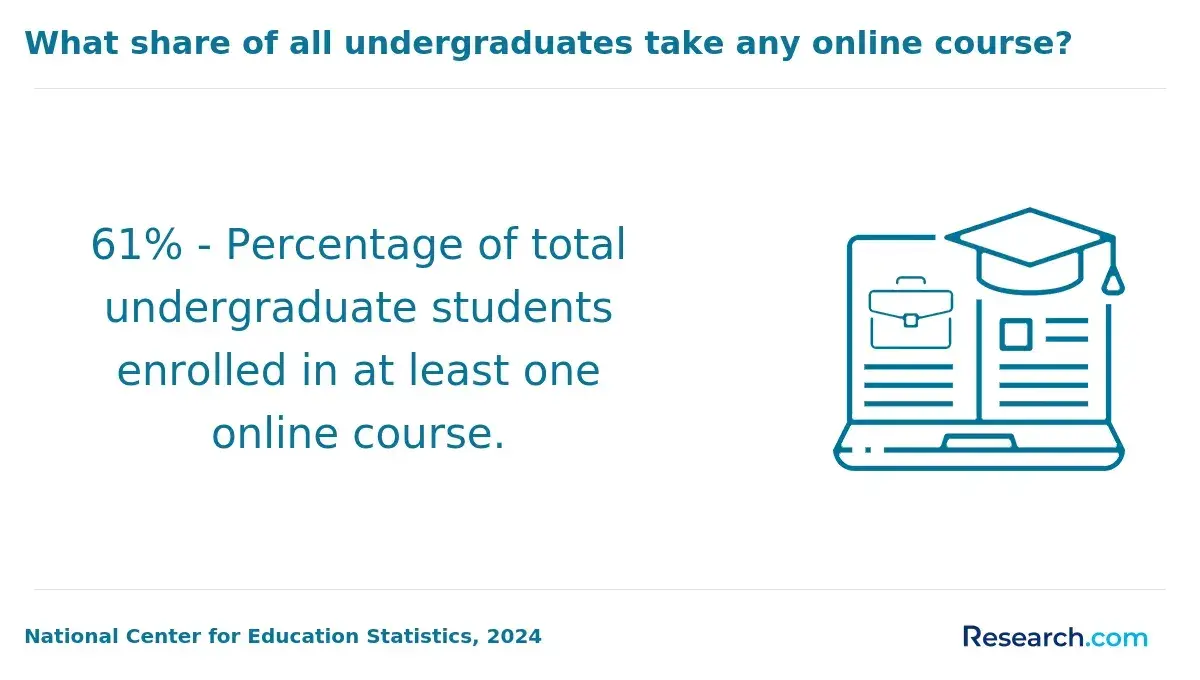
Professionals aiming to specialize in molecular biology face a critical hurdle: balancing the need for advanced credentials with rigid schedules and limited local program availability. According to the National Center for Education Statistics, over 40% of biology-related graduate students now enroll in at least some online coursework, indicating a shift toward flexible learning formats that accommodate working adults and career changers.
This trend reflects growing demand for accessible education that maintains rigorous molecular biology training without sacrificing job or family commitments. This article evaluates accredited online biology degrees focused on molecular biology concentrations, guiding prospective students through key program features, outcomes, and strategic enrollment decisions to best position their careers.
Key Things You Should Know
- Online molecular biology degrees linked to a 12% wage premium in biotech roles per 2024 BLS analyses, but limited in-lab training creates a tradeoff impacting eligibility for entry-level research technician positions.
- Employers increasingly demand hybrid skillsets combining computational biology fluency with wet lab expertise, pressuring programs to balance remote delivery with essential hands-on practicums, affecting graduate job market competitiveness.
- Median total costs for online biology degrees exceed $35,000, with extended part-time enrollment stretching financial aid timelines and delaying workforce reentry, a critical factor for career pivots in 2026's compressed labor market.
What is an online biology degree with a molecular biology concentration?
An online biology degree with molecular biology focus presents distinct tradeoffs compared to general biology degrees, primarily by emphasizing technical proficiency in molecular techniques such as PCR, gel electrophoresis, and DNA sequencing. This specialization equips students with critical lab skills and bioinformatics expertise, essential for roles in genetic testing labs, pharmaceutical research, and biomedical device development.
Working professionals pivoting into biotechnology often prefer a molecular biology concentration in online biology programs because it aligns directly with the practical demands of these fields. However, gaining adequate hands-on experience poses a notable logistical challenge, as completing required lab components typically involves coordinating virtual simulations or local on-site labs, which can complicate scheduling and accessibility.
From a workforce perspective, applicants who combine molecular protocol skills with data analysis capabilities stand out to employers. The number of molecular biology degrees awarded in the U.S. increased by 24.3% annually, heavily skewed toward the bachelor's level, signaling growing market demand but also heightening competition for entry-level positions.
This makes internships and additional certifications strategic priorities. Prospective students assessing the relative value of this degree should also consider labor market outcomes and the range of highest paying jobs with a biology degree accessible through various concentrations.
How does an online molecular biology program compare to a traditional campus program?
The core challenge of an online molecular biology degree program vs traditional campus experience lies in the acquisition of hands-on laboratory skills essential for workforce readiness. While both formats deliver comparable theoretical coverage of genetics, cell biology, and biochemistry, only campus programs integrate structured, in-person lab training in critical techniques such as pipetting and microscopy.
This gap forces online students to seek external lab partnerships or intensive summer sessions, creating logistical barriers that may delay graduation or weaken practical competence. Employers hiring molecular biology graduates-especially in medical research and biotechnology-demand demonstrated proficiency in laboratory methods alongside academic knowledge.
The U.S. Bureau of Labor Statistics forecasts steady growth in medical scientist roles, reflecting a sustained need for candidates with both theory and applied skills. Campus-based education also offers easier access to faculty mentorship and research projects that enhance job prospects.
Online programs require deliberate effort to secure similar experiential learning, often through local internships or hybrid arrangements. Working professionals using a data science master online or molecular biology education to pivot careers benefit from the flexibility of remote learning, but must critically evaluate program components for mandatory lab residencies or partnerships that facilitate skill acquisition. Selecting options without embedded lab experience risks employability gaps and extended timelines, particularly for research-intensive roles where practical training is non-negotiable.
Are online biology degrees with molecular biology concentrations properly accredited?
Accreditation status directly impacts the legitimacy and workforce utility of online biology degrees with molecular biology accreditation. Employers in pharmaceutical and medical research sectors prioritize candidates from programs recognized by the U.S. Department of Education or the Council for Higher Education Accreditation.
Without this, graduates struggle to access federal financial aid, qualify for advanced study, or secure roles demanding molecular biology competencies. Accredited online biology programs with molecular biology concentration integrate essential practical skills, such as molecular techniques and data analysis, often supported by internship or research collaborations.
These elements are critical given that non-accredited degrees frequently lack structured practicum components, limiting graduates' ability to demonstrate applied expertise to prospective employers. The workforce consequences are tangible: biological scientists in relevant industries earned a median annual wage of $112,140. Employers screen rigorously for program rigor and degree validity, making accreditation a key differentiator in competitive STEM job markets.
Students should likewise evaluate transparency around outcomes and practical training when selecting programs. For those exploring flexible educational routes, comparing accredited degrees alongside other options like exercise science degrees online can provide perspective on curriculum depth, time to degree, and career alignment.
What courses and lab experiences are included in a molecular biology concentration online?
Online molecular biology courses with lab components present a notable tradeoff between cost efficiency and hands-on skill acquisition. While theoretical coursework includes molecular genetics, biochemistry, and bioinformatics, the practical training remains challenging to fully replicate in a remote format.
Hybrid models utilizing virtual simulations combined with mailed lab kits or partnerships for local in-person attendance aim to address this, but scheduling flexibility and additional expenses often burden students balancing work commitments. Employers, particularly in research-intensive biotech or pharmaceutical sectors, prioritize candidates who demonstrate verified practical proficiency in techniques like PCR amplification and DNA sequencing.
Graduates lacking these demonstrable skills may face hiring disadvantages despite robust online curricula focused on data interpretation and experimental design.
The cost disparity further complicates decisions: for example, the online BS in biology at Louisiana State University Alexandria costs around $353 per credit hour, more than quadruple the total out-of-pocket expense compared to traditional on-campus options, indicating a significant financial consideration tied to the program's delivery format. This underscores the importance of evaluating not just tuition but also the value of verified lab experience for career mobility.
Students should critically assess programs offering online degree molecular biology practical training and weigh these factors against their personal circumstances. Those wanting to compare educational costs in related fields can visit library science masters resources for broader context.
What admission requirements apply to online molecular biology-focused biology programs?
Admissions for online molecular biology programs in 2026 prioritize proven mastery of foundational sciences over broad academic credentials, reflecting employer demand for immediately applicable skills. Candidates typically need a high school diploma plus demonstrated proficiency in chemistry, biology, and math, with many programs enforcing a minimum GPA near 3.0 to filter for STEM rigor.
Submission of standardized tests like the SAT or ACT remains common but is often waived for applicants with significant college coursework or professional experience, a nod to alternative pathways into the molecular biology workforce. Transfer and post-baccalaureate applicants face scrutiny based on completion of critical prerequisites such as organic chemistry and biochemistry, essential for navigating advanced curriculum.
Applicants must present a targeted personal statement linking their goals to roles in sectors like biotechnology or pharmaceuticals. Letters of recommendation prioritize attestations of analytical competence and lab skills, which are non-negotiable given the practical demands of intensive virtual or in-person laboratory work.
Programs may also assess candidates' access to lab resources and digital literacy, a reflection of the hybridized nature of contemporary molecular biology education. With 90 molecular biology programs in North America reported by Educations.com, competition compresses acceptance margins, favoring those with clear evidence of both academic discipline and relevant practical experience. Employers emphasize graduates' immediate laboratory readiness and adaptability to digital tools, making the admissions process a crucial gatekeeper to sustained employability in a competitive job market.
How long do online biology degrees with molecular biology concentrations typically take to finish?
Completing an online molecular biology degree requires balancing time, cost, and career trajectory with the realities of employer expectations. Programs spanning 18 to 36 months reflect a tradeoff between accelerated completion and manageable workload.
For example, a full-time student may finish within two years, enabling quicker entry into biotech research roles, but must absorb a heavier weekly commitment. Part-time enrollment suits working professionals but extends completion up to or beyond three years, delaying potential salary growth and advanced job opportunities.
The University of Florida's online MS in Microbiology & Cell Science, which mandates 30 credits at $535 per credit, exemplifies how tuition scales with duration-faster completion limits total cost but intensifies study demands. Employers prioritize candidates who demonstrate both mastery of molecular biology content and efficient progression through degree requirements.
Programs demanding theses or capstones lengthen timelines but offer research depth valued in certain career paths, while thesis-free programs expedite entry-level qualifications. Strategic pacing and realistic workload planning optimize the intersection of continuing employment, financial investment, and marketability in specialized biology sectors.
What do online molecular biology degree programs cost, and what financial aid is available?
Cost disparities in online molecular biology degree programs often reflect a tension between financial accessibility and program structure. Public institutions can offer rates below $20,000 for in-state students, while private or out-of-state attendees frequently face tuition over $40,000.
Additional mandatory expenses like technology fees or lab kit shipments, which might add up to $3,000 annually, significantly affect total out-of-pocket costs. This creates a crucial consideration for candidates balancing budget constraints with program rigor.
Financial aid landscapes are uneven, particularly for part-time students blending employment with study. Federal aid remains the most stable funding source, including Pell Grants and Graduate PLUS loans, but its coverage often excludes state scholarships tied to residency or full-time enrollment.
Employer tuition reimbursement programs can bridge some gaps, especially for professionals in biotech hubs such as Boston or Ann Arbor, but these programs require alignment with career goals and explicit employer support. Deciding between programs requires weighing tuition against practical financial aid availability and long-term workforce outcomes.
Candidates in metropolitan areas like Princeton may find hybrid models enabling cost-saving through localized resource use, reducing reliance on costly in-person requirements. However, part-time students must navigate limited scholarship eligibility and potentially extended time-to-degree implications.
What careers can you pursue with an online biology degree in molecular biology?
An online biology degree with a molecular biology concentration often functions as an entry point rather than a terminal credential for specialized healthcare or research roles. Physician assistant positions leverage this foundation effectively, as evidenced by a 20% job growth projection and a median salary of $133,260, yet require additional certification beyond the bachelor's degree.
This highlights a common tradeoff: while the degree provides essential clinical and genetic knowledge, advancing in this field typically demands further credentialing and hands-on experience. Beyond physician assistant roles, career pathways such as genetic counseling demand advanced training due to the complexity of interpreting patient-specific genetic data, reflecting a niche within personalized medicine.
Laboratory technologists and research associates working in molecular biology often need practical lab skills gained through internships or cooperative education, a component many online programs inadequately address. Biotechnology roles frequently involve computational competencies alongside biology, requiring candidates to supplement theoretical learning with technical skill development.
Prospective students must weigh program structures against workforce requirements, particularly the necessity for in-person laboratory exposure and certifications to satisfy employer expectations. Balancing work commitments with these educational demands affects timing and progression, underlining the importance of selecting programs that facilitate experiential learning and clear pathways to graduate credentials or professional certifications.
What salary ranges and job outlook can graduates with molecular biology training expect?
Starting salaries for molecular biology graduates typically range from $50,000 to $70,000 annually in entry-level research or clinical lab roles, though this varies significantly with experience and skill specialization. Professionals with five years in biotechnology or pharmaceuticals can expect $80,000 to $110,000, especially if proficient in advanced techniques like CRISPR gene editing or bioinformatics.
This range reflects employer demand for specific technical competencies that directly impact salary potential. Job growth for molecular biology majors stands around 8% through 2030, outpacing many STEM fields.
Demand is concentrated in personalized medicine, agricultural bioengineering, and environmental biotech sectors. However, competition intensifies for roles requiring graduate or postdoctoral credentials, influencing whether candidates secure higher-paying research positions.
International students face practical challenges affecting employability and salary, notably language proficiency. Programs like the M.S. in Molecular Bioscience at Seton Hall University require TOEFL scores of at least 75% of the maximum, reflecting employer emphasis on communication skills essential for lab integration and career progress.
Those moving from academia into industry should cultivate expertise in data analysis software and regulatory frameworks to bolster salary potential. Freelance or contract molecular biologists generally earn less and encounter less stability than institutional employees.
How can students choose a reputable online molecular biology degree program?
Choosing an online molecular biology degree demands scrutiny beyond accreditation to include tangible workforce outcomes and faculty research activity. Programs led by instructors actively publishing in molecular biology ensure students engage with current methodologies and terminology expected by employers in biotech or healthcare.
Equally important is the rate at which graduates secure roles at research institutions or industry, as this directly reflects program relevance and network strength. Financial tradeoffs can significantly alter return on investment, particularly in specialized tracks like the MS in Biology - Cell and Molecular Biology at the University of Toledo, which estimates an annual cost of $28,307 for 2026.
For students constrained by budget or needing quicker ROI, programs with internship options, employer tuition support, or flexible pacing may better balance immediate costs with credential value. Early-career molecular biologists should consider salary ranges varying by region and sector when calculating net benefit.
Curriculum design impacts job readiness: exposure to lab rotations, industrial partnerships, or clinical applications can differentiate candidates in technical roles from those with purely theoretical backgrounds. Grads aiming to transition into genomic medicine, pharmaceutical R&D, or cellular engineering must prioritize measurable competencies aligned with these sectors' demands.
Finally, the efficacy of remote learning technology shapes skill acquisition. Advanced virtual labs and live interaction platforms simulate hands-on experiences critical for practical expertise, whereas poorly equipped programs risk producing graduates less prepared for immediate workforce integration.
Other Things You Should Know About Biology
Online molecular biology degrees often rely on virtual labs, simulations, or limited in-person lab sessions, which may not fully replicate the hands-on experience that traditional programs provide. Employers in research and clinical labs typically expect graduates to demonstrate practical skills that exceed what virtual labs can teach. If your career goal requires extensive bench work, prioritize programs offering substantial in-person lab components or hybrid models that include clinical placements, as purely online options may limit your immediate employability in lab-heavy positions.
The molecular biology concentration is notably demanding due to intensive coursework in genetics, biochemistry, and lab techniques, which requires a significant time commitment for study and virtual lab work. Compared to other biology tracks, the molecular focus demands stronger self-discipline since complex concepts necessitate deeper independent learning without as much direct instructor interaction. Prospective students should carefully assess their capacity to manage time and maintain motivation remotely before choosing this path.
Acceptance varies widely by employer and industry sector. While some biotech and pharmaceutical companies value the specialized knowledge from molecular biology concentrations regardless of delivery mode, others remain cautious of entirely online degrees due to skepticism about practical training adequacy. For advanced research or doctoral program admission, a traditional or hybrid background with confirmed lab experience carries more weight. Applicants should highlight any in-person lab experiences or internships completed alongside the online degree to enhance credibility.
References
- Molecular Biologist - Salary, How to Become, Job Description & Best Schools https://www.onlinedegree.com/careers/life-physical-science/molecular-biologist/
- Biology Major Jobs & Career Resources https://www.towson.edu/careercenter/planning-resources/major/biology.html
- Molecular Biologist Salary: What You Need To Know https://violencepreventionwales.co.uk/violencepreventionwales-news/molecular-biologist-salary-what-you-need-to-know-1767647345
- NEW Online Science Courses: Cell Biology, Molecular Biology, & Immunology https://online.une.edu/blog/new-online-science-courses-cell-biology-molecular-biology-immunology-pharmacology/
- Online Bachelor's Degrees in Biology: Top Schools & Programs https://www.edumed.org/online-schools/biology-degrees/
- Molecular Biology Education | Thermo Fisher Scientific - IN https://www.thermofisher.com/ru/en/home/brands/invitrogen/molecular-biology-technologies/mol-bio-school.html
- How To Become A Biologist | Biology Degrees And Careers https://www.learnhowtobecome.org/science-technology-careers/biology/
- Cell/Cellular and Molecular Biology https://www.fastweb.com/directory/scholarships-for-cell-cellular-and-molecular-biology-majors
- Online Biology Degrees https://mycollegeguide.org/online-biology-degrees/
- Bachelor's in Molecular Biology https://www.ccis.edu/degrees/molecular-biology-bachelor