2027 What Can You Do With a Biology Degree in 2026?

Co-Founder and Chief Data Scientist
Facing a rapidly evolving biotechnology sector, students and professionals often wrestle with whether investing in a biology degree delivers tangible career advantages amid shifting labor demands. The U.S. Bureau of Labor Statistics projects a 9% growth in biological science occupations by 2032, but access to flexible learning options emerges as a critical determinant in who can realistically capitalize on these opportunities.
The rise of online and hybrid degree programs, which now account for nearly 45% of college enrollments according to the National Center for Education Statistics, reshapes traditional timelines and accessibility for adult learners balancing career changes or family obligations. This article examines how biology degrees fit diverse career trajectories and evolving workforce needs, highlighting strategic choices that best position graduates for success in 2026 and beyond.
Key Things You Should Know
- Annual median wages for biology graduates in specialized fields like genomics or biotech reached $75,000 in 2024 per BLS, but stagnant growth in entry-level roles pressures candidates toward advanced degrees, delaying workforce entry and increasing education costs.
- Employers prioritize candidates with computational biology and data analytics experience, as 62% of relevant jobs now demand multidisciplinary skills, intensifying competition and elevating the value of targeted certifications alongside traditional degrees.
- Federal funding shifts toward applied research and synthetic biology projects create temporal windows favoring graduates with niche expertise; without early specialization, candidates risk missing leverage points in lucrative public and private sector sectors.
What can you do with a biology degree?
A biology degree opens avenues beyond laboratory research, notably in healthcare, environmental management, and biotechnology. However, securing specialized roles such as medical research scientists or pharmacologists typically requires advanced degrees or certifications. Many employers hiring for biology career paths in the United States emphasize practical experience gained through internships or cooperative education programs, reflecting the complexity of biological systems in applied contexts.
Within biotechnology firms, professionals contribute to genetic engineering projects that demand proficiency in molecular techniques and bioinformatics while managing project constraints like tight deadlines and budgets. Conservation biologists balance fieldwork with regulatory compliance by coordinating with government agencies, illustrating the sector's multidisciplinary nature. Those pursuing roles in healthcare technology or environmental consulting must integrate computational modeling and environmental law to remain competitive.
Salary data from the Bureau of Labor Statistics indicates that jobs and opportunities with a biology degree average a median annual wage of $70,000, surpassing the overall bachelor's degree median of $64,000. This wage premium corresponds with demand for biology-trained professionals knowledgeable in emergent challenges such as pandemic response and sustainable resource management. Wage progression, however, hinges on continuous skill development and strategic alignment with sectors valuing hybrid expertise in biology and technology.
For detailed insight into workforce trends and compensation within this interdisciplinary space, consult resources focused on bioinformatics degree salary and jobs.
Which biology jobs pay the most?
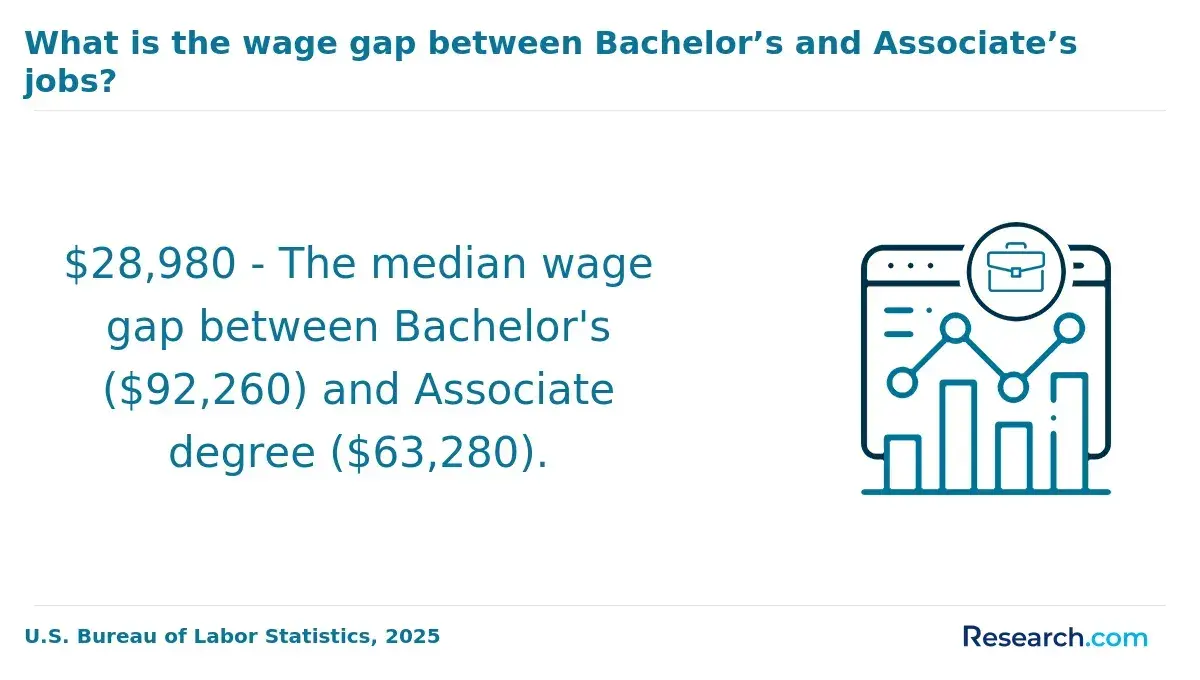
Earning potential in high-paying biology careers in the United States strongly favors advanced degrees due to the increasing technical demands of specialized roles. Bachelor's degree holders in biology typically see median annual salaries near $57,000, while those with graduate degrees surpass $85,000, reflecting the premium employers place on advanced research and analytical skills.
Biomedical researchers working in medical or private sector labs often earn salaries above $90,000 because their roles involve complex tasks such as drug development and disease modeling. Government agencies like the CDC or FDA employ biostatisticians with master's or doctoral degrees who analyze clinical data and influence public health policies, with pay ranging between $80,000 and $110,000. In comparison, bachelor-level laboratory technicians generally make $40,000 to $60,000, highlighting a clear tradeoff between educational investment and salary.
The choice to pursue advanced biology education requires weighing the extra 2 to 6 years of schooling and potential student debt against significantly improved access to leadership roles and specialized fields like genomics, biotechnology, and bioinformatics. Employers actively seek candidates demonstrating relevant expertise through research publications or certifications, which narrows the candidate pool but drives up compensation.
For those evaluating a strategic career pivot, including professionals eyeing top-paying biology jobs and salaries, understanding these workforce implications is essential. Additionally, individuals interested in data-intensive biology roles may consider a data scientist degree, which can broaden options within related analytical domains.
What is the job outlook for biology careers?
Job prospects for biology graduates in the US vary significantly based on specialization and geographic location, reflecting uneven growth within the field. While biological sciences overall are expected to grow by about 8% through 2032, sectors such as environmental science, biotechnology, and healthcare research lead this expansion, unlike more stagnant traditional lab technician roles that face automation pressures. This uneven landscape means graduates must weigh the tradeoff between broad degree value and targeted expertise.
Lifetime earnings data support the economic value of a biology degree, with an average premium of $400,000 compared to non-degree holders and a net lifetime return of $382,000 after educational costs. These figures reflect demand in research institutions, pharmaceuticals, and government roles where data analysis and problem-solving skills are prerequisites. Candidates need to consider credential stacking or niche skills like bioinformatics, regulatory affairs, or clinical trial management to stand out in a saturated entry-level job market.
Geographic considerations markedly affect pathways and salaries. Metropolitan biotech hubs offer denser, higher-paying opportunities, whereas rural regions may limit growth prospects. For those balancing biology career growth in the United States with cost-efficiency, exploring an affordable online computer science degree can complement biological expertise with valuable computational skills increasingly sought by employers.
Pragmatic preparation involves blending traditional biology knowledge with interdisciplinary capabilities and industry certifications to navigate a field demanding ongoing adaptability and technical fluency.
Which biology degree level leads to which careers?
Entry-level positions tied to a biology degree career paths in the United States typically prioritize foundational lab competencies and operational consistency over leadership or innovation, which affects employer expectations. Graduates holding bachelor's degrees usually fill roles such as research assistants, lab technicians, and environmental consultants where managing routine experiments and data collection is essential; however, opportunities to lead complex projects remain limited without additional experience or education. For instance, a biotech startup may rely heavily on bachelor's holders for daily lab operations but require master's credentials for regulatory liaison roles or initiating research design.
The types of biology degrees and related jobs become more specialized with graduate study. Master's degree holders often enter mid-tier positions-clinical research coordinators or conservation scientists-that demand nuanced analytical skills and the ability to navigate between scientific teams and compliance agencies. This tier offers sharper career momentum yet comes with the tradeoff of increased financial and time investment, which must be measured against immediate employment needs.
Doctoral degrees propel professionals into independent research and senior leadership within pharmaceuticals, academia, or government labs, where project management, funding acquisition, and policy influence converge. Admittedly, PhD trajectories involve extended timelines and competitive publication hurdles, yielding fewer immediate openings but markedly greater control over research direction and long-term earning potential.
Those evaluating pathways should also consider cost-efficiency benchmarks for related fields; comparable insights can be drawn from the library degree affordability studies, which underscore the importance of balancing educational expenses with workforce outcomes.
Is an online biology degree respected by employers?
Employer respect for online biology degrees hinges chiefly on program accreditation, the rigor of coursework, and integration of hands-on experience. Degrees from accredited institutions with robust lab components achieve near-parity with on-campus programs-particularly when candidates supplement their education with internships or research projects. For laboratory-driven roles, such as biological scientists or lab technicians, employers consistently require demonstrable applied skills to meet the precision the work demands.
Statistics show less than 15% of biology graduates enter lab-centric positions directly, with 86% branching into broader fields like teaching, environmental science, business, or biomedical industries. In these areas, theoretical knowledge reinforced by analytical and communication skills often suffices, allowing online degrees to hold more weight for entry and growth.
Professionals balancing work and study find accredited online biology programs offer valuable flexibility but should note that specialized sectors-environmental consulting, biotech-tend to prioritize candidates with in-person training or verified lab proficiencies. The reputation of the degree-granting institution also significantly influences employer perceptions beyond the learning format.
Graduates should proactively address online learning's practical gaps by:
- Securing lab internships or volunteer roles early to build experience
- Acquiring certifications in relevant techniques or software tools
- Networking within industry groups to demonstrate applied competence
This approach counters employer scrutiny focused on skill over degree origin, essential in a competitive biology job market demanding both theoretical and applied expertise.
What courses are in a biology degree?
A biology degree requires more than memorizing concepts; it demands integrating theory with hands-on laboratory experience. Core subjects like cellular biology, genetics, and ecology serve as foundational pillars, but practical skills developed through molecular biology and microbiology labs are indispensable for employability in research or clinical settings. Quantitative expertise in biostatistics and bioinformatics further distinguishes graduates, addressing employer expectations especially in pharmaceutical and environmental industries.
Students face a critical tradeoff when choosing electives: specializing in neurobiology or evolutionary biology can tailor career trajectories but may limit flexibility. For example, a biomedical research path necessitates advanced coursework in immunology and molecular genetics, whereas environmental consulting relies on ecology and environmental science. This specialization comes with increased time demands and requires balancing intensive lab work against lecture commitments.
Incoming students should anticipate prerequisite knowledge in chemistry and physics, extending program timelines and complicating scheduling for career-changers. According to The College Board's BigFuture, biological technician roles-the most common entry-level jobs-are projected to grow 5.42%, signaling steady market demand for graduates with interdisciplinary and technical expertise. The median salary near $48,152 reflects the premium on applied skills over broad theoretical knowledge. Prioritizing relevant, applied coursework improves job market readiness while highlighting the practical costs of program length and scheduling constraints.
What admissions requirements do biology programs have?
Admission to biology bachelor's programs demands more than basic science knowledge; it requires demonstrable competence in biology, chemistry, physics, and advanced math, typically including algebra and calculus. Competitive applicants often need test scores above national averages to show readiness for quantitatively rigorous coursework. Laboratory experience-one to two years-is increasingly non-negotiable, reflecting the field's reliance on practical experimentation skills. For those coming from non-science backgrounds, prerequisite bridging courses or community college classes are standard to fill gaps.
Employers and graduate programs value this hands-on proficiency and predictive academic indicators like recommendation letters focusing on problem-solving and scientific inquiry. Prospective students should weigh the financial and career impact: a bachelor's degree in biology correlates with a median salary near $57,000, while a master's offers roughly $93,000, a 63% increase reported by BachelorsPortal citing Georgetown CEW. This gap highlights the strategic importance of aligning educational entry points with long-term workforce positioning.
Working professionals shifting into biology must demonstrate recent academic activity in science and math-typically within five years-to meet program standards. Flexible online or part-time pathways exist but rarely relax prerequisite rigor, preserving compatibility with research protocols and workforce standards.
How long does a biology degree take, and what does it cost?
Pursuing a bachelor's degree in biology demands a multi-year commitment-typically four years full time, with extended timelines common for part-time students or those switching majors. This duration and financial outlay create a substantial upfront burden that must be critically weighed against career outcomes and labor market nuances. Associate degrees can be completed in two years but generally restrict access to entry-level positions without significant advancement potential.
Tuition costs vary: public institutions charge approximately $10,000 to $15,000 annually for in-state students, accumulating to $40,000-$60,000 for a bachelor's degree alone. Out-of-state and private university fees often exceed $30,000 per year. When factoring in lab fees, living expenses, and course materials, total investment often doubles. Considering that median biologist earnings run around $72,860 with modest projected growth of 4% over the decade, prospective students must critically evaluate the economic return relative to educational debt and opportunity costs.
Employers emphasize proficiency in laboratory techniques and practical experience, which may necessitate unpaid internships or research roles while studying, increasing indirect costs and time commitments. For example, environmental consulting roles require both academic credentials and hands-on skills, intensifying this tradeoff.
Choosing between associate, bachelor's, master's, or doctoral pathways hinges on realistic job expectations and willingness to invest time and resources. Advanced degrees unlock research and managerial roles but extend educational timelines and expenses significantly. University of Massachusetts Amherst reports the biology job market's steady but slow growth signals the necessity of deliberate financial and career planning.
What certifications or licenses do biology careers require?
Licensing and certification in biology careers hinge on specific job functions and regulatory environments. For instance, clinical or laboratory biologists typically must secure certifications such as the American Society for Clinical Pathology (ASCP) to legally practice, while environmental biologists often need state licenses for wildlife-related work. These credentials are not merely formalities; they directly affect employability and compliance. Consider a microbiologist in a high-containment lab: lacking proper biological safety level (BSL) certification not only risks job loss but also federal penalties.
Employers seek qualifications that ensure safety, regulatory adherence, and technical proficiency. In specialized fields, failing to meet certification standards can delay employment or necessitate costly retraining. Examples include clinical research coordinators who require Certified Clinical Research Professional (CCRP) status to meet FDA guidelines, or forensic biologists needing American Board of Criminalistics (ABC) certification for credibility.
Certifications vary widely by sector, making a targeted approach essential. Pursuing generic credentials offers limited advantage compared to industry-specific licenses like the Certified Biological Safety Professional (CBSP) in biotech or Regulatory Affairs Professionals Society (RAPS) certifications for regulatory specialists. This strategic credentialing aligns with workforce demand and salary trajectories, as highlighted in ZipRecruiter's 2026 analysis of biology careers listing top-paying roles often tied to advanced certification.
Students and professionals must rigorously verify credential requirements in their chosen specialty to avoid misaligned educational pathways and disrupted career timelines.
How do you choose an accredited biology program?
Choosing a biology program without verifying regional accreditation risks investing time and money in a credential that may not qualify you for licensure or advanced study. Specialized accreditations, like ABET for biochemistry tracks, signal curricula aligned with industry requirements but should be weighed alongside broader factors such as employer integration and graduate outcomes.
Students targeting fields like clinical research or environmental consulting should prioritize programs with direct industry connections or federally funded research affiliations. These relationships often translate to internship opportunities that shorten job search duration and increase starting salaries, a critical consideration given median biochemist earnings around $101,841 and job growth near 7%.
Curriculum alignment with sector-specific skills-advanced molecular biology, bioinformatics, applied physiology-is another decisive factor. Smaller class sizes and ample lab access can materially improve competence in lab-based roles, where practical skills often outweigh theoretical knowledge.
When budget or location constraints eliminate top-tier options, the tradeoff between brand prestige and employability becomes stark. A less prestigious program with robust employer partnerships and high alumni placement rates may offer faster workforce entry and better earnings trajectories than a highly ranked but isolated institution.
- Verify regional accreditation first to ensure degree validity.
- Seek programs connected to funded research or industry to boost practical experience.
- Align required coursework with targeted technical skills needed in your chosen field.
- Evaluate program prestige against practical employment support and internship opportunities.
Other Things You Should Know About Biology
A biology degree offers versatile skills such as data analysis, critical thinking, and laboratory techniques that apply beyond research and healthcare. However, many employers outside these fields expect additional specialized training or experience, so pursuing internships or certifications in areas like environmental consulting, education, or biotech sales can improve employability. Without targeted preparation, the degree alone may limit job opportunities outside traditional biology roles.
Yes. Most biology bachelor’s programs require 8 to 16 semester credit hours of laboratory science, usually including general biology, chemistry, and sometimes genetics or microbiology. Many universities also require at least one upper-division lab course before graduation.
A higher-reputation biology program may offer better research facilities, faculty connections, and internship pipelines, increasing chances of desirable employment or graduate admission. However, these programs usually come with higher tuition and living expenses. Students must weigh whether the network and resources justify increased debt, especially since employers often value demonstrated skills and experience over institution name alone. For many, attending a lower-cost accredited program combined with internships and research can provide comparable outcomes with less financial risk.
References
- Careers Guidance https://www.rsb.org.uk/career-guidance.html
- Highest Paying Biology Degree Jobs in the UK | Royal Open College https://royalopencollege.org/blog/biology/highest-paying-biology-degree-jobs-uk/
- Top 10 Highest-Paying Biology Jobs in India https://internshala.com/blog/highest-paying-biology-jobs/
- Biology Major | Courses For Degree | Career Girls https://www.careergirls.org/college-majors/biology/
- Top 15 Highest‑Paying Pharmacy Jobs in the UK 2025 (Including Salaries) https://apexlearning.org.uk/highest-paying-biology-degree-jobs-2025-2026/
- Careers in Biology https://www.aibs.org/careers/
- TWS Certifications https://wildlife.org/tws-certifications/
- Majoring in Biology: How to Determine which Colleges Offer the Best Fit - Collegiate Gateway https://collegiategateway.com/majoring-in-biology-how-to-determine-which-colleges-offer-the-best-fit/
- Biology https://www.careerpilot.org.uk/job-sectors/subject/biology
- How To Become A Biologist | Biology Degrees And Careers https://www.learnhowtobecome.org/science-technology-careers/biology/