2027 Best Online Bachelor's in Biology With the Strongest Lab Preparation

Co-Founder and Chief Data Scientist
Professionals aiming to enter biology-related careers face a critical challenge: securing robust laboratory experience essential for employability and graduate study readiness without disrupting current work or life commitments. Traditional in-person lab requirements often exclude working adults or remote learners. The National Center for Education Statistics reports a 12% rise in online STEM enrollments since 2023, signaling growing demand for flexible yet comprehensive programs.
However, not all online biology degrees provide sufficient hands-on lab training, a gap that can hinder career mobility in research, healthcare, or environmental sectors. This article evaluates top online bachelor's programs emphasizing strong lab preparation to guide informed decisions based on practical workforce outcomes.
Key Things You Should Know
- Highly lab-focused online bachelor's biology programs often require regional campus attendance or intensive short residencies, creating tradeoffs between full online flexibility and critical hands-on skill acquisition, per 2024 NCES surveys.
- Employers in biotech and healthcare increasingly prioritize graduates with quantifiable lab competencies and research project experience, with Glassdoor reporting 27% higher interview rates for candidates demonstrating validated practical skills.
- Programs offering remote labs integrated with cutting-edge simulation tech reduce relocation costs but extend degree completion time by an average of 6 months versus hybrid models, impacting career entry timing according to recent EDUCAUSE findings.
What makes the best online biology bachelor's program?
Online bachelor's degrees in biology with hands-on labs face a critical challenge: graduates without direct lab experience struggle to meet employer demands for proficient lab techniques in clinical, environmental, and biotechnological roles. Programs that do not integrate rigorous supervised lab hours alongside digital simulations risk underpreparing students for practical tasks such as precise sample handling and instrumentation mastery, essential for workforce entry.
The best online biology bachelor programs with lab experience carefully balance flexibility with accreditation standards ensuring this applied rigor. Students should prioritize programs offering clear lab integration strategies, local internships, or externships, plus remote access to bioinformatics tools that mirror real research environments. For example, pharmaceutical research roles require a combination of molecular biology lab work and data analysis skills that purely online courses without lab components cannot adequately provide.
Employers distinctly value candidates who demonstrate both robust theoretical knowledge and verified laboratory competency. The U.S. Bureau of Labor Statistics anticipates 136,800 openings in biological science careers over the next decade, reinforcing a stable demand for professionals prepared across theory and hands-on lab application.
Prospective students interested in transitioning to environments with high technical and analytical requirements should also review job outcomes linked to specific programs. Those weighing practical versus purely theoretical online biology degrees might find insights into high-paying jobs with environmental science degree pathways particularly relevant to expanding career options beyond traditional biology roles.
How do online biology degrees handle lab requirements?
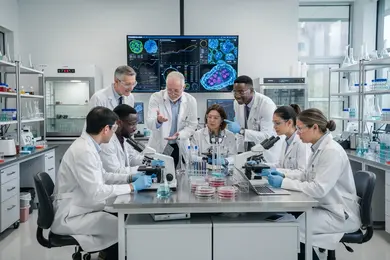
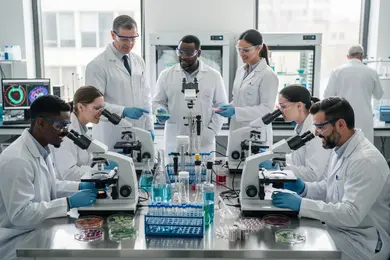
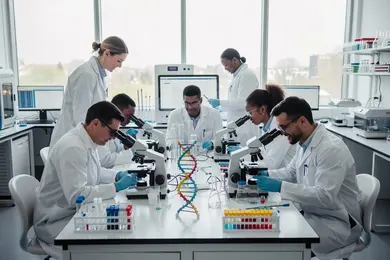
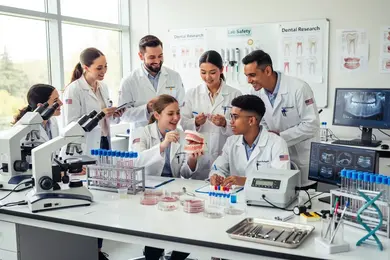
Online biology degree lab course options typically combine virtual simulations with mandatory hands-on components, reflecting workforce realities rather than theoretical ideals. Virtual biology lab experience and techniques provide foundational practice but cannot fully replace tactile proficiency critical in fields such as research, healthcare, and environmental science. This creates a hybrid learning requirement where students must attend brief, intensive in-person lab sessions-often one to two weeks long-at regional sites or approved external facilities to gain practical skills in microscopy, dissections, and DNA analysis.
Working professionals pursuing these degrees must navigate scheduling complexities to complete these lab requirements, which are integral to timely graduation and employability. Many programs also partner with local colleges or research centers to facilitate supervised lab work near a student's location, though the quality and availability of such partnerships vary widely. Without verifying access to accredited lab partnerships and assessing how lab skills are evaluated-through portfolios, proctored exams, or timed virtual labs-students risk earning degrees with insufficient practical readiness, limiting career trajectory in lab-intensive roles.
The ability to demonstrate hands-on competence directly affects employment and salary outcomes, as median wages for biological scientists depend on proven technical capability. Prospective students should carefully weigh these factors alongside program flexibility to ensure their investment achieves desired career pivots. For a contrast in pathways and pacing, some might explore a fast track computer science degree if seeking faster entry into STEM fields with fewer physical lab constraints.
Is an online biology degree respected by employers?
The reputation of an online biology degree employer reputation hinges largely on how well the program replicates or supplements hands-on lab training. Employers in research-intensive or clinical settings consistently prioritize applicants with formal lab experience documented through coursework or internships. This practical focus limits the value of fully online degrees in certain technical roles unless they incorporate robust lab components such as hybrid formats or remote lab kits accredited by recognized bodies.
Conversely, sectors like environmental consulting, biotech sales, or regulatory compliance show greater acceptance of fully online biology degrees if candidates demonstrate relevant expertise and certifications. The values of biology degrees with hands-on labs extend beyond basic theory, offering measurable advantages during candidate screening by confirming competencies in molecular techniques, environmental sampling, or data analysis. For example, LSU Online's B.S. in Modern Biology, with tuition varying from $10,590 to $42,360 depending on transfer credits, illustrates the financial and practical tradeoffs tied to lab rigor comparable to on-campus programs.
Professionals pivoting into biology careers should carefully evaluate programs based on lab access and certification opportunities to avoid limited employability in technical roles. Those targeting non-lab areas should prioritize curricula emphasizing bioinformatics and applied biology tailored to industry needs. Prospective students interested in related health and fitness fields might also consider an online sports science degree as an alternative pathway aligned with their goals.
Which accreditation should an online biology program have?
Regionally accredited online biology programs form the essential foundation for credible credentials, ensuring transferability of credits and recognition by employers. Accreditation from agencies recognized by the U.S. Department of Education or the Council for Higher Education Accreditation (CHEA), such as the Middle States Commission on Higher Education (MSCHE) or the Southern Association of Colleges and Schools Commission on Colleges (SACSCOC), confirms that both theory and lab components meet stringent academic and industry standards.
Choosing the best accreditation for online biology degrees involves verifying science-specific endorsements, especially for lab-intensive curricula. Certifications linked to bodies like the American Society for Clinical Pathology (ASCP) or the American Society for Microbiology (ASM) are indicators that practical skills-often a challenge in remote formats-are rigorously vetted. Many programs address lab requirements through local partnerships or virtual simulations, but quality and relevance vary widely.
Affordability is a factor but should not overshadow accreditation status. Students must balance costs-online tuition can range from $275 to $150 per credit hour for high-GPA candidates-with the risk of inadequate lab training. Insufficient accreditation often leads to unrecognized qualifications, hindering licensure eligibility or job prospects in biotech, healthcare, and environmental science sectors.
Pragmatic evaluation involves understanding these trade-offs and prioritizing programs with transparent, dual-layer accreditation. For those comparing options or seeking cost-effective pathways, resources like the library science degree rankings can offer supplemental insight into affordability benchmarks across fields.
What biology courses are included in online bachelor's programs?
Online bachelor's degrees in biology present a practical option mainly for foundational knowledge and theory, but they invariably introduce gaps in essential hands-on laboratory experience. Given that laboratory proficiency remains a significant employer expectation in biotech and healthcare sectors, students must prepare for the tradeoff inherent in fully online pathways-a lack of direct lab access. For example, an aspiring pharmaceutical researcher needs documented competency in lab instrumentation and experimental protocols, skills often validated during internships or hybrid components rather than online coursework alone.
Core curricula typically cover cellular and molecular biology, genetics, microbiology, ecology, and physiology, with critical courses like biochemistry and anatomy integrated alongside virtual labs. Students targeting pre-med tracks must navigate prerequisites in organic chemistry and physics, acknowledging intense competition-44,133 MD program applicants for the 2025 cohort-necessitating careful preparation across all domains.
Programs may offer electives in bioinformatics or environmental biology to match shifting workforce demands, but the virtual format's limitation often requires planning for supplemental in-person labs or local internships. The responsibility largely falls on students to verify program partnerships for practical components critical to meeting market expectations.
- Graduates must demonstrate skills in experimental design, data analysis, and lab techniques beyond theoretical knowledge.
- Hybrid or local lab arrangements significantly boost employability in research and clinical fields.
- Strategic selection of programs with flexible lab options mitigates practical skill gaps.
What admissions requirements apply to online biology majors?
Entry into online biology programs demands more than academic credentials; it requires demonstrated mastery of foundational science and the capacity to adapt lab skills to hybrid or local settings. Most programs set a baseline high school diploma with specific science coursework, often biology, chemistry, and math, alongside GPA floors from 2.5 to 3.0. This threshold mirrors the rigor students must navigate in largely self-directed learning environments where in-person supervision is minimal.
Unlike traditional routes, growing test-optional policies prioritize prior coursework over standardized tests, but transfer applicants typically need credit in general biology or chemistry with lab components. This safeguards the development of practical competencies, which are difficult to replicate virtually and remain non-negotiable for research or applied roles.
Admissions frequently require evidence of local lab access through partnerships or detailed plans. This condition addresses employer expectations around genuine technical proficiency rather than theoretical understanding alone. For example, a student without this could face barriers transitioning into jobs needing hands-on molecular techniques.
Recommendations that emphasize self-motivation and independent lab work proficiency also weigh heavily in admissions decisions, guiding candidates toward programs that integrate hybrid labs over those limited to theoretical curricula. Recognizing this distinction helps align choices with career goals-whether research-intensive or primarily workforce entry.
How long does an online biology bachelor's degree take?
Completing an online bachelor's degree in biology within four years requires strategic alignment of course load, lab commitments, and transfer credits. While typical programs demand around 120 to 130 credits similar to on-campus equivalents, the lab component presents distinctive challenges for remote students. Unlike lectures, lab work often necessitates physical presence through short residencies or partnerships with local facilities, imposing scheduling complexities that can extend time to degree.
Consider a healthcare professional working full time who pursues this degree: balancing job demands with intermittent campus visits or arranging local lab access may extend completion beyond the standard timeline. Part-time enrollment is common among such students, often pushing graduation to five years or more.
Employers acknowledge accredited online biology degrees comparably to traditional ones but expect graduates to demonstrate tangible proficiency in lab skills. Rushing coursework risks insufficient hands-on experience, potentially limiting eligibility for lab-intensive roles. Prospective students must therefore prioritize programs with clear lab options and flexible scheduling to maintain practical competency without prolonging studies unnecessarily.
- Programs typically set credit requirements between 120 and 130 hours, combining core biology and general education courses.
- Lab requirements are often met through hybrid models including virtual simulations alongside on-site or local lab work.
- Transfer credit policies and course pacing influence completion speed and should be reviewed upfront.
Planning early to integrate lab opportunities efficiently within the online framework is essential for candidates aiming to meet market expectations and achieve timely graduation.
What can you do with an online biology degree?
An online biology degree offers foundational knowledge and technical skills necessary for laboratory and fieldwork roles, but graduates face clear limitations when practical experience is insufficient. Typical programs requiring 120-126 credit hours deliver core competencies in molecular biology, genetics, and cell biology, yet employers prioritize demonstrated proficiency with lab equipment and data analysis-often a challenge without concrete hands-on training.
Graduates frequently find employment as laboratory technicians or research assistants. In pharmaceutical settings, strict adherence to protocols supports drug development pipelines, while environmental consulting roles emphasize specimen collection and ecosystem monitoring, sometimes necessitating internships to supplement limited campus lab time.
For career pivots into healthcare specialties such as genetic counseling or clinical research coordination, an online biology degree is often only a baseline prerequisite; additional certification or graduate education is typically required. Public health and education sectors value applied biological knowledge but expect candidates to adapt theory to community or epidemiological interventions.
Some online programs address employer concerns by integrating virtual simulations, at-home lab kits, or local partnerships to provide experiential components. Prospective students should verify these arrangements in advance, as inadequate lab exposure restricts eligibility for many technical roles in research and healthcare settings.
What are the salary and job outlook for biology graduates?
Biology graduates face a wide salary range reflecting the diversity of roles and industries within the field. Entry-level positions like research assistants or laboratory technicians typically start near $45,000, while experienced professionals in biotechnology, pharmaceuticals, or environmental science can exceed $90,000 annually. These figures align with projected job growth of 8% over the coming decade, driven by expanding sectors such as genomics and environmental conservation.
Employers in regulated industries place greater value on practical lab skills than on theoretical knowledge alone. Graduates without solid hands-on experience or certification may struggle to qualify for clinical labs or FDA-compliant manufacturing roles, where familiarity with laboratory data management and compliance protocols is essential. For example, a candidate lacking training in data systems may need extra certifications to enter clinical research settings.
Competition intensifies for government and university research roles, as bachelor's degrees typically qualify for technician-level jobs but advanced credentials provide clear salary and advancement advantages. Flexibility in credit transfer, as offered by programs allowing up to 75% credit recognition toward online biology degrees, can help working professionals accelerate completion without sacrificing key lab skills. This pathway supports timely workforce entry or re-entry with credentials that meet employer standards for practical readiness.
How do you compare online biology programs before enrolling?
Online biology programs that underdeliver on lab preparation significantly limit graduates' job readiness in research or clinical environments. Hands-on and virtual lab experiences remain indispensable-employers consistently prefer candidates with demonstrated proficiency in industry-standard laboratory techniques. According to a 2024 National Science Foundation workforce analysis, familiarity with current lab protocols boosts employability by roughly 40%. This disparity heavily impacts those targeting lab technician or field research roles, where practical competence outweighs theoretical knowledge.
Accreditation status notably affects both academic rigor and post-graduation opportunities. Regional accreditation coupled with specialized STEM recognition ensures credit transferability and eases entry into advanced programs or certifications. Data from the Department of Education confirms online biology graduates from accredited institutions achieve STEM employment at 15% higher rates than peers from non-accredited programs.
Pragmatic selection also means vetting programs for clear outcome transparency. Graduates aiming for environmental science or biotechnology roles should prefer curricula integrating authentic research projects rather than predominantly lecture-driven formats. For lab-intensive careers, access to local lab partnerships or residency requirements enhances practical skill acquisition.
- Lab readiness drives employability by 40%
- Accreditation correlates with 15% higher STEM employment outcomes
- Program format affects suitability for specialized career paths
- Cost evaluation must consider tangible results like job placement and salary
Flexibility and technology platforms directly influence time to graduation and competence development, so alignment with personal work and learning constraints is essential. The University of Arizona's recognition as a leading online biology provider highlights employer regard, which can facilitate networking and hiring leverage.
Other Things You Should Know About Biology
When evaluating online bachelor's programs in biology for strong lab preparation in 2027, prioritize those offering virtual simulation labs, on-site lab partnerships for hands-on experience, comprehensive lab kits, and opportunities for field research. These elements enhance practical skills crucial for biological sciences.
Online lab components often rely on virtual simulations or at-home kits, which cannot fully replicate in-person lab complexity or equipment access. Employers in fields demanding advanced technical skills may view this as a skill gap, potentially requiring additional in-person training or certifications post-graduation. Prioritize programs that partner with local labs or offer hybrid options to supplement virtual labs with supervised, real-world experience if you need competitive lab proficiency for your targeted job.
Graduate admissions committees typically assess research experience and lab skills alongside academic records. Graduates from online programs may face skepticism if their portfolio lacks documented hands-on research or mentor-led lab work. To maintain competitiveness, seek programs that incorporate structured research internships or capstone projects with faculty oversight, and communicate these experiences clearly in your graduate applications.
Online biology degrees often demand equivalent or greater independent study and time management than on-campus programs due to less direct in-person instruction and group collaboration. Students must be proactive in mastering complex subjects without immediate access to in-person support, which can extend study time. Choose programs with robust online tutoring, active faculty interaction, and clear lab requirements to balance workload with effective learning outcomes.
References
- Online Bachelor's Degrees in Biology: Top Schools & Programs https://www.edumed.org/online-schools/biology-degrees/
- Can Online Biology Courses Replace In-Person Labs? https://www.straighterline.com/blog/can-online-biology-courses-replace-in-person-labs
- Top 15 Highest‑Paying Pharmacy Jobs in the UK 2025 (Including Salaries) https://apexlearning.org.uk/highest-paying-biology-degree-jobs-2025-2026/
- Online Science Courses with Lab that Transfer: A Helpful Guide - Prereqcourses https://www.prereqcourses.com/online-science-courses/
- Online Biology Degrees https://mycollegeguide.org/online-biology-degrees/
- Best Online Biology Degrees https://www.affordablecollegesonline.org/biology-programs/