PharmD cost of attendance versus billed tuition

Co-Founder and Chief Data Scientist
A pharmacy school's tuition figure is not the amount you will necessarily spend—or borrow—to become a pharmacist. The school's cost of attendance adds estimated expenses such as housing and transportation, but it may still miss costs specific to your circumstances. For prospective Doctor of Pharmacy (Pharm.D.) students comparing offers, those differences can change which program is financially workable.
This guide shows what each figure means, how to compare costs across schools and program lengths, and which expenses to confirm before accepting an offer.
Key Things You Should Know
- Billed tuition is a charge from the school; cost of attendance is its annual educational budget, which also includes estimated living and other allowed expenses. Neither is automatically your final out-of-pocket cost.
- Compare the full time to graduation, not just one year's tuition: prerequisite coursework, required fees, rotation travel, and differences between aid years can change the result.
- Use each school's current, student-specific aid offer and confirm federal loan eligibility under rules effective from July 1, 2026; an amount included in cost of attendance is not necessarily covered by grants or available loans.
What Is the Difference Between Pharmd Cost of Attendance and Billed Tuition?
Billed tuition is the instructional charge on your student account. The bill may also include mandatory fees and school-provided insurance or other charges. Cost of attendance (COA) is the school's estimate of allowable educational expenses for a defined enrollment period and student category. It combines direct school charges with estimates for expenses you generally pay elsewhere, such as rent and food.
The distinction matters because financial aid is packaged against COA, while your payment due to the school is based on your actual account charges. This table separates the figures you may see in an offer:
| Figure | What it represents | What it does not tell you |
| Advertised tuition | The published instructional price for a stated term, year, or credit load | Required fees or your living costs |
| Student-account bill | Charges the school assesses for your enrollment | Rent, groceries, or most off-campus spending |
| Cost of attendance | The school's aid-year budget for direct charges and estimated allowable expenses | Your exact spending or a guarantee of funding |
| Net cost after grants and scholarships | Estimated educational cost after aid that does not normally require repayment | How much you may ultimately repay on borrowed funds |
A program can have lower billed tuition but a higher practical cost if attending requires a move or repeated travel. If you are entering after undergraduate study, Pharm.D. admission after pre-pharmacy coursework is a separate cost question: prerequisite classes taken before professional enrollment may not appear in the Pharm.D. budget.
What Expenses Are Included in a Pharmd Cost of Attendance Estimate?
A school's published COA typically accounts for tuition and required fees, books and supplies, housing and food, transportation, and personal expenses. It may also include permitted allowances such as required equipment or loan fees. The categories and estimates depend on the school's aid policy, enrollment period, housing assumption, and student circumstances; the published figure is not an itemized promise to pay those expenses.
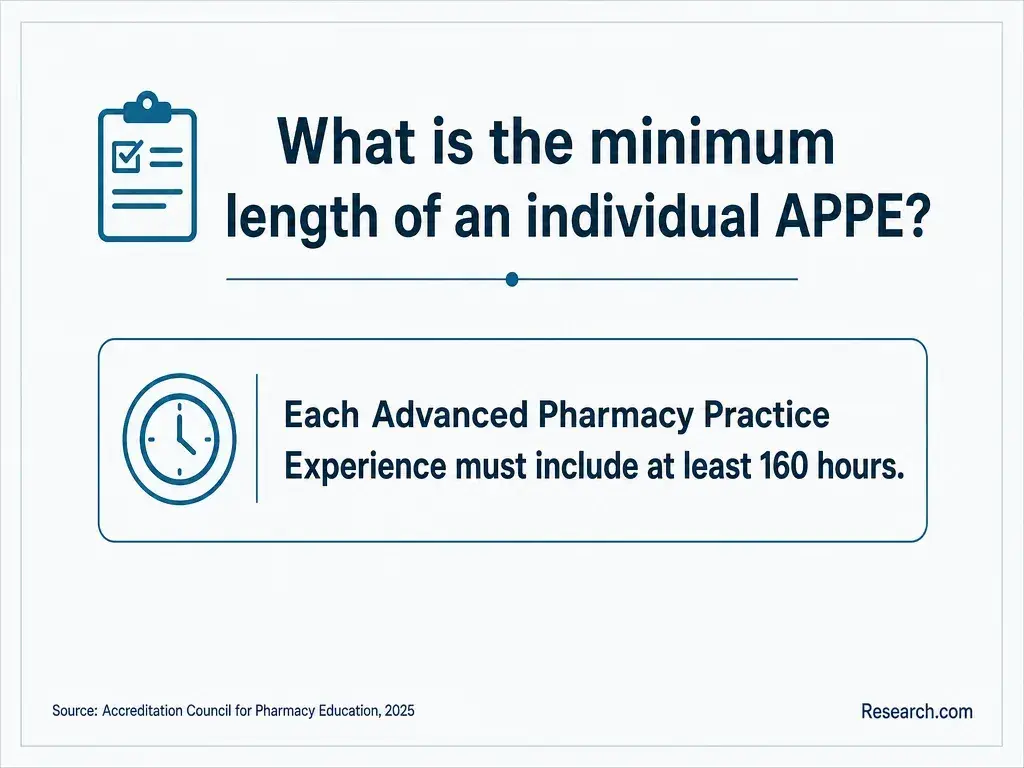
Ask which category covers pharmacy-specific requirements: drug-information resources, a computer or required software, lab supplies, background checks, immunizations, and travel to introductory or advanced pharmacy practice experiences (IPPEs and APPEs). If placements can occur away from campus, ask whether the budget assumes local commuting even when temporary housing may be necessary. Students entering pharmacy programs for students with varied academic backgrounds should also separate remaining prerequisite costs from professional program costs.
A higher COA is not automatically a more expensive school. It may reflect a more realistic living allowance, a longer budget period, or a different housing assumption. Compare the underlying categories before treating COA figures as equivalent prices.
How Much Does a PharmD Program Cost Beyond Tuition and Fees?
There is no reliable nationwide add-on amount for every Pharm.D. student. Your spending beyond tuition and fees depends heavily on where you live, whether you can work during the program, and where clinical rotations occur. A COA housing allowance may be less than your actual rent; conversely, living with family may reduce your spending below the published estimate.
For a decision-ready estimate, separate recurring costs—housing, food, transportation, and supplies—from event-driven costs, such as a required campus visit, a distant rotation, immunizations, graduation requirements, and postgraduation licensing applications and exams. Confirm which expenses the school includes in COA and which arise after its enrollment period ends. An accelerated schedule may reduce time paying living expenses but concentrate coursework and rotations, limiting paid work; pharmacy education with shorter completion time is not necessarily cheaper overall.
Do not count a COA allowance as a charge you must pay the school, or assume it is enough to cover a distant APPE. Ask the experiential education office about placement geography and travel before comparing offers.
Public pharmacy schools may publish different rates for in-state and out-of-state students; private schools may publish one base tuition rate, though their fees and aid can still vary. A public-school discount depends on that school's residency rules. Living in the state while enrolled—or taking courses online—does not automatically establish tuition residency.
Compare rates using the same unit: professional-program tuition for the same academic period and expected credit load. Then add required fees and ask whether the rate can change in later years. An online format can alter travel and housing costs without changing the tuition category; use an online pharmacy program comparison to identify formats worth investigating, then verify each school's current rate, campus requirements, and rotation arrangements directly.
The better financial choice is the program with the more manageable total expected cost after grants and scholarships, not necessarily the lowest advertised tuition. That conclusion can change if you qualify for resident tuition later, lose a conditional scholarship, or need to relocate for rotations.
Compare offers for the same enrollment period and attendance assumptions, then project the remaining periods to graduation. Separate grants and scholarships from loans: borrowed money can make a bill payable without reducing the program's price. Scholarship renewal conditions, required course loads, and summer enrollment can materially change later-year costs.
Use the following sequence for each school so that a lower first-year bill does not hide a higher full-program commitment:
- Record the aid year, student category, tuition residency status, enrollment period, and whether summer terms are included.
- List tuition and mandatory fees separately from the school's estimated housing, food, transportation, books, and personal expenses.
- Subtract grants and scholarships from estimated educational costs; note renewal rules and any unmet need.
- Identify proposed loans separately, including their eligibility conditions and interest and fees, rather than treating them as discounts.
- Ask the aid office to explain how prerequisite study, transferred coursework, rotation travel, or a change in enrollment could alter your budget and aid.
Federal borrowing rules changed for many new graduate and professional students beginning July 1, 2026. Do not rely on older claims that Grad PLUS or a particular borrowing limit will cover any COA gap. Ask each aid office how the current rules, your program classification, and any applicable transition provision affect your offer. Likewise, pharmacy school prior learning credits may shorten or change what you must take only if the receiving school accepts them toward its specific requirements.
For a U.S.-educated pharmacist pathway, verify the professional Pharm.D. program's current status with the Accreditation Council for Pharmacy Education (ACPE). ACPE accreditation concerns the pharmacy education program; institutional accreditation concerns the college or university. Neither is the same as a state's authorization for a school to offer distance education or arrange clinical placements there.
Check the specific program and campus or pathway in ACPE's official records, especially if a school advertises an online or hybrid option or is still seeking accreditation. The applicable state board of pharmacy can explain how the program's status relates to that state's licensure eligibility. Published Pharm.D. completion pathways are starting points for comparing schedules, not substitutes for checking the exact program's accreditation and clinical requirements.
Accreditation alone does not issue a pharmacist license. A lower-cost program is a poor bargain if its status or your intended practice state's requirements do not support your licensing plan.
Pharm.D. applicants generally complete specified undergraduate prerequisite courses before starting the professional curriculum. A bachelor's degree is not universally required. Schools set their own course, laboratory, grade, GPA, credit-age, interview, and application rules; some use PharmCAS and may also require school-specific materials. The Pharmacy College Admission Test (PCAT) was retired in 2024, so it is not a current exam to schedule.
For cost planning, request a prerequisite evaluation before assuming earlier coursework satisfies a requirement. Missing a lab or needing to repeat an older course adds time and expense that a Pharm.D. tuition quote will not show. Lists of pharmacy schools that may be easier to enter can help identify programs to investigate, but published minimums do not predict an individual admission decision or establish the lowest-cost route.
Many professional Pharm.D. curricula take four academic years after prerequisites; some offer accelerated calendars. The complete path also depends on how much prerequisite work you have finished, the school's sequencing, and whether courses or rotations run through summers. That is why a lower annual COA—or fewer calendar years—does not by itself establish the lower total cost.
Request a term-by-term schedule that identifies tuition periods, required in-person labs, IPPEs, APPEs, and any periods when employment may be difficult. Discussions of online doctorate time to completion should not be treated as Pharm.D. timelines: online instruction does not remove hands-on or supervised clinical requirements. Compare the full schedule, including foregone earnings if either option would require you to reduce work.
Graduation does not itself authorize pharmacy practice. U.S.-educated graduates generally must meet the intended state board's eligibility and application requirements and pass the North American Pharmacist Licensure Examination (NAPLEX). Jurisprudence testing varies: a board may require the Multistate Pharmacy Jurisprudence Examination (MPJE), use the Uniform MPJE (UMPJE), or have another approach. Boards may also impose intern-hour, background-check, or other requirements.
Budget for licensing separately if your school's COA ends at graduation. Check the relevant state board and the National Association of Boards of Pharmacy for current exams, fees, application steps, and timing; passing an exam alone does not issue a license. Be cautious with accelerated online pharmacy degree pathways: a shorter pharmacy-related credential should not be assumed to satisfy the education required for pharmacist licensure.
What Pharmacist Careers, Salaries, and Job Outlook Follow a PharmD?
Licensed pharmacists work in settings including community pharmacies, hospitals, ambulatory care, and specialty pharmacy; duties and hiring expectations differ. The Bureau of Labor Statistics reports median annual pay for pharmacists of $140,910 in May 2025 and projects 5% growth, 2025-2035, with about 12,500 openings per year. Those occupation-wide figures are context for evaluating potential earnings, not a starting-salary estimate or a promised return on a particular school's tuition.
Residencies, fellowships, and specialty board certification are distinct from state licensure and are not universal requirements for pharmacist jobs. If your goal is a different pharmacy role, compare its actual credential requirements before financing a Pharm.D.; pharmacy education with a shorter completion time may lead to other work, but it does not replace a licensure-qualifying Pharm.D. for someone intending to practice as a US-educated pharmacist. Weigh likely career fit against the full educational cost and the time before you can earn a pharmacist's income.
Professionals considering short online doctorate programs may find that a compressed doctoral pathway suits their goals when the program’s structure, accreditation, and final project align with the leadership or research role they want. Comparing completion timelines against career requirements helps clarify whether a faster credential justifies its trade-offs.
Other Things You Should Know About PharmD
Possibly. Ask its financial aid office whether your documented expense qualifies for an individual budget adjustment and what evidence it requires. An approved increase raises the aid budget; it does not guarantee additional aid.
Typically, aid first pays eligible charges on your student account. If funds remain, the school issues a refund under its disbursement procedures. Ask when that refund is expected so you can plan for rent or deposits due earlier.
It may, if the school permits a waiver and you meet its coverage and deadline rules. A waiver changes the school charge, but you still need to account for the cost of maintaining qualifying coverage.
Yes. Similar billed costs can lead to different repayment amounts if you borrow at different times or in different amounts. Compare expected borrowing and applicable loan terms, not just the amount due each semester.
- Cost of Attendance (Budget) | 2025-2026 Federal Student Aid Handbook https://fsapartners.ed.gov/knowledge-center/fsa-handbook/2025-2026/vol3/ch2-cost-attendance-budget
- What Financial Aid Offers Don't Tell You About the Cost of College | U.S. GAO https://www.gao.gov/blog/what-financial-aid-offers-dont-tell-you-about-cost-college
- Professional Schools: College of Pharmacy | The University of Utah https://financialaid.utah.edu/tuition-and-fees/cost-of-attendance-professional-schools-college-of-pharmacy.php
- Costs & Aid - College of Pharmacy - University of Minnesota https://www.pharmacy.umn.edu/doctor-pharmacy/admissions/costs-aid
- Costs for Doctor of Pharmacy - Glendale | Midwestern University https://www.midwestern.edu/admissions/paying-college/cost-attendance/glendale-campus-budgets/costs-doctor-pharmacy-glendale
- Program: Pharmacy, PharmD | south.edu https://catalog.south.edu/preview_program.php
- Tuition & Fees | osu.edu https://pharmacy.osu.edu/education/doctor-pharmacy/tuition-fees
- Key Financial Aid Terms | passhe.edu https://www.passhe.edu/students/financial-aid-terms.html
- Tuition & Expenses | Student Financial Services https://financialaid.wsu.edu/tuition-and-expenses/
- Cost of Attendance - Shreiber School of Veterinary Medicine https://svm.rowan.edu/admissions-menu/financial-aid/cost-of-attendance.html