
Compounding Pharmacist Career Path and Training

Co-Founder and Chief Data Scientist
Compounding appeals to people who want to prepare medications for patients whose needs cannot be met by an available product. But learning to compound is not the same as qualifying to practice as a pharmacist. If you are considering pharmacy school - or deciding how to specialize after licensure - this guide separates required education from optional training.
You will learn how to evaluate hands-on programs, plan for time and cost, and decide whether sterile, nonsterile, or another pharmacy career path fits your goals.
Key Things You Should Know
- To practice as a compounding pharmacist, you generally need a qualifying Pharm.D. degree, a state pharmacist license, and training appropriate to the preparations you make; a compounding certificate alone is not a license.
- Nonsterile and sterile compounding require different facilities and competency assessments. Sterile work demands supervised practice in aseptic technique, not online coursework alone.
- The Bureau of Labor Statistics reports median pay of $140,910 in May 2025 for pharmacists overall and projects 5% growth from 2025-2035; neither figure isolates compounding jobs.
What does a compounding pharmacist do?
A compounding pharmacist oversees the preparation of a medication for a clinical need that an available product does not meet, when permitted by applicable law. Work may involve checking a prescription or order, evaluating ingredients and formulation, supervising preparation, assigning a beyond-use date, documenting quality controls, and counseling patients or communicating with prescribers. Examples include a customized oral liquid or a sterile preparation for administration by injection.
Compounding is regulated practice, not simply mixing ingredients. The pharmacist must consider applicable state rules, U.S. Pharmacopeia (USP) standards, and federal requirements. A pharmacy technician may prepare a compound under appropriate supervision, but technician training does not qualify someone to make the pharmacist's clinical and legal decisions.
If your goal is technician work rather than pharmacist responsibility, investigate that route before committing to a Pharm.D. Be cautious when browsing pharmacy programs with a fast timeline: a short course or pharmacy-related degree is not a shortcut to pharmacist licensure.
What education is required to become a compounding pharmacist?
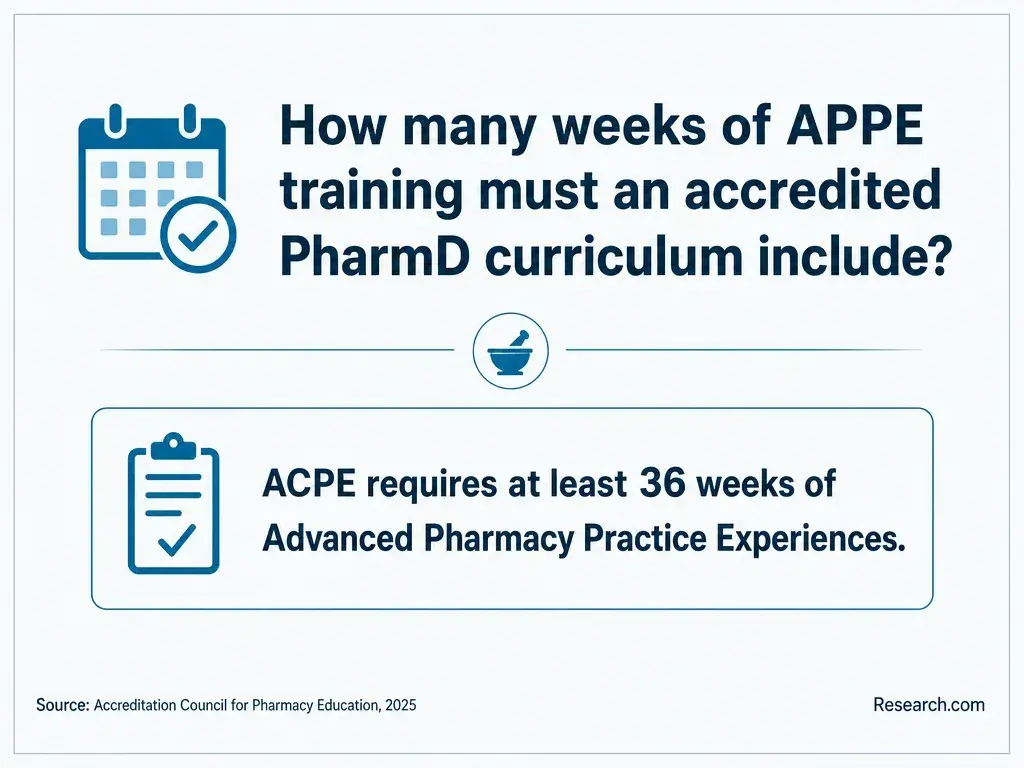
For the usual U.S.-educated route, complete a Doctor of Pharmacy (Pharm.D.) program that meets your licensing jurisdiction's educational requirements. Check its current status with the Accreditation Council for Pharmacy Education (ACPE), which accredits professional pharmacy programs - not individual pharmacists. Institutional accreditation and permission to enroll online students in a state are separate matters.
Before the professional program, applicants complete each school's undergraduate prerequisite coursework. A bachelor's degree is not universally required. The Pharm.D. then develops pharmacology, therapeutics, patient-care, and practice skills through classroom work and supervised experiences. A chemistry, pharmaceutical sciences, or technician degree does not replace it for U.S. pharmacist licensure, although prior coursework may help satisfy admission prerequisites. If chemistry is your starting point, compare pharmacy doctorate options after chemistry against each school's actual prerequisite rules.
Seek programs with meaningful compounding instruction, but do not choose a school solely because it advertises a compounding lab. Its accreditation status, experiential placements, overall cost, and eligibility for licensure where you intend to work matter more.
How do you become a licensed compounding pharmacist?
There is generally no separate state license titled "compounding pharmacist." You first qualify for a pharmacist license in the jurisdiction where you will practice, then meet the training and competency requirements for the compounding work you perform. Degree completion or an exam pass alone does not issue a license.
The sequence below identifies the decisions that can affect your route; your state board of pharmacy sets the controlling requirements.
- Confirm that your Pharm.D. program and any required intern registration or supervised hours satisfy the board where you plan to seek licensure.
- Apply through the board's required process and complete the NAPLEX, plus the jurisdiction's applicable law examination or other law requirement. Do not assume every jurisdiction uses the MPJE; some began transitioning to the UMPJE in 2026.
- Complete any remaining board requirements and confirm that your pharmacist license has been issued before practicing independently.
- For a compounding position, document the preparation-specific training and ongoing competencies your employer and applicable rules require.
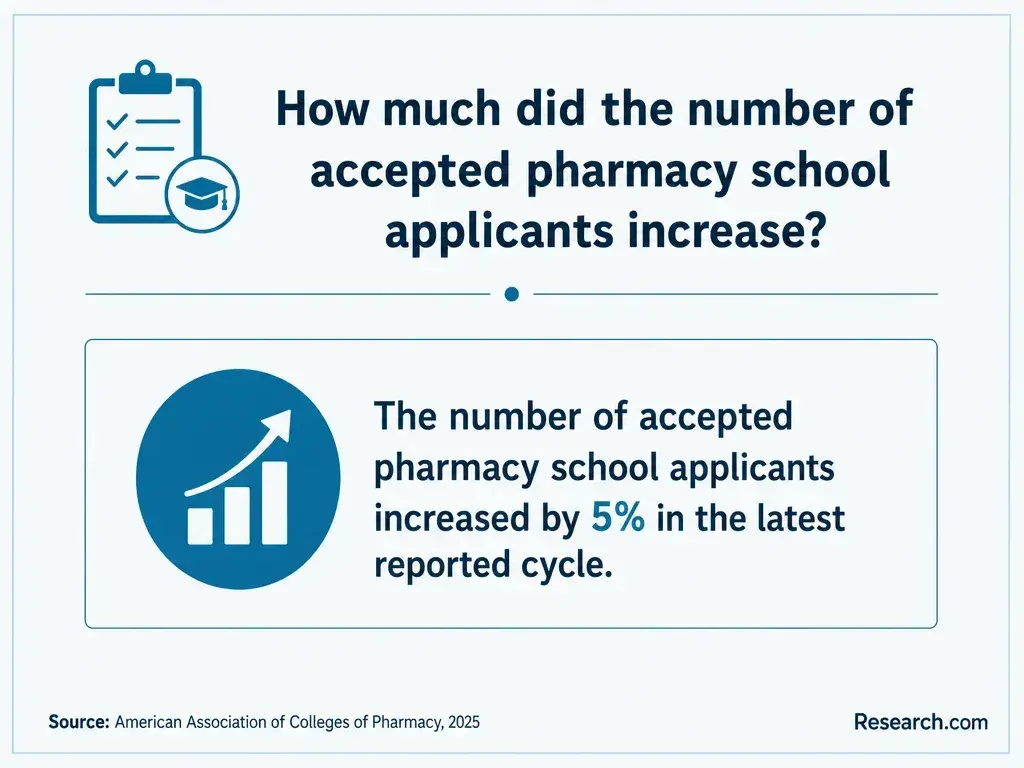
Admissions is an earlier, separate hurdle: check each school's current prerequisites, application process, and deadlines. For context on how competitive is pharmacy school admission, remember that meeting a published minimum does not guarantee a place. The PCAT is retired and is not a current exam to plan for.
Training must match what you will prepare and the risks involved. USP General Chapter <795> addresses nonsterile compounding, <797> addresses sterile compounding, and <800> addresses handling hazardous drugs. Applicable rules, facility policies, and competency requirements depend on the setting and jurisdiction.
The comparison highlights why experience with one type of preparation does not automatically qualify you for another.
| Training area | Nonsterile preparations | Sterile preparations |
| Typical practice | Preparing forms such as customized capsules, creams, or oral liquids | Preparing products that must remain sterile, such as certain injectable medications |
| Core skills | Formulation, calculations, ingredient handling, documentation, and quality checks | Aseptic technique, environmental controls, contamination prevention, documentation, and quality checks |
| Competency evidence | Observed preparation and assessments appropriate to the tasks performed | Hands-on observation and applicable personnel qualification and ongoing assessments |
A course certificate is useful evidence of instruction, but an employer still needs to assess whether you can perform its procedures in its facility. If you have previous pharmacy coursework, ask the receiving school whether any of it counts toward admission or professional study; pharmacy school transfer admission policies do not substitute for workplace compounding competency.
Pharm.D. programs commonly introduce dosage forms, pharmaceutical calculations, medication safety, and the clinical reasoning needed to evaluate a patient's therapy. A dedicated compounding course or lab may add formulation, equipment use, preparation records, quality assurance, and discussion of USP standards. Advanced employer or continuing-education training can focus on a particular setting, such as sterile hospital preparations or nonsterile community pharmacy work.
Compare the practice students actually perform, not just course titles. Ask whether the curriculum includes observed preparation, feedback on technique, and access to relevant experiential sites. Also distinguish exposure in a school lab from qualification to work independently in a regulated facility.
Some students consider accelerated Pharm.D. degree options to enter the workforce sooner. Compare their course sequencing and time for labs and experiential education - not just their advertised completion time - before deciding that a faster schedule supports your compounding goals.
Yes, some compounding courses deliver lectures, calculations, or regulatory instruction online. That format can help a licensed pharmacist study while working. It cannot, by itself, establish competence in tasks that require observed preparation, particularly sterile aseptic technique.
A hybrid Pharm.D. is a larger commitment than an online compounding course. Verify live-class schedules, in-person labs or campus visits, and supervised introductory and advanced pharmacy practice experiences. Ask who arranges placements, whether travel may be required, and whether the program can enroll you and support placements in your state. State authorization for online education is not the same as pharmacist licensure eligibility.
Use an online pharmacy program comparison to identify candidates, then confirm those requirements directly with each school. "Online" does not necessarily mean fully remote, self-paced, or compatible with unrestricted full-time work.
If you are not yet a pharmacist, the major time commitment is prerequisite study followed by the professional Pharm.D. curriculum; exact timelines depend on your existing credits and the school's structure. State licensing follows graduation. Focused compounding instruction may occur during school or after licensure, while an optional residency adds postgraduate supervised training. A licensed pharmacist taking a focused course has a different timeline from someone starting prerequisites.
There is no reliable single price for this career path. Compare the full expense of the route you actually need: prerequisite courses, Pharm.D. tuition and fees, supplies, travel for labs or rotations, licensing expenses, and any later course or residency-related costs. A course fee alone cannot represent the cost of becoming a pharmacist.
For Pharm.D. tuition planning, request each school's current total cost of attendance and ask financial aid staff which federal borrowing rules apply to your entry date. Federal rules changed for many new graduate and professional borrowers beginning July 1, 2026; do not build a plan around older assumptions about Grad PLUS access or loan limits.
Board of Pharmacy Specialties (BPS) offers the Board Certified Sterile Compounding Pharmacist (BCSCP) credential. It is an optional professional credential, not a pharmacist license or a universal hiring requirement. Check BPS's current eligibility, practice-experience, examination, and maintenance rules before budgeting for it.
Continuing-education providers and employers may also offer certificates documenting instruction in particular compounding tasks. Evaluate the instructor, hands-on assessment, and whether the training addresses your intended workplace. A completion certificate, residency, fellowship, and BPS board certification serve different purposes; none automatically grants state practice authority.
If you do not yet hold a Pharm.D., comparing online doctoral degree options should not distract from the essential question: whether a specific professional pharmacy program meets the educational requirements for the pharmacist license you seek.
Potential settings include community compounding pharmacies, hospital pharmacies, health-system sterile preparation areas, and other operations that prepare medications under applicable law. Duties differ: a community role may combine patient counseling and nonsterile preparation, while a hospital role may emphasize sterile products, teamwork, and established quality procedures. Registered outsourcing facilities operate under a different federal framework from traditional patient-specific pharmacy compounding.
Choose a target setting before paying for specialized training. Review job postings for required licensure, sterile or nonsterile experience, scheduling, and supervisory duties; then ask prospective employers how they assess and maintain competency. Some positions favor relevant residency or prior practice experience, but neither is universally required for compounding work.
For people entering from another field, pharmacy programs for career changers may clarify how to begin prerequisite study. Prior laboratory or healthcare experience can be useful, but it does not replace pharmacy-specific education or licensure.
How much do compounding pharmacists earn and what is the job outlook?
The Bureau of Labor Statistics reports median annual pay of $140,910 in May 2025 for pharmacists overall. It projects 5% job growth from 2025-2035, with about 12,500 pharmacist openings per year. These figures include many practice settings: they are not a compounding-specific salary or a forecast of openings in compounding pharmacies.
Your likely opportunities depend on location, setting, schedule, and demonstrated skills. A specialized course may strengthen an application, but it does not establish a pay premium. Before taking on educational debt, compare pharmacy degree costs and duration against your intended role - and consider whether technician training would meet your goal at a lower commitment if pharmacist responsibilities are not what you want.
Other Things You Should Know About PharmD
Compounded medications are not FDA-approved in the way an approved manufactured drug is. Pharmacists must still follow applicable compounding requirements; patients should discuss a preparation's specific risks and intended use with their pharmacist and prescriber.
Coverage varies by plan, ingredients, and claim rules. Ask the pharmacy for an estimate and your insurer what documentation it requires before the medication is prepared.
It is the date or time after which a compounded preparation should not be used, assigned under applicable standards and information about the preparation. It is not automatically the expiration date printed on an ingredient's original container.
Not necessarily. Internationally educated applicants should check the relevant state board and National Association of Boards of Pharmacy requirements, including whether Foreign Pharmacy Graduate Examination Committee certification applies, before planning exams or employment.
- Development and Implementation of a Standardized Sterile Compounding Training Program - PMC https://pmc.ncbi.nlm.nih.gov/articles/PMC6628547/
- NYS Pharmacy: License Requirements - Office of the Professions https://www.op.nysed.gov/professions/pharmacist/license-requirements
- Compounding and the FDA: Questions and Answers https://www.fda.gov/drugs/human-drug-compounding/compounding-and-fda-questions-and-answers
- Regulatory Framework for Compounded Preparations - NCBI - NIH https://www.ncbi.nlm.nih.gov/books/NBK562888/
- How to Become a Pharmacist | School of Pharmacy https://pharmacy.llu.edu/about-us/school-news/how-become-pharmacist
- BCSCP - Board Certified Sterile Compounding Pharmacist https://careers.ashp.org/career-resources/on-the-job-3/bcscp-board-certified-sterile-compounding-pharmacist-a-practical-guide-for-health-system-pharmacy-professionals-120
- USP Compounding Standards Education https://www.usp.org/compounding/education-courses
- PTCB Certified Compounded Sterile Preparation Technician (CSPT) https://ptcb.org/credentials/certification/certified-compounded-sterile-preparation-technician-cspt/
- What is USP 797 and How to Stay Compliant | wolterskluwer.com https://www.wolterskluwer.com/en/expert-insights/what-is-usp-797-and-how-to-stay-compliant
- Sterile Compounding | pharmacist.com https://www.pharmacist.com/Education/Board-Prep-Recertification/Sterile-Compounding


