PharmD Pharmacy Calculations Coursework

Co-Founder and Chief Data Scientist
Pharmacy calculations can look like a small part of a Doctor of Pharmacy (Pharm.D.) degree, but errors in dose, concentration, or infusion calculations can affect patient safety. If you are considering pharmacy school, the useful question is not whether you are naturally "good at math." It is whether you can build accuracy, check your work, and apply calculations under clinical conditions. This guide explains what the coursework involves, how programs assess it, and what to verify before choosing a Pharm.D. pathway.
Key Things You Should Know
- Pharm.D. calculations coursework applies arithmetic, algebra, units, and clinical judgment to doses, concentrations, compounding, and medication administration; programs may assess accuracy before allowing progression.
- Prerequisite math rules and professional-course assessments vary by school. Ask about required courses, remediation, calculator policies, and calculation competency standards before enrolling.
- An accredited Pharm.D. is an educational step, not a pharmacist license. The Bureau of Labor Statistics projects 5% pharmacist employment growth from 2025-2035; weigh that opportunity against the full cost and time of training.
What Is PharmD Pharmacy Calculations Coursework?
Pharm.D. pharmacy calculations coursework teaches students to determine and verify medication quantities for a prescribed patient and product. It may appear as a dedicated course, a lab, or calculation work embedded throughout dispensing, compounding, pharmacotherapy, and experiential education. A correct numerical answer is only part of the task: students must identify appropriate units, interpret the order, and recognize when a result is implausible.
This professional coursework is distinct from undergraduate pre-pharmacy prerequisites such as algebra, statistics, or calculus. Prior chemistry or biology study can help with units and concentrations, but it does not automatically replace professional calculations training. Students making that transition can explore an online Pharm.D. for students with prior science study while checking each school's actual prerequisite and professional-course policies.
What Does a PharmD Pharmacy Calculations Course Cover?
Content and sequencing differ by school, but the following topics show how calculations move from mathematical setup to medication-use decisions. A course description should specify which skills receive supervised practice and formal assessment.
| Common topic | What students work out | Why the result needs checking |
| Unit conversions and dimensional analysis | Equivalent amounts across measurement units | A misplaced unit or decimal can change a dose substantially. |
| Patient-specific doses | A dose based on factors such as body weight and an ordered regimen | The calculated amount must be checked against the order and relevant clinical information. |
| Concentrations and dilutions | The quantity or final concentration of a preparation | Product strength and final volume affect what the patient receives. |
| Infusions and administration | A rate or amount to administer over time | Units of time and the available formulation must align. |
| Compounding quantities | Ingredient amounts for a specified preparation | Formula interpretation, measurement, and documentation all matter. |
More compact shortened Doctor of Pharmacy pathways may teach these topics on a tighter schedule, not omit the need to demonstrate competence. Compare course sequencing and opportunities to repeat practice, rather than judging preparation by program length alone.
How Do Pharmacy Calculations Support Safe Medication Use?
Calculations help pharmacists evaluate whether the ordered dose, available product, prepared concentration, and administration instructions are consistent. For example, a student may calculate a volume correctly but still need to notice that the selected product has a different strength from the one assumed. This is why programs pair calculation practice with order interpretation, verification, and communication.
Software and dispensing systems can perform arithmetic, but they cannot make an incorrect patient weight or product selection safe. Students need to understand the inputs and independently assess results within their training and supervision. Shorter short-duration pharmacy programs may teach calculations for other pharmacy roles, including technician work; they do not substitute for the professional Pharm.D. education and licensure required to practice as a pharmacist.
The most useful starting skills are arithmetic with fractions and decimals, ratios and proportions, algebraic rearrangement, unit conversions, and careful estimation. Statistics may also matter elsewhere in the Pharm.D. curriculum when students evaluate research. The challenge in calculations coursework is usually applying these skills consistently to unfamiliar clinical wording - not advanced mathematics for its own sake.
Schools set their own admission prerequisites, so do not assume a particular calculus or statistics course is universally required. If a prerequisite is missing, check whether the school accepts a planned course before matriculation, a community-college course, or another approved equivalent. Guidance on pharmacy degree entry requirements can help frame those questions, but the receiving school decides what satisfies its rules.
Pharm.D. admission generally involves school-specific pre-professional coursework and an application review. Requirements may include science courses with labs, mathematics or statistics, minimum grades, transcripts, recommendations, and an interview. Some schools require a bachelor's degree; others admit applicants who have completed specified prerequisite credits. Meeting a minimum does not guarantee admission.
Use the current school admissions page and, where applicable, its PharmCAS listing to check course equivalencies, lab format, coursework-age rules, deadlines, and whether prerequisites may be unfinished when you apply. Not every school uses PharmCAS. The Pharmacy College Admission Test (PCAT) was retired in January 2024, so it should not be treated as a current test to schedule. If you are comparing pharmacy school acceptance criteria, compare published requirements with your own completed coursework rather than relying on an "easy admission" label.
The professional Pharm.D. curriculum commonly takes about four academic years after prerequisites, while some programs use accelerated calendars. Prerequisite study can add time, particularly for a student changing fields. A faster calendar may also reduce opportunities to earn income during the program; it does not necessarily reduce the amount of coursework or supervised experience.
There is no reliable national price for "pharmacy calculations coursework" separate from the program. To compare offers, request each school's current tuition and mandatory fees alongside estimates for books or clinical references, supplies, required technology, campus travel, and rotation-related transportation or housing. Then compare online Pharm.D. costs using the same attendance assumptions, not tuition figures alone.
Before borrowing, ask the financial aid office for an aid-year-specific estimate of your eligibility and remaining funding gap. Federal borrowing rules changed for many new graduate and professional borrowers beginning July 1, 2026; eligibility and any transitional provisions depend on the student's circumstances. Do not assume an older loan-limit description or automatic Grad PLUS access applies to a new enrollment decision.
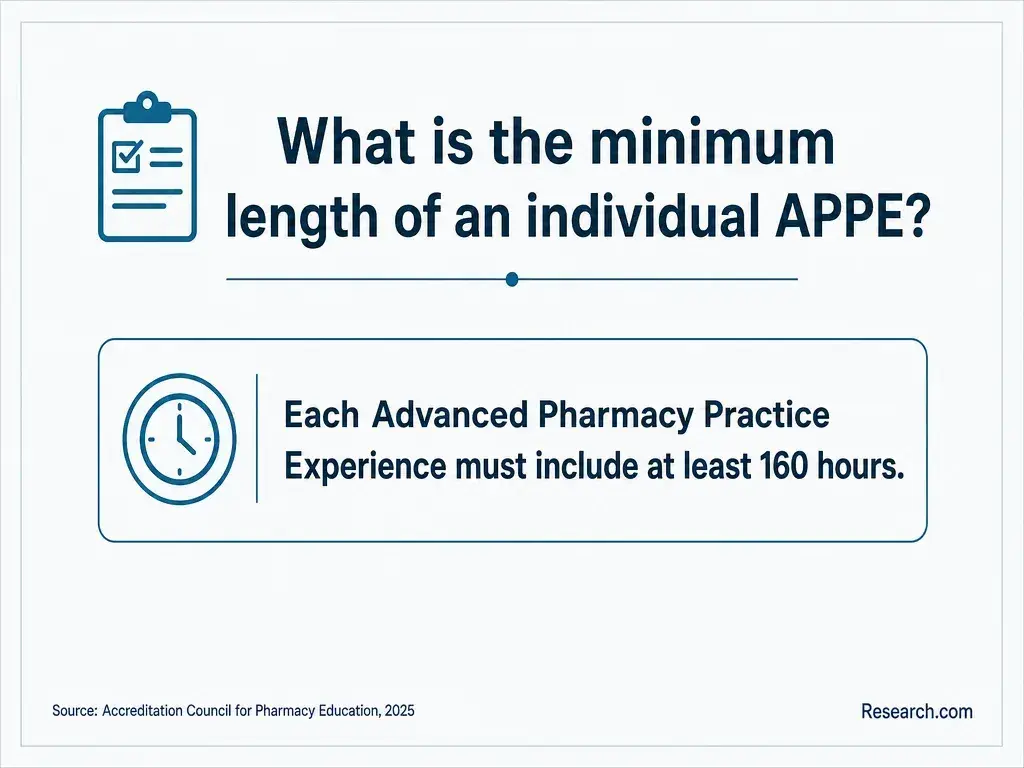
Yes. Some Pharm.D. programs deliver calculations instruction online or in a hybrid format, using recorded lessons, live sessions, problem sets, or remotely administered assessments. "Online" does not necessarily mean asynchronous: a program may require scheduled classes, proctored exams, in-person labs, campus visits, and on-site introductory and advanced pharmacy practice experiences (IPPEs and APPEs).
When you compare pharmacy doctorate options, distinguish delivery of the calculations course from delivery of the full professional degree. Confirm the program's Accreditation Council for Pharmacy Education (ACPE) professional accreditation, separate institutional accreditation, authorization to enroll you where you live, and the rules governing clinical placements. Ask who approves rotation sites and whether travel, intern registration, or time away from work may be necessary; a nearby placement is not automatic.
Programs may use timed quizzes, written examinations, practical labs, simulated orders, or calculations embedded in clinical cases. Some set a separate competency threshold for safety-critical skills or require remediation after an unsuccessful assessment. The threshold, permitted calculators, rounding conventions, and opportunities to reassess are program policies - not nationwide rules.
Before accepting an offer, ask for the current syllabus or student handbook policy. These questions reveal both the standard you must meet and the support available if you struggle:
- Which calculations must students pass independently, and are units and clinical interpretation graded?
- Are assessments timed or proctored, and what calculator or reference materials are allowed?
- What tutoring, practice, remediation, and reassessment options are available?
- Does an unsuccessful competency assessment delay labs, rotations, or progression?
Students seeking pharmacy school transfer admission should also ask whether prior calculations coursework transfers into the professional curriculum. Acceptance of prerequisite credit does not establish equivalence to a Pharm.D. course; the receiving school makes that determination.
After an ACPE-accredited Pharm.D., U.S.-educated graduates generally seek pharmacist licensure through a state board and take the North American Pharmacist Licensure Examination (NAPLEX). The NAPLEX tests practice-related knowledge, including calculation applications. Jurisdictions also determine whether applicants must pass a pharmacy law examination, such as the Multistate Pharmacy Jurisprudence Examination (MPJE), the Uniform Multistate Pharmacy Jurisprudence Examination (UMPJE), or another assessment. Requirements can change, so check the board where you intend to practice.
Course completion, graduation, and passing an examination are distinct from receiving a license. A doctoral study with a shorter time commitment option in another field does not create pharmacist licensure eligibility. Before enrolling, verify the professional program's ACPE status and ask the relevant board about its education, intern experience, application, and examination requirements.
What Careers, Salaries, and Job Outlook Follow a PharmD Degree?
Licensed pharmacists work in settings that include community pharmacies, hospitals, ambulatory care, and other medication-focused services. Calculations remain relevant when verifying doses, preparing medications, reviewing administration plans, or checking system-generated results. The U.S. Bureau of Labor Statistics reports median annual pay of $140,910 for pharmacists in May 2025 and projects 5% employment growth from 2025-2035, with about 12,500 openings per year. Those occupation-wide figures are not a starting-salary promise or a forecast for a particular specialty or location.
A Pharm.D. is appropriate if your goal is pharmacist licensure, but it may be more education than a pharmacy-adjacent goal requires. For comparison, pharmacy technician is a separate occupation that does not ordinarily require a Pharm.D.; its median annual pay was $45,750 in May 2025. Explore lower-cost pharmacy degree pathways only after checking which credential actually qualifies you for the work you want. Postgraduate residencies or fellowships may suit particular career goals, while specialty board certification is a separate credential; none replaces state pharmacist licensure.
Other Things You Should Know About PharmD
Students can ask their school's disability services office about its accommodation process and documentation requirements. Contact the office early; accommodations for a course do not automatically carry over to external licensure exams, which have separate application rules.
Wait for your program's current reading list unless it recommends a specific resource in advance. Notation, rounding rules, permitted calculators, and required editions can differ.
Usually, work experience alone does not award professional course credit. Ask the Pharm.D. program whether it offers any formal credit or competency-evaluation process, and get the decision in writing.
Not necessarily. Depending on their education and intended jurisdiction, they may need a foreign-graduate certification pathway and additional board requirements rather than admission to a U.S. Pharm.D. program. Confirm the applicable route with the National Association of Boards of Pharmacy and the state board.
- Chapter 5 Math Calculations - Nursing Skills - NCBI Bookshelf https://www.ncbi.nlm.nih.gov/books/NBK596732/
- A Global Comparison of Initial Pharmacy Education Curricula | nih.gov https://pmc.ncbi.nlm.nih.gov/articles/PMC8132530/
- Drug dosing based on weight and body surface area | nih.gov https://pubmed.ncbi.nlm.nih.gov/22711238/
- PHM-115A Pharmacy Calculations Lab | Wake Tech https://www.waketech.edu/course/phm-115a
- Remediation Policy - Pharmacy Students - UW-Madison https://students.pharmacy.wisc.edu/pharmd-handbook/remediation-policy/
- Curriculum and Dual Degrees | umaryland.edu https://www.pharmacy.umaryland.edu/academics/pharmd/curriculum/
- PharmD Curriculum | CU School of Pharmacy https://pharmacy.cuanschutz.edu/degreesandprograms/pharmd/curriculum
- Requirements for Participation in Advanced Pharmacy Practice Experiences | PharmD Degree Program https://pharmd.ucsf.edu/policies/appe-participation
- Curriculum - UW School of Pharmacy https://sop.washington.edu/pharmd/curriculum/
- PharmD Program: Math, Calculations, and PK | usc.edu https://libguides.usc.edu/c.php