
Pharm.D. Application Status: What Each Stage Means?

Co-Founder and Chief Data Scientist
A PharmD application can say "submitted" while a school still considers it incomplete. For applicants tracking Doctor of Pharmacy (Pharm.D.) admissions, that distinction can affect interview eligibility, deadlines, and whether a missing item is noticed in time.
This guide explains the statuses you may see in the Pharmacy College Application Service (PharmCAS) and school portals, what typically happens between them, and when to contact admissions. Use it to identify your next step without mistaking application processing for an admission decision.
Key Things You Should Know
- Submitted, complete, and verified are different checkpoints. Submission sends your application; completeness depends on required materials; verification is PharmCAS's review of entered coursework against transcripts.
- "Under review" is not a decision. It generally means the school is evaluating your file, but its timing and next steps depend on that program's admissions process.
- A PharmCAS status does not necessarily include a school's supplemental application, interview requirements, or final admission decision.
What does each PharmD application status mean?
Status wording differs between PharmCAS and individual school portals. The table translates common labels, but your program's published instructions control what counts as complete and when a decision is final.
| Status | Typical meaning | Where it may appear |
| In progress | You have started but not submitted the application. | PharmCAS |
| Submitted or received | The application was sent or received; required materials may still be outstanding. | PharmCAS or school portal |
| Awaiting materials or incomplete | At least one required item has not been received or processed. | PharmCAS or school portal |
| Complete | The items required for that portal's completeness check are present. | PharmCAS or school portal |
| Verified | PharmCAS has checked reported coursework against official transcripts. | PharmCAS |
| Under review | The school is evaluating the application; no decision is implied. | School portal |
| Interview invited | The school wants an interview before making or finalizing its decision. | School portal or email |
| Hold or waitlist | The school has not offered a seat and may reconsider the application later. | School portal or email |
| Admitted, denied, or withdrawn | The school has issued an outcome, or the application is no longer being considered. | School portal or email |
A "complete" label in one system does not prove every school-specific requirement is satisfied. If a status appears inconsistent with the published pharmacy school admission requirements, check the program portal and ask admissions which item or step remains outstanding.
How long does PharmD application review usually take?
There is no nationwide review clock. Transcript receipt, PharmCAS verification, supplemental materials, interview scheduling, and committee decisions each add time. Review can take several weeks after a file is ready, and a school may wait longer to decide if it reviews applicants in rounds. At a rolling-admissions program, an earlier complete file may be considered while seats remain, but early submission does not guarantee an earlier offer.
Use the school's stated notification window - not the day you clicked submit - as your reference point. If that window has passed, send admissions a brief message with your application identifier, the status shown, and the date your final required item was received. Do not infer from a long wait that you have been denied.
Application speed is separate from degree length. Lists of short-duration pharmacy programs may include credentials other than a licensure-qualifying Pharm.D.; they cannot tell you how quickly a Pharm.D. admissions committee will decide.
What happens after submitting a PharmD application?
Submission starts processing; it does not necessarily put your file before an admissions committee. Follow this sequence to locate a delay without repeatedly sending materials the school already has.
- Confirm that PharmCAS shows your submission and payment, if your chosen school uses PharmCAS.
- Check whether official transcripts and required evaluations have been received, and whether recommenders have submitted their letters.
- Watch for PharmCAS verification or a notice that an entry needs correction.
- Open each school's portal and email to find supplemental forms, fees, deadlines, or interview instructions.
- Save confirmation messages and contact the appropriate office if a required item remains missing after its stated processing window.
Returning students should pay particular attention to transcripts from every institution the application requires, even when coursework was later transferred. Applicants exploring pharmacy school routes for returning students should also ask whether unfinished prerequisites may be completed before enrollment; submitting with courses in progress is not the same as having those courses waived.
Complete means a defined set of materials has arrived. It does not mean you meet every admission standard or have been accepted. A school can also require items that PharmCAS does not track, so read "complete" in the context of the portal displaying it.
Under review generally means the program is evaluating your file. The school may still request an interview, an updated grade, or clarification. Unless the program instructs applicants to provide updates, avoid treating that status as an invitation to resend your application.
Neither label confirms that prerequisite credits will count toward admission or transfer into the professional curriculum. The receiving school decides how prior coursework applies under its pharmacy degree credit transfer policies. If a course is central to your eligibility, request a program-specific evaluation rather than relying on a portal status.
Most applicants must document pre-professional coursework and meet a program's academic and application requirements, but there is no single national prerequisite checklist. Schools set their own rules for subjects and labs, grades, minimum GPA, course age, recommendations, interviews, and whether a bachelor's degree is required. Some permit prerequisites to be in progress when you apply but require completion before matriculation. A published minimum is an eligibility threshold, not a promise of admission.
If you already have biology, chemistry, or pre-pharmacy coursework, compare the specific courses you took with each school's current list. A guide to pharmacy programs for students with science credits can help you identify options, but the school must determine whether your labs, grades, and credits satisfy its rules. The Pharmacy College Admission Test (PCAT) was retired in January 2024; it is not a current exam applicants can take to strengthen a file.
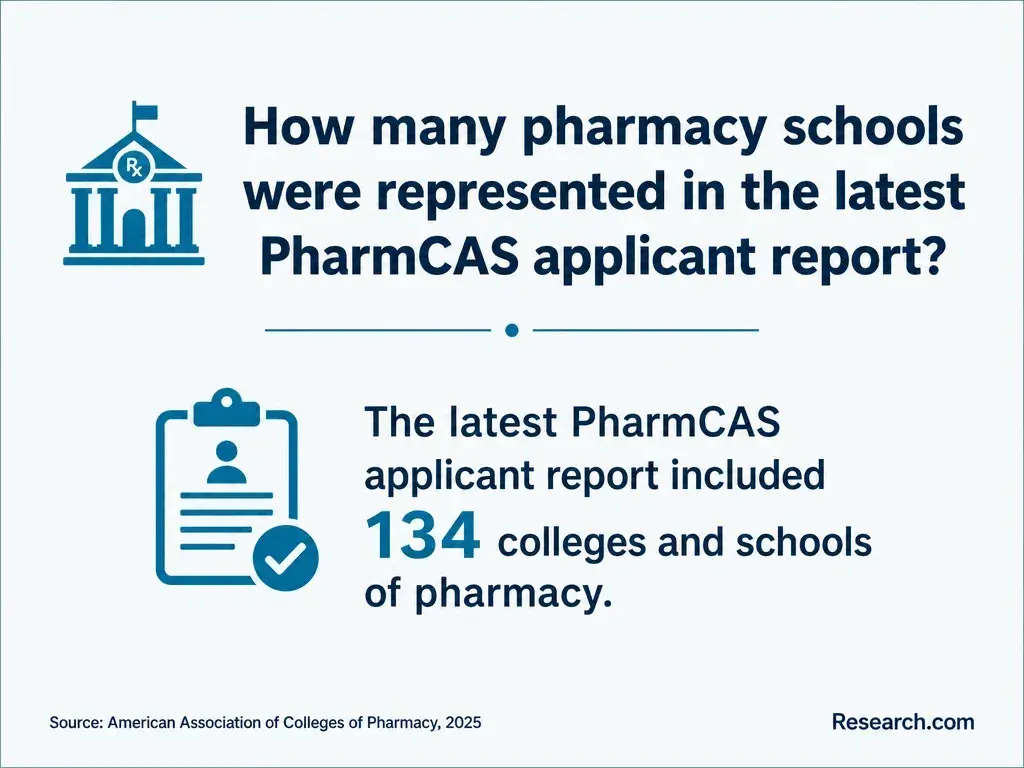
PharmCAS is a centralized application service used by participating pharmacy schools; not every school uses it. Applicants enter coursework and other information, arrange required official transcripts and recommendations, and submit to selected programs. PharmCAS then verifies reported coursework against transcripts. Verification is an accuracy check, not an admission recommendation or a judgment that you satisfy a particular school's prerequisites.
Schools receive the application information and apply their own review procedures. Their supplemental forms, fees, deadlines, and decisions may appear outside PharmCAS. This distinction matters whether you apply to a campus program or compare online pharmacy school programs: delivery format does not replace the need to check each program's application instructions. An online or hybrid Pharm.D. may also require in-person labs and clinical experiences.
An interview invitation calls for a prompt reply under the school's instructions. Confirm the format and deadline, prepare to discuss your experience and reasons for pursuing pharmacy, and disclose any scheduling conflict early. For a waitlist or hold, follow the school's rules on continued-interest messages and updates; additional letters are not useful if the program does not accept them.
For an offer, check the response and deposit deadlines before committing. Compare any other pending options and ask what happens to a deposit if you later decline the seat. If denied, request feedback only if the school offers it, then identify whether prerequisites, experience, or application timing could be improved. Applicants considering shorter pharmacy doctorate pathways should verify the actual curriculum length and eligibility before declining an offer for an assumed faster alternative.
The professional Pharm.D. curriculum commonly takes about four academic years after required pre-professional study, although accelerated and other structures vary by school. Prerequisite undergraduate coursework is a separate stage; its length depends on what you have already completed. The professional program includes classroom and supervised experiential education, including introductory and advanced pharmacy practice experiences.
When comparing completion claims, ask when the program begins, whether summers are required, and how clinical rotations are scheduled. "Fast" in a list of fast online doctoral study does not establish that a program awards an accredited Pharm.D. or meets the requirements for pharmacist licensure. Completing the degree itself does not issue a license.
The Accreditation Council for Pharmacy Education (ACPE) accredits professional pharmacy degree programs; it does not license individual pharmacists. Before accepting an offer, check the program's current status in ACPE's official program records, particularly if it is new or advertises an unusual format. Institutional accreditation and authorization to enroll distance-learning students are separate matters. For an online or hybrid option, also confirm where required in-person activities and rotations can occur.
After earning a qualifying Pharm.D., graduates must satisfy the licensing board's requirements in the jurisdiction where they seek to practice. These can include internship or experience rules and the North American Pharmacist Licensure Examination (NAPLEX), plus a jurisdiction-specific law examination or other requirements. Do not assume every jurisdiction uses the MPJE: some transitioned to the UMPJE beginning in 2026. An internationally educated pharmacist may have a different eligibility pathway. Neither degree completion nor passing an exam alone confers a license.
Accreditation and licensure eligibility should be checked before comparing pharmacy degree affordability and completion time. A cheaper or shorter credential is not an equivalent substitute if it does not support your intended pharmacist pathway.
How should applicants compare PharmD programs, costs, and career outcomes?
Once your application reaches the decision stage, compare offers using the same cost and training questions. Published tuition alone may exclude mandatory fees, supplies, background checks, immunizations, campus travel, rotation-related housing, and licensure expenses. Request each school's current cost of attendance and aid information. Federal borrowing rules changed for many new graduate and professional borrowers beginning July 1, 2026, so confirm your own eligibility and limits with the financial aid office rather than assuming an older loan arrangement applies.
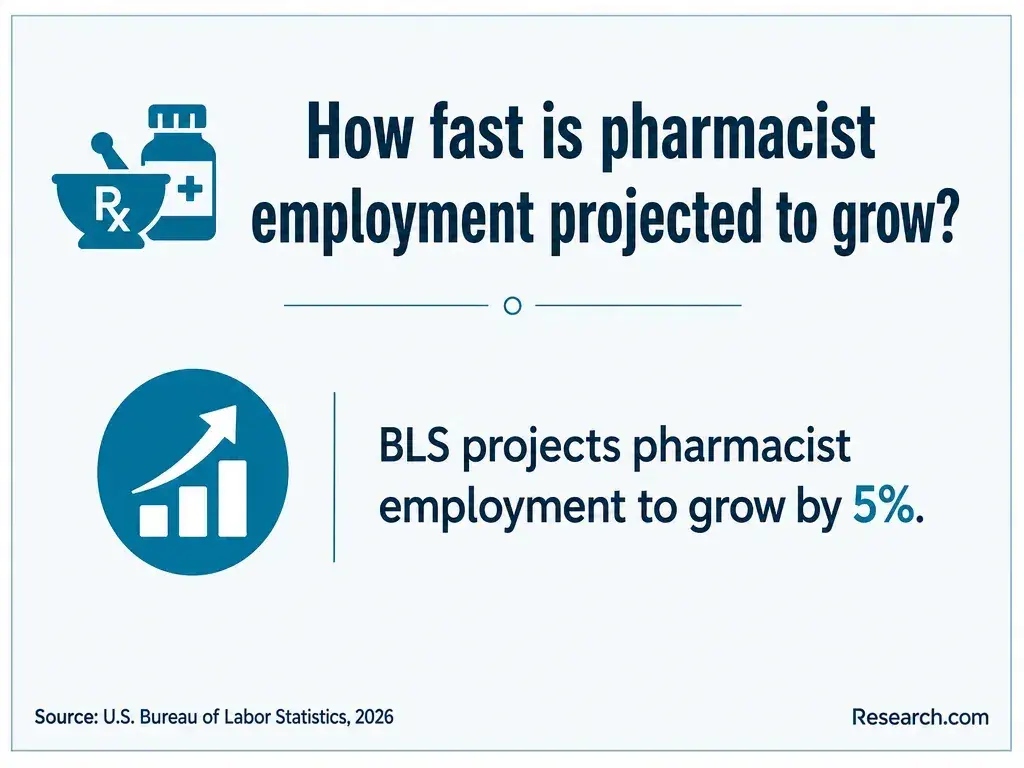
Also compare ACPE status, prerequisite work still needed, clinical placement arrangements, published NAPLEX outcomes where available, and the locations where you hope to seek licensure. The Bureau of Labor Statistics reports median annual pay of $140,910 in May 2025 for pharmacists, with 5% projected job growth, 2025-2035. That occupation-wide figure is context for a career decision - not a forecast of your earnings or proof that a more expensive program will pay off.
An affordable route to a Pharm.D. is one you can finance while meeting your academic and licensure goals. Residency or fellowship training may matter for particular career paths but is not universally required for pharmacist employment; specialty board certification is distinct from state licensure. If your goal is a pharmacy technician role rather than pharmacist practice, check that occupation's requirements before taking on the time and cost of a Pharm.D.
Other Things You Should Know About PharmD
Some information can be updated through PharmCAS or directly with a school, but submitted coursework and other fields may have restrictions. Check the current cycle instructions and the program's update policy before sending changes.
Do not assume a school can see your entire application activity. Review PharmCAS's current disclosure rules and answer any school-specific questions about other applications truthfully.
Check whether the deadline applies to submission or to receipt of every supporting item. Remind the recommender promptly, then ask the school whether late materials can still be considered; policies vary.
No. Contact PharmCAS support about an account or processing problem, and contact the school about its own portal. A second account can make records harder to reconcile.
- PharmD FAQs - UNC Eshelman School of Pharmacy https://pharmacy.unc.edu/education/pharmd/pharmd-admissions-faqs/
- Step Two: PharmCAS Application - UMKC School of Pharmacy https://pharmacy.umkc.edu/admissions/pharmd-application-process/step-two-pharmcas-application.html
- PharmD Application Process and Requirements | umich.edu https://pharmacy.umich.edu/pharmacy-programs/pharmd-program/application-process-requirements/
- PharmD Application Deadlines | University of the Pacific https://www.pacific.edu/pharmacy/pharmd/deadlines
- Admissions Timeline - Pharmacy Students - UW-Madison https://students.pharmacy.wisc.edu/pre-sop-handbook/admissions-timeline/
- PharmD Application Process - School of Pharmacy https://pharmacy.wisc.edu/pharmd/application-process/
- Application Instructions - After You Submit | PharmCAS https://www.pharmcas.org/application-instructions/after-you-submit
- PharmCAS Quick Start Guide and FAQs - Liaison https://help.liaisonedu.com/PharmCAS_Applicant_Help_Center/Starting_Your_PharmCAS_Application/Getting_Started_with_Your_PharmCAS_Application/00_PharmCAS_Quick_Start_Guide


