Pharm.D. Elective Courses and Concentration Options

Co-Founder and Chief Data Scientist
A Pharm.D. elective can help you explore a specialty, but a concentration may commit you to a sequence of courses and rotations. That distinction matters when you are comparing pharmacy schools or planning a path toward clinical practice, industry, or another role.
This guide explains what these options typically include, how much weight to give them alongside accreditation and experiential training, and what to ask a school before committing. You will leave with a way to choose courses that support your goals without mistaking a concentration for a professional credential.
Key Things You Should Know
- Choose electives for the skills and experience they offer; choose a concentration only after checking its required courses, rotation access, and effect on your schedule.
- A concentration does not replace pharmacist licensure, residency, or board certification. It may also be unnecessary for a career goal that can be explored through individual electives.
- The Bureau of Labor Statistics projects 5% growth in pharmacist employment for 2025-2035, but that profession-wide figure does not establish demand for any particular concentration.
What are PharmD elective courses and concentration options?
Doctor of Pharmacy (Pharm.D.) electives are courses students select within a professional curriculum, subject to their school's requirements and available seats. A concentration, sometimes called a track, is usually a defined combination of coursework and possibly experiential learning focused on an area such as ambulatory care, research, or pharmacy management. Names and requirements vary by school.
These are choices within a Pharm.D., not substitutes for the degree's required curriculum. Undergraduate pre-pharmacy courses establish admission eligibility; they generally are not interchangeable with professional electives. If you hope to evaluate credits for pharmacy prerequisites, ask the receiving school how it applies them rather than assuming they will shorten the Pharm.D. or satisfy a concentration.
Start with the kind of work you want to test, then check whether a single elective, a rotation, or a formal track provides the strongest relevant experience. A track's name alone says little about what you will do.
How do PharmD electives differ from concentrations and specializations?
An elective is an individual curricular choice. A concentration is a school-defined package that may require several electives, a project, or particular rotations. A professional specialization is different: it may describe a practice focus developed through employment or postgraduate training, while an optional board certification has its own eligibility and assessment requirements.
The distinctions below show what each option can - and cannot - signal to a future employer.
| Option | What it usually shows | Key limitation |
| Pharm.D. elective | Focused study of a subject | One course is limited evidence of practice readiness |
| School concentration | Completion of a defined curricular sequence | Requirements and recognition vary by school |
| Residency or fellowship | Postgraduate training in a program's defined area | Separate application and selection; not required for every pharmacist job |
| Board certification | An independently awarded specialty credential | Separate eligibility rules; not a pharmacist license |
A concentration can strengthen an application by giving you experiences to discuss, but it neither guarantees a residency position nor qualifies you automatically for board certification. Similarly, short-duration pharmacy programs may award credentials for different roles; their duration or title does not make them substitutes for a professional Pharm.D. when pharmacist licensure is the goal.
Which PharmD electives and concentrations align with pharmacy careers?
Match the option to the work you want to try, not just to a specialty label. The examples below are starting points for comparing actual course descriptions, projects, and placements; no particular employer is obliged to value a concentration.
| Possible direction | Relevant learning to look for | Experience that adds context |
| Ambulatory or community-based care | Chronic disease management, patient communication, population health | Supervised patient-care experiences in outpatient settings |
| Hospital or health-system practice | Advanced pharmacotherapy, medication safety, stewardship | Inpatient or health-system rotations |
| Pharmaceutical industry or research | Drug development, study design, medical writing | Research projects or applicable industry experiences |
| Operations, informatics, or leadership | Quality improvement, data systems, management | Projects involving workflow or system-level decisions |
If you are uncertain, broad electives and varied rotations may preserve more flexibility than an early, tightly sequenced track. If your target job does not require pharmacist licensure, compare shorter pharmacy programs with career potential before taking on the time and expense of a Pharm.D.; check each credential's actual hiring relevance.
Schools may offer electives in advanced therapeutics, geriatrics, pediatrics, oncology, infectious diseases, public health, compounding, medication safety, informatics, research methods, business, or pharmaceutical policy. Availability, prerequisites, and whether a course runs in a given term are school-specific. A course title does not establish how much patient contact, laboratory work, or software practice it includes.
If you want to build on prior biology or chemistry coursework, compare the professional course's actual learning objectives with your interests. Prior science study may help you identify a research direction, but it does not normally replace the required professional curriculum.
When reviewing a catalog, look for what you will produce or practice: a literature evaluation, patient case, quality-improvement project, or supervised skill. That evidence is more useful for choosing an elective than its title alone.
Pharm.D. experiential education includes introductory pharmacy practice experiences (IPPEs) and later advanced pharmacy practice experiences (APPEs). A concentration may guide elective APPE choices or require a project at an approved site, but it does not eliminate the program's required experiences. A requested specialty site may be limited by capacity, preceptors, geography, and scheduling.
Rotation logistics can determine whether a track is realistic. Before choosing one, get answers to these questions from the experiential education office:
- Which IPPEs or APPEs are required for the concentration, and which are merely preferred?
- Who finds and approves sites and preceptors, and how are students assigned when demand exceeds available placements?
- Could the track require travel, temporary housing, an altered course sequence, or time away from employment?
- What intern registration, health documentation, background checks, or site-specific conditions must students meet?
Review online Pharm.D. program timelines with the same questions in mind: a shorter or more flexible classroom schedule does not make supervised rotations self-paced or remote.
Admission rules vary by school. Applicants typically need specified undergraduate prerequisite courses, often including sciences and general education, plus transcripts and program-required application materials. Some schools require a completed bachelor's degree; others admit students after the required pre-professional coursework. Minimum grades, laboratories, course-age limits, interviews, recommendations, and whether courses may be unfinished at application also vary.
Check the current school listing and admissions policy before planning electives years ahead. Some pharmacy programs before all requirements are complete may accept an application with coursework in progress, but admission or matriculation can remain conditional on finishing it. The Pharmacy College Admission Test (PCAT) was retired in January 2024 and is not a current exam to schedule.
Treating a school's minimum prerequisite or grade standard as a competitive-admission guarantee. Confirm the requirements of each program you intend to apply to, including whether it uses PharmCAS and requires additional school-specific materials.
The professional Pharm.D. curriculum commonly spans four academic years after prerequisite study, though accelerated structures and entry pathways differ. A concentration may fit within available elective credits or add sequencing constraints without formally lengthening the degree. Ask for a term-by-term plan if a track's courses or rotations are offered infrequently.
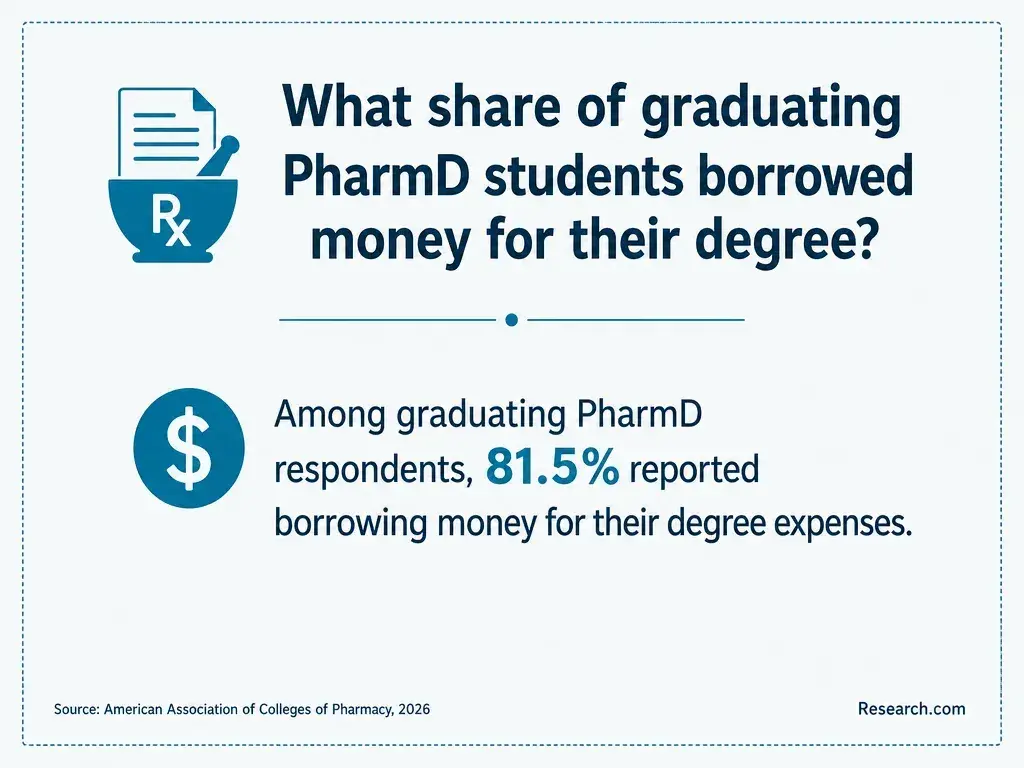
Published tuition is not the full cost of attendance. Compare online pharmacy school cost options using equivalent units - such as each program's estimated cost for the full professional curriculum - and account for fees, supplies, travel, housing during rotations, and foregone earnings. Federal student-loan rules changed for many new graduate and professional borrowers beginning July 1, 2026; confirm your own aid eligibility and borrowing options with the financial aid office rather than assuming an older financing plan still applies.
A concentration is worth an added cost only if its specific courses, mentorship, or placements advance a goal you cannot reasonably pursue through the standard curriculum. Ask whether it carries extra fees or requires travel before assigning it a financial value.
An online or hybrid delivery format does not, by itself, determine accreditation or licensure eligibility. Check the specific professional Pharm.D. program in the Accreditation Council for Pharmacy Education (ACPE) program records. Institutional accreditation and state authorization to enroll distance learners are separate matters. None of these replaces the licensing requirements of the state where you plan to practice.
When comparing online pharmacy school programs, ask which classes are live, which labs or assessments require campus attendance, and where in-person IPPEs and APPEs take place. Confirm who coordinates placements in your location and whether travel is likely. "Online" does not mean the professional degree can be completed entirely from home or around an unrestricted full-time work schedule.
ACPE accredits professional pharmacy education programs, not individual pharmacists. For a U.S.-educated applicant, graduating from an appropriate Pharm.D. program is a key educational step toward licensure, but a diploma, elective track, or certificate does not itself authorize practice. State boards set licensure requirements, including applicable supervised experience, examinations, and application conditions.
The North American Pharmacist Licensure Examination (NAPLEX) assesses pharmacy practice knowledge. Jurisprudence requirements differ by jurisdiction: a board may use the Multistate Pharmacy Jurisprudence Examination (MPJE), the Uniform Multistate Pharmacy Jurisprudence Examination (UMPJE), another process, or no separate jurisprudence examination. Check the current rules of the board where you seek licensure; passing an exam alone does not issue a license.
Use pharmacy school application eligibility as only an initial screening consideration. Before accepting an offer, independently confirm the program's current ACPE status and ask your intended state board about licensure eligibility. Internationally educated pharmacists may face a different credential-evaluation and licensing pathway.
What careers, salaries, and job outlook can PharmD graduates expect?
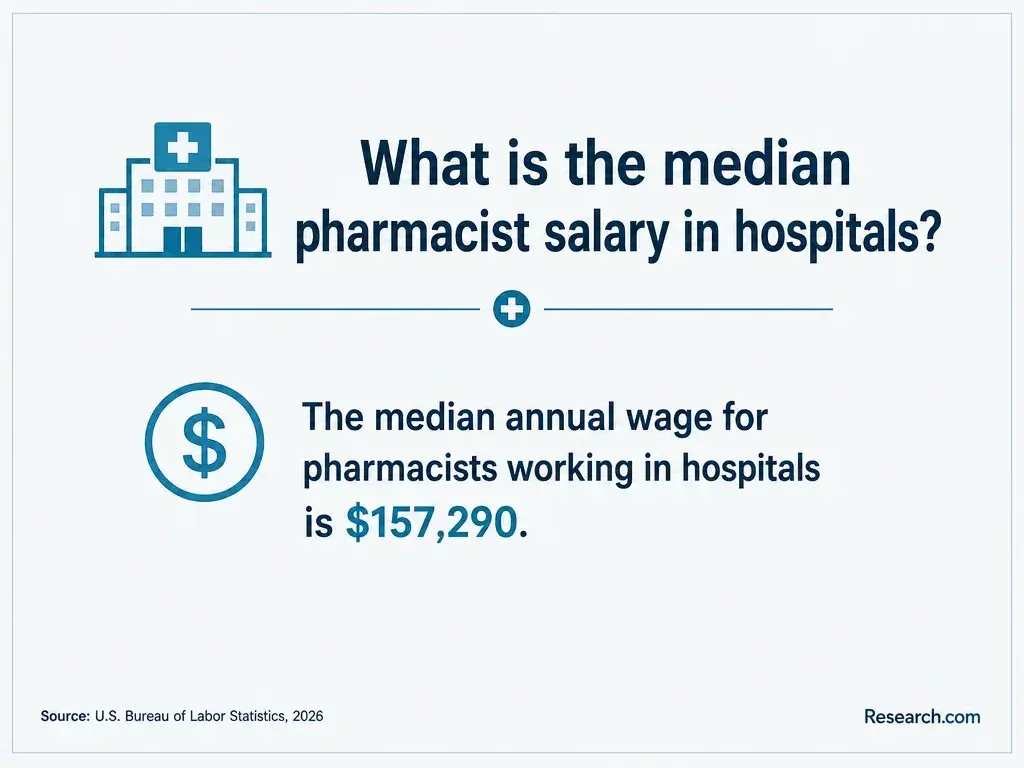
Licensed pharmacists work across community pharmacies, health systems, outpatient care, industry-related roles, and other settings. Electives and concentrations can help build relevant knowledge and examples of your work, but hiring requirements differ. Some specialized positions favor postgraduate residency or fellowship training; others value direct experience. Board certification is a separate, optional credential with specialty-specific rules, not a substitute for state licensure.
According to the Bureau of Labor Statistics, median annual pay for pharmacists was $140,910 in May 2025, with 5% projected employment growth for 2025-2035 and about 12,500 openings per year. These occupation-wide figures cannot predict pay, demand, or entry prospects for a particular concentration or graduate.
If you want a pharmacy-related job but not the pharmacist's clinical and legal responsibilities, investigate short-duration pharmacy programs for other roles. Pharmacy technician work, for example, is a separate occupation that does not ordinarily require a Pharm.D. Choose the professional degree because you want its eligible career path, not because a concentration sounds broadly marketable.
Other Things You Should Know About PharmD
Possibly. Schools set their own change and withdrawal rules. Check whether completed courses will still count as electives and whether changing tracks will disrupt course sequencing.
That depends on the school. Ask the registrar whether it appears on the transcript, diploma, a separate certificate, or only in internal records.
Some programs permit approved courses from another department or institution; others restrict professional elective credit. Obtain written approval before enrolling.
It may, if the program offers an approved research elective or project option. Confirm the credit, supervision, assessment, and deadline rules before committing to a project.
- Evolution of Clinical Pharmacy in the US and Future... - PMC https://pmc.ncbi.nlm.nih.gov/articles/PMC4821736/
- Specialty tracks in Pharm.D. curricula of US colleges and schools of pharmacy - ScienceDirect https://www.sciencedirect.com/science/article/abs/pii/S1877129715301301
- Dual Degree Programs - USC School of Pharmacy https://mann.usc.edu/program/doctor-of-pharmacy-pharmd/curriculum/dual-degree-programs/
- PharmD-MPH dual-degree program | Oregon State University https://health.oregonstate.edu/public-health/mph/dual-degree/pharmd
- Elective Course Descriptions - College of Pharmacy https://www.pharmacy.umn.edu/doctor-pharmacy/curriculum/elective-courses/elective-course-descriptions
- Advanced Training | ucsf.edu https://pharmd.ucsf.edu/about/advanced-training
- Curriculum - UW School of Pharmacy https://sop.washington.edu/pharmd/curriculum/
- Pharmacy Program PharmD | llu.edu https://pharmacy.llu.edu/academics/doctor-pharmacy
- Elective offerings - Doctor of Pharmacy - Wayne State University https://applebaum.wayne.edu/pharmd/curriculum-electives
- PharmD Clinical Experience | College of Pharmacy | Financial Aid https://www.westernu.edu/pharmacy/programs/academic/pharmd-clinical-experience/