62 prerequisite credits for an online PharmD

Co-Founder and Chief Data Scientist
If you have 62 college credits—or are planning to earn them—the number alone will not tell you whether you can enter an online Doctor of Pharmacy (Pharm.D.) program. Schools evaluate specific prerequisite courses, grades, and labs, while online study still includes in-person clinical training.
This guide helps prospective U.S. pharmacy students determine whether their credits meet a program's rules, identify gaps before applying, and compare pathways without mistaking admission eligibility for a shortcut to pharmacist licensure.
Key Things You Should Know
- 62 prerequisite credits are not a national Pharm.D. requirement. A school that specifies 62 credits will also decide which courses, labs, grades, and prior credits satisfy its requirements.
- Prerequisites come before the professional degree. Completing them does not replace Pharm.D. coursework or the in-person pharmacy practice experiences required in the program.
- Check the entire route to licensure. Confirm the program's ACPE status, online enrollment authorization, clinical placement rules, and your intended state's licensing requirements before committing.
What Are 62 Prerequisite Credits for an Online PharmD?
A 62-credit prerequisite pathway means that a particular pharmacy school requires approximately that amount of qualifying pre-professional undergraduate coursework before students begin their professional Pharm.D. curriculum. It does not mean the Pharm.D. itself is 62 credits, that every school uses the same threshold, or that any collection of 62 credits qualifies.
The deciding factor is how the receiving school applies your courses to its current prerequisite checklist. A biology course may satisfy one requirement but not another; a lecture may count without satisfying a separate lab requirement. Students bringing credits from another institution should compare pharmacy programs for students with prior coursework, then request a course-by-course evaluation from each school of interest. Acceptance of undergraduate prerequisites is distinct from transfer into the professional Pharm.D. curriculum.
Are Online PharmD Programs Accredited by ACPE?
Some Pharm.D. programs deliver academic instruction online or in a hybrid format, but the delivery format does not establish accreditation. The Accreditation Council for Pharmacy Education (ACPE) accredits professional pharmacy degree programs—not individual pharmacists. Check the specific program and its current status in ACPE's official program directory rather than relying on a school-wide accreditation statement.
Also verify two separate issues: whether the institution holds appropriate institutional accreditation and whether it may enroll you as a distance student in your state. Neither substitutes for ACPE professional program accreditation. Before comparing pharmacy schools offering online Pharm.D. study, ask each school to identify required campus visits and the states in which it can arrange or approve clinical placements. Authorization to take online classes does not automatically authorize an in-state rotation or establish licensure eligibility.
What Are the Admission Requirements for an Online PharmD?
Requirements vary by school. A program may require specified prerequisite courses and labs, minimum grades or GPA, recommendations, an interview, and completion of outstanding coursework before matriculation. A bachelor's degree is not universally required, and meeting a published minimum does not guarantee admission. The Pharmacy College Admission Test (PCAT) was retired in January 2024 and is not a currently available admissions exam.
Check the school's current admissions page and PharmCAS directory entry to see if it participates in PharmCAS. Application-service instructions do not replace a school's supplemental materials, deadlines, or deposit rules. If you have gaps, investigate pharmacy programs with alternative entry pathways, but get written confirmation of which courses may still be in progress when you apply and which must be finished before enrollment.
Pharm.D. prerequisites commonly draw from science, mathematics, and general education, but exact course titles, credit amounts, and lab rules are school-specific. This table groups subjects you are likely to encounter; it is not a universal 62-credit plan.
| Course area | What to compare with the school's checklist |
| Chemistry and biology | Required sequence, course level, and separate or integrated labs |
| Mathematics and related sciences | Specified subjects and permitted course substitutions |
| Communication and general education | Writing, speaking, and other named distribution requirements |
| Previously earned coursework | Minimum grade, recency rule, and policy for online or transfer courses |
A science major may already have substantial relevant coursework without meeting every named requirement. For that reason, online pharmacy programs for science-background students should be compared by remaining courses, not just credits already earned. The receiving school makes the final determination about substitutions and accepted credit.
The timeline has two parts: any prerequisites you still need and the professional Pharm.D. program after admission. A 62-credit entry requirement describes the first part, not the time needed to earn the doctorate. Professional programs have prescribed course sequences and supervised experiences, so online delivery does not make them automatically self-paced.
When comparing accelerated pharmacist education, request the academic calendar rather than relying on a shortened headline timeline. Ask when live classes, campus labs, introductory pharmacy practice experiences (IPPEs), and advanced pharmacy practice experiences (APPEs) occur. Rotations may require daytime availability, travel, or time away from work; a school must approve sites and preceptors, and a placement near home should not be assumed.
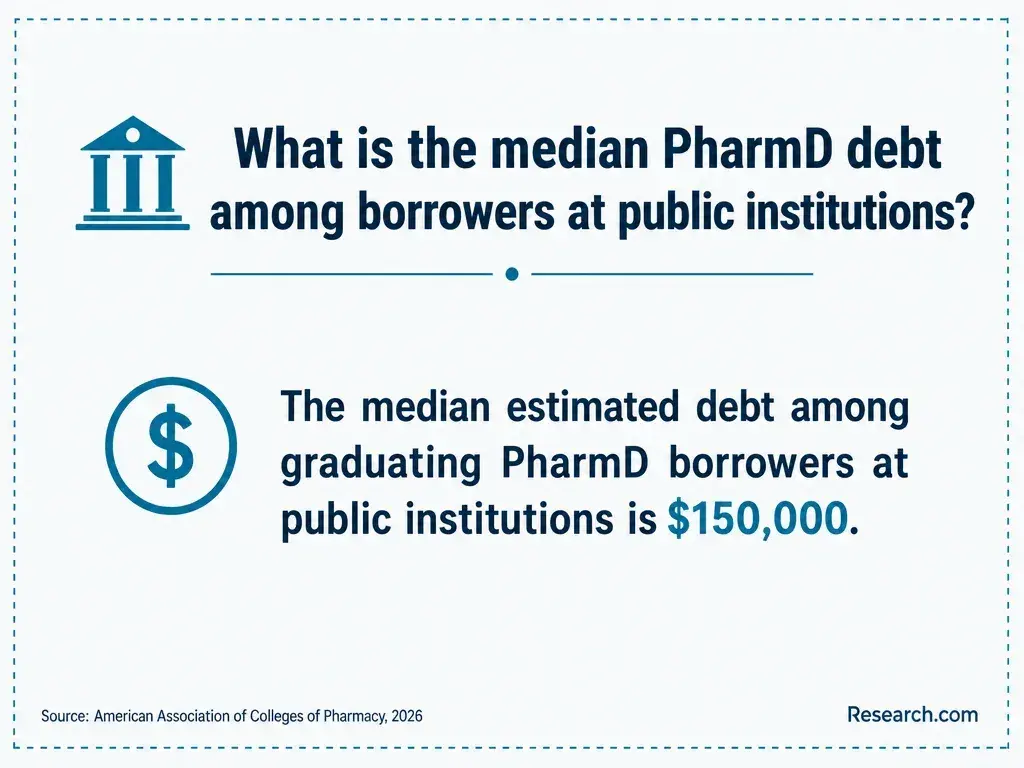
There is no reliable single price for an "online Pharm.D. with 62 prerequisites." Your cost depends on where you complete missing courses, the school's tuition and fees, your location, and clinical travel. An advertised tuition figure is not a total cost of attendance. Use the same cost categories when comparing programs:
- Remaining prerequisite tuition, labs, and required materials
- Professional-program tuition, mandatory fees, technology, and learning resources
- Campus-visit travel and lodging, plus rotation travel or temporary housing
- Required screenings, immunizations, and later licensing-related expenses
A low-cost online pharmacy doctorate is only lower-cost for you if its accepted credits and required travel support that conclusion. Request a current, itemized estimate and a personalized financial aid review. Federal borrowing rules changed for many new graduate and professional borrowers beginning July 1, 2026; do not assume older loan limits or automatic Grad PLUS access apply to your enrollment.
Employer Confidence in Online vs. In-Person Degree Skills, Global 2024

Both routes must cover professional pharmacy learning and supervised practice; the meaningful difference is where and when you must participate. This comparison highlights scheduling questions that can change whether a program is workable:
| Decision factor | Online or hybrid Pharm.D. | Campus Pharm.D. |
| Class participation | May include scheduled live sessions alongside online coursework | Typically involves regular on-campus classes |
| Hands-on learning | May require campus intensives or designated in-person labs | Often integrated into the campus schedule |
| Clinical experiences | In-person sites still require school approval and coordination | In-person sites still require school approval and coordination |
| Budget pressure | Technology, immersion, and travel costs may matter more | Commuting or relocation costs may matter more |
Online study can reduce routine commuting without eliminating fixed schedules. Be especially cautious with short online pharmacy degree timelines: a pharmacy-related degree or certificate advertised with a brief timeline is not necessarily a professional Pharm.D. that prepares graduates to seek pharmacist licensure.
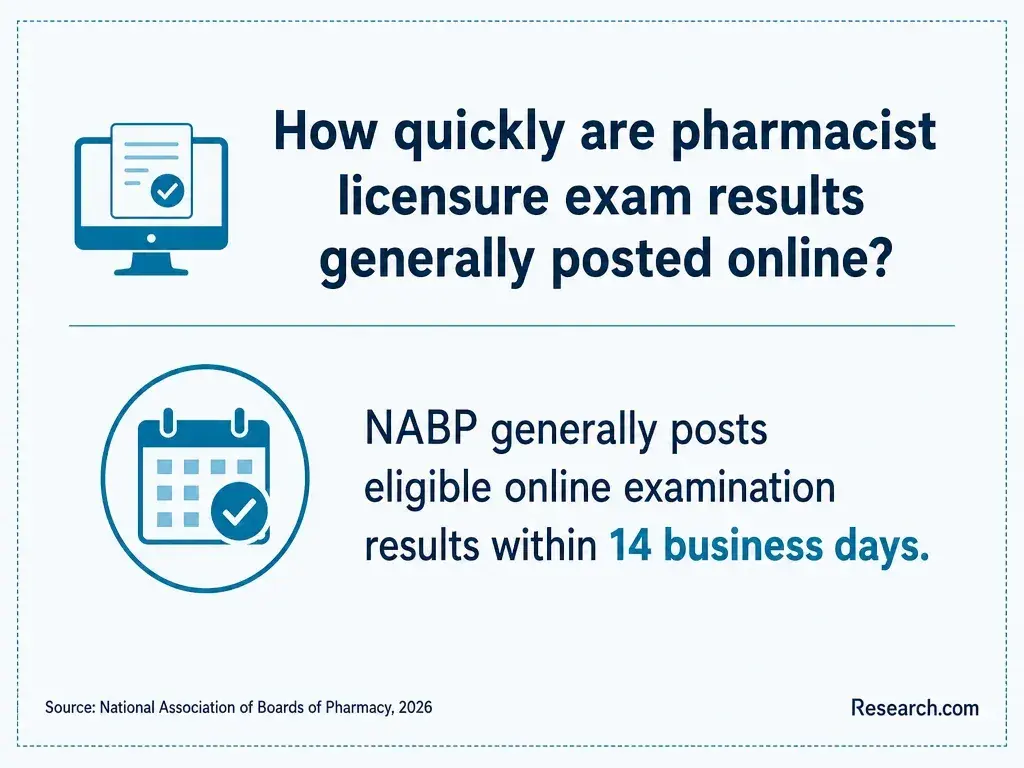
Graduating from an online or hybrid Pharm.D. program does not itself issue a pharmacist license. A U.S.-educated applicant generally must meet the relevant state board's education and other eligibility rules, complete applicable supervised training, and pass required examinations. The North American Pharmacist Licensure Examination (NAPLEX) assesses pharmacy knowledge; a jurisdiction may also require a law examination, such as the MPJE or, where adopted, the UMPJE. Requirements vary, and passing an exam alone does not confer a license.
Before enrolling, read the board rules for the state where you intend to practice and ask the school how its curriculum and rotations support that pathway. An online doctorate program with a shorter timeline in another subject is not a substitute for a qualifying professional Pharm.D. Internationally educated pharmacists may face a different certification and licensing pathway.
Licensed pharmacists work in settings that can include community pharmacies, hospitals, ambulatory care, and specialty pharmacy. The Bureau of Labor Statistics reports median annual pay for pharmacists of $140,910 in May 2025 and projects 5% growth, 2025-2035, with about 12,500 openings per year. These occupation-wide figures are not a starting-salary or job-placement promise for a particular graduate.
Some roles favor postgraduate training. A PGY1 residency provides broad practice training; a PGY2 typically builds specialty expertise. Fellowships may focus on different career paths, while Board of Pharmacy Specialties certification is a separate credential—not a state license. None is universally required for pharmacist employment.
If your goal is a pharmacy-adjacent role rather than licensed pharmacist practice, compare lower-cost online pharmacy degree programs carefully: a less extensive credential may fit that goal, but it does not qualify its holder to practice as a pharmacist.
How Can You Choose a Reputable Online PharmD Program?
Start with eligibility, not a ranking or an advertised credit threshold. A school that appears among pharmacy schools that may be easier to enter still needs to meet your academic, financial, geographic, and licensure needs. Use these checks before paying an application deposit:
- Match every completed and planned course against the school's current prerequisite checklist; ask for a written evaluation of uncertain credits, labs, grades, and substitutions.
- Confirm the professional program's current ACPE status and separately confirm institutional accreditation and authorization to enroll you in your state.
- Request the full schedule of live instruction, campus attendance, IPPEs, and APPEs; ask who secures or approves sites and what travel you may need.
- Compare itemized total costs and your aid eligibility, then review the intended state board's intern, examination, and licensing rules.
- Ask for recent, clearly labeled NAPLEX outcomes and how the school supports students who need academic or placement assistance.
If a school cannot clearly explain how your credits apply or where required hands-on training can occur, resolve that uncertainty before enrolling. The strongest choice is a program whose verified requirements you can complete—not merely one whose advertised entry-credit number matches your transcript.
Other Things You Should Know About PharmD
Sometimes. Schools set their own policies, which may differ by subject or lab. Check whether the credit appears on your college transcript and obtain the pharmacy school's decision before relying on it.
That depends on the school's repeat and minimum-grade policies. Ask which attempt counts for the requirement and how each attempt affects its GPA review.
They may count if the receiving pharmacy school accepts the college-level course. Provide the issuing college's transcript; a high school transcript alone may not establish the required college credit.
Possibly, but schools may require a specified credential evaluation and may restrict how international science or lab courses satisfy prerequisites. Request the school's policy before ordering an evaluation or repeating coursework.
- Are Prerequisite Courses Barriers to Pharmacy Admission or the Keys to Student Success? - PMC https://pmc.ncbi.nlm.nih.gov/articles/PMC10159397/
- PharmD Admissions - R. Ken Coit College of Pharmacy https://www.pharmacy.arizona.edu/academics/pharmd/admissions
- PharmD Prerequisites - Doctor of Pharmacy https://pharmacy.wisc.edu/pharmd/prerequisites/
- College of Pharmacy, Glendale | Midwestern University https://www.midwestern.edu/academics/degrees-programs/doctor-pharmacy-program/college-pharmacy-glendale
- Prerequisite Coursework | School of Pharmacy https://www.pharmacy.pitt.edu/academics/doctor-pharmacy/apply-pharmd-program/prerequisite-coursework
- Prerequisite Information - UW School of Pharmacy https://sop.washington.edu/pharmd/admissions/prerequisite-info/