How to Assess Clinical Rotation Site Quality

Co-Founder and Chief Data Scientist
A clinical rotation can look impressive on a placement list yet offer little opportunity to practice patient-care skills. If you are comparing Doctor of Pharmacy (Pharm.D.) programs or deciding whether to accept an assigned site, you need evidence about supervision, learning opportunities, safety, and logistics - not just a recognizable employer name.
The section questions below use legal-internship terminology; this guide applies them to pharmacy experiential education. Use its criteria to identify a worthwhile rotation, ask the right questions, and flag problems before they disrupt your progress.
Key Things You Should Know
- A quality Pharm.D. rotation has an approved site, a qualified pharmacist preceptor, defined learning objectives, meaningful supervised work, and a documented evaluation process.
- Introductory pharmacy practice experiences (IPPEs) and advanced pharmacy practice experiences (APPEs) serve different stages of training; ACPE's professional-program standards specify at least 1,440 hours of APPEs, but hours alone do not establish quality.
- Before accepting a placement, confirm its schedule, travel and housing demands, state intern-registration rules, required clearances, and the school's process for resolving site problems.
What makes a legal internship or externship site high quality?
For a Pharm.D. student, the relevant placement is a pharmacy practice experience, not a legal internship. An IPPE introduces practice earlier in the professional curriculum; an APPE is a more advanced, supervised experience. Neither is the same as undergraduate pre-pharmacy coursework.
A strong site can explain what students will do, how responsibilities increase, who supervises them, and how performance is assessed. Look for opportunities to gather medication histories, evaluate drug therapy, communicate with patients or care teams, and document work appropriate to the setting and the student's training. A famous health system is not necessarily a better learning site than a smaller practice with engaged preceptors.
Ask the school to show how the placement fits its required experiences and graduation timeline. When comparing programs, pharmacy program value and duration should be judged alongside the quality and feasibility of their clinical placements, not tuition or speed alone.
How does attorney supervision affect paralegal internship quality?
Attorney supervision does not apply to Pharm.D. rotations. The key relationship is between the student and an approved pharmacy preceptor, typically a licensed pharmacist who oversees activities, provides feedback, and evaluates progress under the school's policies and applicable state rules.
Ask who will supervise you day to day, whether that person has time for scheduled feedback, and what happens when the primary preceptor is absent. Students should be able to explain their clinical reasoning and receive corrections - not merely observe indefinitely or perform tasks without appropriate oversight. Prior laboratory or biology experience may help, but students exploring pharmacy doctorate options after biology still need supervised practice in pharmacist-specific patient-care skills.
What should students learn at a legal internship site?
At a pharmacy rotation, learning should match the site and the student's stage of training. A community site may emphasize prescription verification workflows, counseling, and access to medicines; an ambulatory-care site may emphasize longitudinal medication management; a hospital site may emphasize care-team communication and transitions of care. The student's activities must remain within applicable law and the preceptor's supervision.
Before the rotation starts, request its objectives and assessment rubric. During the placement, keep examples of patient-care problems addressed, feedback received, and skills still needing practice - without retaining identifiable patient information outside approved systems. Prior work or coursework may be valuable, but pharmacy program credit acceptance is a separate decision made by the receiving school; it does not automatically replace required experiential education.
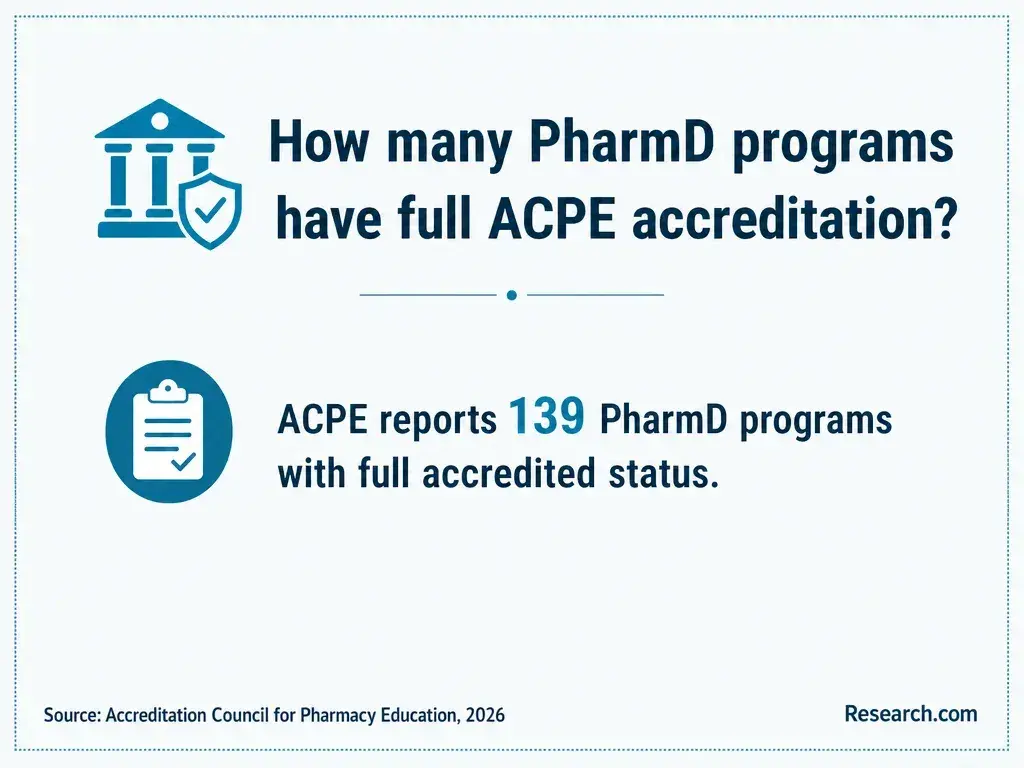
Check the program's current listing and accreditation status in the Accreditation Council for Pharmacy Education (ACPE) professional-program directory. Then review the school's current experiential education handbook or catalog for required IPPEs and APPEs, site approval, preceptor qualifications, evaluations, and remediation policies. Ask for the policy if it is not public.
Keep three approvals separate: ACPE accredits the professional pharmacy program; institutional accreditation concerns the college or university; state authorization can govern distance education. None alone confirms that a particular rotation site is approved, that an out-of-state placement is permitted, or that a graduate will receive a pharmacist license. Likewise, pharmacy school prerequisite expectations concern admission to the professional curriculum, not whether its clinical placements meet quality standards.
No legal setting is relevant to a required Pharm.D. rotation. In pharmacy, the best setting is one that meets the school's requirements while offering the supervised skills you need to develop. This comparison shows what different sites may offer and where to probe further.
| Pharmacy setting | Potential learning exposure | Possible limitation to check |
| Community pharmacy | Patient counseling, dispensing systems, medication access, and workflow | Whether staffing allows sustained teaching and feedback |
| Hospital or health system | Inpatient drug therapy, interprofessional communication, and care transitions | How much direct participation students receive |
| Ambulatory care clinic | Follow-up visits and medication-management decisions | Whether patient volume supports the stated objectives |
| Specialty or other approved practice | Focused services and complex medication access | Whether the experience satisfies a required or elective rotation |
Ask the school which experiences are required, which are electives, and whether it coordinates or merely approves proposed sites. This matters particularly when comparing Doctor of Pharmacy distance learning programs: online coursework does not make hands-on rotations remote or guarantee a site near home.
Pharm.D. programs should approve and monitor pharmacy sites and preceptors through their experiential education processes. Ask how the school collects student evaluations, reviews preceptor feedback, responds to safety concerns, and determines whether a site remains suitable. A useful policy identifies a contact outside the site, a way to report problems, and a process for protecting progress toward required hours and competencies if reassignment becomes necessary.
Pay attention to evidence, not promises: repeated canceled teaching sessions, unclear supervision, pressure to work outside permitted duties, or evaluations that do not reflect actual performance warrant prompt contact with the experiential education office. An Pharm.D. completion pathway with a compressed schedule makes a workable reassignment process especially important; lost rotation time may be difficult to recover.
Use these questions with the experiential education office and, when permitted, the proposed pharmacy site. Written answers make competing placements easier to compare and expose logistical problems early.
- Is this site approved for my specific required or elective IPPE or APPE, and who is my designated preceptor?
- What patient-care activities can I expect to perform, and how often will I receive direct feedback?
- What are the actual shift times, weekend requirements, start date, and attendance or make-up policies?
- Who arranges the placement, and what happens if the preceptor leaves or the site cannot meet its objectives?
- What intern registration, background checks, immunizations, transportation, technology, or other prerequisites must I complete?
- If the site is in another state, who confirms that the placement and my student activities are permitted there?
Resolve eligibility issues before making travel commitments. A discussion of pharmacy application eligibility pathways may help prospective students distinguish admission conditions from later rotation clearances; meeting one does not waive the other.
For pharmacy, online or hybrid instruction does not establish the quality - or location - of clinical rotations. A prospective Pharm.D. student should confirm required live classes, campus visits, hands-on labs, in-person assessments, and IPPE/APPE schedules separately. Ask whether the school assigns sites, helps secure them, or requires students to propose sites for approval; also ask whether a local placement is possible but not guaranteed.
Do not assume a current job can substitute for a rotation or that full-time work can continue unchanged during APPEs. State authorization to enroll an online student is also distinct from permission to complete a particular placement and from eventual pharmacist licensure eligibility. Lists of fastest online pharmacy degree programs may include credentials other than a licensure-qualifying Pharm.D.; verify the exact degree and its in-person requirements before comparing timelines.
For a Pharm.D. student, rotation costs extend beyond advertised tuition. Possible expenses include intern registration, immunizations, background checks, transportation, temporary housing, parking, and time away from paid work. The largest difference between two otherwise similar placements may be whether commuting is practical or a temporary move is needed.
Request the school's current cost-of-attendance estimate and ask which rotation expenses it includes. Compare that figure with likely personal costs using Pharm.D. tuition planning as a starting point, not a substitute for a school-specific budget. Confirm financial-aid eligibility under the rules for your entry date; federal borrowing rules changed for many new graduate and professional borrowers beginning July 1, 2026. A delayed or failed rotation may also postpone graduation, so ask when the next eligible placement would be available.
Can a high-quality legal internship improve paralegal career outcomes?
A strong pharmacy rotation can give students documented experience, informed references, and a clearer view of practice settings. It may help them assess whether to pursue direct employment or postgraduate training, but it does not guarantee a job, residency position, or salary. A residency or fellowship is training after the Pharm.D.; board certification is a separate credential, and none replaces state pharmacist licensure.
The U.S. Bureau of Labor Statistics reports median annual pay for pharmacists of $140,910 in May 2025 and projects 5% employment growth from 2025-2035. Those occupation-wide figures do not measure the return from any particular rotation. Judge a site by the skills and feedback it offers rather than treating a prestigious name as an employment promise. Similarly, short doctoral degree completion options should not be confused with the professional Pharm.D. training and supervised experiences needed on the U.S. pharmacist-licensure pathway.
Other Things You Should Know About PharmD
Do not assume they are. Ask your school whether a particular placement offers compensation and whether accepting it affects any school or site policy.
Only if your program expressly approves the arrangement for the required experience. Employment alone does not establish that the site, preceptor, objectives, and assessment meet program rules.
Policies vary by school. Ask when preferences are submitted, how assignments are made, and whether ranking a site creates any priority or guarantee.
No. IPPEs and APPEs are part of the professional Pharm.D. curriculum. A pharmacy residency is postgraduate training pursued after completing the degree, subject to its own eligibility and application requirements.
- Reporting Patient Safety Events | PSNet https://psnet.ahrq.gov/primer/reporting-patient-safety-events
- CDC Approach to Program Evaluation https://www.cdc.gov/evaluation/php/about/index.html
- Assessment of clinical competence in... - PMC - NIH https://pmc.ncbi.nlm.nih.gov/articles/PMC7668267/
- Preceptor Selection Criteria | Conway School of Nursing https://nursing.catholic.edu/explore-our-school/clinicals-career/preceptors-clinical-educators-dedicated-your-learning/preceptor-selection-criteria
- What to Know About Nursing Clinical Requirements | verifiedcredentials.com https://verifiedcredentials.com/what-to-know-about-nursing-clinical-requirements
- Hospital Accreditation Program | jointcommission.org https://www.jointcommission.org/en-us/accreditation/hospital