Pharmacy residency specialties explained for PharmD students

Co-Founder and Chief Data Scientist
Choosing a pharmacy residency means deciding whether additional supervised training will help you reach a specific practice goal—and, if so, which specialty is worth the time and foregone earnings. For Doctor of Pharmacy (Pharm.D.) students, the options range from broad patient-care training to focused work in oncology, pediatrics, ambulatory care, and other fields.
This guide compares those paths, explains the application and licensing steps, and shows how to test a specialty choice before committing. You should leave with a shortlist of training options and questions to ask each program.
Key Things You Should Know
- A postgraduate year one (PGY1) residency usually provides about 12 months of broad practice training; a postgraduate year two (PGY2) residency usually adds about 12 months in a specialty. Not every specialty job requires either one.
- Choose by patient population, daily work, practice setting, and program experiences—not an unsupported ranking of "most in-demand" specialties. Confirm each program's accreditation status, application process, and licensure deadline.
- The Bureau of Labor Statistics reports median pharmacist pay of $140,910 in May 2025, but that figure covers pharmacists broadly, not residents or a particular specialty. Compare a program's published stipend with your likely costs and alternative job offers.
What Are the Main Pharmacy Residency Specialties for PharmD Students?
Most Pharm.D. graduates considering residency start with a PGY1 program in pharmacy practice or a more focused PGY1 setting, then consider PGY2 training if a particular practice area calls for deeper experience. The available specialties and program descriptions are best checked in the current American Society of Health-System Pharmacists (ASHP) residency directory; names alone do not tell you how much direct patient care a resident receives.
The comparison below groups common interests by the work residents typically seek. Actual rotations, patient populations, and responsibilities vary by program.
| Practice interest | Specialty examples | Good fit if you enjoy |
| Acute care | Critical care, emergency medicine, internal medicine, cardiology | Rapid clinical decisions and hospital teams |
| Longitudinal care | Ambulatory care, geriatrics | Follow-up visits and chronic-disease management |
| Defined patient populations | Oncology, pediatrics, infectious diseases, psychiatric pharmacy | Developing depth with particular conditions or patients |
| Systems and specialized services | Medication-use safety, pharmacy informatics, health-system administration, specialty pharmacy | Improving medication processes, technology, or service delivery |
If you are still working toward a Pharm.D. after a science degree, pharmacy school for biology and chemistry graduates is an earlier decision. Prior science coursework does not replace the professional degree, pharmacist licensure, or residency eligibility.
What Is the Difference Between PGY1 and PGY2 Pharmacy Residencies?
PGY1 builds broad clinical and operational competence; PGY2 develops advanced competence in a defined practice area. A PGY1 resident might rotate through inpatient care, ambulatory care, medication safety, and staffing while completing projects and teaching activities. A PGY2 resident spends more of the year managing specialty-specific cases and services, often after completing a qualifying PGY1. Verify the prerequisite stated by each PGY2 program.
PGY1 is not automatically a commitment to PGY2. It may support applications for clinical roles, while direct employment after the Pharm.D. can be the better route when an employer will train you for the work you want. A fellowship is different: it commonly emphasizes research or pharmaceutical-industry work rather than an ASHP-accredited patient-care residency. Board certification is a separate credential, not another name for PGY2.
An accelerated online pharmacy program may change the timeline for earning a Pharm.D.; it does not compress or replace postgraduate residency training. Compare the two timelines separately.
Which Pharmacy Residency Specialties Are Most in Demand?
There is no reliable nationwide ranking of residency specialties by employer demand. Demand differs by region, health system, service line, and job title. A hospital expanding oncology services may seek oncology experience, while an outpatient network may prioritize ambulatory care. A specialty can also be popular with applicants without offering many positions locally.
For context, the Bureau of Labor Statistics projects 5% growth in pharmacist employment from 2025-2035, with about 12,500 openings per year. Those are projections for pharmacists overall; they cannot establish that oncology, critical care, or any other residency specialty has the strongest outlook.
Look instead at recent postings in places where you would work: note which roles require an active pharmacist license, which prefer PGY1 or PGY2 training, and which accept equivalent experience. If you have not yet chosen a school, compare online Pharm.D. program options on education and licensure suitability, not on an assumption that delivery format predicts specialty demand.
Applicants generally need a Pharm.D. from an eligible pharmacy program, or an accepted equivalent where a program permits one, and must meet the program's pharmacist licensure requirements by its stated deadline. Requirements vary: some programs specify a state license, eligibility to obtain one, minimum academic standing, or particular prior experiences. A Pharm.D. alone does not issue a license; state boards set licensing requirements.
Use each program's current listing to build an application checklist. The following steps cover requirements that are easy to confuse or miss:
- Check eligibility, accreditation status, location, licensure deadline, and any specialty-specific prerequisites directly with the program.
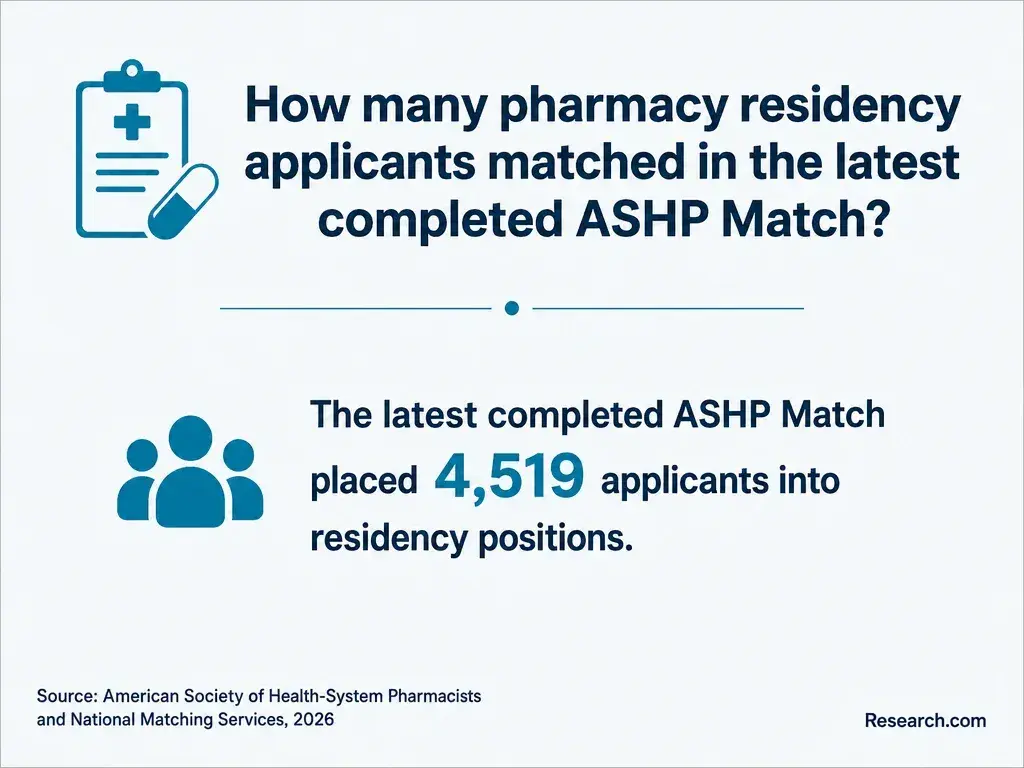
- Confirm whether it uses the Pharmacy Online Residency Centralized Application Service (PhORCAS) and participates in the ASHP Resident Matching Program administered by National Matching Services; do not assume every opportunity follows the same process.
- Prepare the requested transcript, curriculum vitae, letters of intent, references, and interviews, following each program's instructions and deadlines.
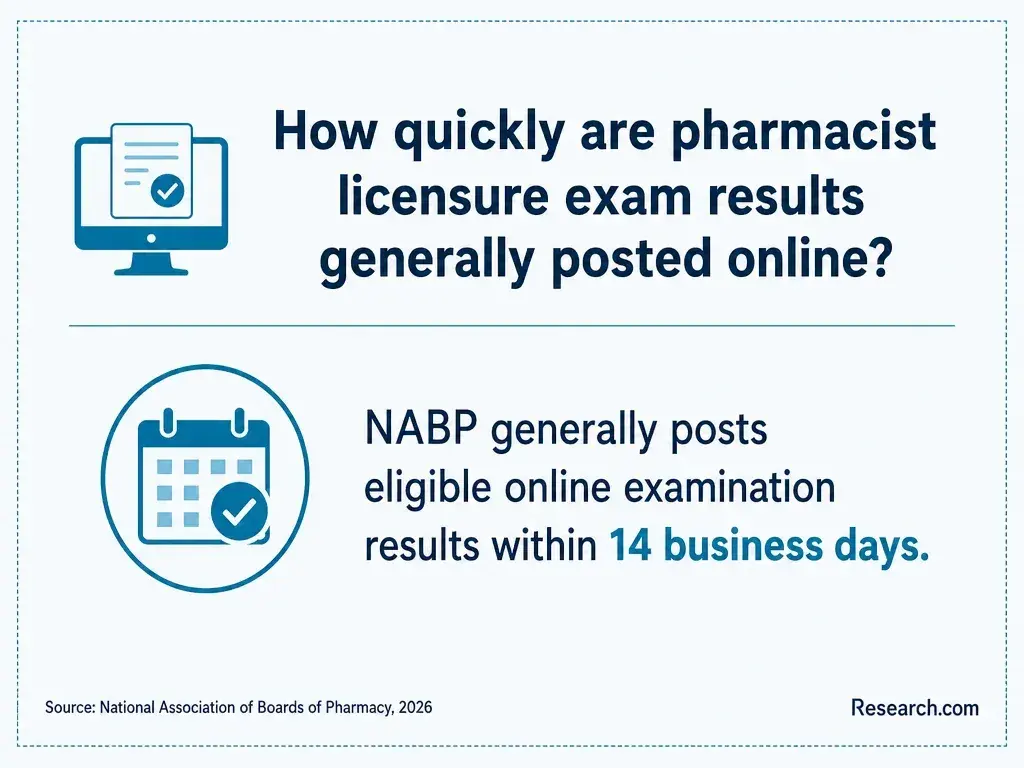
- Rank only programs you would accept, using the current Match rules; plan separately for licensing exams and state-board processing.
Students still preparing for pharmacy school should distinguish pharmacy school prerequisite expectations from residency eligibility. Undergraduate prerequisites lead toward admission to a professional Pharm.D. program; they are not residency application requirements.
Use this short decision sequence after your advanced pharmacy practice experiences (APPEs) or other supervised exposure. It turns an initial interest into questions you can test:
- Name two roles you would seriously consider and review their current hiring requirements in your preferred locations.
- Identify the patient care, operations, research, or teaching activities you want to do regularly—and the tasks you would rather avoid.
- Compare PGY1, PGY1 followed by PGY2, and direct employment against those roles, including time, stipend, and relocation trade-offs.
- Ask residents and preceptors how much of the advertised experience residents actually receive, how feedback works, and where graduates have gone.
If you have not entered a Pharm.D. program, investigate transfer-friendly pharmacy education options before planning residency. The receiving school decides how prior credit applies; transferred undergraduate coursework does not substitute for specialty training.
Residencies teach through supervised practice, feedback, projects, and increasing responsibility—not just classroom instruction. An oncology resident may work on antineoplastic medication plans and supportive care; an infectious diseases resident may participate in antimicrobial stewardship; an ambulatory care resident may manage longitudinal medication therapy under applicable practice rules. Critical care can emphasize unstable patients and interdisciplinary rounds, while informatics can emphasize medication-system design and data workflows.
Program design matters as much as the specialty name. Compare required and elective rotations, staffing duties, project support, teaching opportunities, and access to your target patient population. Ask who supervises clinical decisions and what residents may do under state law and site policy; training does not create independent authority to practice beyond those limits.
For prospective students, pharmacy program admission planning comes before these postgraduate experiences. Admission flexibility in a Pharm.D. pathway should not be mistaken for a waiver of residency prerequisites or licensure rules.
A PGY1 residency typically lasts about 12 months; completing PGY1 and then PGY2 typically means about two years of postgraduate training. Residencies are generally paid positions rather than tuition-based degrees, but stipends, benefits, application costs, licensing expenses, and relocation needs differ by program. Check the offer rather than assuming a stipend will cover your local living costs.
The largest economic trade-off may be earnings forgone relative to taking a pharmacist job immediately. Compare each program's published stipend and benefits with a realistic job offer—not the national pharmacist median—then account for moving, insurance, loan payments, and the possibility of a second year of training. A higher-paying alternative is relevant only if you could actually obtain it.
If Pharm.D. tuition remains part of your decision, review affordable online Pharm.D. programs separately from residency compensation. For new borrowers, federal graduate and professional loan rules changed beginning July 1, 2026; confirm your eligibility and aid-year terms with the school's financial aid office rather than assuming older borrowing options still apply.
Residency is primarily supervised practice at an approved site, not an online degree. A program may use virtual meetings, remote project work, or telehealth activities, but residents generally must be available for scheduled patient-care, staffing, and other on-site responsibilities. Ask about multiple sites, commuting, calls, and remote-work policies before accepting a position.
"Online" describes a possible instructional format for a degree, not a substitute for the clinical work of residency. Listings for the shortest online doctoral programs should therefore not be treated as routes to complete a pharmacy residency remotely—or as proof of pharmacist licensure eligibility.
Depending on the training and employer, former residents may pursue hospital clinical pharmacist, ambulatory care pharmacist, specialty pharmacist, medication safety, informatics, administration, or academic roles. PGY2 experience can strengthen an application for a narrowly focused position, but hiring requirements differ. Some pharmacists reach specialty roles through direct employment and substantial practice experience instead.
The Bureau of Labor Statistics reports median annual pay of $140,910 for pharmacists in May 2025. That national figure includes pharmacists across settings and experience levels; it is not a resident stipend, a new-graduate offer, or a specialty salary prediction. Evaluate actual postings and offers alongside the extra training time.
If you are comparing education routes before residency, pharmacy programs balancing cost and time can help frame the earlier investment. Do not assume a shorter or cheaper degree pathway—or residency itself—produces a particular salary or job.
How Do Accreditation, Licensure, and Board Certification Apply?
These are separate checks. The Accreditation Council for Pharmacy Education (ACPE) accredits professional Pharm.D. programs; it does not license graduates. Institutional accreditation and authorization to offer distance education are separate matters. ASHP accreditation applies to eligible residency programs and should be checked in its current directory. A program's accreditation status does not issue an individual pharmacist license.
State boards determine pharmacist licensure requirements, which may include the North American Pharmacist Licensure Examination (NAPLEX) and a jurisdiction-specific law examination or other requirement. Do not assume every jurisdiction uses the MPJE: some began moving to the UMPJE in 2026. Check the board where you will train and practice, along with the residency's deadline for obtaining a license.
Board of Pharmacy Specialties (BPS) certification is an optional professional credential for qualifying pharmacists in designated specialties. Its examination and eligibility rules are distinct from state licensure and residency accreditation; a PGY2 may be relevant to an eligibility route but is not itself board certification. Likewise, claims about pharmacy programs with shorter completion times should be checked for the exact credential offered: a short program does not automatically satisfy ACPE Pharm.D. education, licensing, or residency requirements.
Other Things You Should Know About PharmD
Review the Match's current post-match opportunities and program instructions, and consider pharmacist jobs that develop relevant experience. A later application can be stronger if you can show new skills, references, and a clearer practice goal.
Possibly, but eligibility varies by program and state. Confirm degree-equivalency, licensing, work-authorization, and program-specific requirements before spending money on applications.
Not universally. Programs may value a well-explained quality-improvement, research, or practice project, but assess applicants against their own selection criteria. Ask each program what experience matters for its role.
Yes. Relevant APPEs, PGY1 electives, mentorship, and entry-level pharmacist roles can help you test the work. Confirm what each opportunity actually permits you to do and whether it prepares you for your target job.
- Which PGY1 Pharmacy Residency Is Right for Me... - PMC https://pmc.ncbi.nlm.nih.gov/articles/PMC7243907/
- Pharmacy Residency Programs - What Is a Residency? | PCOM https://www.pcom.edu/pharmacy/news/pharmacy-residency-programs.html
- Pharmacy Practice Experiences | Doctor of Pharmacy https://pharmacy.wisc.edu/pharmd/pharmacy-practice/
- Participating Programs - ASHP Match https://natmatch.com/ashprmp/directory/participating-programs.html
- PGY1 Pharmacy Residency - A Practical Guide for Clinical Pharmacy Professionals | American College of Clinical Pharmacy https://careers.accp.com/career-resources/on-the-job-3/pgy1-pharmacy-residency-a-practical-guide-for-clinical-pharmacy-professionals-148
- From PGY1 Pharmacy Resident to PGY2 Specialty Resident | ashp.org https://careers.ashp.org/career-resources/on-the-job-3/from-pgy1-pharmacy-resident-to-pgy2-specialty-resident-a-health-system-pharmacy-career-path-103
- Program Specifics | PGY2 Emergency Medicine Pharmacy Residency | Atrium Health https://atriumhealth.org/education/graduate-medical-education/pharmacy-residencies/carolinas-medical-center/pgy2-emergency-medicine-pharmacy-residency/program-specifics
- PGY2 Ambulatory Care Pharmacy Residency Program | Tampa General Hospital https://www.tgh.org/healthcare-professionals/pharmacy-residency-programs/pgy2-ambulatory-care-pharmacy-residency-program
- PGY2 Competency Areas | ashp.org https://www.ashp.org/Professional-Development/Residency-Information/Residency-Program-Resources/Residency-Accreditation/PGY2-Competency-Areas
- Rotations - UW Health - Remarkable Careers https://careers.uwhealth.org/pgy2-oncology-pharmacy-residency/rotations/