How PharmD experiential training supports NAPLEX preparation

Co-Founder and Chief Data Scientist
Pharmacy rotations put classroom knowledge to work, but they are not a substitute for studying for the North American Pharmacist Licensure Examination (NAPLEX). If you are choosing a Doctor of Pharmacy (Pharm.D.) program or planning your final year, the useful question is whether its patient-care experiences will help you recognize gaps, apply drug knowledge, and make safer decisions under exam conditions. This guide explains what introductory and advanced rotations contribute, what they cannot cover reliably, and which program and licensure details to verify before committing.
Key Things You Should Know
- Introductory pharmacy practice experiences (IPPEs) build foundational skills; advanced pharmacy practice experiences (APPEs) require more independent clinical reasoning under supervision. ACPE standards specify minimums of 300 IPPE hours and 1,440 APPE hours for professional Pharm.D. programs.
- Rotations reinforce NAPLEX topics through patient cases, calculations, dispensing, and medication safety, but site assignments may leave gaps that require targeted review.
- Compare programs by ACPE professional accreditation, rotation settings and placement support, feedback quality, and published NAPLEX outcomes—not by an "online" label or a promised exam-prep benefit alone.
How Does PharmD Experiential Training Support NAPLEX Preparation?
Experiential training helps students retrieve and apply information rather than only recognize it in a lecture. On rotation, a student may review a patient's conditions, medications, laboratory results, and treatment goals; identify a medication-related problem; and explain a recommendation to a preceptor. That sequence resembles the reasoning needed for many NAPLEX questions, although real practice allows more consultation and reference use than a timed exam.
IPPEs introduce supervised practice, often in community and health-system settings. APPEs are more intensive rotations in which students apply accumulated knowledge to patient care and pharmacy operations. Both are part of the professional Pharm.D. curriculum, not undergraduate pre-pharmacy prerequisites. Students considering Doctor of Pharmacy accelerated tracks should check when these experiences occur and how much time remains for cumulative NAPLEX review.
The limitation: A rotation teaches what its patients and site expose you to. Even an excellent placement cannot be expected to cover every disease state, calculation type, or compounding concept on the exam.
What Skills Do IPPEs and APPEs Develop for the NAPLEX?
IPPEs emphasize accurate information gathering, communication, workflow, and supervised medication-use tasks. APPEs build on those foundations through more complex case assessment, therapy monitoring, documentation, and recommendations. The distinction matters because NAPLEX preparation depends on both reliable basics and the ability to connect several clinical facts.
A practical way to use either experience is to turn routine work into deliberate review:
- After reviewing an order, calculate the dose independently and check units, renal function, and reasonableness with the preceptor.
- After a patient encounter, explain the treatment goal, major alternatives, monitoring plan, and counseling priorities.
- Record topics you could not explain confidently, then revisit them with a trusted review resource outside patient-care time.
These activities supplement—not replace—the school's evaluations and a comprehensive study plan. Be cautious with lists of fast-track online pharmacy education: a short online pharmacy-related credential is not necessarily a licensure-eligible Pharm.D. with required in-person experiences.
How Do Pharmacy Rotations Align With NAPLEX Competency Areas?
The NAPLEX assesses whether a candidate can apply pharmacy knowledge to medication use and patient safety. Rotation settings provide different opportunities to practice those competencies. This comparison shows the likely overlap—and why no single setting is sufficient.
| Rotation setting | Common NAPLEX-relevant practice | Likely coverage gap |
| Community pharmacy | Prescription assessment, counseling, dispensing, calculations, and safety checks | Less sustained exposure to complex inpatient cases |
| Hospital or health-system pharmacy | Order verification, sterile-product processes, dosing, and medication-use systems | Less routine community dispensing and self-care counseling |
| Ambulatory or direct patient care | Therapy selection, monitoring, follow-up, and communication across care teams | Exposure varies with the clinic's patient population |
When comparing leading online pharmacy degree programs, ask for the actual required rotation categories and examples of approved sites. Online coursework does not turn clinical rotations into remote experiences, and site availability can affect the mix a student receives.
Rotations can repeatedly reinforce pharmacotherapy, drug characteristics, calculations, medication preparation and dispensing, and safe medication-use systems. The strongest learning occurs when a student connects a decision to its rationale: why a dose changes with organ function, why a therapy needs monitoring, or how a dispensing check prevents harm.
Exposure is uneven. A student who sees many chronic-disease visits may gain confidence with monitoring plans but still need structured review of less common conditions, compounding, or unfamiliar calculations. Use the current NABP NAPLEX content outline as a checklist, and mark each area as practiced, reviewed without practice, or not yet reviewed. Then allocate study time to the last two categories rather than assuming frequent rotation tasks represent the whole exam.
Applicants reviewing pharmacy school admission requirements should make a separate distinction: prerequisite science courses establish eligibility to apply, while professional coursework and rotations develop the knowledge assessed for pharmacist licensure.
Preceptors are pharmacists or other approved practitioners who supervise and evaluate experiential learning. Their most valuable exam-related contribution is specific feedback: identifying an incomplete assessment, asking a student to defend a recommendation, and checking whether the student can explain a calculation or safety concern. They are not a substitute for a NAPLEX instructor or a comprehensive review course.
Students can make that feedback more useful by asking for one clinical reasoning strength and one topic to review after each case discussion. They should also ask how performance is evaluated and what remediation is available if a skill remains weak. Feedback may differ across sites and preceptors, so compare patterns over several rotations rather than relying on one evaluation.
Students entering through pharmacy admission pathways for nontraditional students may bring useful workplace experience, but previous experience does not remove the need to demonstrate Pharm.D.-level skills during supervised rotations.
Patient care makes clinical facts less abstract. A student must distinguish the information that changes a decision from details that do not, weigh benefits against risks, and select a defensible next step. Those habits help with exam questions that require prioritization rather than recall of an isolated drug fact.
Consider a patient whose medication list, symptoms, and laboratory results point to more than one possible problem. A useful rotation discussion identifies the most urgent concern, the information still needed, and how the treatment plan would be monitored. For exam preparation, the student can later revisit the underlying disease state and compare it with cases that call for a different decision.
This is one reason the transition from pre-pharmacy to a Pharm.D. is more than an increase in scientific coursework: students must learn to apply that science to patients. Real patient care always remains subject to supervision, site policy, and state law.
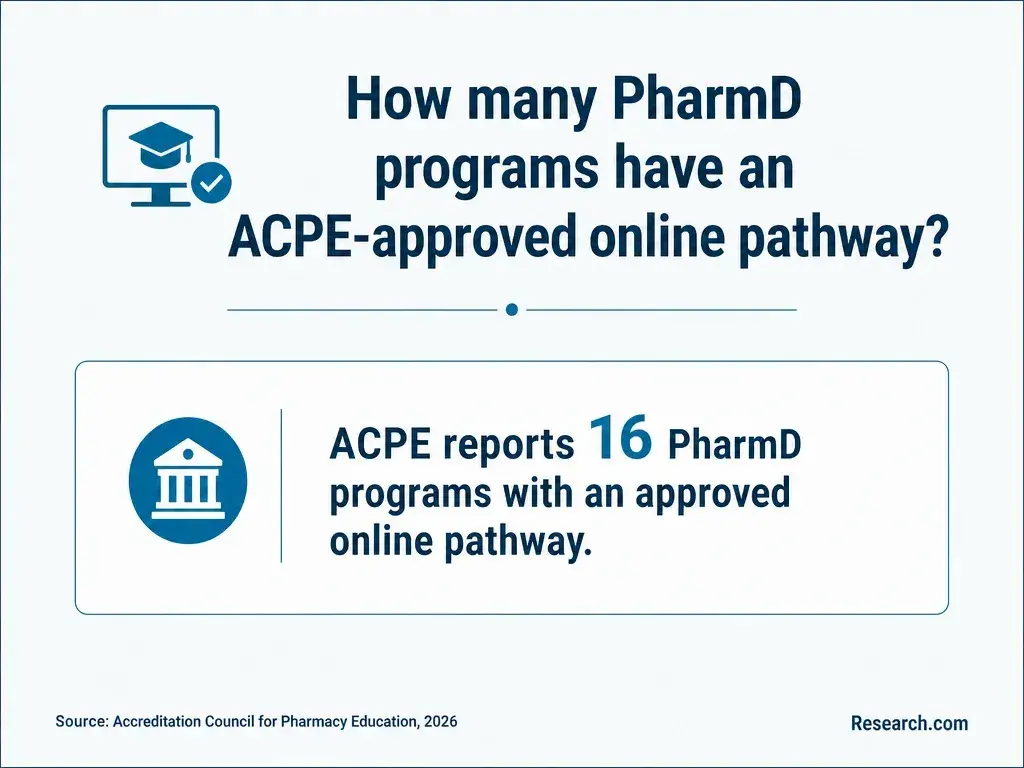
In an online or hybrid Pharm.D., lectures and some case discussions may be delivered online, while hands-on activities, assessments, campus sessions, IPPEs, and APPEs may require in-person attendance. Delivery arrangements vary by program; "online" does not mean self-paced, fully remote, or compatible with unrestricted full-time work during rotations.
Before enrolling, ask the program how it approves sites and preceptors, who coordinates placements, whether a placement near home is possible, and what happens if a local site is unavailable. Also confirm campus attendance, rotation schedules, potential travel or temporary housing, and requirements such as intern registration, background checks, and immunizations. A student's existing job should not be assumed to qualify as a rotation.
Include those expenses when assessing online pharmacy degree affordability. Lower advertised tuition may not offset substantial travel costs or time away from paid work. State authorization to enroll online students and approval of clinical placements are separate questions from eligibility for pharmacist licensure.
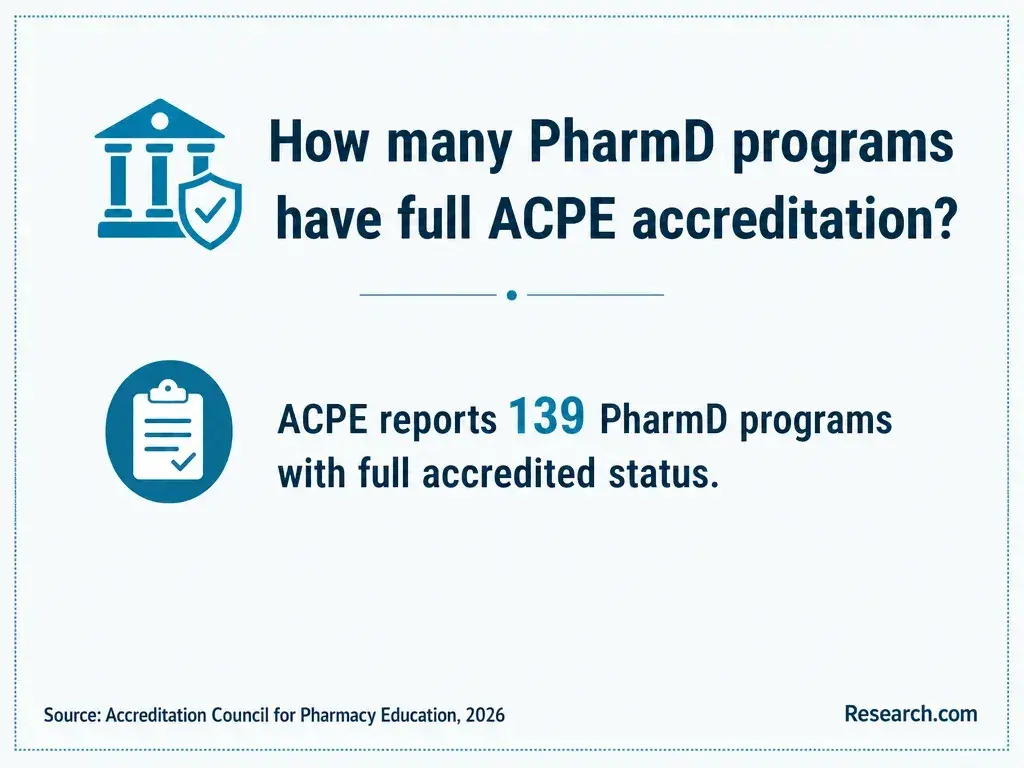
Start by confirming the professional Pharm.D. program's current status in ACPE's official directory. ACPE professional-program accreditation is distinct from an institution's accreditation and from state authorization for distance education. None of these, by itself, grants a pharmacist license.
Once eligibility is clear, compare how programs support the experiences that matter for NAPLEX preparation:
- Ask which IPPE and APPE settings are required, when they occur, and how sites and preceptors are approved and evaluated.
- Ask how students receive feedback, address weak clinical skills, and prepare for topics their assigned sites do not cover.
- Review the school's published NAPLEX outcomes with the cohort and reporting period in mind; ask what support is available to students who need additional preparation.
- Confirm total attendance costs, including required travel and rotation expenses, before comparing offers.
A published pass rate is useful context, not a promise about an individual student. When you compare pharmacy degree costs and duration, weigh the price and schedule alongside placement reliability and the time available for exam review.
Classroom instruction and structured review provide breadth; rotations provide repeated application and feedback. An effective study plan uses both. Map the current NAPLEX outline against coursework and rotation experiences, then use practice questions to test whether you can apply—not merely recognize—the material.
Keep a concise, de-identified learning log of missed calculations, unfamiliar therapies, and reasoning errors. Review it regularly, while also scheduling time for topics your sites rarely encounter. Protect patient confidentiality and follow the school's and site's rules for any learning notes. As the exam approaches, timed practice helps reveal whether clinical reasoning transfers to the exam's format and pace.
Be wary of assuming that a shorter calendar automatically leaves enough review time. Unlike general doctoral programs with accelerated timelines, a licensure-eligible Pharm.D. includes substantial supervised experiential work. Ask for a term-by-term schedule showing rotations, assessments, breaks, and the period graduates typically use for NAPLEX preparation.
What Other Requirements Must PharmD Graduates Meet for Pharmacist Licensure?
Other Things You Should Know About PharmD
Not automatically. Technician work can build familiarity with medications and workflow, but the Pharm.D. program determines whether an experience satisfies its supervised IPPE or APPE requirements. Technician and pharmacist are distinct roles.
Usually, choices depend on the school's placement process, approved preceptors, site capacity, and required rotation categories. Ask how preferences are considered before assuming a particular location will be available.
The school's published evaluation and remediation policies govern what happens next. An unsuccessful APPE may require additional work or a repeated experience and can delay graduation, so request the policy before enrollment.
- Systematic Review of Predictors of Success for the North American Pharmacist Licensure Examination - PMC https://pmc.ncbi.nlm.nih.gov/articles/PMC8715967/
- Advanced Pharmacy Practice Experiences (APPE) | Veterans Affairs https://www.va.gov/loma-linda-health-care/work-with-us/internships-and-fellowships/advanced-pharmacy-practice-experiences-appe/
- RxPrep helps PharmD students prep for NAPLEX | Binghamton University https://www.binghamton.edu/news/story/3300/rxprep-helps-pharmd-students-prep-for-naplex
- Experiential Education at the College of Pharmacy | UNT Health Fort Worth https://www.unthealth.edu/college-of-pharmacy/experiential-education.html
- Pharmacy Practice Experiences | Doctor of Pharmacy https://pharmacy.wisc.edu/pharmd/pharmacy-practice/
- IPPE Information | Experiential Education https://pharm.ucsf.edu/experiential/ippe
- Experiential Rotation Manual | ufl.edu https://oep.pharmacy.ufl.edu/student-resources/experiential-policies-and-procedures/
- The Office of Experiential Education (OEE) | Pharmacy Advising Center https://advising.pharmacy.uconn.edu/academics/experiential-education/
- PharmD Program: NAPLEX Preparation | usc.edu https://libguides.usc.edu/c.php
- Strategies to grow an experiential learning program - The role of administrators - ScienceDirect https://www.sciencedirect.com/science/article/abs/pii/S1877129715200147