
PharmD Payment Schedule and Semester Billing Guide

Co-Founder and Chief Data Scientist
A Pharm.D. offer can be difficult to budget for if the tuition page shows an annual figure but the university bills by semester. The amount due may also change when financial aid posts, clinical rotations begin, or required fees appear. This guide is for prospective and current U.S. Doctor of Pharmacy students who need to plan each payment - not just estimate total tuition. You'll learn how billing cycles work, which charges to anticipate, and what to confirm before choosing a program or committing to a payment plan.
Key Things You Should Know
- Most schools issue a separate bill for each semester or term; the due date, aid-disbursement date, and payment-plan deadline may differ.
- Compare the full 2026-27 cost of attendance with the charges actually billed. Rotation travel and living expenses can be substantial even when they do not appear on the university bill.
- Federal borrowing rules changed for many new graduate and professional students beginning July 1, 2026. Confirm your own loan eligibility and any transition rules before relying on loans to cover a semester balance.
What Is a PharmD Payment Schedule and Semester Billing Cycle?
A Pharm.D. payment schedule is the set of dates on which a school posts charges, applies payments and financial aid, and requires any remaining balance. The billing cycle is the process for a particular semester or other academic term. A student account may show a balance before aid is disbursed, so a posted charge is not always the amount the student must pay out of pocket.
Check which courses the schedule covers. Undergraduate pre-pharmacy prerequisites and the professional Pharm.D. curriculum can have different tuition rates, calendars, and aid classifications.
A student still finishing prerequisites should not assume that an admission offer makes those courses part of the professional program. If that is your situation, compare pharmacy application requirement flexibility with the school's written conditions for enrollment and billing.
When Are PharmD Tuition Payments Typically Due?
Payment is generally due around the start of each term, but there is no nationwide Pharm.D. due date. A school may bill before classes begin, set an earlier deadline for payment-plan enrollment, and disburse eligible aid only after enrollment and other conditions are confirmed. Summer courses or clinical rotations may create an additional billing period.
Use the student accounts calendar - not the admissions deposit deadline - as your authority. Before each term, note the date charges post, the balance deadline, the expected aid-disbursement window, and the last day to change enrollment without a tuition penalty.
An accelerated program may use a different term pattern or include summer study; compare its shorter pharmacy doctorate pathways against the actual billing calendar, not just the advertised completion time.
How Much Do PharmD Programs Cost Per Semester?
There is no reliable national per-semester price to apply to every Pharm.D. program. Schools may charge a flat professional-program rate, a per-credit rate, or different amounts by residency status and term. A published annual tuition figure also may exclude mandatory fees and may not divide evenly between semesters.
For a usable estimate, request the school's 2026-27 term-by-term tuition and fee schedule for your residency status and expected course load. If tuition is charged per credit, multiply the published rate by the credits scheduled for that term, then add its required fees.
If it is a flat rate, confirm which terms and credit loads it covers. Compare affordable pharmacy doctoral education using comparable full-year or full-program figures; a lower tuition line alone does not establish a lower total cost.
The distinction between billed charges and other expenses makes semester estimates more useful. This table shows where common costs usually belong; each school's policy controls.
| Cost | Usually on the school bill? | Budget implication |
| Professional tuition and mandatory fees | Yes | Usually part of the balance due each term |
| Books, software, and equipment | Sometimes | May require separate purchases near the start of classes |
| Housing, food, and rotation travel | Usually not | Still affect how much cash or aid the student needs |
A statement commonly separates tuition from university and professional-program fees. Depending on the school and term, charges may include laboratory or technology fees, health insurance unless waived, and materials supplied directly by the institution. Optional items and refundable deposits should be identified separately.
Other required spending may never reach the student account: textbooks, clinical-reference subscriptions, a computer, immunizations, background checks, intern-registration costs, and travel or temporary housing for introductory or advanced pharmacy practice experiences (IPPEs and APPEs).
Students entering after science prerequisites should also account for any courses they must complete before professional enrollment; pharmacy doctorate options after chemistry are worth comparing by remaining prerequisite costs as well as Pharm.D. tuition.
Ask student accounts to explain any charge you cannot match to the published fee schedule. Ask the experiential education office separately which rotation-related expenses students normally pay themselves.
Schools typically accept electronic payments and may accept other methods such as bank transfers, checks, or third-party sponsorship payments. Accepted methods, processing fees, and the time a payment takes to post vary. Eligible financial aid normally credits the student account first; the student pays any balance not covered by posted aid.
Before sending money, confirm the payment instructions in the official student portal, especially for a large transfer. If an employer or other sponsor is paying, ask whether the school accepts a billing authorization or requires you to pay first and seek reimbursement. Avoid treating a credit-card payment as a no-cost convenience: processing charges and card interest can make it expensive.
If the goal is a pharmacy-related job rather than pharmacist licensure, compare the cost of the Pharm.D. with pharmacy degree options with shorter study periods. A shorter credential may meet a different career goal, but it does not substitute for the professional degree and state requirements for pharmacist licensure.
Eligible aid can cover billed tuition and fees, and remaining funds may be released to the student for permitted education expenses after the school applies aid to the account. Eligibility depends on the student's classification, the school's cost of attendance, enrollment, program eligibility, and the applicable aid year. An aid offer is not the same as cash already posted to a bill.
Federal loan rules changed for many new graduate and professional borrowers beginning July 1, 2026. Do not assume a previous student's borrowing limit or Grad PLUS access applies to you.
Ask the financial aid office which rules and any transition provisions govern your 2026-27 enrollment, what aid can disburse each term, and how you will cover a balance if aid is delayed or insufficient. Check current Federal Student Aid guidance before accepting a loan.
Previous coursework can affect the calculation too. For pharmacy degree programs for transfer students, the receiving school decides which credits count and how they change the remaining program length, charges, and aid eligibility. Get that evaluation in writing before projecting savings.
Many institutions offer term-based installment plans, but availability and terms are school-specific. A plan divides an eligible balance into scheduled payments; it ordinarily does not reduce tuition. Enrollment may require a fee, an initial payment, or a deadline before the term's standard due date. Missed payments may trigger charges or a registration hold.
Compare the plan against the actual gap between posted aid and your bill. The following checks help determine whether its payment dates are workable:
- Ask which charges qualify and whether expected aid reduces the amount scheduled for installments.
- Record the enrollment deadline, initial payment, later due dates, and all plan or late fees.
- Check what happens if aid changes, a course is added, or you withdraw.
A manageable installment is not proof that the program is economical overall. When assessing pharmacy programs that may offer strong value, include the full cost of attendance and the borrowing needed across all terms.
Delivery format alone does not determine when tuition is due. Online or hybrid Pharm.D. programs may bill by semester, term, or another published calendar, just as campus programs can. The meaningful differences are the program's actual course sequence, required campus visits, and in-person clinical experiences - not an assumption that online tuition is charged monthly or costs less.
An online course schedule may still include live sessions, hands-on labs, campus immersions, IPPEs, and APPEs.
Confirm who arranges or approves placements, whether a nearby site is possible, and what travel, housing, time away from work, or state requirements may apply. Use the same questions when comparing leading online pharmacy degree programs; online instruction does not make clinical training fully remote.
Before committing to a billing agreement, check the program's current status in the Accreditation Council for Pharmacy Education (ACPE) professional-program directory.
ACPE accreditation concerns the pharmacy program; institutional accreditation concerns the school, and distance-education state authorization is a separate matter. For an online or hybrid option, also ask whether the school can enroll you and arrange required experiences in your state.
A Pharm.D. is a professional degree, not a pharmacist license. Graduates must satisfy the applicable state board's requirements, which can include supervised experience, the NAPLEX, and a jurisdiction-specific law assessment.
Do not assume every jurisdiction uses the MPJE: some began transitioning to the UMPJE in 2026. Confirm current exam and intern-registration requirements directly with the state board where you intend to practice.
Be especially cautious when comparing online doctorate programs with shorter timelines. A doctorate in another subject, however convenient its billing schedule, is not a substitute for an appropriate Pharm.D. pathway to U.S. pharmacist licensure.
How Should Students Compare PharmD Costs and Career Outcomes?
Compare offers term by term, then assess the total commitment: remaining prerequisites, tuition and required fees, living costs, rotation logistics, likely borrowing, and time away from paid work.
Review each program's published NAPLEX outcomes and the context for those results, but do not treat a pass rate as a guarantee of your own licensure. Also ask how the school supports clinical placements and licensure preparation.
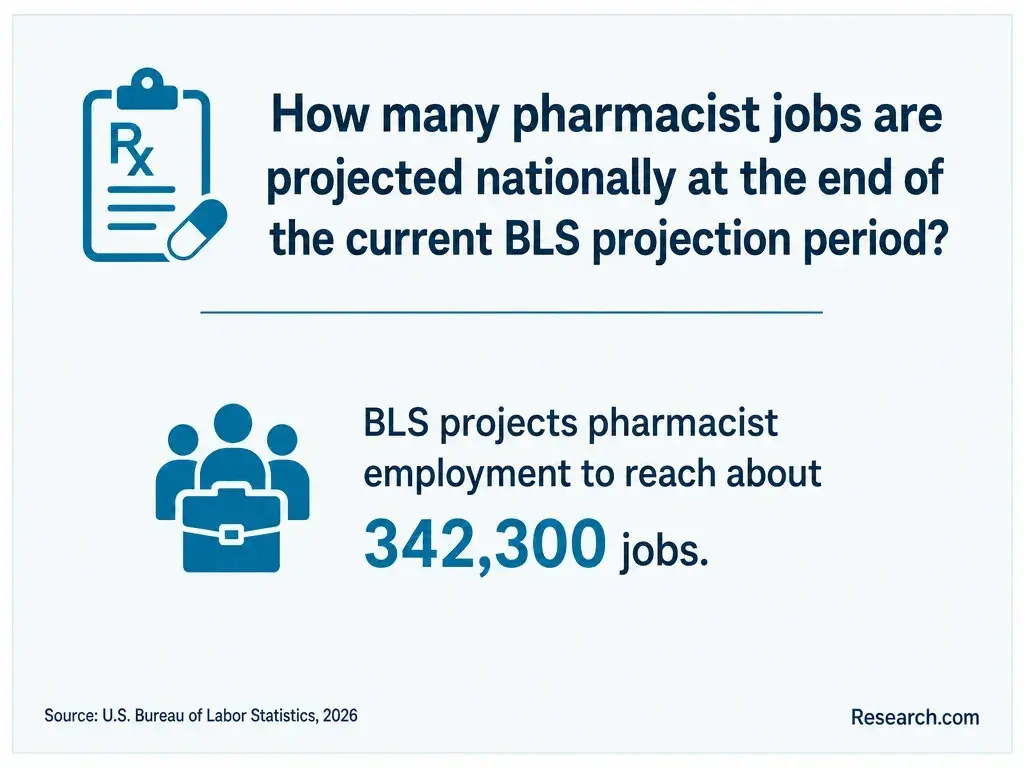
The Bureau of Labor Statistics reports pharmacist median annual pay of $140,910 in May 2025 and projects 5% job growth from 2025-2035, with about 12,500 openings per year. Those national occupation figures provide career context, not a starting-salary estimate or a promised return on a particular school's tuition.
Before paying a nonrefundable deposit, request an itemized, term-by-term cost estimate and written answers about aid, rotation expenses, accreditation, and state eligibility. Compare pharmacy program application requirements as well: a program that requires additional prerequisite courses may cost more and delay enrollment even if its professional tuition is lower.
Other Things You Should Know About PharmD
It depends on the school and the date you withdraw your acceptance. Read the offer's deposit terms before paying, and ask whether the deposit will be credited to your first bill.
Eligible expenses at an eligible institution may be paid with a 529 plan, but tax treatment depends on the expense and applicable rules. Confirm the school's eligibility and consult the plan administrator or a tax professional before withdrawing funds.
Some employers offer education benefits, but eligibility, approved programs, grade requirements, and repayment obligations vary. Confirm whether reimbursement arrives only after you complete the term; it may not help with the initial due date.
Eligibility depends on citizenship or qualifying immigration status, not simply admission to a U.S. Pharm.D. program. Students who are ineligible for federal aid should ask the school about institutional funding and accepted payment arrangements.
- Academic Years, Academic Calendars, Payment Periods, and Disbursements | 2025-2026 Federal Student Aid Handbook https://fsapartners.ed.gov/knowledge-center/fsa-handbook/2025-2026/vol3/ch1-academic-years-academic-calendars-payment-periods-and-disbursements
- Receiving Financial Aid | studentaid.gov https://studentaid.gov/complete-aid-process/receive-aid
- Payment Plan | FIU OneStop https://onestop.fiu.edu/finances/pay-for-tuition/payment-plan/
- PharmD Tuition and Financial Aid | University of the Pacific https://www.pacific.edu/pharmacy/pharmd/tuition-financial-aid
- Payment Obligation | University of Illinois Chicago https://registrar.uic.edu/financial-matters/payment-obligation/
- Financial Aid - Pharm.D. Admissions " College of Pharmacy " https://admissions.pharmacy.ufl.edu/financial-aid/
- Pharm.D. Tuition & Fees | University of Health Sciences and Pharmacy in St. Louis https://www.uhsp.edu/admissions/pharmd-tuition-fees/
- Financial Implications of Withdrawing | University Registrar https://registrar.columbia.edu/content/financial-implications-withdrawing
- Introductory Practice (IPPE) and Advanced Practice (APPE) | utexas.edu https://pharmacy.utexas.edu/programs/pharmd/experiential/ippe-appe
- Experiential Education | Washington State University https://pharmacy.wsu.edu/pharmd/experiential-services/


