PharmD Burnout Prevention and Student Wellness Resources

Co-Founder and Chief Data Scientist
A Doctor of Pharmacy (Pharm.D.) program can combine demanding coursework, patient-care training, paid work, and substantial expense. When those demands collide, students may struggle to recover between exams and rotations.
This guide helps prospective and current U.S. pharmacy students identify burnout risks, use available support, and compare programs on more than tuition or speed. You'll learn which questions to ask before enrolling and when to change your schedule or seek help rather than trying to push through.
Key Things You Should Know
- Compare the actual weekly schedule - not just program length - including classes, study time, work, commuting, and clinical rotations.
- Before enrolling, verify access to confidential counseling, academic support, leave policies, and help with rotation placements; availability can differ across campuses and clinical sites.
- Budget for time as well as money. The U.S. pharmacist median annual pay was $140,910 in May 2025, but that figure does not predict an individual graduate's earnings or make an unsustainable schedule worthwhile.
What causes burnout among PharmD students?
Burnout is prolonged exhaustion and disengagement associated with chronic stress; it is not a diagnosis or a personal failure. Pharmacy students may face dense science coursework, frequent assessments, patient-safety responsibilities, financial pressure, and limited control over schedules. Paid shifts, caregiving, long commutes, and uncertainty about performance can compound those demands.
Clinical training creates a different kind of strain. Introductory pharmacy practice experiences (IPPEs) and advanced pharmacy practice experiences (APPEs) involve supervised work at practice sites; hours, travel, and site expectations can disrupt routines that worked during classroom terms. Accelerated Pharm.D. degree options may reduce time to completion, but a compressed calendar can leave less room for recovery. Compare the published term and rotation schedules before treating a shorter program as the easier one.
How can PharmD students prevent burnout during pharmacy school?
Prevention works best when students plan around predictable peaks rather than waiting until they are exhausted. A workable plan protects sleep and recovery, identifies which commitments can change, and establishes whom to contact if academic or clinical demands become unmanageable.
Use these steps at the start of each term and revisit them before rotations:
- Put classes, assessments, work shifts, commuting, and protected personal time on one calendar; ask an adviser about conflicts before the term starts.
- Set a realistic limit on paid work, especially during assessment-heavy periods and APPEs, and review the financial consequences of reducing hours.
- Use tutoring, faculty office hours, and study groups early when you repeatedly fall behind, rather than relying on last-minute studying.
- Learn the process for reporting unsafe fatigue, placement problems, or mistreatment without assuming your course instructor is the only contact.
Students considering pharmacy degree programs with shorter timelines should compare weekly workload and breaks, not just graduation dates. If stress is persistent, affects daily functioning, or does not improve after schedule changes, seek a qualified health professional rather than treating time management as the whole solution.
What wellness resources are available to pharmacy students?
Common resources include campus counseling, student health services, academic coaching, peer support, disability services, financial counseling, and assistance with housing or food insecurity. Access rules vary: a service may be limited to enrolled students, located on a particular campus, subject to appointment delays, or unavailable during a distant rotation.
Ask the school which services are confidential, whether telehealth is offered where you will be physically located, and how students reach support after hours. Pharmacy-specific advising can also help distinguish a study-skills problem from a schedule or placement problem. If you are exploring cost-conscious online Pharm.D. choices, include access to these services - and any travel needed to use them - in the comparison. Online instruction does not make in-person clinical requirements disappear.
Meaningful support is more than a wellness webpage. Look for clear referral routes, accessible academic advising, transparent remediation and leave policies, and a process for addressing concerns at clinical sites. A program should be able to explain who responds when a student cannot safely continue a rotation or needs help after an assessment setback.
The distinction below helps separate support that is easy to advertise from support a student can actually use.
| Area | Limited evidence of support | More useful evidence |
| Counseling | A general campus-services link | Eligibility, access hours, confidentiality rules, and referral information |
| Academic difficulty | An invitation to "contact your professor" | A documented advising and remediation process |
| Rotations | A placement list | Named contacts and a process for site or safety concerns |
Students entering from another field may need help rebuilding science knowledge while balancing existing responsibilities. When considering pharmacy programs for career changers, ask how advising handles unfinished prerequisites, employment conflicts, and the transition into professional coursework.
For a U.S. pharmacist pathway, check the program's current professional accreditation status in the Accreditation Council for Pharmacy Education (ACPE) program directory. Check the exact program and campus or pathway you intend to attend, and ask what any listed accreditation status means for your expected graduation. ACPE accredits professional pharmacy programs; it does not license individual pharmacists.
Institutional accreditation is separate from ACPE professional-program accreditation. State authorization to enroll a distance-education student is another separate question, as are clinical placement rules and eventual licensure eligibility in the intended state. These distinctions matter when evaluating online Pharm.D. pathways for future pharmacists: online classes may still require campus labs and in-person IPPEs and APPEs. Confirm each requirement with the school and the relevant state board before committing.
Applicants complete a school's specified pre-professional prerequisites before entering the professional Pharm.D. curriculum. Required courses, labs, grades, credit totals, and whether a bachelor's degree is necessary vary by program. Schools may also require recommendations, an interview, and additional application materials. A published minimum does not guarantee admission.
Check the current school listing and admissions page for deadlines and whether the program uses the Pharmacy College Application Service (PharmCAS); not every school does. Confirm how the school evaluates community-college, online, repeated, and older coursework, including courses still in progress. The Pharmacy College Admission Test (PCAT) was retired in January 2024, so it is not a current test to schedule. A guide to pharmacy degree eligibility requirements can help frame a search, but the school's current requirements control your application.
The professional Pharm.D. curriculum builds on prerequisite science courses. It generally covers how medicines work, therapeutics, calculations, drug information, communication, medication safety, and the legal and ethical dimensions of pharmacy practice. Supervised IPPEs introduce practice settings; APPEs provide more sustained experience applying knowledge with patients and care teams. Exact courses, sequencing, sites, and placement arrangements vary by school.
When comparing Pharm.D. programs for students with a pre-pharmacy background, do not confuse familiar undergraduate topics with credit automatically awarded toward the professional curriculum. Ask how the school teaches and assesses clinical skills, who arranges rotations, and what you must provide for placement, such as documentation, background checks, or intern registration where applicable.
Students must complete required pre-professional study and then the professional Pharm.D. program; the total timeline depends on their starting credits and the school's curriculum. Accelerated calendars and transfer decisions can change the schedule, while rotation availability can constrain it. A guide to online pharmacy program length may include credentials other than a licensure-qualifying Pharm.D., so verify the degree named in any advertised timeline.
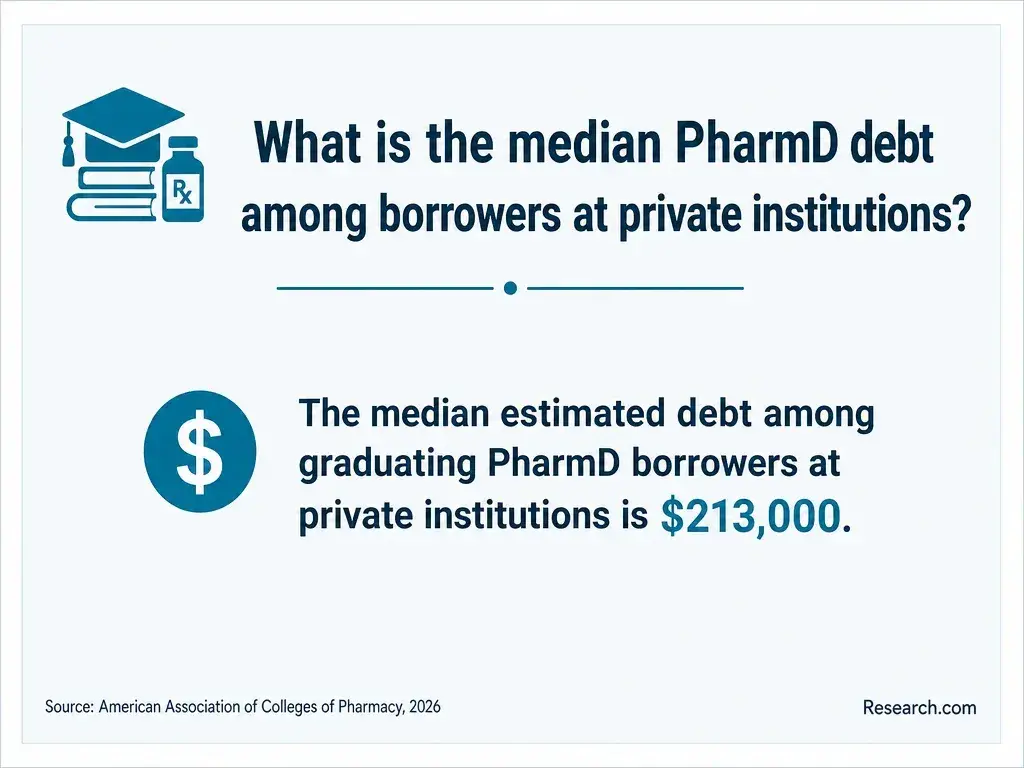
Compare each school's published tuition and mandatory fees for the applicable academic year, then budget for prerequisites, supplies, health requirements, rotations, travel or temporary housing, and licensing expenses. Those costs affect both borrowing and how much paid work remains feasible.
Federal borrowing rules changed for many new graduate and professional borrowers beginning July 1, 2026; eligibility and transitional provisions depend on the student. Ask the financial aid office for a written, individualized aid estimate rather than assuming a prior student's borrowing options still apply.
Earning a Pharm.D. is not the same as receiving a pharmacist license. U.S.-educated applicants generally need to satisfy their state board's education, practical-experience, application, and examination requirements, including the North American Pharmacist Licensure Examination (NAPLEX). Jurisprudence requirements vary: a jurisdiction may use the Multistate Pharmacy Jurisprudence Examination (MPJE), the Uniform Multistate Pharmacy Jurisprudence Examination (UMPJE), another process, or no separate jurisprudence exam. Passing an exam alone does not issue a license.
Check the National Association of Boards of Pharmacy and your intended state board for current eligibility, intern-registration rules, exams, and fees. If changing schools, investigate pharmacy program credit acceptance before assuming earlier coursework will keep you on the same path to licensure. The receiving school decides how credit applies. Internationally educated pharmacists have a different eligibility pathway and should consult the board and NABP requirements that apply to them.
What careers, salaries, and job outlook follow a PharmD degree?
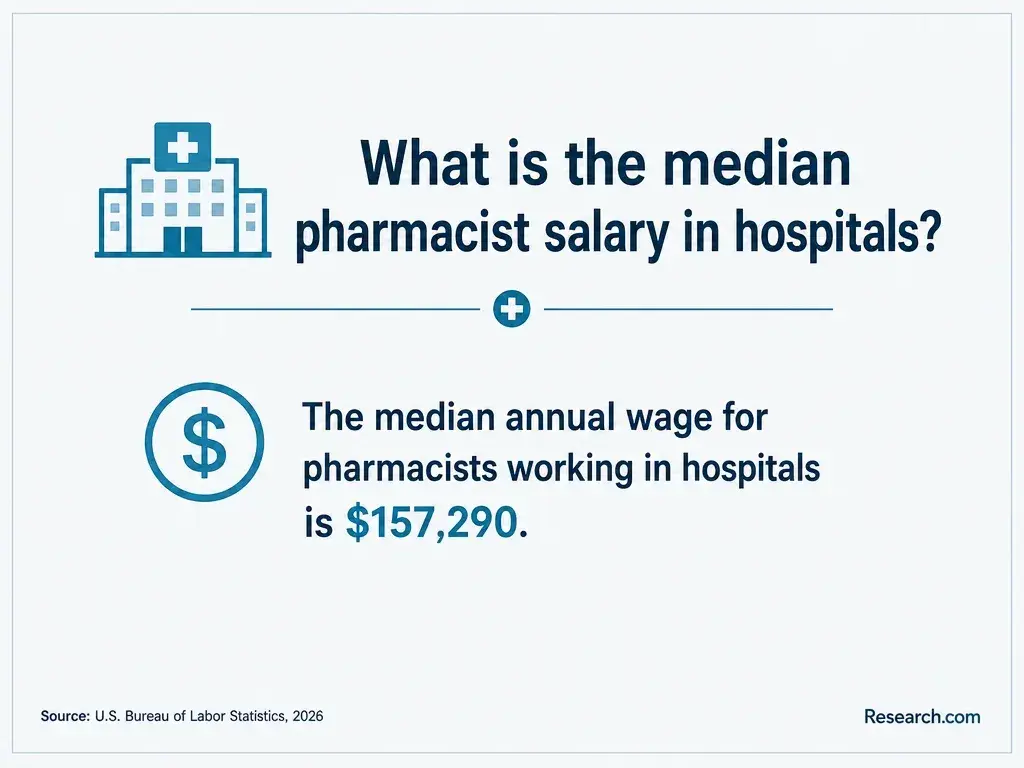
Licensed pharmacists work in settings such as community pharmacies, hospitals, ambulatory care, and industry-related roles, with responsibilities and hiring requirements that differ by job. The Bureau of Labor Statistics reports median annual pay for pharmacists of $140,910 in May 2025 and projects 5% employment growth for 2025-2035. Those occupation-wide figures do not describe a new graduate's likely offer or any particular specialty.
A residency provides structured postgraduate practice training; a fellowship typically emphasizes a different, often industry- or research-focused training route. Neither is universally required for pharmacist employment. Board certification is a separate specialty credential, not a substitute for state licensure.
If your goal is research or another pharmacy-adjacent role rather than licensed patient care, compare online doctorate lengths only after confirming which credential the job actually requires. A shorter non-Pharm.D. doctorate does not qualify someone for pharmacist licensure.
Other Things You Should Know About PharmD
Often, but terms differ by school. Before requesting leave, ask how it affects course sequencing, rotations, aid, insurance, and the date you could return.
Ordinarily, a counseling visit is not an academic grade or course. Ask the provider about confidentiality, records, and any limits on privacy before sharing sensitive information.
It may. Contact the school's disability-services office to learn its documentation and accommodation process; adjustments are assessed individually and may not apply retroactively.
Seek immediate help through local emergency services or an emergency department. In the United States, you can also call or text 988 for crisis support. Do not wait for a routine school appointment.
- Accommodating Pharmacy Students With Physical Disabilities During the Experiential Learning Curricula - PMC https://pmc.ncbi.nlm.nih.gov/articles/PMC8787167/
- Student Wellness Resources - Pharmacy Students https://students.pharmacy.wisc.edu/student-life/wellness-sop/
- Experiential Learning Manual - School of Pharmacy https://www.pharmacy.pitt.edu/experiential-learning-manual
- Mental Health, Wellness and Health Care Resources | Georgetown University https://www.georgetown.edu/mental-health-and-telehealth-resources/
- Burnout levels among undergraduate pharmacy students | fip.org https://pharmacyeducation.fip.org/pharmacyeducation/article/view/3064