
PharmD Introductory Pharmacy Practice Experiences Explained

Co-Founder and Chief Data Scientist
Introductory pharmacy practice experiences can determine when and where a Pharm.D. student must be available in person - even if much of the coursework is online. For prospective students, these rotations affect scheduling, travel, costs, and readiness for advanced clinical training.
This guide explains what IPPEs require, how they differ from later rotations, and which placement questions to ask before choosing a program. It is designed to help you judge whether a school's experiential schedule is realistic for your work, location, and budget.
Key Things You Should Know
- Introductory pharmacy practice experiences (IPPEs) are supervised components of the professional Pharm.D. curriculum; ACPE standards require at least 300 IPPE hours.
- IPPEs involve real practice settings, including community and health-system pharmacy. Online coursework does not eliminate in-person placement requirements.
- Before enrolling, confirm who secures sites, when rotations occur, and whether travel, intern registration, or time away from work will be necessary.
What are PharmD introductory pharmacy practice experiences?
IPPEs are supervised learning experiences that introduce Pharm.D. students to pharmacy practice while they are developing their classroom and laboratory skills. Under an approved preceptor - a qualified practitioner responsible for supervision and assessment - students observe workflows, interact with patients and healthcare teams as permitted, and practice applying what they learn. Their activities must match their training, site policies, and applicable law.
IPPEs belong to the professional Pharm.D. curriculum, not the undergraduate prerequisite courses often called pre-pharmacy study. A pharmacy technician credential or a shorter pharmacy-related degree can serve different career goals, but neither replaces the Pharm.D. experiences required on the U.S.-educated pharmacist pathway. If pharmacist licensure is not your goal, compare shorter pharmacy programs with career potential before committing to professional-degree training.
How many hours are required for PharmD IPPEs?
Accreditation Council for Pharmacy Education (ACPE) standards require at least 300 hours of IPPEs in a professional Pharm.D. program. That is a minimum, not a promise that every school uses the same calendar or assigns identical activities. A program may schedule experiences across courses, academic terms, or concentrated blocks.
Ask each school for its current experiential calendar rather than converting 300 hours into an assumed number of weeks. The answer may change your expected pharmacy doctorate program length or how many hours you can work during a term. Also ask whether orientation, simulations, and required assessments count toward the school's published IPPE total; do not assume every scheduled activity does.
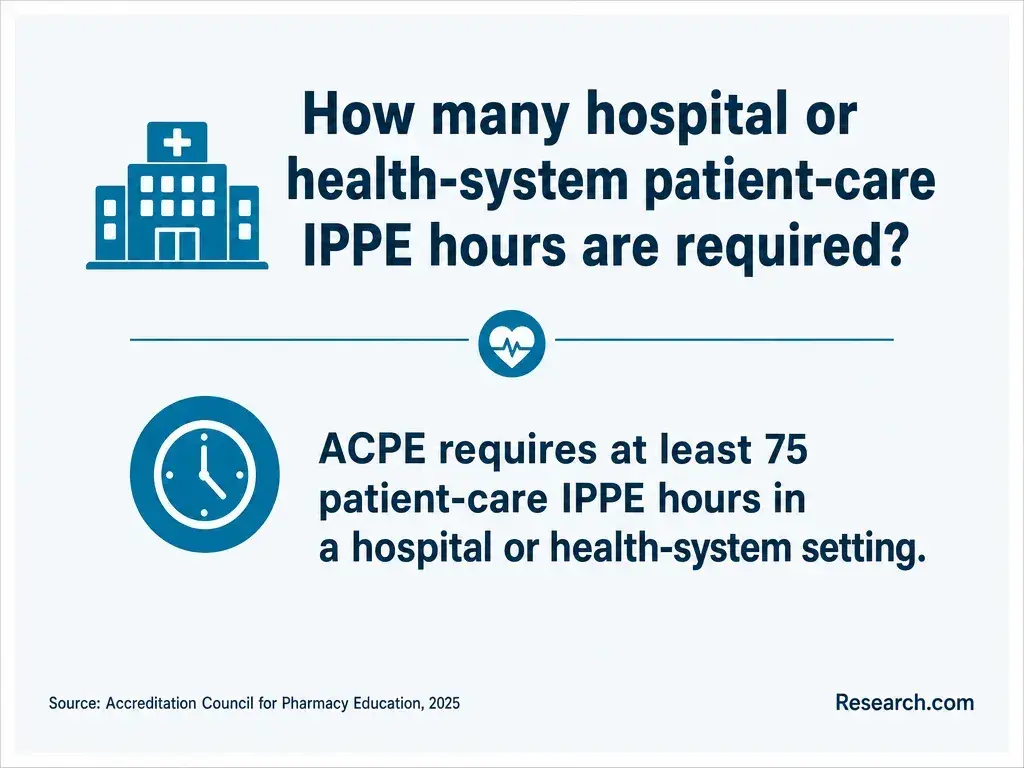
What activities and settings are included in PharmD IPPEs?
IPPEs introduce students to community and health-system pharmacy practice. Depending on the school, site, and student's preparation, supervised activities may include medication-history collection, patient communication, dispensing-workflow observation, drug-information searches, medication-safety work, and discussion of patient cases. Performing a task in an educational setting does not give a student independent authority to practice pharmacy.
Experiences can differ substantially even within one program: a busy community pharmacy may emphasize patient-facing workflow, while a hospital placement may expose a student to medication-use systems and interprofessional care. For applicants transitioning into a Doctor of Pharmacy program, this matters because prior science coursework is useful preparation but is not a substitute for supervised practice. Request examples of recent IPPE assignments and ask how the school evaluates the skills you most want to develop.
IPPEs build foundational practice habits alongside the developing professional curriculum. Advanced pharmacy practice experiences (APPEs) come later, after substantial coursework, and expect students to apply more of their pharmacy knowledge in patient-care and other practice settings. Both are supervised; neither is independent pharmacist practice.
This comparison shows why an attractive introductory placement alone is not enough to evaluate a program's clinical training.
| Feature | IPPEs | APPEs |
| Primary purpose | Introduce practice settings and foundational skills | Integrate and apply advanced professional knowledge |
| ACPE minimum | 300 hours | 1,440 hours |
| Typical place in curriculum | Earlier professional years | Later professional years |
| Student responsibility | Grows with preparation and supervision | Generally broader clinical participation, still under supervision |
Neither requirement disappears because another credential can be completed faster. When comparing shortest online doctoral programs, check the credential and its professional requirements: a shorter doctorate in another field is not an alternative route to pharmacist licensure.
Students generally complete IPPEs during the earlier professional years, before APPEs. The exact sequence is school-specific: placements may run alongside classes, occur during breaks, or be organized into dedicated blocks. An accelerated calendar does not remove the experiential requirement.
Before accepting an offer, request a term-by-term schedule showing IPPE hours, expected days at sites, and how assignments interact with exams and paid work. Be especially cautious when comparing claims about how quickly can an online pharmacy degree be completed: a short pharmacy-related degree and a professional Pharm.D. have different purposes and clinical obligations. Plan for possible schedule changes if a site or preceptor becomes unavailable.
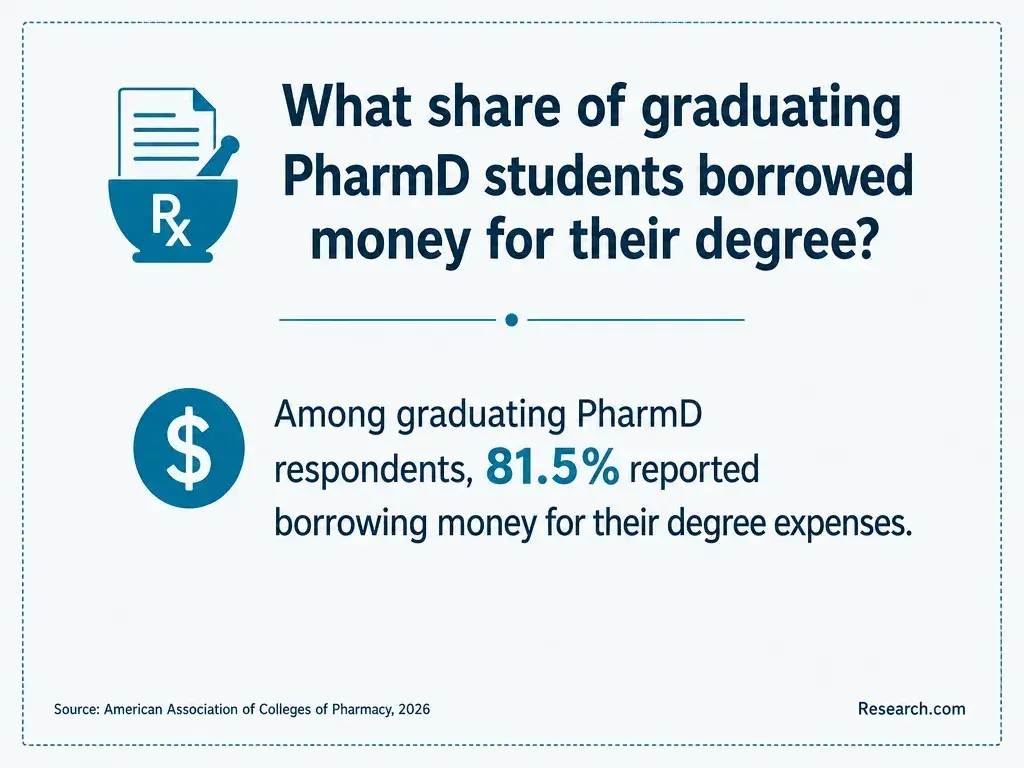
Yes. Online delivery of lectures does not make IPPEs virtual: professional practice experiences require appropriate supervised placements. Programs may also require in-person labs, assessments, or campus visits. "Online" does not necessarily mean asynchronous or compatible with an unrestricted full-time work schedule.
When reviewing Doctor of Pharmacy programs with online coursework, separate three questions: whether the school can enroll you in your state, whether it can arrange or approve suitable experiential sites there, and whether the education meets the licensing board's requirements where you intend to practice. State authorization, ACPE professional-program accreditation, and pharmacist licensure eligibility are distinct. Ask the experiential office who identifies preceptors, whether a local placement is possible, and what happens if no suitable site is available; do not assume a nearby assignment is guaranteed.
IPPEs are a curriculum requirement, not usually a separate application track. Applicants typically need a school's specified pre-professional courses and other application materials, but prerequisite credits, required laboratories, minimum grades, interviews, and bachelor's-degree policies vary. Some schools use PharmCAS; applicants must check each school's current instructions and deadlines. The PCAT was retired in 2024 and is not a currently available admissions exam.
Admissions flexibility should not be confused with an easier experiential schedule. Even when comparing pharmacy schools that may be easier to enter, check whether prerequisite courses must be finished before matriculation and when the school expects students to become eligible for placements. A stated admissions minimum does not guarantee acceptance or waive later site requirements.
IPPEs contribute to the supervised education within a Pharm.D. program, but completing them does not issue a pharmacist license. Graduates must meet the requirements of the jurisdiction where they apply, which can include board approval, the North American Pharmacist Licensure Examination (NAPLEX), a jurisdiction-specific law examination or other law requirement, and any applicable internship or background-check rules. Do not assume every jurisdiction uses the Multistate Pharmacy Jurisprudence Examination (MPJE); examination arrangements vary and may change.
Rules for student intern registration and recognition of experiential hours also vary by state. Check the relevant board and your school's experiential office before relying on a placement to satisfy a particular licensing requirement. Readers examining pharmacy school requirements and exceptions should distinguish flexibility at admission from the separate legal requirements for supervised practice and licensure. Residency, fellowship, and specialty board certification are additional pathways, not substitutes for a pharmacist license.
There is no single IPPE price: tuition and fees depend on the school, while rotation-related expenses depend on site locations and student circumstances. Build a cost-of-attendance comparison that includes required supplies, background checks, immunizations, transportation, possible short-term housing, and income lost when placements conflict with work. Ask whether the school charges tuition during experiential terms and whether distant assignments generate additional costs.
When comparing budget-friendly pharmacy degree programs, use each school's current tuition and required-fee schedule alongside its placement policy, not advertised tuition alone. Confirm your individual financial-aid eligibility with the school: federal borrowing rules changed for many new graduate and professional borrowers beginning July 1, 2026, so older assumptions about loan limits or Grad PLUS access may not apply. A lower-priced program can cost more in practice if rotations require substantial travel or time away from paid work.
How can students choose an accredited PharmD program for IPPEs?
First, verify the professional Pharm.D. program's current ACPE accreditation status in ACPE's official program records. Institutional accreditation addresses the institution; it is not a substitute for professional-program accreditation. Then compare experiential policies in writing rather than treating a school's list of potential sites as a placement guarantee.
Use these questions when speaking with an admissions representative and the experiential education office. The answers reveal scheduling and financial risks that a course catalog may not show.
- Which terms contain IPPEs, and how many site hours are scheduled in each?
- Does the school secure and approve sites and preceptors, or must students propose them?
- How often might students travel or relocate, and what happens if a preferred local site is unavailable?
- What intern registration, immunization, screening, and onboarding steps must be completed before a placement?
- How are students assessed, and what happens if a placement is interrupted?
If you have previous college study, review pharmacy programs for students with prior coursework alongside each school's own evaluation policy. The receiving school decides whether previous courses satisfy prerequisites or apply to its professional curriculum; transferred credit should never be assumed to replace required IPPEs. Favor the program whose verified placements, schedule, accreditation status, and total cost you can realistically manage - not simply the one advertising the greatest flexibility.
Other Things You Should Know About PharmD
Do not budget on receiving wages for an IPPE. Ask the school whether a particular experience is paid and whether its policies permit payment; arrangements can differ by placement.
Not automatically. A school must determine whether the work meets its educational objectives, supervision, documentation, and site-approval rules. Get written approval before assuming a current job will count.
The school and site set attendance and make-up rules. Notify the preceptor and experiential office promptly; missed hours may need to be completed before the experience can be passed.
Many schools allow students to suggest a site or preceptor, but approval is not guaranteed. The school must confirm that the placement and supervision meet its requirements.
- Advanced Pharmacy Practice Experiences (APPE) | Veterans Affairs https://www.va.gov/loma-linda-health-care/work-with-us/internships-and-fellowships/advanced-pharmacy-practice-experiences-appe/
- Introductory Pharmacy Practice Experiences | The University of Iowa https://pharmacy.uiowa.edu/pharmd/curriculum/professional_experience/introductory
- Pharmacy Practice Experiences | Doctor of Pharmacy https://pharmacy.wisc.edu/pharmd/pharmacy-practice/
- Introductory Pharmacy Practice Experiences (IPPE) | buffalo.edu https://pharmacy.buffalo.edu/academics/pharmd/experiential-education/introductory-pharmacy-practice-experiences--ippe-.epa-and-educational-outcomes.html
- Introductory Pharmacy Practice Experiences | ucsf.edu https://pharmd.ucsf.edu/introductory-pharmacy-practice-experiences
- Pharm.D. Experiential Education - College of Pharmacy https://pharmacy.utexas.edu/programs/pharmd/experiential
- IPPE Information | Experiential Education https://pharm.ucsf.edu/experiential/ippe
- Pharmacy Practice Experiences | Ernest Mario School of Pharmacy https://pharmacy.rutgers.edu/info-for/pharmacy-practice-experiences/
- Activities to enhance introductory pharmacy practice experiences - ScienceDirect https://www.sciencedirect.com/science/article/abs/pii/S1877129721001611
- Accreditation Council for Pharmacy Education: Home https://www.acpe-accredit.org/


