How to compare PharmD scholarship offers

Co-Founder and Chief Data Scientist
A large Doctor of Pharmacy (Pharm.D.) scholarship can still leave you with a larger bill than a smaller award at another school. Tuition, clinical rotation expenses, renewal conditions, and changes to other financial aid all affect what you will pay. This guide is for applicants comparing U.S. Pharm.D. offers. It gives you a worksheet and a set of questions to help you identify the lower-cost, lower-risk option before you accept an award or pay an enrollment deposit.
Key Things You Should Know
- Compare each offer across the full professional program, not just its first year: an award described as "renewable for four years" is worth less if later years have different amounts or difficult renewal conditions.
- Subtract the scholarship from comparable total costs—including required fees, living expenses, and clinical rotation costs—not from advertised tuition alone.
- Ask the financial aid office to recalculate your package under rules applicable to your enrollment date; federal borrowing rules changed for many new graduate and professional borrowers beginning July 1, 2026.
How Should You Compare PharmD Scholarship Offers?
Compare the expected amount you must pay or finance to complete the Pharm.D., then weigh the risk that an award could shrink or disappear. First, put every school's figures on the same basis: the same academic years, expected enrollment status, and realistic housing and rotation assumptions. Keep undergraduate prerequisite costs separate from the professional Pharm.D. curriculum.
Use this worksheet for each offer. Enter amounts from the school's current cost-of-attendance estimate and your written award notice; leave uncertain figures marked "unconfirmed" rather than treating them as $0.
| Comparison field | Offer A | Offer B |
| Program length and academic years covered | _____ | _____ |
| Tuition and mandatory fees by year | _____ | _____ |
| Books, equipment, housing, and transportation | _____ | _____ |
| Clinical rotation travel or additional housing | _____ | _____ |
| Scholarship amount by year; renewable or one-time | _____ | _____ |
| Other grants and scholarships after adjustments | _____ | _____ |
| Estimated remaining cost by year and at completion | _____ | _____ |
| Unconfirmed costs or award conditions | _____ | _____ |
For each year, add expected educational and living costs, then subtract grants and scholarships you expect to retain. Add the yearly remainders for a completion estimate; loans are a way to finance that remainder, not a discount. A higher-priced school can be the better financial offer if its aid is more dependable or its location reduces your expenses. If you need more ways to reduce the cost of pharmacy school, compare those options using the same full-cost method.
What Costs Should You Subtract From Each PharmD Scholarship?
Strictly speaking, subtract the scholarship from your costs, not costs from the scholarship. Start with tuition and mandatory fees, then account for books and clinical-reference resources, technology, lab supplies, health insurance if required, and ordinary living expenses. Add costs particular to the program, such as campus visits for a hybrid pathway or travel and temporary housing during advanced pharmacy practice experiences (APPEs), the longer clinical rotations typically completed later in the professional curriculum.
Also budget separately for expenses a school may exclude from its published estimate: prerequisite coursework, background checks, immunizations, intern registration where required, and eventual licensure applications and examinations. Actual charges and eligibility to include expenses in financial aid vary. Ask for a program-specific estimate rather than assuming a tuition-only scholarship will cover them.
If your goal does not require pharmacist licensure, compare the Pharm.D. commitment with affordable short pharmacy programs as a separate career decision. A shorter pharmacy-related credential does not substitute for a Pharm.D. when the goal is to become a pharmacist.
Are PharmD Scholarships Renewable for All Four Years?
Not necessarily. "Renewable" may mean the school reviews eligibility each year; it does not always mean the amount is fixed or guaranteed. Check whether the award covers every year of that program's professional curriculum, including terms dominated by APPEs, and whether a summer term is covered. Do not assume all Pharm.D. programs follow the same calendar.
Request a written year-by-year schedule stating the award amount, maximum duration, renewal decision date, and what happens if you repeat a course, take a leave, or graduate later than planned. A one-time award can still beat a renewable offer if its value is greater after costs are compared. Likewise, Pharm.D. programs for a faster path need a term-by-term comparison: fewer calendar years do not establish lower tuition or more reliable scholarship coverage.
Renewal conditions are set by the particular award. Common possibilities include a minimum professional-program grade point average, satisfactory academic progress, full-time enrollment, passing required courses, or remaining in good standing. A school's standard for retaining a merit scholarship can be stricter than its standard for continuing enrollment or receiving federal aid.
Ask which courses count toward the scholarship GPA, when it is measured, whether there is an appeal or probation period, and whether the award returns after eligibility is restored. This is especially important if a single difficult term could eliminate aid for the rest of the program. Students entering from science backgrounds can explore Pharm.D. programs for biology majors, but strong prerequisite performance should not be mistaken for automatic satisfaction of a scholarship's later professional coursework requirements.
The award agreement controls. A tuition-only scholarship may leave mandatory fees and living expenses untouched. An award described as covering "tuition and fees" may exclude specific course or clinical charges. A scholarship without that restriction may be applied more broadly, subject to school policies and financial aid rules.
Ask the bursar or financial aid office which charges receive the award, whether unused funds can be refunded for eligible living expenses, and whether the scholarship applies during summer or rotation terms. If you plan to Doctor of Pharmacy study online, include any required in-person labs, campus visits, and clinical placements. Online instruction does not mean the entire professional degree can be completed remotely.
A school generally must include outside and institutional scholarships when building your aid package. An added award may reduce your remaining need or the amount you can borrow within the school's approved cost of attendance; it may also replace another form of aid under institutional rules. Do not add a new scholarship to an old aid letter and assume you can keep every other amount unchanged.
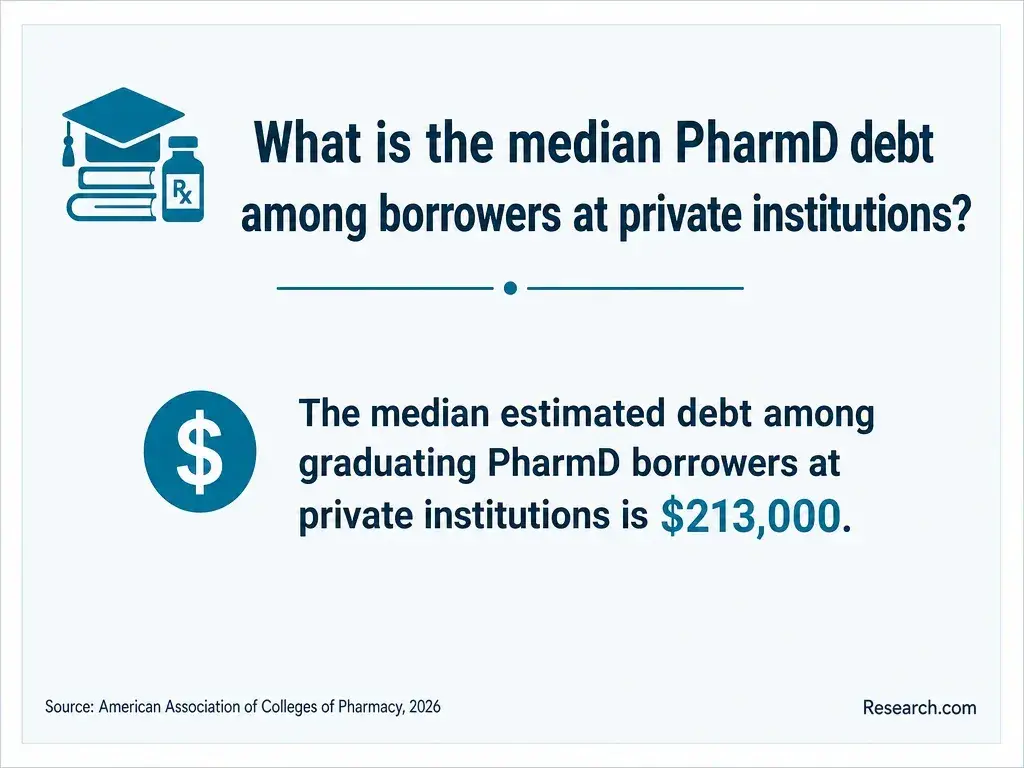
Ask for a revised, itemized aid offer showing what changed and why. Confirm your student classification and the federal borrowing rules applicable to your enrollment date. Federal rules changed for many new graduate and professional borrowers beginning July 1, 2026, so older descriptions of Grad PLUS access or loan limits may not apply to you. Compare any remaining financing gap and likely borrowing, not just the face value of each award.
Time matters, too: a delayed completion can add living costs and affect aid eligibility. General lists of online doctorate completion periods are not a substitute for the Pharm.D. school's published course and rotation schedule when estimating your financing needs.
Requirements vary by school and award. Some scholarships are considered with an admissions application; others require a separate form, interview, recommendation, or annual renewal submission. A school may require the Free Application for Federal Student Aid (FAFSA) for need-based institutional aid even when a merit award does not require it. The FAFSA is also the starting point for determining federal student aid eligibility, but submitting it does not guarantee an award.
Record each scholarship deadline separately from the admissions deadline, the aid-office deadline, and any enrollment-deposit date. If you will apply to pharmacy school while finishing prerequisites, ask whether unfinished courses affect scholarship selection or when the offer becomes final. Admissions eligibility and scholarship eligibility are distinct decisions.
Read for commitments beyond grades and enrollment. An award might require participation in a service activity, continued membership in a particular program, work for a sponsoring employer after graduation, or repayment if you leave early. The exact terms—not the scholarship's appealing name—determine its value.
For any service or employment commitment, obtain the work location, duration, compensation terms, circumstances that trigger repayment, and any exceptions in writing. Consider whether the obligation limits your ability to pursue a residency, fellowship, or different first job. These are postgraduate options, not automatic requirements for pharmacist licensure. Be particularly careful when comparing a Pharm.D. award with accelerated online pharmacy degree pathways: a shorter pharmacy-related program may lead to a different credential and cannot be valued as if it were a pharmacist-qualifying Pharm.D.
Before treating any offer as a bargain, check the professional Pharm.D. program's current status in the Accreditation Council for Pharmacy Education (ACPE) program directory. Distinguish full accreditation from other listed statuses, and ask the school and the state board where you intend to practice how its status affects your path to licensure. A scholarship cannot compensate for an unverified pathway to your intended profession.
ACPE accredits professional pharmacy programs, not individual pharmacists. Institutional accreditation and authorization to enroll online students in a state are separate matters. Completing a Pharm.D. also does not itself grant a pharmacist license; state requirements include examinations and other conditions that vary by jurisdiction. If you intend to transfer coursework toward pharmacy prerequisites, confirm acceptance with the receiving school: accreditation alone does not guarantee that particular credits will count.
What Questions Should You Ask Before Accepting a PharmD Scholarship?
Send the same questions to each school and keep the written replies with your award letters. The answers will resolve uncertainties that an advertised scholarship amount cannot:
- What is my scholarship amount in each academic term, including summers and APPE terms, and which charges can it cover?
- What exact academic, enrollment, application, and service conditions govern renewal, and what happens after a leave or repeated course?
- What is my revised aid package after this award, and which federal loan rules apply to my enrollment date and classification?
- Which required costs are missing from the published budget, especially rotation travel, temporary housing, and campus visits?
- What is the deadline to accept, and will the school put every material condition or promised adjustment in writing?
Choose the offer with the more manageable credible completion cost and acceptable conditions—not automatically the largest first-year scholarship. If key answers remain unconfirmed, ask for clarification before committing. You can review pharmacy program applicant requirements while comparing options, but admission criteria should not be confused with the terms of an individual financial award.
Other Things You Should Know About PharmD
You can ask whether a school reviews competing offers or changed financial circumstances. Provide documentation and ask for its reconsideration process; additional funding is not guaranteed.
Not always. An offer may depend on completing admission requirements or providing final records. Check the award notice for contingencies before paying a deposit.
Tax treatment depends on how funds are used and your circumstances. Amounts used for qualified tuition and required educational expenses may be treated differently from amounts used for housing. Consult current IRS guidance or a qualified tax professional.
Its payment rules determine where the funds go. Tell your school's financial aid office about the award even if you receive the payment directly, so your aid package can be reviewed accurately.
- Types of Financial Aid: Grants, Work-Study, and Loans | studentaid.gov https://studentaid.gov/understand-aid/types
- Disbursing Title IV Funds | 2025-2026 Federal Student Aid Handbook https://fsapartners.ed.gov/knowledge-center/fsa-handbook/2025-2026/vol4/ch2-disbursing-title-iv-funds
- Qualified Ed expenses | Internal Revenue Service https://www.irs.gov/credits-deductions/individuals/qualified-ed-expenses
- How will scholarships affect the other types of need-based aid I may receive? | usc.edu https://ask.usc.edu/s/article/000001332
- Financial Aid and Cost | ucsf.edu https://pharmd.ucsf.edu/admissions/financial-aid-cost
- Cost of Attendance " Pharm.D. Admissions " | ufl.edu https://admissions.pharmacy.ufl.edu/financial-aid/anticipated-expenses/
- Professional Schools: College of Pharmacy | The University of Utah https://financialaid.utah.edu/tuition-and-fees/cost-of-attendance-professional-schools-college-of-pharmacy.php
- Scholarship Renewal Requirements and Appeals | The University of Iowa https://financialaid.uiowa.edu/types-aid/scholarships/scholarship-renewal-requirements-and-appeals
- Affording Your Degree | University of Charleston https://www.ucwv.edu/school-of-pharmacy__trashed/affording-your-degree/
- Outside Scholarships - Undergraduate Financial Aid | Northwestern University https://undergradaid.northwestern.edu/types-of-aid/scholarships-grants/outside-scholarships.html