How Online PharmD Programs Coordinate Clinical Placements

Co-Founder and Chief Data Scientist
An online Doctor of Pharmacy (Pharm.D.) program can move coursework out of the classroom, but it cannot move patient-care training entirely online. Before enrolling, you need to know who finds clinical sites, whether rotations can happen near home, and what travel or time away from work may be required. This guide explains how placement coordination works, what to verify about accreditation and state rules, and which questions reveal whether a program's clinical schedule is workable for you.
Key Things You Should Know
- Online Pharm.D. students complete supervised, in-person pharmacy practice experiences; online classes do not replace clinical rotations.
- ACPE standards require at least 300 hours of introductory experiences and 1,440 hours of advanced experiences. A school's placement process determines where and when students complete them.
- Before enrolling, get written answers about approved sites near your home, who secures preceptors, required travel, and what happens if a placement falls through.
How do online PharmD programs coordinate clinical placements?
Online Pharm.D. programs typically use an experiential education office to plan clinical placements, maintain site agreements, approve qualified preceptors, schedule rotations, and track evaluations. A preceptor is a pharmacist or other approved practitioner who supervises a student's learning at a practice site. Students may suggest local sites, but a suggested site is not an approved placement until the program completes its review.
The division of work matters more than a general promise of "placement support." This comparison shows the responsibilities to clarify when evaluating online Pharm.D. program selection.
| Placement stage | Typical program responsibility | Typical student responsibility |
| Site approval | Review the setting, preceptor qualifications, learning activities, and required agreements | Submit a proposed site or preferences by the program's deadline, if permitted |
| Scheduling | Assign or confirm rotations and communicate academic requirements | Disclose location constraints and remain available for the assigned schedule |
| Readiness | Specify documentation and monitor eligibility | Complete applicable registration, screenings, immunizations, and site onboarding |
| Assessment | Set learning objectives and review preceptor evaluations | Complete required activities and meet conduct and performance standards |
Ask whether the school guarantees an approved site within a defined geographic area, merely considers location preferences, or expects students to identify prospective sites themselves. Those are materially different levels of support.
Are online PharmD programs accredited by ACPE?
Some online or hybrid Pharm.D. pathways are offered through programs accredited by the Accreditation Council for Pharmacy Education (ACPE), but delivery format alone proves nothing. Check the specific professional Pharm.D. program and its current status in ACPE's official directory. Also ask whether the online pathway is covered by that program's accreditation and whether required in-person components are available to you.
ACPE professional-program accreditation is different from a university's institutional accreditation. Both are separate from state authorization to enroll a distance-education student, approval for clinical training at a particular site, and eligibility for pharmacist licensure in the jurisdiction where you intend to practice. Confirm each issue independently with the school and the relevant state board of pharmacy.
Be cautious when comparing a Pharm.D. with fast-track online pharmacy education: a shorter pharmacy-related credential may serve a different career goal and does not, by itself, qualify someone for pharmacist licensure.
Do online PharmD students complete the same clinical rotations as campus students?
Students in an ACPE-accredited professional Pharm.D. program must meet its experiential education requirements regardless of whether classroom instruction is online or on campus. That does not mean every student visits identical sites or follows the same calendar. Available preceptors, site agreements, elective choices, and geographic restrictions can affect individual assignments.
Online instruction is also not necessarily asynchronous. Live classes, hands-on labs, campus immersions, and scheduled assessments may limit the time available for rotations and paid work. Even accelerated pharmacist education must account for required supervised practice; a compressed academic calendar does not make clinical training optional.
Compare each program's published rotation calendar with its online class and campus-attendance requirements. A workable classroom schedule is not enough if an advanced rotation requires full-time daytime availability.
Approved sites commonly include community pharmacies, hospitals and health systems, ambulatory care clinics, and other settings that meet the program's learning objectives. Advanced experiences may also offer electives in areas such as specialty pharmacy, managed care, industry, or research, depending on the school and available preceptors.
The setting determines what students can practice under supervision. Community sites may emphasize dispensing and patient counseling; inpatient sites may focus on medication-use systems and care-team decisions. For someone considering pharmacy education after a pre-pharmacy track, these experiences are a key difference between studying science and preparing for pharmacist practice.
Ask for the required site categories and recent examples available in your region - not a general list of every organization with which the school has ever worked. A site's presence on a partner list does not establish that it has an opening when your rotation begins.
Matching generally balances required experience types, student preferences, preceptor availability, site capacity, and any restrictions imposed by the school or site. Programs also need a way to evaluate preceptors and document that sites can support the intended learning. A student's existing relationship with a pharmacist does not automatically create an approved rotation.
Placement policies can be especially important if you may change schools or locations. Pharmacy transfer planning concerns whether a receiving school accepts prior academic or experiential work; it does not mean an existing site agreement or preceptor assignment transfers with you.
Before accepting an offer, ask the experiential education office these questions and request its written policy where available:
- Does the school assign preceptors, or must students propose potential sites?
- When are assignments confirmed, and how are location preferences ranked?
- What restrictions apply to family members, employers, or sites where students already work?
- Who finds a replacement if a site cannot host the assigned rotation?
Introductory pharmacy practice experiences (IPPEs) introduce students to supervised pharmacy practice during the professional curriculum. Advanced pharmacy practice experiences (APPEs) involve more intensive supervised work later in the program. ACPE standards set minimums of 300 IPPE hours and 1,440 APPE hours; a school may structure its calendar or requirements beyond those minimums.
These hours belong to the professional Pharm.D. curriculum, not to undergraduate prerequisite coursework. Prior college credit may help an applicant meet admissions requirements, but it should not be assumed to waive clinical training. If you are researching pharmacy admissions for students with prior credits, ask separately how the school evaluates prerequisites and whether it accepts any previous professional experiential work.
Request the program's rotation sequence before enrolling. Specifically, identify when each experience occurs, its weekly schedule, the required settings, and whether an academic term leaves room to earn income.
Sometimes, but proximity is rarely something to assume. A program may approve sites near a student's home if qualified preceptors, suitable learning activities, agreements, capacity, and applicable state permissions are in place. A required hospital or specialty experience may have fewer local options than a community-pharmacy experience.
Home-area placements can reduce housing and travel costs, making location support relevant when evaluating an affordable route to a Pharm.D.. They may also reduce time away from work or family. Neither benefit is certain until the school confirms the specific placement policy and schedule.
Use this sequence to test whether a program's geographic flexibility is practical:
- Give the experiential office your home location and ask which required rotation categories have approved sites within a commute you can manage.
- Confirm whether you may propose new sites, who negotiates agreements, and when approval must be complete.
- Ask which rotations could require relocation or extended travel and whether campus visits overlap with them.
- Check applicable intern-registration and placement rules with the school and the state where each rotation would occur.
Do not commit based on "rotations are available nationwide" without understanding how assignments are made and who bears the cost if local capacity is unavailable.
Admissions requirements vary by school and pathway. Applicants generally need specified undergraduate pre-pharmacy prerequisites, which are distinct from the professional Pharm.D. courses and rotations completed after admission. Schools set their own rules for courses and labs, grades, GPA, credit age, interviews, recommendations, and whether a bachelor's degree is required.
Use the current school admissions page and, where applicable, its PharmCAS entry to check deadlines and application steps. Not every program uses PharmCAS, and a school may require additional materials. The Pharmacy College Admission Test (PCAT) was retired in January 2024; do not treat an old PCAT requirement as a current testing instruction.
If you are comparing pharmacy programs with varied admission routes, request an evaluation of your actual coursework before relying on a stated minimum. Meeting a threshold does not guarantee admission - or access to clinical sites in your preferred location.
There is no dependable single price or duration for every online Pharm.D. pathway. The time required depends on prerequisites already completed, the school's professional curriculum, course sequencing, and the placement calendar. Doctoral degree length comparisons can provide context, but a short online doctorate in another field is not a substitute for a Pharm.D.'s supervised practice requirements.
Compare each school's current tuition and required fees in the same units, then build a budget for books and technology, labs or campus visits, screenings and immunizations, rotation travel or temporary housing, and eventual licensure-related expenses. Ask for the school's estimated cost of attendance and a rotation calendar; advertised tuition alone will not show the cost of lost work hours or a distant placement.
Financial aid eligibility depends on the student and program. Federal borrowing rules changed for many new graduate and professional borrowers beginning July 1, 2026, so ask the financial aid office which rules apply to your enrollment and whether its estimate includes placement-related expenses. Do not assume an older Grad PLUS borrowing arrangement or a published tuition figure will cover your full costs.
What careers, salaries, and licenses follow an online PharmD?
An accredited Pharm.D. can be an educational step toward pharmacist licensure, but graduation does not issue a license. Applicants must meet the requirements of the board of pharmacy in the jurisdiction where they seek to practice, which can include supervised experience, the NAPLEX, a jurisdiction-specific law examination or other law requirements, and additional eligibility checks. Do not assume every jurisdiction uses the MPJE; some began transitioning to the UMPJE in 2026.
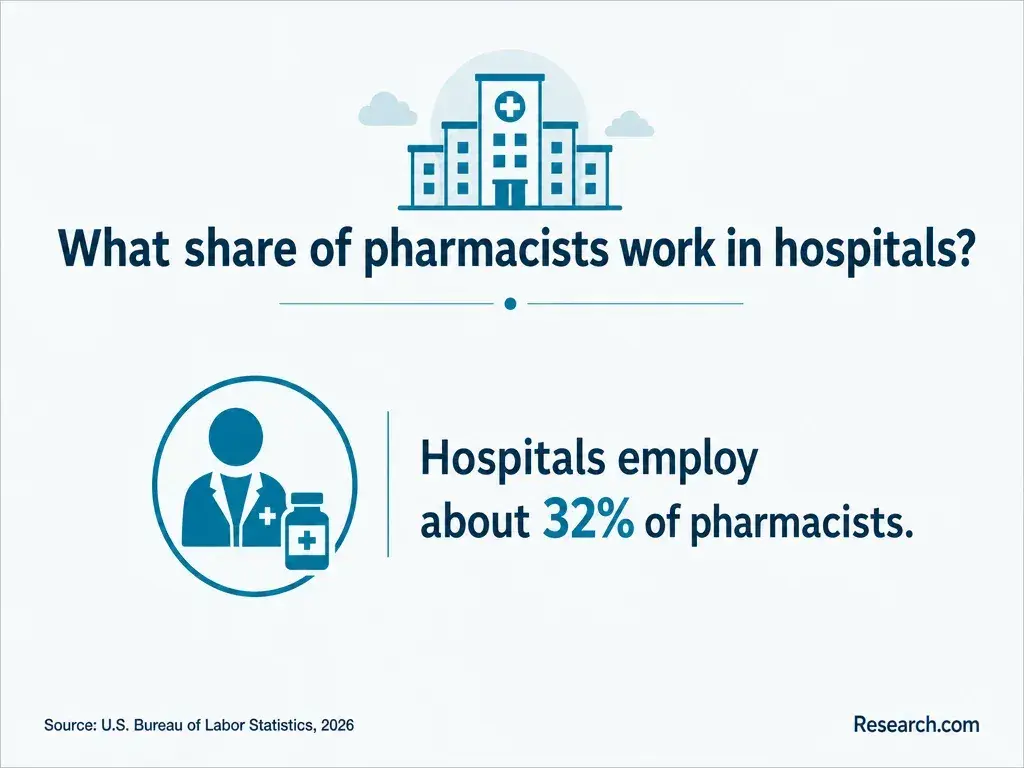
Licensed pharmacists work in settings including community pharmacies, hospitals, ambulatory care, and other medication-focused roles. The U.S. Bureau of Labor Statistics reports median annual pay of $140,910 in May 2025 for pharmacists and projects 5% growth from 2025-2035. Those occupation-wide figures are useful career context, not a salary forecast for a particular graduate, region, or practice setting.
If your goal is not pharmacist licensure, compare the role you want before paying for a professional doctorate. Some low-cost and shorter pharmacy degree programs address different pharmacy-related work; a pharmacy technician role, for example, does not ordinarily require a Pharm.D. Conversely, a technician credential or pharmaceutical sciences degree does not by itself qualify someone to practice as a pharmacist.
Other Things You Should Know About PharmD
Usually, students can express preferences for electives, but specialty placements depend on the program's offerings, site capacity, preceptor availability, and any prerequisites. A request is not a confirmed assignment.
The school's experiential education office should explain its replacement and rescheduling process. Ask how a cancellation could affect your graduation date and whether you would have to travel to an alternative site.
Availability depends on the site and required learning activities. Do not assume rotations can be scheduled around a full-time job; obtain the expected hours for each experience before making work commitments.
Yes. Clinical experiences are assessed components of the professional degree. A school's handbook should explain remediation, repetition, appeals, and how any delay affects later rotations and graduation.
- How to Meet NHSC Site Eligibility Requirements | hrsa.gov https://nhsc.hrsa.gov/sites/eligibility-requirements
- Identifying features of quality in rural placements for health students - PMC https://pmc.ncbi.nlm.nih.gov/articles/PMC8995951/
- Pharm D Practice Experience Curriculum | Presbyterian College https://www.presby.edu/graduate-programs/pharmacy/pharmd/practice-experience/
- Doctor of Pharmacy (Pharm.D.) - Manchester University https://www.manchester.edu/academics/programs/graduate-pharmacy-pharmd/
- Clinical Rotations FAQ - Nursing@Georgetown https://online.nursing.georgetown.edu/academics/family-nurse-practitioner-fnp/admitted/clinical-placement-faq/
- Earn an Online Pharm.D. Degree at St. John Fisher University https://onlinepharmd.sjf.edu/
- Background Checks and Drug Screens for Applicants and Students | UAMS College of Health Professions https://healthprofessions.uams.edu/future-students/resources/forms-and-policies/background-checks-and-drug-screens/
- Program: Pharmacy, PharmD | south.edu https://catalog.south.edu/preview_program.php
- Finding a Veterinary Externship Site | pennfoster.edu https://www.pennfoster.edu/vet-externship-locator
- Assessing Student Performance in Field Education | Applied Learning in Social Work Education Journal https://alswe.simmons.edu/article/assessing-student-performance-in-field-education/