2027 Online Philosophy Degree Programs Costs: Tuition & Fees

Co-Founder and Chief Data Scientist
Choosing an online philosophy degree is partly an academic decision and partly a cost-control decision. Philosophy can build strong skills in reasoning, writing, ethics, argument analysis, and interpretation, but the financial payoff depends heavily on the school you choose, how much aid you receive, whether you study full time or part time, and what career path you pursue after graduation.
This guide explains what students should expect to pay for an online philosophy degree, what tuition usually covers, which extra fees to watch for, how online programs compare with campus-based options, and how financial aid may reduce the final cost. It is written for prospective undergraduate and graduate students who want a realistic view of affordability before applying.
Key Points About Online Philosophy Degree Costs
- Average tuition for online philosophy degrees ranges from $10,000 to $30,000 per year, depending on residency status and institution type.
- Costs vary with credit load, faculty expertise, and access to research resources, which enhance learning outcomes in critical thinking and ethics.
- Investing in a Philosophy degree may offer strong analytical skills, valuable for diverse career paths, justifying the tuition expense.
What Is the Average Cost of an Online Philosophy Degree?
The average cost of an online philosophy degree depends most on the school, residency rules, degree level, and total credits required. At public universities, online undergraduate philosophy tuition commonly ranges from $200 to $400 per credit hour for in-state students, while out-of-state rates sometimes exceed $600 per credit.
For a full 120-credit bachelor's program, total expenses usually fall between $25,000 and $45,000. That estimate is most useful when comparing bachelor's programs because many schools price online degrees by the credit hour rather than by a single program fee.
Private or nonprofit colleges often cost more, with annual tuition between $10,000 and $33,000. Some of these institutions use flat-rate tuition, accelerated calendars, or cohort pricing, which can change the total price depending on how quickly a student completes the degree.
Graduate philosophy programs tend to have higher per-credit costs than bachelor's programs. Students should also budget for expenses that may not appear in the headline tuition rate, including technology fees, textbooks, course materials, remote proctoring, and graduation fees.
Compared with many other humanities fields, online philosophy programs are generally competitively priced. However, the cheapest listed tuition is not always the cheapest final cost. A program with a higher per-credit rate but generous transfer-credit policies, flat online tuition, or strong financial aid can be less expensive than it first appears.
What Is Typically Included in the Tuition for an Online Philosophy Degree?
Tuition for an online philosophy degree usually pays for instruction, course access, and the core academic systems needed to complete classes remotely. Students typically take courses in areas such as ethics, logic, metaphysics, political philosophy, philosophy of law, ancient philosophy, modern philosophy, and applied philosophy, depending on the curriculum.
Most online philosophy programs include the following within tuition or standard enrollment charges:
- Academic instruction: Tuition covers faculty-led courses, lectures, readings, assignments, discussions, grading, and feedback.
- Learning platform access: Students usually receive access to the online learning management system used for discussion boards, assignments, quizzes, and course materials.
- Library and research tools: Many universities include access to digital journals, databases, e-books, citation tools, and research support.
- Academic advising: Online students often receive help with degree planning, transfer credits, course sequencing, and graduation requirements.
- Basic student support: Tuition may support online tutoring, writing center access, career services, disability services, and technical assistance.
Several costs may still be billed separately. Textbooks, printed materials, publisher access codes, specialized digital readings, or course packs may not be included. Some programs rely heavily on open educational resources, while others require students to purchase books for each course.
Students should also check for technology fees, application fees, enrollment deposits, graduation fees, transcript fees, and remote exam proctoring fees. These charges can make two programs with similar tuition rates look different once the full cost of attendance is calculated.
Before applying, request or locate the program's tuition and fee schedule. The most useful estimate should include tuition, mandatory fees, expected books and supplies, and any online-specific charges.
What Factors Influence the Cost of Pursuing an Online Philosophy Degree?
The cost of an online philosophy degree is shaped by more than the advertised tuition rate. Students should compare programs by total estimated cost, not just by per-credit pricing, because residency policies, transfer credits, fees, and pacing can change the final amount paid.
- Type of school: Public universities generally offer lower tuition rates for in-state students, while private institutions often charge a fixed rate regardless of residency. For example, Portland State University charges residents $207 per credit hour versus $627 for non-residents.
- Residency status: Some public universities charge different online tuition rates for in-state and out-of-state students. Others reduce this gap by offering the same or similar online rate to all students. The University of Missouri - St. Louis, for example, provides in-state tuition rates to all online students.
- Credit hours and program length: Most online Philosophy bachelor's degrees require around 120 credits and take four years full-time. Students who transfer in prior credits may reduce both time and cost, while part-time enrollment can extend the calendar length of the degree.
- Additional fees: Technology fees, course materials, textbooks, online platform fees, proctoring fees, and graduation fees can add to the cost beyond tuition.
- Transfer-credit policy: A school with a generous transfer-credit policy may be more affordable for students who already completed college coursework, even if its per-credit rate is not the lowest.
- Student support services: Programs with more robust advising, tutoring, writing support, library access, and career services may cost more, but those services can help students stay enrolled and graduate on schedule.
- School reputation and faculty resources: Institutions with stronger brand recognition, specialized faculty, research opportunities, or extensive alumni networks may charge higher tuition.
Students comparing philosophy with other fields can also review the best college degrees to see how academic interests, employability, and cost fit together.
Are Online Philosophy Programs Cheaper Than Traditional Programs?
Online philosophy programs are often cheaper than traditional campus-based programs, but the savings depend on the university's tuition model and the student's residency status. The biggest savings usually come from avoiding campus-related expenses rather than from tuition alone.
The average tuition for online philosophy programs in the US is about $12,216 per year for a bachelor's degree, compared to roughly $18,981 for on-campus tuition at a typical four-year college. The nearly $7,000 annual difference can reflect lower costs for housing, commuting, parking, and some campus fees.
Online students may also save money by continuing to work, studying from home, and avoiding relocation. For adult learners, these indirect savings can be just as important as the tuition difference.
However, online is not automatically cheaper. Some public universities charge higher out-of-state online tuition than in-state campus tuition. Others charge online students separate technology or distance-learning fees. A student comparing programs should calculate the full cost of attendance rather than assuming the online option is the lowest-cost option.
For philosophy specifically, some online programs offer notably low tuition. Fort Hays State University offers tuition as low as $7,719, while on-campus philosophy degrees at many public universities exceed $10,000 annually. Online students still need to budget for books, technology, and internet access, but the overall cost can be lower when the program has affordable tuition and limited fees.
Students looking for accessible and potentially lower-barrier options may also compare colleges offering open enrollment as part of their affordability search.
Are There In-state and Out-of-state Tuition for Online Philosophy Programs?
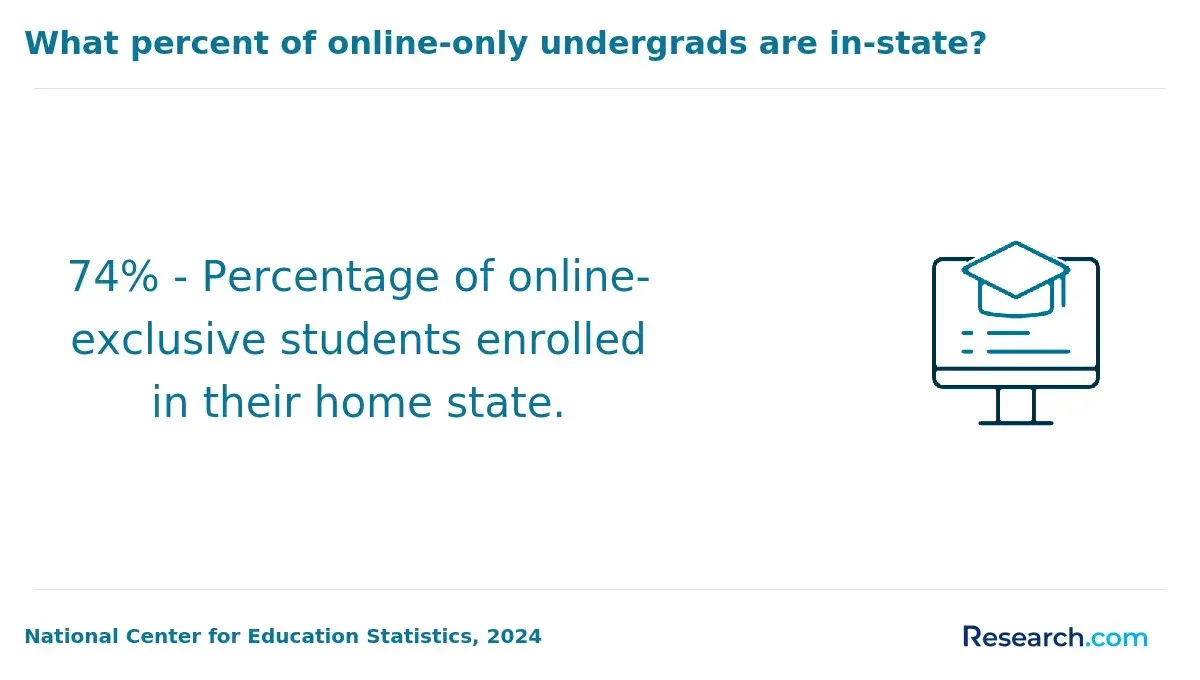
Yes, many online philosophy programs at public universities still distinguish between in-state and out-of-state tuition. A fully online format does not always remove residency pricing. This is one of the most important details to confirm before applying, especially for students considering public universities outside their home state.
Some universities charge residents significantly less per credit, while non-residents pay much higher rates. Portland State University and the University of Arizona both maintain distinct tuition fees based on residency, with non-residents paying nearly three times more than residents at times.
Other schools use a flat-rate model for online students. Oregon State University and the University of Missouri-St. Louis offer the same tuition to all domestic online learners, which can make them more predictable options for students living outside the school's state.
Students should also ask about exceptions. Regional tuition agreements, military benefits, employer partnerships, and institutional discounts may reduce costs for eligible students. These policies are not always obvious on a program page, so it is worth confirming the rate directly with the admissions or bursar's office.
When comparing programs, students should look for the exact tuition category that applies to them: resident, non-resident, domestic online, military, transfer, graduate, or part-time. A small difference in per-credit tuition can become a large difference across a full degree.
Which Schools Offer the Most Affordable Philosophy Degree Programs?
The most affordable online philosophy programs combine low tuition with accreditation, transparent fees, flexible transfer-credit policies, and enough student support to help learners finish. A low sticker price is helpful, but students should also check whether books, technology fees, and required campus visits increase the final cost.
Examples of affordable online philosophy bachelor's degree options include:
- Fort Hays State University (FHSU): FHSU is one of the lowest-cost options listed, with annual tuition of approximately $7,719. Its online bachelor's degree in Philosophy is fully accredited and designed for flexible study nationwide.
- University of North Carolina at Greensboro (UNCG): UNCG offers its program at around $9,324 per year, giving online learners a relatively affordable path through a public university.
- University of New Orleans (UNO): UNO charges all online philosophy students in-state tuition of $10,926 regardless of residency and awards a $1,000 scholarship to each graduating philosophy major.
Other cost-conscious options include American Public University System at roughly $10,500 yearly and Oregon State University, which charges $366 per credit hour with courses taught by the same on-campus faculty.
When evaluating affordability, students should ask four questions: How many credits will I need after transfer evaluation? Is tuition flat-rate or per-credit? Are online fees charged every term? Are books and digital materials included or separate? The answers can change which program is truly the least expensive.
Which Schools Offer the Most Expensive Philosophy Degree Programs?
The most expensive philosophy programs are often attached to highly selective or well-resourced universities. Higher tuition may reflect institutional prestige, faculty reputation, small seminars, research opportunities, academic advising, and access to broader university resources. It does not always mean the program is the best financial fit for every student.
Examples of higher-priced philosophy programs include:
- Brown University: Brown charges about $62,680 per year for its philosophy concentration. The price is tied to its Ivy League setting, specialized faculty, small class sizes, and opportunities such as honors work through a senior thesis or independent project.
- University of Pennsylvania: Penn's tuition is approximately $56,212 yearly. Its philosophy curriculum includes areas of focus such as humanistic and philosophy of science, supported by an elite institutional reputation and extensive academic resources.
- University of Missouri at Saint Louis: The fully online Bachelor of Arts in Philosophy costs about $37,590 annually. The program is built for distance learners and covers historical and contemporary philosophical topics.
Students considering a higher-cost program should compare the price against expected aid, transfer-credit acceptance, academic goals, and career plans. Prestige can matter for some graduate-school pathways, networking goals, or academic ambitions, but it may not justify substantial debt for every student.
For readers weighing cost against career speed and earning potential, researching quickest degree highest pay programs can provide a useful comparison point outside philosophy.
How Long Does It Take to See a Return on an Online Philosophy Degree?
The return on an online philosophy degree varies widely because philosophy graduates enter many different fields, including education, law, public policy, writing, business, nonprofit work, consulting, and graduate study. The degree's value often comes from transferable skills rather than a single direct career pipeline.
On average, graduates recoup the costs of their online philosophy degree within about 14 years after starting their careers. This timeline can be shorter for students who choose lower-cost programs, receive grants or scholarships, transfer credits, avoid high debt, or move into higher-paying roles.
Entry-level salaries for philosophy majors typically hover around $58,900. Graduates who continue into advanced degrees or specialize in fields like law or education may see lifetime earnings exceed $7 million, but those outcomes depend on additional education, career choices, location, and professional experience.
The total investment in an online bachelor's degree in philosophy averages near $131,650. Because that figure includes more than tuition alone, students should reduce avoidable costs where possible: compare resident and non-resident rates, maximize transfer credits, apply for aid early, use employer tuition assistance if available, and avoid borrowing more than necessary.
A philosophy degree is most likely to produce a stronger return when students pair it with practical experience. Internships, writing samples, research projects, policy work, legal exposure, data or technology skills, teaching experience, or business coursework can make the degree more marketable.
Are Online Philosophy Students Eligible for Financial Aid?
Yes. Online philosophy students may be eligible for many of the same financial aid options as campus-based students, as long as they attend an eligible accredited institution and meet the aid requirements. The most important first step is usually completing the Free Application for Federal Student Aid (FAFSA).
FAFSA eligibility for online philosophy students can open access to federal grants, federal loans, and work-study programs. Students should complete the FAFSA as early as possible because school and state deadlines can affect the type and amount of aid awarded.
- Federal Financial Aid: Students who complete the FAFSA may qualify for federal grants, loans, and work-study programs that help pay tuition and related educational expenses. This can apply to associate degrees like Georgia State's online A.A. as well as bachelor's degree candidates.
- Institutional Scholarships and Grants: Many universities offer internal scholarships and grants. At the University of Missouri-St. Louis, 97% of students receive aid, which can reduce the net cost even at institutions with higher tuition rates like $37,590 annually.
- Graduate Funding: Graduate philosophy students may find teaching assistantships that provide tuition waivers and stipends between $13,750 and $25,200, depending on the program and appointment.
- Employer Tuition Assistance: Some employers help pay for approved degree programs. This option is especially useful for working adults who can connect philosophy coursework to leadership, ethics, communication, policy, education, or analytical roles.
Students should compare net price rather than sticker price. A program with higher tuition but stronger aid can cost less than a lower-tuition program with limited scholarships. Always confirm whether aid applies to online students, part-time students, transfer students, and out-of-state students.
Students thinking ahead to work environments and career fit can also explore the best jobs for creative introverts after considering how philosophy skills may translate into professional roles.
Are Online Philosophy Program Costs Expected to Increase in the Coming Years?
Online philosophy program costs may increase gradually in the coming years, although the pace will vary by institution. Schools can raise tuition or fees to cover faculty compensation, learning technology, student support, library resources, compliance costs, and general operating expenses. Students should not assume that today's listed tuition will remain unchanged throughout a multi-year degree.
At the same time, online philosophy remains a smaller niche compared with many professional and technical programs. That can create two competing pressures: universities may invest more in online liberal arts programs as demand for flexible study grows, but they may also keep prices competitive to attract students who have many low-cost humanities options.
Universities are expanding online offerings in areas such as bachelor’s degrees, master’s programs, applied ethics, social philosophy, and philosophy of technology. Better online discussion tools and digital learning platforms have also made it easier to deliver courses built around debate, reflection, and close reading.
Students planning for future enrollment should verify whether tuition is locked for a cohort, billed per credit, or subject to annual increases. They should also ask whether fees can change separately from tuition. For budget planning, the safest approach is to leave room for moderate cost increases, apply for aid every year, and avoid delaying required courses when possible.
What Students Say About The Cost of Pursuing Online Philosophy Programs
- : "Enrolling in an online Philosophy degree was one of the best decisions I've made. The average cost was surprisingly affordable compared to traditional programs, making it a smart investment for my career growth. The critical thinking skills I'm gaining are already opening doors in consulting and policy analysis. Nick"
- : "After carefully weighing the financial commitment of an online Philosophy program, I found the cost to be reasonable, especially given the flexibility it offers. It's been a rewarding journey that challenges me intellectually and enriches my worldview, reaffirming that the value extends beyond just monetary returns. Brian"
- : "The cost of attending an online Philosophy degree program was initially a concern, but I've come to see it as a worthwhile investment. The insights I've gained have enhanced my professional approach, providing a strong foundation in ethics and logic that benefits my career in law. Completing this degree has truly paid off. AJ"
Other Things You Should Know About Philosophy Degree Program Costs
No. Many programs bill them separately from tuition as online learning or technology fees, often charged per credit hour or per semester. Students should also check for proctoring, library access, and graduation fees, since these can raise the total cost beyond the advertised tuition rate.
Besides tuition, online Philosophy degree programs in 2027 may include additional fees for technology, resources, or special courses, affecting the total cost. Prospective students should inquire directly with institutions about any extra fees to budget effectively.
References
- Philosophy (B.A. or B.S.) – Oregon State Online https://ecampus.oregonstate.edu/online-degrees/undergraduate/philosophy/
- 2025 Philosophy Tuition - Online https://www.collegetuitioncompare.com/majors/38.0101/philosophy/
- Professional Certificate in Medical Coding | National University https://www.nu.edu/degrees/certificate-programs/programs/online-medical-coding-program/
- Online Philosophy Degree | Philosophy, BA https://online.uccs.edu/program/online-bachelors/philosophy-ba
- E-Education vs Traditional and Distance Learning: A Cost Comparison - Distance Learning Institute https://distancelearning.institute/economic-perspective/e-education-vs-traditional-distance-learning-cost-comparison/
- Online B.A. Program https://www.uno.edu/academics/colaehd/la/philosophy/online
- What is it like to study philosophy as a University of London student? | University of London International Programmes - Official Student Blog https://londoninternational-blog.com/universityoflondoninternationalprogrammes-officialstudentblog-208/
- The Cost of an Online Degree vs. a Traditional Degree: Is it Worth the Investment? https://onlineamrita.com/blog/the-cost-of-an-online-degree-vs-a-traditional-degree-is-it-worth-the-investment/