2027 Paying for an Online BS in Business Administration: A Prior Withdrawal That Affects Aid Eligibility
Audited and Verified:
Our Editorial and Data Verification Process
Research.com uses government datasets, official education statistics and primary institutional information to support its career and degree guides. Our review process checks factual accuracy, occupational definitions, source dates and the requirements associated with the credentials discussed.
How This Article Was Fact-Checked
Our editorial team verifies salary estimates, employment projections, education requirements and program information against original data providers and official organizations. Salary figures are checked against the relevant occupational definitions and reporting periods. Information about licensure, accreditation and required in-person training is reviewed separately.
Fact-checked and verified on:

Co-Founder and Chief Data Scientist
A previous college withdrawal can complicate paying for an online BS in Business Administration, but it does not automatically end your eligibility for federal student aid. The outcome depends on what happened to your earlier aid, whether you owe a balance or have a loan in default, and how your new school evaluates satisfactory academic progress.
If you are returning to finish a bachelor's degree, this guide will help you identify the records to request, the questions to ask, and the costs to compare before committing to a program.
Key Things You Should Know
- A prior withdrawal alone does not disqualify you from federal aid; unresolved aid overpayments, loan default, and satisfactory academic progress can affect eligibility.
- Withdrawing before completing 60% of a payment period can trigger a federal aid recalculation. A school's tuition refund is a separate calculation, so you may still owe the school money.
- Before enrolling, ask the new school for both a degree audit and a written review of your aid status. Accepted transfer credits do not necessarily satisfy BSBA requirements or shorten the amount you must finance.
What Does an Online Bachelor's in Business Administration Cover?
An online BS in Business Administration, often abbreviated BSBA, combines general education with accounting, finance, marketing, management, operations, economics, and business decision-making. Programs may offer concentrations, but their names and requirements vary. The degree prepares students to apply business concepts; it does not by itself qualify a graduate for a management position or a professional license.
For a returning student, the curriculum matters most as a credit-applicability question. An earlier college may have accepted a statistics or accounting course toward an associate degree, while the new BSBA may require a different course for its business core. Request a program-specific degree audit before estimating how much aid or borrowing you will need. You can evaluate American online business school options, then ask each school to apply your prior coursework to its actual BSBA requirements.
How Does a Prior Withdrawal Affect Financial Aid Eligibility?
A withdrawal can create several distinct problems. The first is a return of Title IV funds calculation, if you received federal aid and stopped attending before completing the payment period, your former school determines how much aid you earned. After the 60% point, students generally earn all federal aid for that payment period. Tuition-refund rules are separate, so returning aid can leave a balance on your student account.
The second issue is satisfactory academic progress, or SAP. Each school applies a published policy covering grades, the share of attempted credits completed, and a maximum time frame. A withdrawal may count as attempted but not completed credit. A new school evaluates SAP under its own policy; it may not simply carry over your former school's academic standing. Federal aid overpayments and defaulted federal loans are separate eligibility issues that also need resolution.
These distinctions help you direct each question to the right office rather than treating every balance or failed course as the same problem.
| Issue after withdrawal | What to verify | Who can confirm it |
| Returned federal aid | Whether the prior term's aid was recalculated and any amount you must repay | Former school's financial aid office |
| School account balance | Whether you owe tuition or fees after the school's refund and aid calculations | Former school's student accounts office |
| SAP at the new school | How applicable transfer credits and future enrollment affect your standing | New school's financial aid office |
| Federal loan status | Whether loans are current, in repayment, or in default | Your federal student aid account and loan servicer |
Once you know which issue applies, build a budget around aid you are actually eligible to receive. A guide to business administration tuition budgets using federal student aid can help you compare programs, but it cannot substitute for an individual aid determination.
Can You Receive Federal Aid After Withdrawing From College?
Yes, many students can. File the FAFSA for the enrollment period you plan to attend and ask the new school to review your eligibility before you rely on a proposed award. Federal aid still depends on the program's eligibility, your enrollment and other federal requirements, available grant or loan eligibility, and the resolution of any disqualifying aid issue.
Use this sequence to find out what you can actually receive:
- Ask your former school for its withdrawal date, return-of-aid calculation, account balance, and academic transcript.
- Check your federal student aid account for loan and grant history, then contact the appropriate office about any reported overpayment or default.
- Submit the FAFSA and your transcripts to the new school; ask its financial aid office for a SAP assessment and its policies on appeals, warning, or probation, if applicable.
- Compare the school's written aid offer with its degree audit and payment deadlines before registering for classes.
If you fail SAP, an approved appeal or a period of enrollment without aid may provide a path back, depending on the school's policy; an appeal is not guaranteed. If you have already used part of a federal loan's grace period, do not assume another withdrawal or a later return to school will reset it. Ask your servicer when repayment is due.
Federal aid rules also matter if you change majors instead of continuing in business administration. For example, students considering project management can use tuition and aid questions for project management students to frame a comparison, while confirming their own eligibility directly with each school.
Start with institutional accreditation recognized by the U.S. Department of Education and confirm that the online BSBA is an eligible program at the school. Institutional accreditation and eligibility are important to federal aid; neither erases a prior overpayment, default, or SAP problem.
Business-school accreditation through AACSB, ACBSP, or IACBE is a separate consideration. Check the accreditor's listing and the school's description of its scope rather than assuming every business degree or campus is covered. Compare that information with transfer policy, course availability, and total remaining cost. A list of economical college choices for business administration majors is a starting point, not proof that a particular program accepts your credits or qualifies you for aid.
A BSBA commonly includes introductory and advanced work in accounting, economics, finance, marketing, organizational behavior, operations, statistics, and strategy, alongside writing and general education. Some programs require a capstone, internship, or group project. Online delivery does not necessarily make those requirements self-paced.
If you withdrew partway through a business course, ask whether the new school will accept a completed equivalent or require you to repeat it. Also check course sequencing: an unfulfilled accounting or quantitative prerequisite may delay upper-level work even when many other credits transfer. If your goal is specifically HR rather than broad business study, compare the BSBA's HR coursework with online human resources programs for associate degree holders. A specialized route may be more relevant, but only a formal evaluation can establish which path uses more of your previous credit.
Schools commonly request a completed application and official transcripts from every college attended, even if you do not expect credits from a school where you withdrew. GPA standards, prerequisites, readmission rules, and admission to the business major vary. Admission to the university does not guarantee admission to the major, transfer of every course, or federal aid eligibility.
Tell admissions when and where you last attended, then ask the registrar or transfer office for a program-specific evaluation. Ask separately whether the financial aid office needs a SAP appeal or other documentation. If you are weighing another major because of credit loss, online project management bachelor's programs accepting transfer credits offer a comparison point; do not assume their transfer policies or remaining requirements match a BSBA's.
Your completion time depends on credits applied to the degree, remaining prerequisites, course rotation, and how many courses you can take while meeting SAP requirements. An accelerated calendar does not remove required coursework. Taking fewer courses may better protect your grades and budget after a difficult withdrawal, although it can extend your enrollment and change the timing of aid disbursements.
Ask an adviser to map your remaining courses by term, including any courses offered infrequently. If supply chain is your intended field, you can compare shorter completion timelines for supply chain bachelor's students; the advertised timeline is useful only if your evaluated credits and scheduling permit it.
There is no reliable personal total until a school evaluates your credits and aid. Compare the cost to finish, not just the advertised tuition rate. A prior withdrawal can increase that cost if courses must be repeated, aid must be repaid, or an unpaid school balance delays enrollment.
This comparison separates charges from funding and timing, which is especially important when an aid offer does not cover every bill.
| Budget component | What to obtain from each school |
| Remaining academic charges | Required credits or terms, tuition basis, mandatory fees, and repeat-course charges |
| Other study costs | Books, software, equipment, proctoring, and any travel requirements |
| Available funding | Confirmed grants, scholarships, federal loans, and employer benefits |
| Cash-flow gap | Payment due dates, aid disbursement timing, and any employer reimbursement delay |
Grants and scholarships generally reduce what you pay; loans shift payment into the future. Check annual and aggregate loan limits, remaining Pell Grant eligibility if relevant, and any conditions on employer reimbursement. Use a business degree tuition comparison guide to shortlist schools, then request an individualized estimate based on the credits each will actually apply.
A BSBA can support applications for roles such as operations coordinator, administrative specialist, sales support associate, HR assistant, or marketing coordinator. Which roles are realistic depends on your previous work, the business function you want to enter, and evidence of skills such as spreadsheets, budgeting, customer communication, or process improvement. A degree alone does not confer a management title.
If you already have logistics or purchasing experience, a focused supply chain program might fit your target role better than a general BSBA. Compare coursework and remaining cost using budget-friendly supply chain degrees with shorter schedules, while checking whether changing programs would strand more of your transfer credits. Relevant employment, a supervised project, or an internship may also help demonstrate readiness without taking on unnecessary additional coursework.
What Salary and Job Outlook Can Business Administration Graduates Expect?
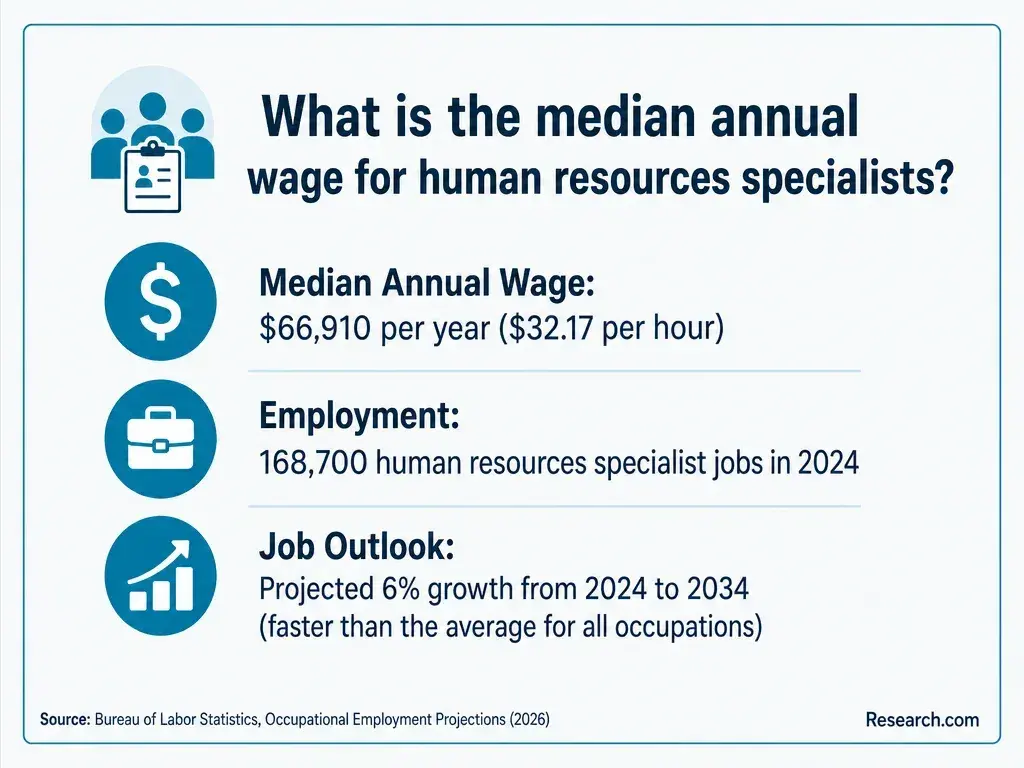
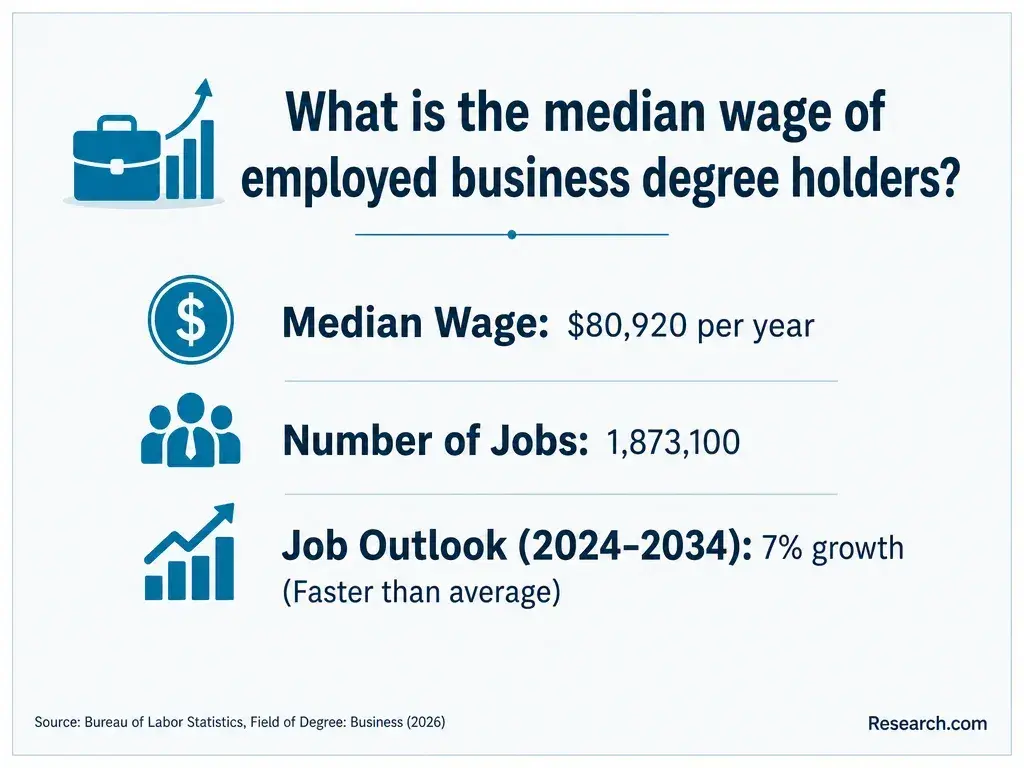
There is no single salary or job-growth figure for BSBA graduates. The U.S. Bureau of Labor Statistics reports a May 2025 median annual wage of $75,940 for human resources specialists and projects 6% employment growth from 2025 to 2035. Those are occupation-wide figures, not starting salaries or outcomes promised to business graduates; employers may also expect HR-specific preparation or experience.
To judge whether borrowing is worthwhile, start with the jobs you could credibly pursue given your existing experience. Compare their requirements with the skills and credential you would gain, then weigh likely opportunities against your remaining cost and time out of school. Shorter affordable business administration degree pathways may reduce the cost to finish, but only if their evaluated transfer credits, course schedules, and aid policies work for you.
Other Things You Should Know About Business Administration
If an application asks about enrollment gaps or academic history, answer accurately and briefly. Describe what changed and how you will manage coursework now; do not omit a college whose transcript is required.
Possibly. Ask your employer about eligible programs, reimbursement timing, grade requirements, annual limits, and whether leaving the job triggers repayment.
They might. Check live sessions, group meetings, exam windows, and internship or campus requirements before choosing courses around work or caregiving.
Ask whether nondegree or part-time enrollment is allowed and whether that course will apply to the BSBA. Aid eligibility can differ by enrollment status and program admission, so confirm funding before registering.
- The Steps in a Return of Title IV Aid Calculation - Part 2 https://fsapartners.ed.gov/knowledge-center/fsa-handbook/2026-2027/vol5/ch2-steps-return-title-iv-aid-calculation-part-2
- Staying Eligible | Federal Student Aid https://studentaid.gov/understand-aid/eligibility/staying-eligible
- Withdrawals and Return of Title IV Aid | Northwestern Michigan College https://www.nmc.edu/financial-aid/withdrawals-and-return-of-title-iv-aid.html
- Satisfactory Academic Progress Policy - Chicago https://www.depaul.edu/tuition-and-aid/financial-aid-and-eligibility/sap
- How Dropping or Withdrawing Affects Your Financial Aid | CSUSM https://www.csusm.edu/finaid/dropwithdrawaffect/index.html
- Satisfactory Academic Progress - Financial Aid https://finaid.umich.edu/managing-your-aid/satisfactory-academic-progress
- Impact of Withdrawal on Students Receiving Federal Financial Aid | Student Account Services https://studentaccounts.ua.edu/impact-of-withdrawal-on-students-receiving-federal-financial-aid/