
Biochemistry Prerequisites for PharmD programs

Co-Founder and Chief Data Scientist
A biochemistry course can determine whether your Doctor of Pharmacy (Pharm.D.) application is complete, or add an unexpected semester before enrollment. The difficulty is that pharmacy schools do not all ask for the same course. Some require it before entry, while others recommend it or teach it in the professional curriculum.
This guide helps prospective applicants check what counts, identify credit and timing problems early, and decide whether to take, retake, or seek approval for a biochemistry course.
Key Things You Should Know
- Biochemistry is not a universal Pharm.D. admission requirement; check each school's current prerequisite list rather than assuming a chemistry degree covers it.
- A course counts only if the receiving school accepts its content, credits, institution, format, grade, and completion date. A lab is required only where the school specifically says so.
- Check requirements for your application cycle and confirm when unfinished courses must be completed, typically before matriculation, not necessarily before applying.
What biochemistry prerequisites do PharmD programs typically require?
Where biochemistry is an admission prerequisite, a school may specify a standalone undergraduate biochemistry course, a particular credit value, or an approved course covering topics such as proteins, enzymes, metabolism, and molecular biology. Other schools accept a course with a different title if its content matches. Do not assume that general chemistry, organic chemistry, or a survey course automatically substitutes for biochemistry.
Read the current prerequisite entry for each school on your list. Note the required credits, whether a laboratory is explicitly required, and any stated course equivalencies. If your course title is unusual, send admissions staff the catalog description or syllabus and request a written determination before enrolling or relying on the credit. Students entering from chemistry can also compare pharmacy doctorate options after chemistry, but must still check each school's course-level rules.
Is biochemistry required for admission to every PharmD program?
No. Pharm.D. programs set their own admission prerequisites within the framework of professional pharmacy education. A school may require biochemistry before entry, recommend it without making it mandatory, or include the subject in its professional Pharm.D. curriculum. Undergraduate prerequisite work and courses taken after entering the Pharm.D. are not interchangeable unless the school expressly provides that pathway.
A missing course therefore has different consequences at different schools. It may make you ineligible, leave you eligible if you finish it before enrollment, or have no effect on basic eligibility. Compare those possibilities when reviewing admission pathways for pharmacy students, a school with fewer listed prerequisites is not necessarily easier to enter or better suited to your goals.
How does biochemistry prepare students for PharmD coursework?
Biochemistry connects chemical structures to processes in living systems. Understanding enzymes, metabolic pathways, and molecular interactions gives students a foundation for studying how drugs act, how the body handles them, and why a disease or treatment can change those processes. Pharm.D. instruction then builds on that foundation through subjects such as pharmacology, medicinal chemistry, and therapeutics.
The value of taking biochemistry early depends on your preparation. If you have not recently studied organic chemistry or cell biology, taking those courses in a sensible sequence may be more useful than rushing to finish biochemistry. Likewise, faster Doctor of Pharmacy routes compress the calendar; they do not remove the need to learn the underlying science. Ask an accelerated program whether its entry requirements and course pace fit your background.
Common pre-professional subjects include general and organic chemistry, biology, microbiology, anatomy and physiology, physics, and mathematics or statistics. The exact mix, credit amounts, and laboratory requirements differ by school. Some programs also require nonscience coursework. A completed bachelor's degree is not a nationwide requirement for Pharm.D. admission; individual schools determine whether they require one or accept specified prerequisite credits instead.
Build a school-by-school course map rather than treating a general "pre-pharmacy" checklist as authoritative. If your goal is a different pharmacy-related occupation, compare its actual education requirements before paying for pharmacist-track prerequisites. Some short-duration pharmacy programs lead toward roles that do not require a Pharm.D., they are not shortcuts to pharmacist licensure.
They may, but acceptance is school-specific. Some community colleges offer an appropriate biochemistry course; others offer a course whose title, level, credit value, or content does not match a pharmacy school's requirement. The receiving Pharm.D. program - not the institution awarding the original credit - decides whether it satisfies the prerequisite.
Before registering, give the pharmacy school the community college's course description, credits, lab details if applicable, and syllabus if requested. Ask whether the course meets that school's biochemistry prerequisite, not merely whether community college credits are accepted in general. Guidance on pharmacy programs that accept transfer credits can help frame the question, but prerequisite acceptance is distinct from transfer into the professional Pharm.D. curriculum.
Minimum acceptable grades and limits on how old science coursework may be vary by program. A school may also treat a repeated course differently from the way your undergraduate institution calculates GPA. Meeting a stated minimum does not guarantee admission, and an older course may need individual review even if its grade was strong.
Check the admissions page for the cycle in which you will apply, then ask how a repeat, a pass/fail mark, or an older biochemistry course would be evaluated on your actual transcript. If retaking the course adds substantial time or expense, compare that commitment with lower-cost pharmacy degree pathways only if those pathways meet your career goal. A less expensive non-Pharm.D. credential does not qualify someone for pharmacist licensure.
Possibly. Acceptance depends on the receiving school's rules for the institution awarding credit, course content, and delivery format. An online lecture and an online or at-home lab may be evaluated separately. A course being offered by an accredited college does not, by itself, establish that a Pharm.D. program will accept it as its biochemistry prerequisite.
Get approval for the specific course and lab format before paying tuition. Confirm how the course will appear on your transcript and whether it must be completed by a particular date. If you are also considering top online pharmacy doctorate programs, evaluate those programs separately: online instruction in a Pharm.D. does not imply that required hands-on activities or clinical rotations can be completed remotely.
PharmCAS, the Pharmacy College Application Service, provides school listings and application instructions for participating programs. Use the listing for the cycle in which you plan to apply, then cross-check it against the school's current admissions page. Not every pharmacy school uses PharmCAS, and a participating school may have additional application steps or its own prerequisite-evaluation process.
Use this sequence to resolve a biochemistry question before a deadline:
- Find the school's current PharmCAS listing, if it participates, and record the stated biochemistry requirement and completion deadline.
- Compare that entry with the school's admissions page, including its rules for labs, grades, course age, and courses still in progress.
- Send admissions staff your course title, institution, credits, description, and syllabus if the match is unclear; keep their written response.
- Enter coursework accurately and follow the school's instructions for updated transcripts, supplemental materials, and final prerequisite completion.
For broader pharmacy program admission planning, distinguish permission to apply with a course in progress from permission to begin the Pharm.D. without completing it.
There is no single timeline or price. Your starting transcript, the schools you target, course sequencing, and whether biochemistry is offered when you need it determine the remaining time. Tuition also varies by institution and residency status. A lower-priced course can cost more overall if it is rejected and must be taken again.
The comparison below separates the costs students can check before committing to a prerequisite plan. Request current prices from each institution rather than relying on a generic estimate.
| Cost or time factor | Why it can change your plan |
| Tuition and mandatory fees | Charges may differ by college, residency status, and enrollment load. |
| Course sequencing and availability | Required earlier courses or infrequent offerings can delay biochemistry and Pharm.D. entry. |
| Lab, materials, and travel | A required in-person component can add expenses beyond advertised tuition. |
| Retakes or unaccepted credit | A grade or equivalency problem can require another course and another enrollment period. |
Compare the remaining prerequisites for each school, not an assumed price for a full pre-pharmacy curriculum. Be cautious with lists of online doctorate programs with shorter timelines, their durations may exclude prerequisites, and a doctorate in another field is not a substitute for a Pharm.D. when the goal is pharmacist licensure. Ask your financial aid office how taking prerequisites would affect your individual aid eligibility.
How should students compare PharmD programs and accreditation standards?
First, compare admission fit: whether your biochemistry course counts, what else remains, and when every requirement must be finished. Then assess the professional program itself. The Accreditation Council for Pharmacy Education (ACPE) accredits professional pharmacy programs; institutional accreditation and a school's authorization to offer distance education are separate matters. Check a program's current ACPE status directly before enrolling.
These criteria help keep a seemingly convenient prerequisite policy from overshadowing the full decision:
- Entry requirements: Identify missing courses, approval conditions, application deadlines, and any required campus visits.
- Total educational cost: Compare professional-program tuition and fees alongside remaining prerequisites, travel, and possible rotation-related expenses.
- Delivery and experiential education: Ask about scheduled classes, in-person labs, introductory and advanced pharmacy practice experiences, and who coordinates or approves placements.
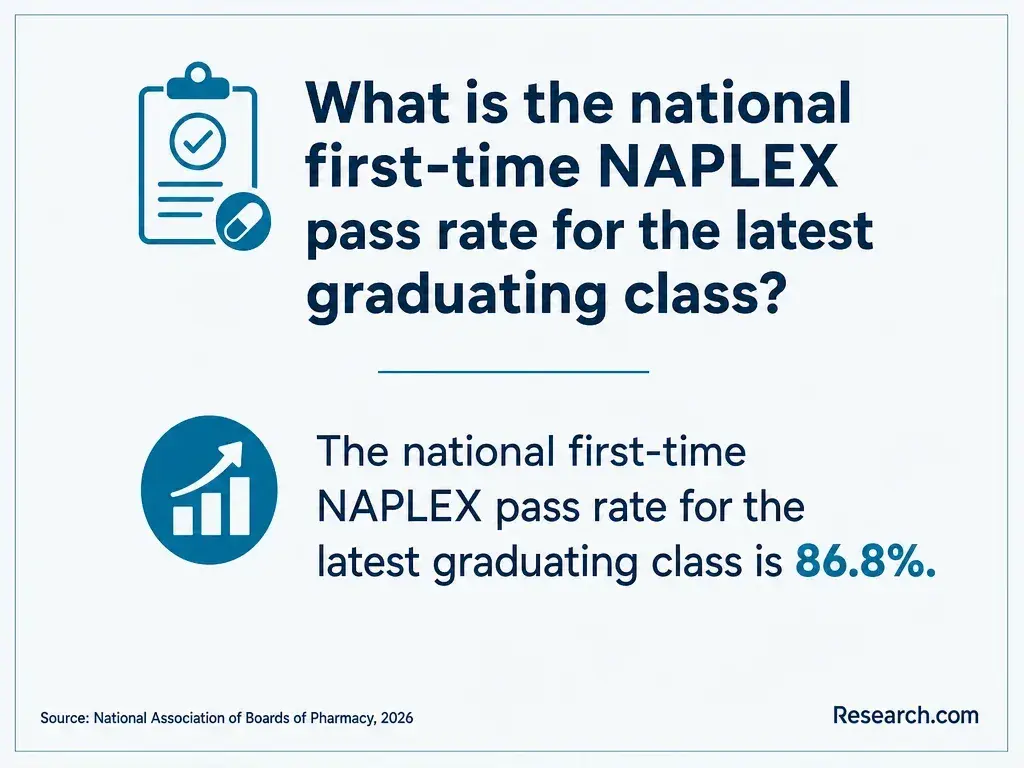
- Outcome and licensing fit: Review published exam outcomes in context and check the pharmacy board requirements for the state where you intend to practice.
Resources on online pharmacy school cost options can help you identify programs to investigate, but verify current charges and accreditation with each school and ACPE. Completing an accredited Pharm.D. does not itself issue a pharmacist license; graduates must meet applicable state board requirements, including examinations. Residency, fellowship, and specialty board certification are separate pathways, not universal conditions for entry into pharmacy practice.
Other Things You Should Know About PharmD
Not necessarily. Some Pharm.D. programs admit applicants who complete specified prerequisite coursework without a bachelor's degree; others set different entry conditions. Check each school's current policy.
Do not assume so. Schools decide whether and how they accept AP or IB credit, and chemistry exam credit may not match a separate biochemistry requirement. Ask for a course-specific evaluation.
It may be considered, but schools set their own evaluation and documentation rules. Ask whether a credential evaluation, translated syllabus, or additional U.S. coursework is required.
Usually not unless a school explicitly allows a substitution. Work experience can strengthen an application, but it does not automatically award academic credit or satisfy a required science course.
- Pre-Pharmacy Requirements | UAMS College of Pharmacy https://pharmacy.uams.edu/pre-pharmacy-requirements/
- Admission Requirements | ufl.edu https://admissions.pharmacy.ufl.edu/steps-to-apply/application-requirements/
- Admissions: USC Mann PharmD Program https://mann.usc.edu/program/doctor-of-pharmacy-pharmd/admissions/
- Academic Requirements - MSU College of Veterinary Medicine https://cvm.msu.edu/future-students/dvm/prerequisites
- PharmD FAQs - UNC Eshelman School of Pharmacy https://pharmacy.unc.edu/education/pharmd/pharmd-admissions-faqs/
- PharmD Prerequisites - Doctor of Pharmacy https://pharmacy.wisc.edu/pharmd/prerequisites/
- Prerequisite Information - UW School of Pharmacy https://sop.washington.edu/pharmd/admissions/prerequisite-info/
- PharmCAS Admission Requirements | buffalo.edu https://pharmacy.buffalo.edu/admissions/doctor-of-pharmacy--pharmd-/pharmcas/pharmcas-requirements.html
- FAQ | OSU College of Pharmacy - Oregon State University https://pharmacy.oregonstate.edu/programs-admissions/pharm-d/faq


