PharmD State Authorization versus Pharmacist Licensure

Co-Founder and Chief Data Scientist
A pharmacy school may be allowed to enroll you in your state without preparing you to qualify for a pharmacist license there. That distinction matters before you pay a deposit, arrange clinical rotations, or plan a move. This guide is for prospective Pharm.D. students - especially those considering online or hybrid programs - who need to separate permission to study from permission to practice. You'll learn which approvals to check, how accreditation and exams fit together, and what to ask the school and pharmacy board before committing.
Key Things You Should Know
- State authorization concerns a school's permission to offer education to students in a state; pharmacist licensure is the pharmacy board's permission for an individual to practice.
- For a typical U.S.-educated applicant, check the program's ACPE professional accreditation and the intended licensing board's rules. Neither authorization nor graduation alone grants a license.
- Before enrolling, confirm authorization for your location, whether required clinical placements can be completed there, and whether the program satisfies the educational requirements in the state where you intend to practice.
What is the difference between PharmD state authorization and pharmacist licensure?
State authorization regulates educational activity; pharmacist licensure regulates professional practice. Authorization addresses whether an institution may enroll or teach students who are located in a particular state. Licensure is issued to an individual by a state board of pharmacy after the applicant meets that jurisdiction's requirements.
The comparison below shows why a positive answer to one question cannot stand in for an answer to the other.
| Issue | Pharm.D. state authorization | Pharmacist licensure |
| Who it concerns | The institution's educational activity for students in a state | An individual applicant's authority to practice pharmacy |
| Who determines it | Applicable state higher-education authorities or authorization arrangements | The relevant state board of pharmacy |
| What it does not establish | ACPE accreditation or a graduate's licensing eligibility | Permission for a school to enroll students in every state |
Use this distinction when you compare pharmacy doctorate options: an enrollment map and a licensure-disclosure map answer different questions. If you expect to study in one state and practice in another, check both jurisdictions separately.
Does a state-authorized PharmD program qualify graduates for pharmacist licensure?
State authorization does not certify that a curriculum meets pharmacist-licensing requirements. A U.S.-educated candidate generally needs an appropriate professional Pharm.D. education, required practical experience, passing examination results, and approval from the licensing board. The board - not the school - determines whether the applicant qualifies.
Ask the program for its written professional-licensure disclosure for your intended practice state, then compare it with that board's current requirements. Treat "has not determined whether the program meets requirements" differently from "meets requirements." Also ask whether changing your state of residence during enrollment would affect coursework or rotations.
If you have college credits already, pharmacy programs for students with prior coursework may help narrow your search. Only the receiving school can decide how those credits apply; accepted prerequisites are not a substitute for an eligible professional Pharm.D. curriculum.
What accreditation must a PharmD program have for pharmacist licensure?
For the standard U.S.-educated pathway, look for a professional Pharm.D. program accredited by the Accreditation Council for Pharmacy Education (ACPE). Check the program's current listing and status in ACPE's official directory, including any qualifications that apply to a newer program. Then check the intended licensing board's educational-eligibility rules.
ACPE professional-program accreditation is distinct from an institution's accreditation and from state authorization to enroll distance-education students. Each answers a different question. A school's general accreditation, or the length shown in a guide to online doctoral program duration, does not establish that its degree is a licensure-qualifying Pharm.D.
Be especially cautious with programs labeled "pharmacy doctorate" that are actually pharmaceutical sciences degrees or post-licensure options for practicing pharmacists. Check the exact credential and admission audience before comparing price or speed.
The usual U.S.-educated route begins with a school's undergraduate pre-professional prerequisites, followed by its professional Pharm.D. curriculum and supervised pharmacy practice experiences. Prerequisite courses are not themselves the Pharm.D.; schools vary in whether applicants need a completed bachelor's degree and in which prior courses they accept.
After graduation, applicants must satisfy their chosen board's experience, examination, application, and other requirements. Some states require pharmacist-intern registration during training. A pharmacy doctorate program length comparison can help you plan, but a shorter academic schedule does not remove clinical or licensing obligations.
A residency or fellowship is postgraduate training, not the license itself. Some jobs value or require particular training, but neither route is universally required to become a pharmacist.
Internationally educated applicants may instead need to follow a separate foreign-graduate eligibility process; they should check the board and the National Association of Boards of Pharmacy (NABP) before assuming a U.S. admissions rule applies to them.
An online or hybrid school must determine whether it can enroll a student located in a particular state under applicable distance-education rules. That determination is separate from whether the state permits the student's proposed clinical placement and whether its board will accept the education for pharmacist licensure.
"Online" also describes only part of the experience. Programs may require scheduled live classes, in-person labs or campus visits, and supervised, in-person introductory and advanced pharmacy practice experiences.
Before comparing affordable online Pharm.D. programs, account for required travel, possible rotation housing, time away from work, and fees beyond advertised tuition.
If you plan to move while enrolled, notify the program first. Your new location can affect its authority to teach you, available placements, and any intern-registration rules. Do not assume authorization to deliver online classes also approves a clinical site near your home.
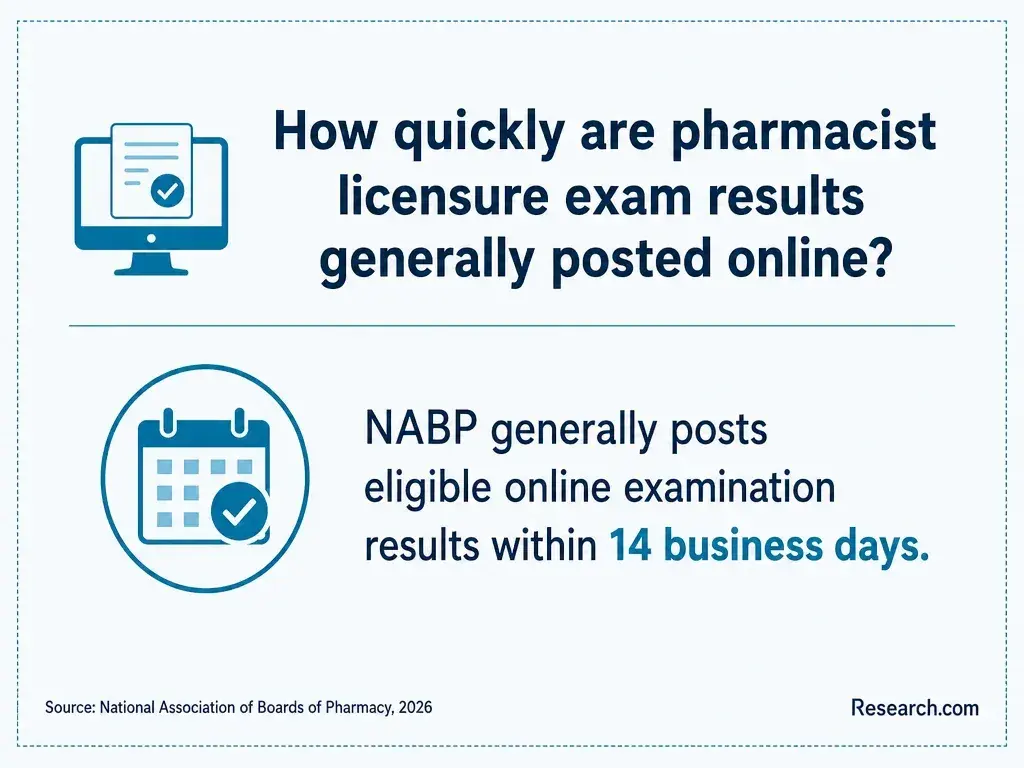
The North American Pharmacist Licensure Examination (NAPLEX) assesses pharmacy-practice knowledge for licensure. A jurisdiction may also require a law examination or another assessment of pharmacy law; do not assume every board uses the Multistate Pharmacy Jurisprudence Examination (MPJE).
Some jurisdictions began transitioning to the Uniform Multistate Pharmacy Jurisprudence Examination (UMPJE) in 2026. Check NABP and your intended board for the exam currently accepted, eligibility rules, fees, and application sequence.
Passing exams is one component of a board application, not permission to practice. Likewise, a list of fastest online pharmacy degree programs may include credentials other than an entry-to-practice Pharm.D.; a short completion claim cannot establish exam eligibility.
Accredited Pharm.D. education includes supervised introductory pharmacy practice experiences (IPPEs) and advanced pharmacy practice experiences (APPEs). Whether those experiences satisfy a particular board's intern-hour rules depends on that jurisdiction's requirements and how the hours are documented. A board may have additional registration or experience conditions.
Placement logistics deserve attention before enrollment. Ask who approves sites and preceptors, whether placements are available near you, what travel may be required, and when you must obtain intern registration, background checks, or immunizations. A job in a pharmacy should not be assumed to replace a required rotation.
For applicants exploring pharmacy admission pathways for nontraditional students, also check when unfinished prerequisites must be completed. An admissions pathway does not waive the professional curriculum or the board's experience rules.
The professional curriculum connects drug science with patient care. Students typically study how medications work, how to evaluate therapy, identify safety problems, communicate with patients and clinicians, and apply pharmacy law and professional judgment. Labs and supervised experiences help students practice those skills under appropriate oversight; classroom learning does not authorize independent practice.
Science graduates considering online Pharm.D. options for science graduates should compare their prior coursework against each school's prerequisites. A biology or chemistry degree may cover some foundations, but it does not replace the professional patient-care curriculum or confer pharmacist-licensure eligibility.
Verify the school's claims against the authorities that control each decision. Keep written answers for the state where you will study and the state where you intend to apply for a license; they may differ.
Use this sequence before paying a nonrefundable deposit:
- Find the exact professional Pharm.D. program in ACPE's current directory and review its status.
- Request the school's state-authorization and professional-licensure disclosures for your location and intended practice state.
- Ask the intended state board whether the program meets its educational rules and what intern registration, experience, and exams it requires.
- Get the program's written explanation of in-person requirements, placement support, travel expectations, and how experience is recorded.
- Compare the full educational cost and schedule with your finances and work obligations; keep copies of the school's and board's responses.
When understanding pharmacy school admissions, keep acceptance criteria separate from licensing criteria. Admission, even with previously completed science courses, is not a board ruling on future eligibility. Recheck requirements if you change programs or states.
How do pharmacist licensure requirements affect career opportunities and salaries?
A pharmacist license is required to practice as a pharmacist in the relevant jurisdiction. It can therefore determine which pharmacist positions you may pursue and where you may work; a Pharm.D. alone does not provide that authority.
Employers may add requirements or preferences, such as experience or residency training, for particular roles. Specialty board certification is a separate credential, not a replacement for state licensure.
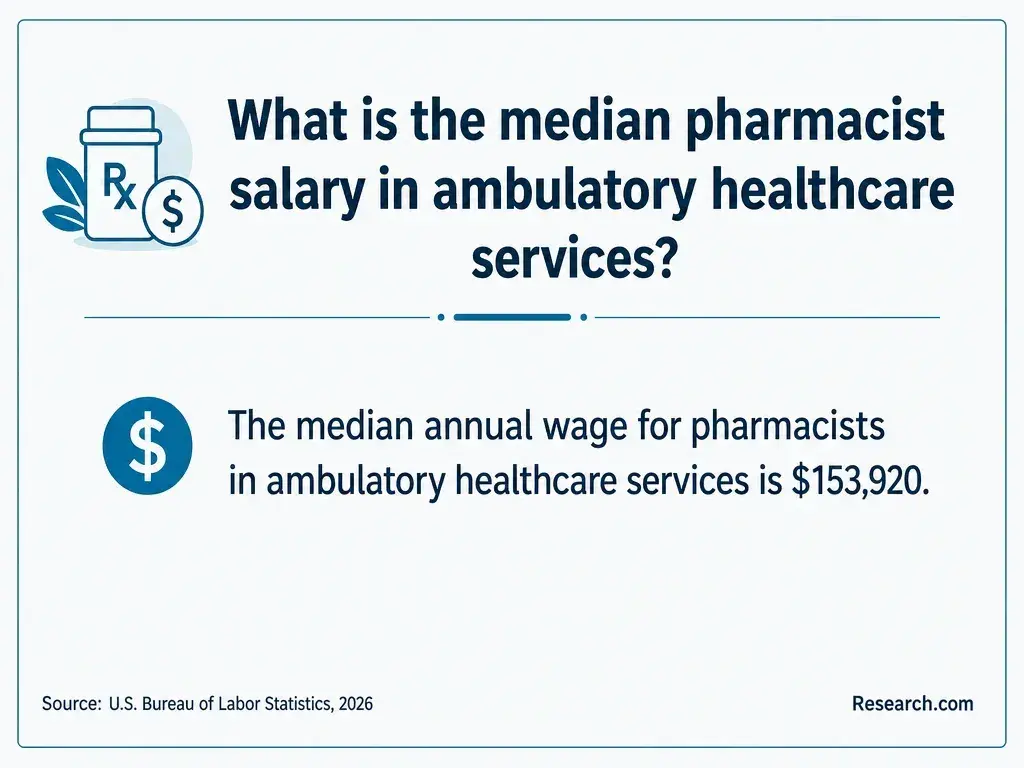
The Bureau of Labor Statistics reports $140,910 in median annual pay for pharmacists in May 2025 and projects 5% employment growth from 2025-2035. Those national figures describe the occupation, not a starting salary, a particular specialty, or a guaranteed return on a Pharm.D.
Evaluate pharmacy programs that may offer strong value against total tuition and fees, required travel, time away from earnings, and a realistic route to licensure where you want to work. If your goal is a pharmacy technician role rather than pharmacist practice, confirm that role's separate requirements before investing in a professional doctorate.
Other Things You Should Know About PharmD
Not automatically. Ask the destination board about license transfer or other application routes and any additional requirements before accepting a position there.
No. Technician credentials and pharmacist licenses authorize different roles. Technician experience may be useful preparation, but it does not replace a Pharm.D. or pharmacist licensing requirements.
Not necessarily. Foreign graduates should check NABP's applicable certification process and the intended state board's rules before scheduling exams or planning additional education.
Pharmacists must maintain it under the issuing jurisdiction's rules, which may include renewal and continuing education. Check the board's current deadlines and conditions rather than assuming licensure remains active indefinitely.
- GAC - Chapter 480-2 LICENSURE AS A PHARMACIST https://rules.sos.ga.gov/gac/480-2
- Virginia Board of Pharmacy - FAQ https://www.dhp.virginia.gov/Boards/Pharmacy/PractitionerResources/FAQ/
- NYS Pharmacy: License Requirements - Office of the Professions https://www.op.nysed.gov/professions/pharmacist/license-requirements
- Pharmacist - Florida Board of Pharmacy https://floridaspharmacy.gov/pharmacist/
- State Licensure Requirements for Students Seeking... - PMC https://pmc.ncbi.nlm.nih.gov/articles/PMC5135425/
- Pages - Frequently Asked Questions https://www.njconsumeraffairs.gov/phar/Pages/FAQ.aspx
- Pharmacist Licensure Guide | Department of State https://www.pa.gov/agencies/dos/resources/professional-licensing-resources/licensure-processing-guides-and-timelines/pharmacist-guide
- Pharmacist by Score Transfer Instructions | CT.gov https://portal.ct.gov/dcp/knowledge-base/articles/drug-control/licenses/pharmacist-by-score-transfer-instructions
- Program Eligibility, Written Arrangements, and Distance Education | 2024-2025 Federal Student Aid Handbook https://fsapartners.ed.gov/knowledge-center/fsa-handbook/2024-2025/vol2/ch2-program-eligibility-written-arrangements-and-distance-education
- Experiential Education | Washington State University https://pharmacy.wsu.edu/pharmd/experiential-services/