
Pharmacist Salary by Practice Setting

Co-Founder and Chief Data Scientist
A pharmacist's practice setting can change the workday as much as the paycheck. If you are considering a Doctor of Pharmacy (Pharm.D.) degree - or deciding between job offers - an attractive salary figure is useful only when you understand the hours, training, and costs behind it.
This guide explains what national pay data can and cannot tell you about settings such as retail and hospitals, then shows how to compare offers and choose an education path that supports the work you want to do.
Key Things You Should Know
- The U.S. Bureau of Labor Statistics (BLS) reports median pharmacist pay of $140,910 in May 2025; that occupation-wide figure is not a salary for every practice setting.
- No setting is reliably the highest-paying choice for every pharmacist. Compare actual offers using scheduled hours, premiums, benefits, location, and training costs - not job titles alone.
- A Pharm.D. is the standard U.S. educational route to pharmacist licensure, but the degree alone does not confer a license; some specialized jobs also favor postgraduate training.
What is the average pharmacist salary by practice setting?
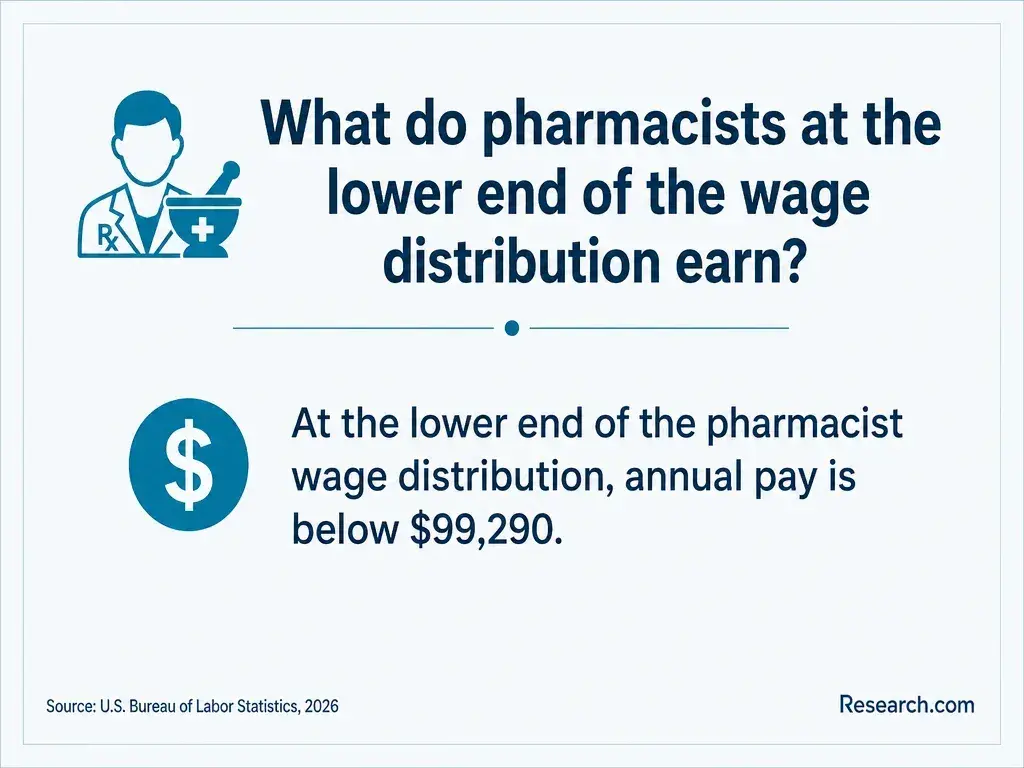
The clearest national starting point is the BLS median annual pay for pharmacists: $140,910 in May 2025. A median is the midpoint of reported earnings, not an average or an entry-level offer. It combines pharmacists working across multiple settings, locations, and experience levels.
There is no single defensible salary figure for each setting without specifying a current dataset and exactly how it defines that setting. Industry wage categories, such as hospitals or stores, do not perfectly identify a pharmacist's duties; "clinical pharmacist" describes a role, not one consistent industry. The comparison below identifies what to check rather than assigning an unsupported national salary to each job.
| Practice setting | Common pay arrangements | What can change the comparison |
| Community or retail | Salary or hourly pay | Store hours, staffing, bonuses, and weekend coverage |
| Hospital or health system | Salary or hourly pay, sometimes with shift differentials | Evening or overnight shifts, on-call duties, and residency preferences |
| Ambulatory care or clinic | Often salary | Clinic schedule, patient-care responsibilities, and employer benefits |
| Specialty, managed care, or industry | Role-dependent salary, sometimes with incentives | Clinical expertise, management scope, travel, and bonus eligibility |
A useful comparison converts each offer to pay for the hours you are actually expected to work, then considers benefits and debt. Resources on pharmacy programs balancing cost and time can help frame that education-versus-earnings decision, but confirm that any program under consideration leads to an accredited Pharm.D. if pharmacist licensure is your goal.
Which pharmacist practice settings pay the highest salaries?
There is no universal highest-paying practice setting. Leadership roles, hard-to-fill shifts, and positions requiring specialized experience may offer higher compensation, but a setting label alone cannot establish a ranking. A hospital offer with an overnight differential, for example, answers a different question from a daytime hospital offer.
If maximizing earnings is the priority, compare written offers for base pay, expected hours, overtime eligibility, shift premiums, incentives, and benefits. Then subtract any additional time or expense needed to become competitive for the role. Fast-track Doctor of Pharmacy programs may reduce time in school for an eligible student, but a shorter program does not establish higher pay or eliminate licensure requirements.
How does retail pharmacist pay compare with hospital pharmacist salaries?
Neither retail nor hospital practice consistently pays more for every applicant. Retail offers may emphasize immediate staffing needs, variable store schedules, or incentives. Hospital compensation may include shift differentials and benefits, while some clinical positions favor applicants who have completed a postgraduate year one (PGY1) residency. A residency is supervised postgraduate training - not a license - and it usually means delaying entry into a full pharmacist position.
Compare the specific jobs, not an advertised "retail average" against a "hospital average." Ask whether the quoted salary assumes weekends, overnight coverage, on-call work, or hours beyond the stated schedule. If hospital work would require training you would not otherwise pursue, include that opportunity cost in your pharmacy doctorate financial planning.
Geography, employer type, experience, supervisory responsibility, schedule, and local hiring conditions can all change an offer. Licensure and relevant clinical skills determine which positions you can pursue; a credential or residency may strengthen an application without guaranteeing a raise.
The largest comparison mistake is treating a higher annual salary as a higher return. Estimate the effective hourly rate from expected working hours, and assess health coverage, retirement contributions, paid leave, commuting, and any repayment assistance separately. For prospective students, a school's pharmacy degree transfer credit policies may also affect total education cost. The receiving school decides whether prior coursework satisfies prerequisites or applies to its professional curriculum.
In the United States, the usual route is to complete required undergraduate prerequisite coursework and then earn a professional Pharm.D. from a program accredited by the Accreditation Council for Pharmacy Education (ACPE). Prerequisites are not the same as the professional curriculum, and schools differ on whether applicants need a completed bachelor's degree. Applicants exploring pharmacy school after biology or chemistry should have each school evaluate their courses rather than assume that a related major meets every requirement.
A pharmacy technician credential, pharmaceutical sciences degree, or pharmacology degree does not automatically qualify someone for pharmacist licensure. After the Pharm.D., graduates must satisfy the licensing board's applicable examination and other requirements. Residency, fellowship, and specialty board certification are distinct steps pursued for particular career goals, not universal conditions for becoming a pharmacist.
An ACPE-accredited professional program combines drug science and therapeutics with patient-care, communication, medication-safety, and supervised practice. Introductory pharmacy practice experiences (IPPEs) develop foundational skills; advanced pharmacy practice experiences (APPEs) provide substantial later-stage practice across settings. These experiences help students test whether they prefer community operations, hospital care, or another environment before pursuing a job.
Delivery format matters when comparing programs. Doctor of Pharmacy study online may still require scheduled classes, in-person activities, and clinical rotations. Confirm who arranges placements and whether travel, intern registration, or time away from work will be necessary. ACPE program accreditation addresses the professional curriculum; institutional accreditation and authorization to provide distance education in a state are separate matters.
U.S.-educated applicants generally take the North American Pharmacist Licensure Examination (NAPLEX), which assesses knowledge needed for pharmacy practice. Jurisdictions may also require a pharmacy-law examination, such as the Multistate Pharmacy Jurisprudence Examination (MPJE) or, where adopted, the Uniform MPJE (UMPJE). Requirements vary: do not assume every state uses the MPJE. The relevant state board determines eligibility and any additional steps, such as intern-hour, application, or background-check requirements.
Passing an exam does not itself issue a license. Before choosing a school or intended work state, check the board's current rules as well as pharmacy schools and entry standards. Admissions eligibility and licensing eligibility are different decisions made by different organizations.
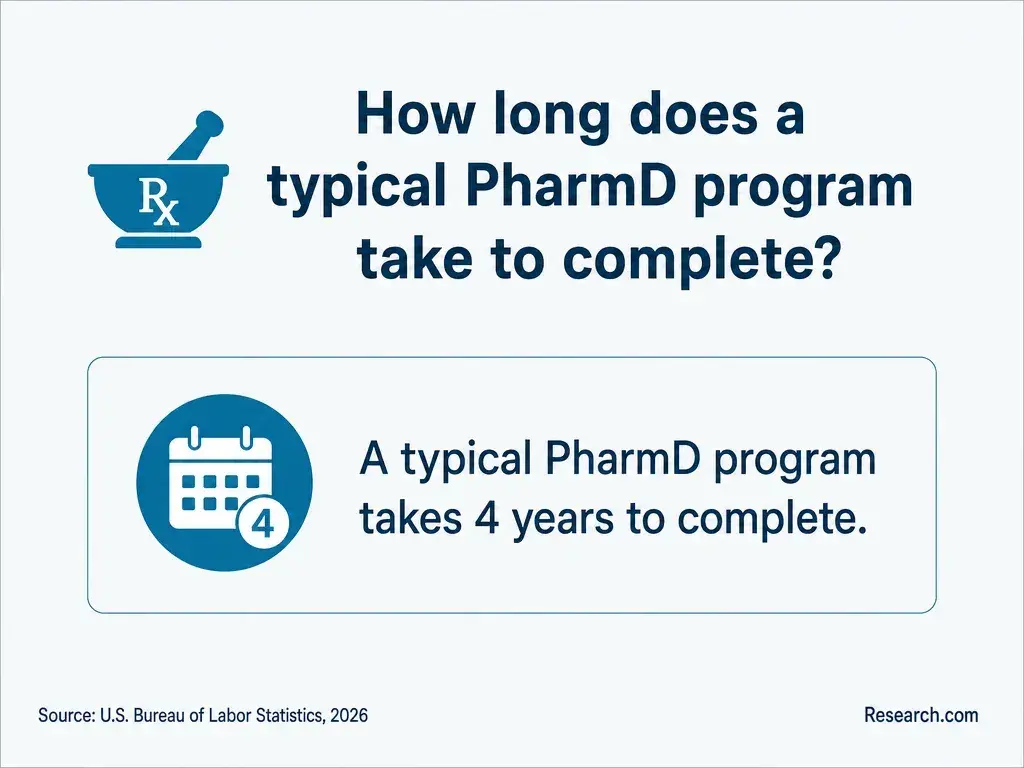
A Pharm.D. commonly involves prerequisite undergraduate study followed by a multi-year professional curriculum; the total timeline depends on the applicant's existing credits and the program's sequence. Accelerated formats may shorten the calendar but can make paid work or relocation harder. Broader comparisons of doctoral programs with accelerated timelines should not be mistaken for evidence that a short online doctorate qualifies someone for pharmacist licensure.
Compare each school's current tuition and mandatory fees with prerequisites, books, equipment, campus visits, rotation travel, and licensing expenses. Request a full cost-of-attendance estimate rather than calculating from tuition alone. Federal borrowing rules changed for many new graduate and professional borrowers beginning July 1, 2026, so ask the financial aid office which rules apply to your enrollment and aid year before using projected salary to justify debt.
Licensed pharmacists may work in ambulatory care, specialty pharmacy, long-term care, managed care, government, medication safety, informatics, or leadership. Pharmaceutical-industry positions also exist, although duties and hiring requirements vary considerably. Compare the daily work first: patient-facing care, operations, data-focused work, and management use different strengths and may follow different schedules.
Some paths favor residency, fellowship, or experience; others may be accessible through direct employment. A pharmacy residency provides structured practice training, a fellowship commonly emphasizes an area such as industry research or development, and specialty board certification is a separate credential subject to its own eligibility rules. If your goal is a pharmacy-adjacent role rather than licensed pharmacist practice, investigate pharmacy programs with a fast timeline carefully: a short program is not a substitute for an accredited Pharm.D. and state licensure.
What is the job outlook for pharmacists in the United States?
BLS projects 5% pharmacist employment growth from 2025 to 2035, with about 12,500 openings per year. These are occupation-wide projections, not promises of openings in a particular city or specialty. They support exploring pharmacist careers, but local employer requirements and competition still matter when choosing a practice setting.
For a career change, start with local job postings in the settings you want. Note which require licensure, which prefer residency or specific experience, and which have schedules you would accept. Then compare those requirements with the cost and time of school; pharmacy admission pathways for nontraditional students may be worth investigating, but verify when outstanding prerequisites must be completed. This avoids committing to a degree based solely on a national salary figure.
Other Things You Should Know About PharmD
Use both. Annual pay shows expected income; an effective hourly rate reveals how a longer workweek changes the comparison. Confirm whether the offer covers extra shifts or on-call time.
No. Treat a signing bonus as separate, potentially one-time compensation. Read its payment schedule and repayment conditions before including it in your comparison.
They may, but rates and eligibility for benefits vary by employer. Compare the written hourly offer and the value of benefits you would give up or gain.
Not necessarily. Housing, taxes, commuting, and moving costs can outweigh a pay increase. Compare likely take-home resources and living expenses alongside the job's schedule.
- More Than 60% of U.S. Pharmacists Were Women but They Earned Less Than Their Male Counterparts | Census.gov https://www.census.gov/library/stories/2024/10/american-pharmacists-month.html
- The Health Care Industry and Calculating Overtime Pay | dol.gov https://www.dol.gov/agencies/whd/fact-sheets/54-healthcare-overtime
- Trends in the Pharmacist Workforce and Pharmacy Education | nih.gov https://pmc.ncbi.nlm.nih.gov/articles/PMC6418852/
- How Much Do Pharmacists Make? | MCPHS https://www.mcphs.edu/admission-and-aid/blog/how-much-do-pharmacists-make
- How Much Do Pharmacists Make? Salary, Pay and Career Outlook | PCOM https://www.pcom.edu/pharmacy/news/how-much-do-pharmacists-make.html
- The New Reality | Drug Topics https://www.drugtopics.com/view/new-reality
- Clinical Pharmacist Salary Range for Your Job Posting | accp.com https://careers.accp.com/career-resources/employer-4/clinical-pharmacist-salary-range-for-job-posting-153
- The Differences Working in a Hospital vs. Community Pharmacy | TRC Healthcare https://trchealthcare.com/the-differences-working-in-a-hospital-vs-community-pharmacy/
- The Anatomy of a Compensation Survey (And Why It Matters) | yourerc.com https://yourerc.com/blog/the-anatomy-of-a-compensation-survey-and-why-it-matters/


