Ambulatory Care Pharmacist Salary and Demand

Co-Founder and Chief Data Scientist
Ambulatory care pharmacy can appeal to people who want ongoing patient relationships rather than a dispensing-focused role, but the training investment deserves a close look. For prospective Pharm.D. students and licensed pharmacists considering a transition, the key questions are what these jobs pay, whether demand supports the move, and which credentials employers actually expect. This guide separates national pharmacist data from ambulatory care-specific opportunities and shows how to evaluate programs and training routes without assuming that a residency or board certification is always required.
Key Things You Should Know
- The Bureau of Labor Statistics reports median pharmacist pay of $140,910 in May 2025; it does not publish a separate national median for ambulatory care pharmacists.
- Pharmacist employment is projected to grow 5% from 2025-2035, with about 12,500 openings per year across all pharmacist roles - not ambulatory care alone.
- An ambulatory care pharmacist needs a state pharmacist license. A PGY1 or PGY2 residency and Board Certified Ambulatory Care Pharmacist (BCACP) credential may strengthen an application, but hiring requirements vary.
What does an ambulatory care pharmacist do?
An ambulatory care pharmacist provides medication-focused care to patients who are not admitted to a hospital, often in a primary care practice, specialty clinic, or health-system outpatient service. Work may include reviewing medication regimens, identifying safety problems, counseling patients, following up between visits, and helping manage chronic conditions such as diabetes or hypertension. The pharmacist documents recommendations and coordinates with prescribers; authority to adjust or prescribe medications depends on state law and the practice arrangement.
This is a pharmacist role, not a pharmacy technician role. Some short-duration pharmacy programs prepare people for other pharmacy-related work, but they do not substitute for the professional education and license needed to practice as a pharmacist.
How much do ambulatory care pharmacists earn?
The Bureau of Labor Statistics (BLS) reports a $140,910 median annual wage in May 2025 for pharmacists overall. That is a useful national benchmark, not an ambulatory care salary estimate: the occupation-wide figure also includes pharmacists in other settings. Actual offers can differ by location, employer, experience, clinical responsibilities, and schedule.
For a career-change calculation, compare a specific offer's pay and benefits with the full cost of reaching the role. Pharmacy program tuition options are only one part of that comparison; required fees, prerequisite courses, clinical travel, and potential time away from paid work also matter. A residency adds training time and typically pays differently from a permanent pharmacist position, so it should be weighed against the jobs it would help you pursue.
What is the job outlook for ambulatory care pharmacists?
BLS projects 5% pharmacist employment growth from 2025-2035. This signals opportunities across the occupation, but it does not measure growth in ambulatory care positions specifically. Its projection of about 12,500 pharmacist openings per year likewise includes openings in many practice settings and openings created when workers leave the occupation.
Outpatient clinics may value pharmacists who can support longitudinal medication management and work within care teams, but the number and design of those positions depend on local health systems, funding, and state practice rules. Before paying for additional training, review actual openings in the area where you intend to work: compare required versus preferred residency training, clinic experience, and certification. If cost is a constraint, assess budget-friendly pharmacy education options against those real hiring requirements rather than treating national growth as a job guarantee.
The standard U.S.-educated route begins with a Doctor of Pharmacy (Pharm.D.) professional degree from a program accredited by the Accreditation Council for Pharmacy Education (ACPE). Applicants first complete the school's undergraduate pre-pharmacy prerequisites; those courses are distinct from the professional Pharm.D. curriculum. A completed bachelor's degree is not a universal admission requirement.
Students who already have relevant coursework can compare pharmacy programs for students with science credits, but each school decides whether specific courses meet its prerequisites. Pharmaceutical sciences, pharmacology, and pharmacy technician credentials do not themselves qualify someone for pharmacist licensure. After the Pharm.D. and state licensure, graduates may seek ambulatory care employment directly or pursue a postgraduate year one (PGY1) residency, followed in some cases by a specialty-focused postgraduate year two (PGY2) residency. A fellowship is a different form of postgraduate training and is not the default route into clinic practice.
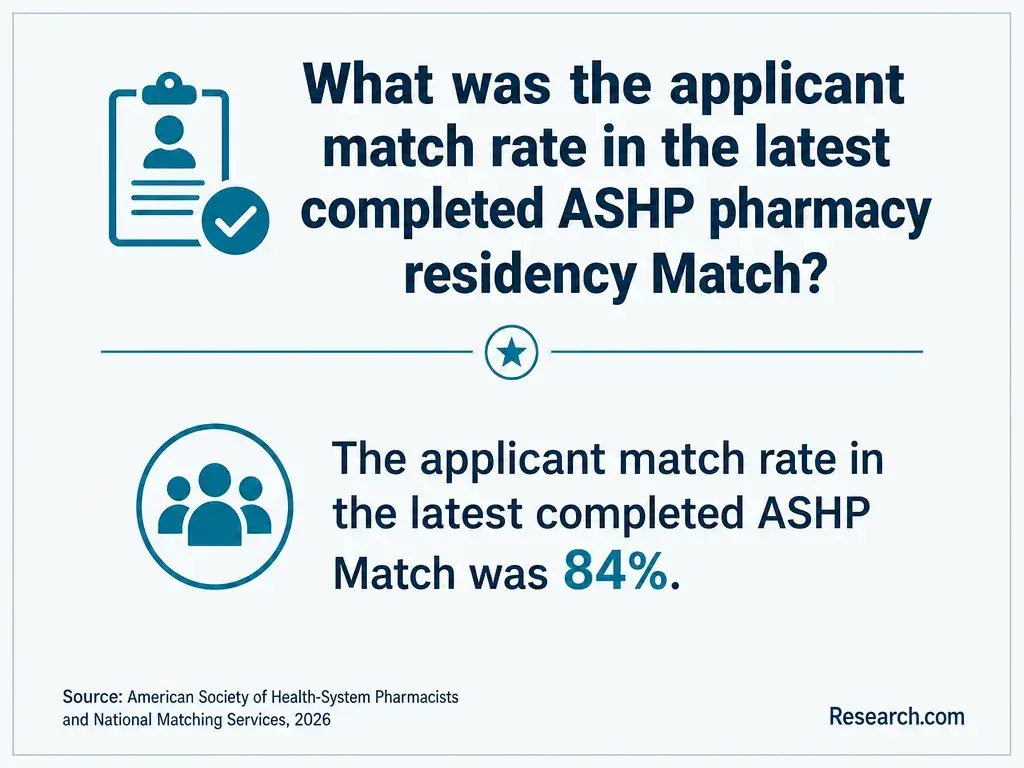
The Board of Pharmacy Specialties awards the Board Certified Ambulatory Care Pharmacist (BCACP) credential. It is a specialty certification, not a pharmacist license. Candidates must meet BPS's current eligibility requirements, including an active pharmacist license and a qualifying route based on practice experience or postgraduate residency training, and pass the specialty examination. BPS also sets requirements for maintaining certification.
A residency may help a pharmacist build the clinical experience needed for competitive clinic roles, but it does not automatically award BCACP. Likewise, pharmacy prerequisite credit evaluation determines how earlier courses may apply to school admission; it does not establish specialty practice experience. If certification is important to a target employer, check BPS's current eligibility criteria against your own training and duties before choosing a residency or relying on a job title alone.
You need an active pharmacist license in the jurisdiction where you practice, subject to that jurisdiction's rules. For U.S. Pharm.D. graduates, the process generally involves meeting the state board's education and experiential requirements and passing the North American Pharmacist Licensure Examination (NAPLEX), plus any required jurisprudence examination or other state requirements. Do not assume every jurisdiction uses the Multistate Pharmacy Jurisprudence Examination (MPJE): examination requirements vary, and some jurisdictions have moved to the Uniform MPJE (UMPJE). Passing an examination or completing a Pharm.D. does not itself issue a license.
Admissions-related pharmacy degree eligibility options are separate from eligibility to practice. Before accepting a job - especially one involving telehealth, collaborative practice, or work across state lines - confirm licensure and scope-of-practice rules with the relevant state boards. Internationally educated pharmacists should also check the applicable foreign-graduate certification pathway rather than assuming their existing degree follows the U.S.-graduate route.
Look for an ACPE-accredited professional Pharm.D. program that offers substantial opportunities to learn outpatient patient care - not a program that merely uses "clinical" in its marketing. Introductory pharmacy practice experiences (IPPEs) and advanced pharmacy practice experiences (APPEs) can expose students to different settings; ambulatory care availability, site assignment, and travel expectations vary by school.
Top online pharmacy doctorate programs may offer some coursework remotely, but hands-on activities and clinical rotations still require careful scheduling. An online format is not necessarily self-paced or fully remote. Ask each school how students obtain outpatient rotations, whether sites near home can be approved, and who bears travel and housing costs. Those answers are more useful for this career decision than delivery format alone.
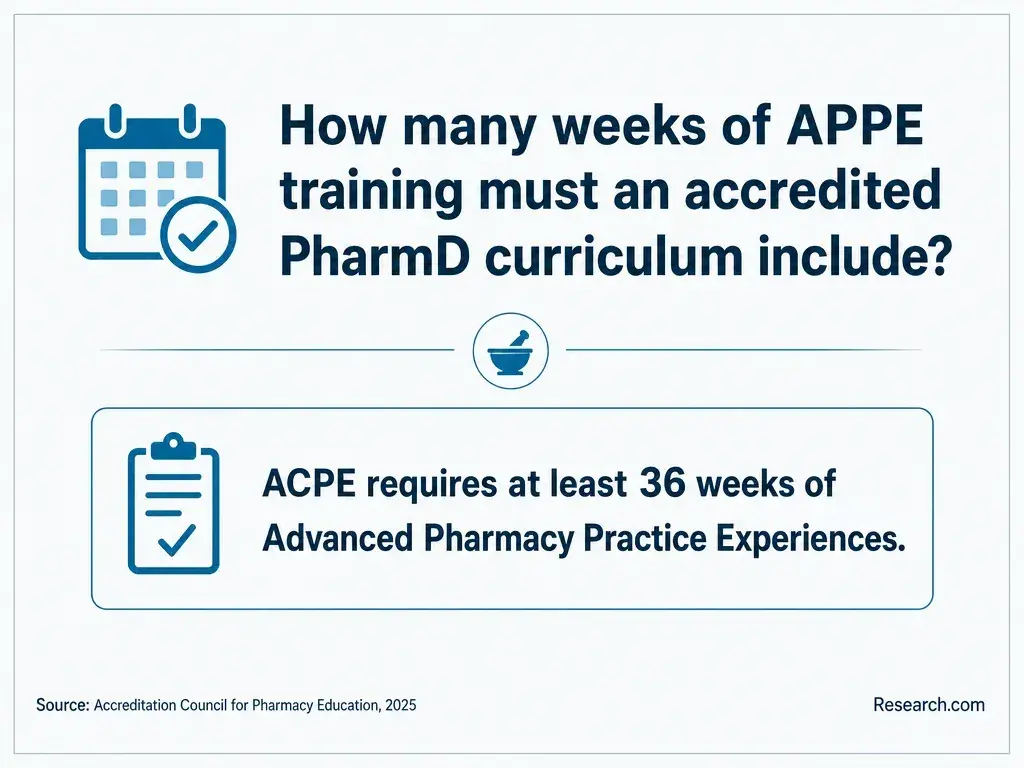
There is no separate Pharm.D. degree required specifically for ambulatory care. Within a professional pharmacy curriculum, pharmacotherapy, clinical assessment, drug information, patient communication, and medication safety build the foundation for outpatient care. Supervised IPPEs introduce practice settings, while APPEs give students more advanced opportunities to apply clinical judgment with patients and care teams.
When comparing curricula, look beyond course titles. Check whether students practice documenting care, interpreting monitoring results, communicating recommendations to prescribers, and following patients over time. Review pharmacy school prerequisites separately: admission coursework prepares you to enter the professional curriculum, but it is not a replacement for its supervised clinical training.
The timeline depends on your starting coursework and whether you pursue optional postgraduate training. A traditional Pharm.D. professional curriculum commonly takes four academic years after prerequisites, though program designs differ. PGY1 residency generally adds one year; a subsequent PGY2 adds another. Direct entry into an outpatient position may be possible after licensure when the employer's requirements and your experience align.
When comparing pharmacy doctorate program length, include prerequisites, required in-person activities, rotations, and licensing steps - not just the advertised professional-curriculum duration. An accelerated schedule may reduce elapsed time but leave less room for paid work. A residency can improve preparation for particular clinical jobs, yet its opportunity cost may not be justified if suitable employers will hire and train you without it.
How can you choose an accredited pharmacy program?
Start by confirming the program's current ACPE professional-program accreditation status in ACPE's records. Institutional accreditation and authorization to enroll online students address different questions; neither replaces ACPE accreditation or a state board's licensure decision. A shorter option among general doctoral degree timeline options is not a substitute for an eligible professional Pharm.D. if your goal is pharmacist licensure.
Then compare programs on the factors most likely to affect your route into ambulatory care:
- Ask how ambulatory care APPE sites are assigned, whether placements are guaranteed, and what travel or housing you may need to arrange.
- Request a full cost estimate covering tuition, fees, prerequisites, clinical travel, and licensure expenses; confirm current aid eligibility before planning to borrow.
- Review published NAPLEX outcomes alongside student support and graduation information, without treating any single measure as a promise of licensure.
- Confirm admission prerequisites, required in-person attendance, and the licensing rules of the state where you expect to work.
A good choice is the program whose verified requirements, clinical access, schedule, and total cost make your intended route feasible - not necessarily the one with the shortest advertised timeline.
Other Things You Should Know About PharmD
Some positions include telehealth, but many require in-person clinic work. Remote care can also raise patient-location and pharmacist-licensure questions, so check the employer's arrangement and applicable state rules.
Sometimes, within authority established by state law and an applicable practice arrangement. The scope can be narrower than independent physician prescribing; verify the rules and the employer's protocols for a specific role.
Ambulatory care focuses on patients receiving care without a hospital admission, often with follow-up across visits. Hospital pharmacists may focus on medication therapy during an inpatient stay. Health systems can employ pharmacists in both settings.
It can build familiarity with medication workflows and patient communication, but it does not replace Pharm.D. education, pharmacist licensure, or the clinical experience an employer may request.
- The New Era of Pharmacists in Ambulatory Patient Care - PMC https://pmc.ncbi.nlm.nih.gov/articles/PMC7643699/
- Pharmacy Contributions to Improved Population Health | cdc.gov https://www.cdc.gov/pcd/issues/2020/20_0350.htm
- Salary survey of ambulatory care clinical pharmacists | nih.gov https://pubmed.ncbi.nlm.nih.gov/9165560/
- Federally Qualified Health Centers and Rural Health Clinics | ca.gov https://www.dhcs.ca.gov/services/medi-cal-resources/federally-qualified-health-centers-and-rural-health-clinics/
- Federally Qualified Health Centers (FQHCs) and the Health Center Program Overview - Rural Health Information Hub https://www.ruralhealthinfo.org/topics/federally-qualified-health-centers
- Clinical Pharmacist Salary Range for Your Job Posting | accp.com https://careers.accp.com/career-resources/employer-4/clinical-pharmacist-salary-range-for-job-posting-153
- Ambulatory Care | pharmacist.com https://www.pharmacist.com/Career/Career-Pathways/Career-Option-Profiles/Ambulatory-Care