Postgraduate Training for Oncology Pharmacists

Co-Founder and Chief Data Scientist
Oncology pharmacy positions often call for expertise that a Doctor of Pharmacy (Pharm.D.) program alone cannot fully develop. If you are considering cancer care, the key decision is whether to pursue a general pharmacy residency, add an oncology specialty residency, or build relevant experience while employed.
This guide separates required credentials from employer preferences, explains what each training route provides, and identifies the time, financial, and career trade-offs to check before applying.
Key Things You Should Know
- A pharmacist license is required to practice; an oncology residency and Board Certified Oncology Pharmacist (BCOP) credential are not universal legal requirements.
- The common specialty-training route is a one-year postgraduate year one (PGY1) residency followed by a one-year oncology PGY2 residency, after the Pharm.D. and licensure process.
- The Bureau of Labor Statistics reports $140,910 median annual pay for pharmacists in May 2025, but does not publish a separate median for oncology pharmacists.
What postgraduate training is required to become an oncology pharmacist?
There is no single nationwide requirement to complete an oncology residency before working in oncology pharmacy. The legal starting point is pharmacist licensure in the state where you practice. Employers set additional qualifications, which may include oncology experience, a postgraduate year one (PGY1) pharmacy residency, a postgraduate year two (PGY2) oncology residency, or specialty certification.
A PGY2 oncology residency is the most direct structured route toward specialized clinical roles. Pharmacists may also enter oncology through relevant hospital or specialty-pharmacy work, although they should expect to demonstrate comparable skills when competing for positions that prefer residency training. A fellowship is generally a different route, often oriented toward research or industry rather than supervised clinical practice.
If you have not yet entered pharmacy school, pharmacy programs with faster completion options address an earlier part of the timeline. A faster Pharm.D. does not remove licensure requirements or substitute for oncology training.
How do PGY1 and PGY2 pharmacy residencies prepare pharmacists for oncology practice?
PGY1 develops broad patient-care judgment across pharmacy practice settings. An oncology PGY2 builds on that foundation through concentrated work with cancer therapies, supportive care, treatment monitoring, and oncology teams. PGY2 programs generally expect an accredited PGY1 residency or a qualifying route recognized under applicable program and accreditation rules; confirm eligibility with each program.
The distinction matters because the two years serve different hiring goals. This comparison summarizes what each route is designed to add, not a guarantee of a particular job.
| Route | Primary emphasis | Decision implication |
| PGY1 residency | Broad clinical practice, medication-use systems, and professional development | Useful if you want general clinical training or plan to compete for PGY2 positions. |
| Oncology PGY2 residency | Focused cancer-care practice, often across inpatient and outpatient settings | Strongest structured fit for positions seeking advanced oncology experience. |
| Relevant employment experience | Skills gained in an employer-defined role | May suit an available oncology position, but breadth and mentorship can differ from residency. |
Shorter credentials should not be mistaken for either residency year. For someone considering shorter online pharmacy study options, the first question is whether the credential actually leads to pharmacist eligibility; a pharmacy-adjacent program is not a substitute for a Pharm.D., license, or PGY2 training.
What education and licensing requirements apply to oncology pharmacists?
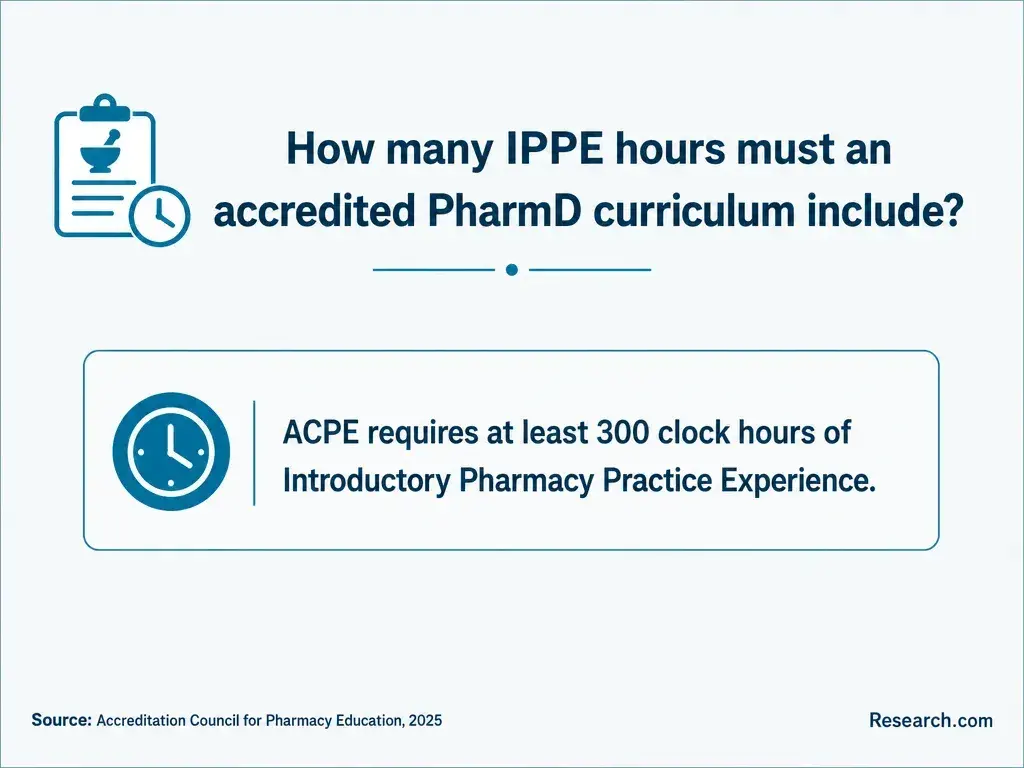
U.S.-educated pharmacists generally complete a professional Pharm.D. program accredited by the Accreditation Council for Pharmacy Education (ACPE), then satisfy the licensing board's requirements in the jurisdiction where they intend to practice. These commonly include the North American Pharmacist Licensure Examination (NAPLEX) and applicable law or jurisprudence requirements. Jurisdictions differ; do not assume every state uses the same law exam. A degree, a passed exam, or a residency alone does not issue a license.
Undergraduate pre-pharmacy prerequisites are separate from the professional Pharm.D. curriculum. Applicants comparing schools should check each program's prerequisites and application conditions. Some schools allow students to apply to pharmacy school while finishing prerequisites, but required coursework must still be completed under that school's rules.
ACPE accredits professional pharmacy programs, not individual pharmacists. Institutional accreditation and authorization to offer distance education are separate matters. Internationally educated pharmacists should check the applicable foreign-graduate and state-board pathways rather than assuming a foreign pharmacy degree follows the U.S. Pharm.D. route.
An oncology PGY2 typically combines supervised patient care with projects, teaching, and practice development. Experiences may span hematologic malignancies, solid tumors, transplant or cellular therapy, investigational medications, and supportive care. The exact rotations and their duration depend on the program, so compare published schedules rather than assuming every resident receives the same exposure.
Residents may assess treatment plans, monitor toxicity, recommend supportive medications, counsel patients, and help improve medication-use processes under the program's supervision and practice rules. When comparing sites, look for the patient populations you want to serve, access to oncology preceptors, outpatient versus inpatient exposure, and how much time is protected for research or quality-improvement work.
Students evaluating best online Doctor of Pharmacy programs should keep the stages distinct: Pharm.D. coursework and clinical rotations establish the professional foundation, while an oncology residency is postgraduate, site-based training.
Programs commonly seek a Pharm.D. from an eligible pharmacy program, pharmacist licensure or eligibility to obtain it by the program's deadline, and qualifying PGY1 training for PGY2 entry. They may assess clinical evaluations, oncology exposure, recommendations, a letter of intent, an interview, and evidence of research or quality-improvement work. An interest in oncology helps, but does not replace a program's stated eligibility rules.
ASHP-accredited residency programs commonly use the Pharmacy Online Residency Centralized Application Service (PhORCAS), and many participate in the ASHP Match. Check each listing for its current application process, Match participation, deadlines, PGY1 requirements, and licensure deadline; these details can differ by site.
Residency selection is distinct from entry to the Pharm.D. An applicant still exploring pharmacy schools and entry standards should first confirm a route to the professional degree. A pharmacy school's minimum admission threshold says nothing about eventual residency selection.
The usual PGY1-plus-oncology-PGY2 route adds two years after the Pharm.D. A pharmacist who enters oncology employment instead may avoid that fixed residency timeline, but the time needed to gain comparable experience varies. Residency positions generally pay a stipend rather than charging Pharm.D.-style tuition; the financial cost is often the difference between resident compensation and what you could earn in another pharmacist position.
Compare offers using the same financial categories. Published stipends alone may conceal meaningful differences in living costs and benefits.
| Cost factor | Why it matters |
| Stipend and benefits | Take-home resources depend on insurance, leave, and other employer terms. |
| Relocation and housing | A required move can change the value of an otherwise attractive offer. |
| Applications and interviews | Fees and travel or time away from work can add to upfront costs. |
| Existing education debt | Repayment obligations can affect whether resident pay is workable. |
If you are still budgeting for the degree itself, budget-friendly pharmacy degree programs address a separate expense. Compare total educational costs and verify current aid eligibility before borrowing; federal borrowing rules changed for many new graduate and professional students beginning July 1, 2026.
Online oncology courses, continuing education, and exam-preparation resources can supplement learning, but they do not replace the supervised patient care in a clinical oncology PGY2 residency. Residents work to a site's schedule and participate in its practice, projects, and evaluations; do not plan on completing an oncology residency fully remotely unless a specific accredited program explicitly documents a qualifying arrangement.
Similarly, online instruction in a Pharm.D. pathway does not make the entire path remote: professional programs include hands-on and clinical requirements. Comparisons of online doctorate completion periods therefore should not be used to estimate how quickly someone can finish pharmacist licensure and oncology residency training.
For a working pharmacist who cannot relocate, a realistic alternative may be an oncology-focused job with mentoring and continuing education. Confirm the role's actual patient-care exposure before treating it as equivalent preparation for a future position or certification application.
Oncology-trained pharmacists may work on inpatient cancer teams, in infusion centers, ambulatory oncology clinics, specialty pharmacies, investigational-drug services, or medication-safety and leadership roles. Responsibilities differ: one position may center on direct treatment-plan review and toxicity management, while another emphasizes access to oral cancer therapies, patient education, or clinical-trial operations.
Choose training against the setting you want. A PGY2 site with substantial ambulatory exposure may better support a clinic goal; a pharmacist drawn to research operations should compare investigational-drug experience and relevant fellowships as well. If you are moving into pharmacy from a science background, online pharmacy programs for science-background students concern the earlier Pharm.D. decision, not a direct entry point into licensed oncology practice.
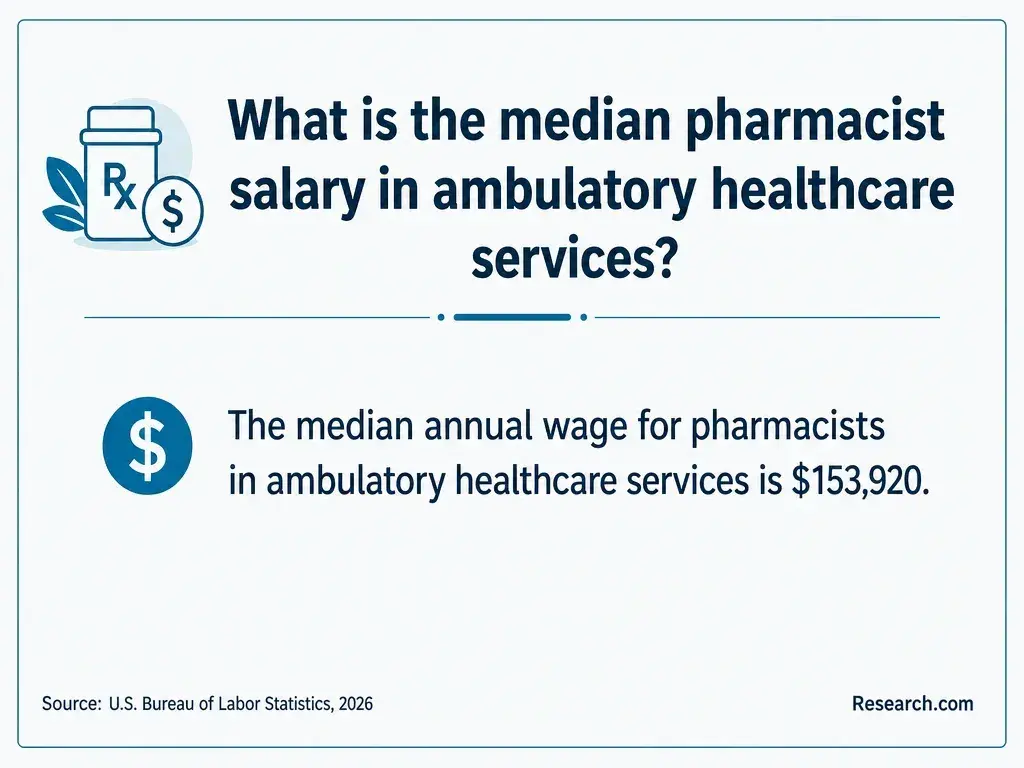
The Bureau of Labor Statistics reports median annual pay of $140,910 for all pharmacists in May 2025. It projects 5% pharmacist employment growth from 2025 to 2035, with about 12,500 openings per year. These figures provide broad U.S. market context; they are not oncology-specific pay or a forecast of vacancies for PGY2 graduates.
Pay for an individual oncology role can vary with employer, location, responsibilities, and experience. Compare an actual offer's compensation and benefits with the resident stipend and the experience you expect to gain, rather than assuming specialty training automatically raises earnings. For someone still selecting a degree, low-cost and shorter pharmacy degree programs may help frame educational expenses, but only a qualifying professional pathway supports a pharmacist career.
How does BCOP certification strengthen an oncology pharmacist's career?
Board Certified Oncology Pharmacist (BCOP) is a specialty credential from the Board of Pharmacy Specialties (BPS). It can provide employers with a standardized signal of oncology knowledge and sustained specialty practice. It is not a state pharmacist license, and neither a PGY2 residency nor BCOP is automatically required for every oncology-titled job.
BPS sets eligibility through qualifying practice-experience and residency pathways, followed by its examination and ongoing credential-maintenance requirements. Check the current BPS oncology criteria against your own training before scheduling an exam or assuming that any oncology job qualifies. A PGY2 may offer a more direct route to meeting specialty-experience criteria, while a pharmacist entering through employment should document relevant practice carefully.
If you are still preparing to apply for a Pharm.D., pharmacy prerequisite credit evaluation is the immediate admissions issue. BCOP is a later career decision, after professional education, licensure, and qualifying oncology preparation.
Other Things You Should Know About PharmD
Some roles involve direct preparation or administration activities, while others focus on reviewing regimens, monitoring patients, and advising care teams. Duties depend on the setting, training, employer policies, and state law.
Some programs permit outside work, often called moonlighting, under restrictions; others do not. Confirm the residency's policy, scheduling limits, and licensing requirements before relying on extra income.
No. Exposure depends on the position. Ask prospective employers about handling duties, safety procedures, and training rather than assuming every oncology role has the same risks.
Possibly, but eligibility depends on the residency's rules, work authorization, and the applicable U.S. pharmacist-licensure pathway. Confirm all three with the program and relevant state board before applying.
- The Expanding Role of the Oncology Pharmacist - PMC - NIH https://pmc.ncbi.nlm.nih.gov/articles/PMC7557441/
- Pharmacy residency learning experiences | Veterans Affairs https://www.va.gov/wilkes-barre-health-care/work-with-us/internships-and-fellowships/pharmacy-residency-learning-experiences/
- Oncology - Academic Departments - University of Pennsylvania https://departments.med.upenn.edu/academic-departments/locations/hup/pharmacy-residency/pgy2-residency/oncology
- Oncology Pharmacy: Roles, Training and Career Opportunities | PCOM https://www.pcom.edu/pharmacy/news/oncology-pharmacy.html
- From Oncology Pharmacist to Medical Science Liaison | hoparx.org https://careers.hoparx.org/career-resources/on-the-job-3/from-oncology-pharmacist-to-medical-science-liaison-oncology-pharmacy-career-path-82
- Call to action: Pharmacists needed for cancer care https://www.pharmacist.com/APhA-Press-Releases/call-to-action-pharmacists-needed-for-cancer-care
- Application Requirements | PGY2 Oncology | University Health https://www.universityhealth.com/healthcare-professionals/residency-programs/pharmacy-residency/postgraduate-year-two-oncology/application-requirements
- From Clinical Pharmacist to Oncology Clinical Specialist | accp.com https://careers.accp.com/career-resources/on-the-job-3/from-clinical-pharmacist-to-oncology-clinical-specialist-a-clinical-pharmacy-career-path-125
- Cancer care A handbook for pharmacists | fip.org https://www.fip.org/file/5248
- PGY2 Application Process | cityofhope.org https://www.cityofhope.org/academics/fellowships-and-residencies/pharmacy-residency-programs/pgy2-oncology-specialty-residency/pgy2-application-process