PharmD Immersion Preparation: Skills and Supplies

Co-Founder and Chief Data Scientist
A Pharm.D. immersion can put students in a skills lab, a pharmacy, or a patient-care setting with expectations that differ from classroom work. Preparing well means knowing what you will be allowed to do, practicing the skills you will use, and buying only supplies your program or site actually requires. This guide is for prospective and current Doctor of Pharmacy students planning hands-on coursework or rotations. It provides a preparation checklist and shows what to verify before choosing a program or committing to travel, equipment, and other expenses.
Key Things You Should Know
- Prepare for two distinct types of supervised experience: introductory pharmacy practice experiences (IPPEs) build foundational skills, while advanced pharmacy practice experiences (APPEs) expect greater application of clinical knowledge.
- Prioritize medication-history interviews, calculations, documentation, counseling, and safe use of references; confirm which tasks students may perform under the site's supervision and state rules.
- Before buying supplies or booking travel, confirm three things with your program: the site's required items, your clearance and intern-registration status, and who pays for travel or temporary housing.
What skills and supplies are needed for a PharmD immersion experience?
The essentials are readiness to work safely with patients and a short, site-approved supply kit. Skills usually matter more than equipment: students need to ask clear questions, check calculations, look up drug information, recognize when to involve a preceptor, and protect patient information. A notebook, approved device, identification, and appropriate clothing may be useful, but the required items depend on the program and setting.
An immersion is part of the professional Pharm.D. curriculum, not undergraduate pre-pharmacy coursework. Students moving into pharmacy education after a pre-pharmacy track should expect to apply science knowledge in supervised, patient-facing situations. Ask for the orientation packet before purchasing clinical tools: a hospital, community pharmacy, and campus simulation lab may have different rules.
What does a PharmD immersion experience involve?
"Immersion" is a program-specific term. It may mean an on-campus block of skills labs and assessments, a supervised practice placement, or both. Activities can include simulated patient interviews, dispensing or compounding exercises, case discussions, documentation, and feedback from faculty or a licensed pharmacist preceptor. Check the program's published schedule rather than assuming every immersion is a rotation.
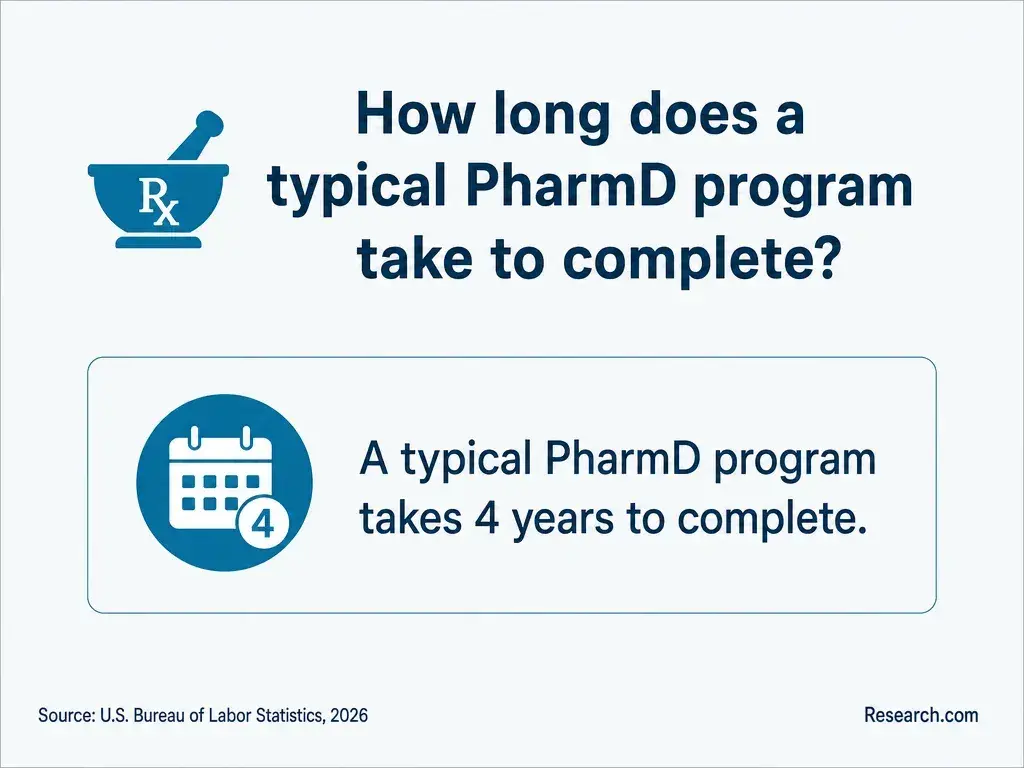
For online or hybrid students, online lectures do not eliminate scheduled in-person work. Immersions may require travel and time away from a job; clinical placements also require attendance at the site's assigned hours. If a shorter schedule is important, compare accelerated Pharm.D. programs by their actual calendar, campus visits, and rotation timing - not just the advertised time to degree. A compressed calendar can leave less flexibility for work or rescheduling.
How can students prepare for hands-on pharmacy practice?
Start with the tasks listed in your upcoming course or site objectives, then practice them in the format you will use on placement. The sequence below helps turn general preparation into specific actions without assuming a student may practice independently.
- Request the immersion schedule, learning objectives, dress code, technology policy, and evaluation rubric from the program.
- Rehearse a medication-history interview with a classmate, including allergies, nonprescription products, adherence, and how to escalate an uncertain answer.
- Work through calculations and patient cases using the references your program provides; explain your reasoning aloud and check it with an instructor or preceptor.
- Confirm your arrival instructions, supervision arrangement, required clearances, and a backup plan for travel disruptions.
Prior healthcare or technician experience can help with workflow, but it does not replace professional-course assessments or authorize pharmacist-level decisions. Likewise, schools decide whether earlier coursework counts toward admission or the professional curriculum. Students still completing prerequisites should check pharmacy schools and prerequisite completion policies separately from immersion-readiness requirements.
Focus first on skills that support safe supervised work: collecting an accurate medication list; communicating with patients and the care team; performing dosage and measurement calculations; finding and evaluating drug information; documenting an encounter; and identifying a concern that needs the preceptor's review. Practice counseling in plain language, including how to check a patient's understanding without assuming that a memorized script fits every situation.
Students should also be able to describe what they know, what they need to verify, and when they must stop and ask for help. Simulation and feedback are valuable preparation, but neither prior science credit nor software exposure demonstrates clinical proficiency on its own. When considering transfer-friendly pharmacy education options, ask how the receiving school assesses practical skills as well as how it applies credits. Credit acceptance and readiness for a particular immersion are separate decisions.
Bring only what the program and site permit. This provisional packing list covers common needs; the site's written instructions take precedence, particularly for devices, clinical tools, and anything that could contain patient information.
- Access and identification: required student ID, site badge or access instructions, and contact details for the preceptor and experiential office.
- Dress and personal protection: approved professional clothing and footwear; a lab coat or protective equipment only if the site instructs you to bring it.
- Learning tools: an approved calculator, pen, and non-patient-identifiable notes; use drug references and devices only under site policy.
- Logistics: your schedule, transit plan, and any forms the program requires you to present or complete.
Do not assume you need to purchase a stethoscope, blood pressure cuff, reference subscription, or compounding kit; sites or schools may provide them or prohibit personal versions. When estimating the full cost, include required supplies alongside travel, parking, and possible temporary housing. Comparisons of online pharmacy school cost options are more useful when they account for in-person requirements, not tuition alone.
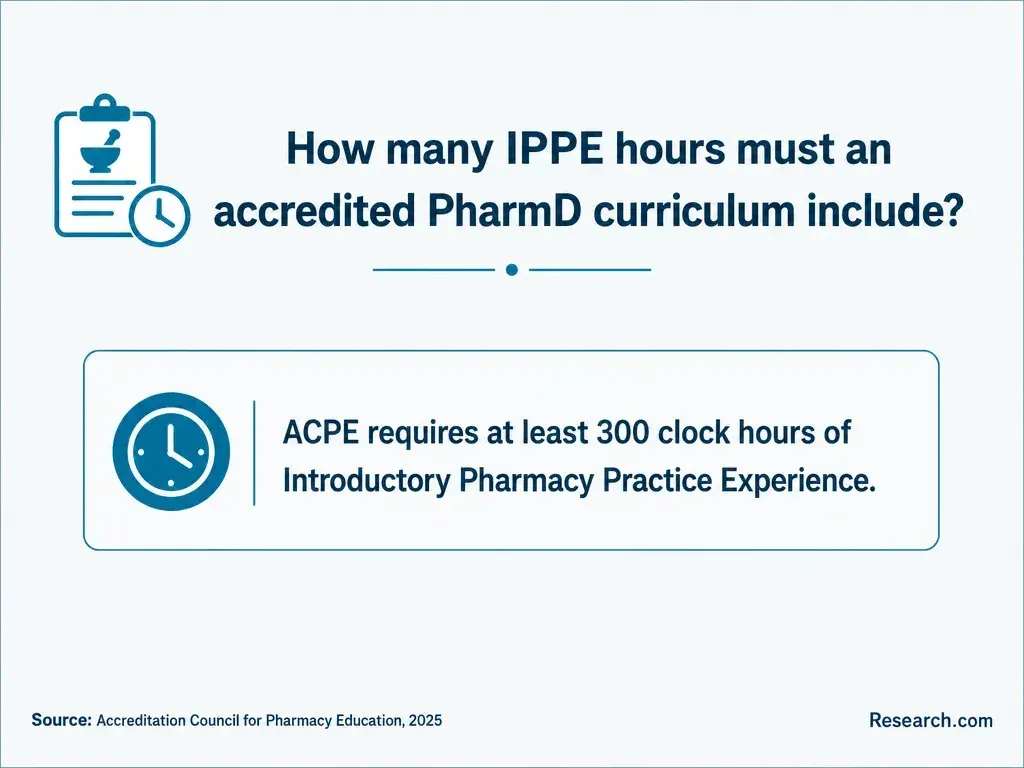
Introductory pharmacy practice experiences (IPPEs) develop foundational practice skills; advanced pharmacy practice experiences (APPEs) require students to apply more of the professional curriculum in supervised settings. This comparison helps you ask a school what preparation and scheduling each stage requires.
| Feature | IPPE | APPE |
| Role in training | Introduces pharmacy workflows and patient-care skills | Integrates clinical knowledge and practice skills |
| Typical timing | Earlier in the professional curriculum | Later in the professional curriculum |
| Student responsibility | Foundational tasks under supervision | More complex, supervised tasks with greater expectations for preparation and follow-through |
| Planning question | Which settings and schedules are assigned? | Which required practice areas, site locations, and travel periods apply? |
Schools coordinate or approve experiential sites and preceptors, but students may have to complete preferences, clearances, transportation plans, and site onboarding themselves. Neither a nearby placement nor permission to substitute a current job should be assumed. Be cautious when comparing fastest online pharmacy degree programs: a shorter pharmacy-related credential is not necessarily a professional Pharm.D., and Pharm.D. experiential requirements still need to be completed.
Requirements vary by school, site, and state. Before a placement, students may need pharmacist-intern registration, a background check, drug screening, immunization documentation, training in patient privacy, or site-specific safety modules. Some sites may request basic life support or another credential. The experiential office should identify what is required, when it expires, who verifies it, and whether a student or the program pays.
Admission and rotation eligibility are different checkpoints. A school offering pharmacy programs with varied admission routes may still require every placed student to meet site and state clearance rules. Missing documentation can delay a rotation even after successful coursework. A certification or intern registration also does not independently grant a student permission to practice as a licensed pharmacist; students must follow their permitted role and supervision requirements.
Programs typically build toward practice through professional coursework, skills labs, simulation, assessments, and supervised IPPEs before more advanced APPE work. Preparation is strongest when students receive feedback on clinical reasoning and communication - not merely access to a drug database or dispensing system. Ask a program which tools students actually use, which skills are assessed in person, and how it supports students who need remediation before placement.
For a hybrid pathway, request a term-by-term calendar showing live classes, campus immersions, exams, and rotations. General comparisons of online doctoral study duration cannot establish a Pharm.D. student's availability for work: required in-person training and course sequencing determine the practical schedule. Confirm whether the school arranges or approves placements, what happens when a site changes, and how far students may need to travel.
Start by checking the program's current professional accreditation status in the Accreditation Council for Pharmacy Education (ACPE) program directory. ACPE accreditation of a Pharm.D. program is distinct from a university's institutional accreditation and, for distance students, state authorization. Also confirm with the school and intended state pharmacy board how the pathway relates to licensure eligibility; a degree alone does not issue a pharmacist license.
Next, compare programs on the same decision criteria: prerequisite rules, total educational costs, immersion dates, IPPE and APPE locations, placement support, intern-registration responsibilities, and published licensure-exam outcomes where available. Ask admissions and experiential staff what students must arrange themselves. When reviewing best online Doctor of Pharmacy programs, verify which parts are genuinely remote and whether required travel fits your budget and work obligations. Treat an unclear placement policy or an unitemized cost estimate as a reason to ask more questions before paying a deposit.
What careers and licensure pathways follow a PharmD degree?
A Pharm.D. is the professional education route toward pharmacist licensure for U.S.-educated graduates, but graduation is not a license. Applicants must meet their jurisdiction's requirements, which generally include the North American Pharmacist Licensure Examination (NAPLEX) and may include a jurisdiction-specific law examination and other conditions. Check the relevant board and the National Association of Boards of Pharmacy for current rules; do not assume every jurisdiction uses the Multistate Pharmacy Jurisprudence Examination (MPJE), as some began transitioning to the Uniform Multistate Pharmacy Jurisprudence Examination (UMPJE) in 2026.
Licensed pharmacists work in settings including community pharmacies, hospitals, ambulatory care, and other medication-focused roles. The Bureau of Labor Statistics reports pharmacist median annual pay of $140,910 in May 2025 and projects 5% growth from 2025-2035, with about 12,500 openings per year. Those occupation-wide figures are context for a career decision, not a predicted salary or job offer for a graduate.
Some graduates enter practice directly; others pursue a postgraduate year one (PGY1) residency, a more specialized PGY2 residency, or a fellowship focused on a particular career path. Board of Pharmacy Specialties certification is a separate credential with its own eligibility rules, not a substitute for state licensure. When weighing pharmacy program value and duration, compare the cost and time of the pathway with the role you actually want. A pharmacy technician role is a distinct occupation and does not ordinarily require a Pharm.D.
Other Things You Should Know About PharmD
Do not assume it can. The program must approve an experience that meets its educational objectives and site requirements; employment alone does not establish academic credit.
Contact the experiential office promptly. Ask how it identifies a replacement, whether your schedule or graduation date could change, and what costs you would be responsible for.
Not universally. Transportation needs depend on site locations and schedules. Ask for the placement geography and commuting expectations before relying on public transit or signing a lease.
Check school and site access first. They may provide approved references, and a personal subscription may be unnecessary or unsuitable for use at a particular site.
- Prescription Drug Monitoring Programs (PDMPs) | cdc.gov https://www.cdc.gov/overdose-prevention/hcp/clinical-guidance/prescription-drug-monitoring-programs.html
- Guidance | Protecting Student Privacy - Department of Education https://studentprivacy.ed.gov/guidance
- Factors That Influence Students' Selection of Advanced... - PMC https://pmc.ncbi.nlm.nih.gov/articles/PMC7092785/
- Pharmacy Calculations - StatPearls - NCBI Bookshelf - NIH https://www.ncbi.nlm.nih.gov/books/NBK560924/
- PharmD Courses | umaryland.edu https://catalog.pharmacy.umaryland.edu/courses/pharmd
- Procedure for Health, Safety, and Immunization - UNC Policies https://policies.unc.edu/TDClient/2833/Portal/KB/PrintArticle
- Required Immunization and Screening | Student Health Services https://studenthealth.med.wustl.edu/new-students/requirements/
- Netter School Code of Conduct | Quinnipiac University Academic Catalog https://catalog.qu.edu/school-of-medicine/code-of-conduct/
- Clinical Site Policies | Department of PA Medicine https://pa.com.msu.edu/current-students/program-policies/clinical-site-policies
- School of Health Sciences Program Compliance Policy | Greenville Technical College https://www.gvltec.edu/academics_learning/health-sciences/policy-manual/program-compliance-policy.html