
How to Prepare for a PharmD Admissions Interview Online

Co-Founder and Chief Data Scientist
An online Doctor of Pharmacy (Pharm.D.) admissions interview tests more than whether you can answer questions on camera. It helps a school assess your communication, judgment, and understanding of the profession - and gives you a chance to decide whether its program fits your goals.
If you have an interview invitation, this guide will help you research the school, prepare credible examples, practice timed answers, and avoid technical distractions. You will also leave with questions that can help you evaluate an offer, not just earn one.
Key Things You Should Know
- Prepare school-specific answers: connect your experiences to the program's curriculum, clinical training, and stated interview format rather than memorizing a generic script.
- Practice explaining your reasoning under time limits, especially when an ethical scenario has no simple answer; patient safety, honesty, and appropriate supervision matter more than sounding certain.
- Verify current admissions rules before the interview. The Pharmacy College Admission Test (PCAT) was retired in January 2024, and prerequisite, degree, and interview requirements vary by school.
How can you prepare for a PharmD admissions interview online?
Start with the invitation. Confirm whether the school uses a live panel, individual conversation, multiple mini-interview (MMI) stations, recorded responses, or a combination. Note the time zone, platform, response limits, permitted materials, and any confidentiality instructions. If a detail is missing, ask admissions staff rather than guessing.
Then build a one-page school brief. General comparisons of online doctoral program duration cannot tell you a particular Pharm.D. program's calendar, so use the school's current materials for these details. Your preparation should cover:
- The program's stated mission, curriculum structure, and reasons it interests you.
- Its published admission prerequisites and any conditions still outstanding in your application.
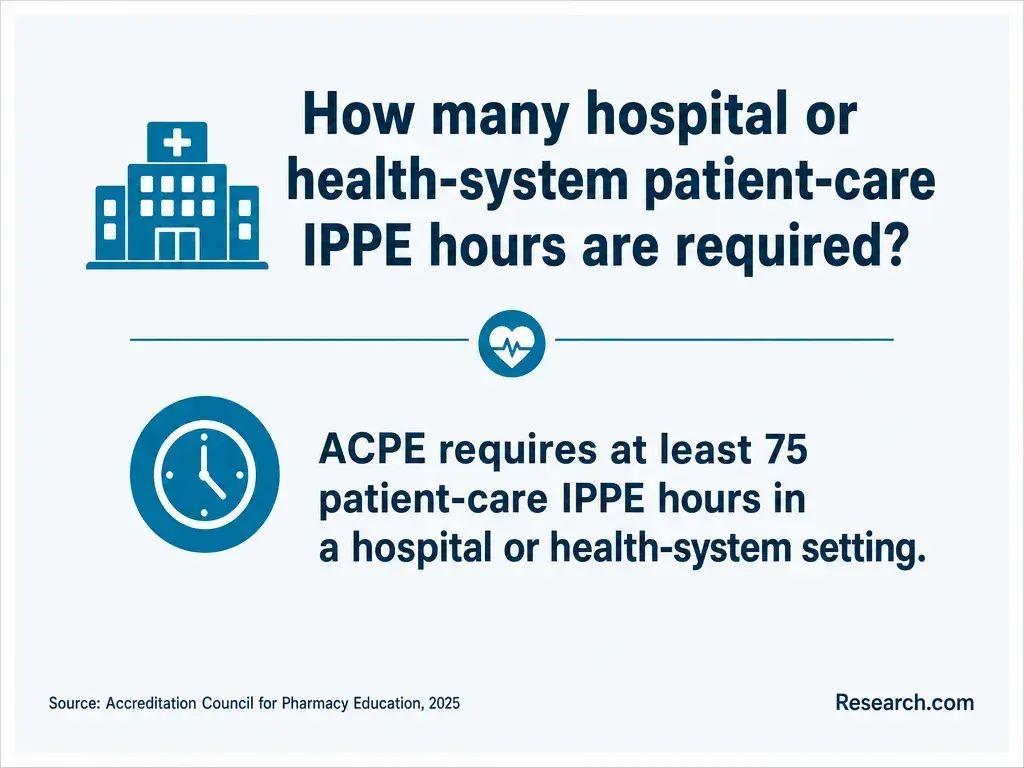
- Required campus activities and introductory and advanced pharmacy practice experiences (IPPEs and APPEs), if relevant to your decision.
- Two specific questions you cannot answer from the school's published information.
Finally, reread your application. Be ready to discuss each experience accurately, including what you personally did, what you learned, and what you would do differently.
What questions are commonly asked in PharmD admissions interviews?
Questions vary by school and format, but most examine motivation, communication, teamwork, resilience, and judgment. Admission thresholds are not promises of an offer; even if you have reviewed pharmacy schools and entry standards, prepare to show how you would contribute to a professional learning environment.
Practice these prompts with specific, truthful examples rather than rehearsed speeches:
- Why pharmacy, and why this Pharm.D. program?
- Describe a disagreement on a team. What did you do, and what changed?
- Tell us about feedback or a setback and how you responded.
- How would you respond if a patient did not understand medication instructions?
- What would you do if you noticed a possible medication error or were asked to do something outside your training?
For experience-based questions, briefly describe the situation, your role, your action, and the result. For scenarios, explain what information you would seek and when you would involve a qualified supervisor; interviewers need not hear a confident clinical guess.
How do you succeed in a virtual pharmacy school interview?
Treat the screen as a communication setting, not an obstacle course. Look toward the camera when delivering key points, pause before answering, and speak clearly enough for an interviewer to follow your reasoning. Keep notes limited to brief prompts if the school permits them; reading a script can make it harder to respond to follow-up questions.
Virtual admissions may be convenient, but it does not establish that a degree can be completed remotely. If delivery format matters to you, review online pharmacy doctorate programs alongside each school's own requirements for live classes, campus labs, and in-person clinical rotations. Use your interview to clarify an unresolved requirement, not to assume that "online" means self-paced.
If a connection drops, rejoin using the invitation's instructions and contact the designated admissions staff member. A calm, concise explanation is more useful than repeatedly apologizing.
Separate undergraduate pre-professional prerequisites from the professional Pharm.D. curriculum. Schools set their own rules for courses, laboratories, grades, GPA, course age, and whether a bachelor's degree is needed. They may also differ on when in-progress courses must be completed and whether they use the Pharmacy College Application Service (PharmCAS), a supplemental application, or another process.
The distinctions below help you ask precise questions about your file without confusing admission eligibility with progress toward the professional degree.
| Item | What it concerns | Important distinction |
| Prerequisite courses | Preparation for admission | Meeting a minimum does not guarantee an interview or offer. |
| Previously earned credits | School-specific evaluation | Acceptance as a prerequisite does not mean transfer into the Pharm.D. curriculum. |
| Professional coursework and rotations | Degree completion | These requirements are separate from undergraduate preparation and subsequent licensure. |
If prior study is important to your timeline, investigate pharmacy school credit transfer options, then request a decision from the receiving school. Be prepared to explain any unfinished requirement honestly and confirm the deadline for completing it.
Build your answer around an observed problem, your contribution or response, and what that experience taught you about pharmacists' responsibilities. A useful answer might connect patient communication or medication safety to your interest in the field while acknowledging that you still have much to learn.
If you are considering pharmacy school after biology or chemistry, explain what your science background contributes and why you want the additional patient-care and professional training of a Pharm.D. Avoid presenting a pharmaceutical sciences degree, technician work, or enthusiasm for medications as equivalent to pharmacist preparation.
Be specific about the school without claiming that one elective or placement guarantees your preferred career. Explain why its documented opportunities merit further consideration, and identify what you hope to learn during the interview.
An ethical response should show how you protect patients while respecting your limits as an applicant or student. State the concern, identify missing facts, avoid assumptions about anyone's motives, and explain when you would stop, document, or seek help from an appropriately qualified professional. Privacy and honest communication should remain part of your reasoning.
For example, if a scenario describes a possible dispensing error, do not invent a treatment plan or imply you can act as a licensed pharmacist. Explain that you would promptly alert the responsible pharmacist, share what you observed, and follow the applicable safety process. Requirements and permitted duties vary by setting and state.
Apply the same honesty to your application. If you discover an incomplete prerequisite, review the school's policy and pharmacy program preparation requirements before asking whether it can be finished by matriculation. Never describe unfinished coursework or an observed clinical task as completed work you performed independently.
Describe experience at the level you actually had. A pharmacy technician may have insight into workflow and communication, but technician duties are distinct from a pharmacist's clinical and legal responsibilities. If you have not worked in a pharmacy, draw on relevant service, research, employment, or caregiving experience without claiming it substitutes for direct exposure.
If asked about a trend such as telepharmacy, automation, or expanding patient-care services, connect it to a concrete issue: access, safety, communication, or the need to verify information. Acknowledge that pharmacist scope of practice and technology use vary by state and workplace. Avoid presenting a headline or an artificial intelligence tool as a substitute for professional judgment.
Your career goal also affects the educational decision. Shorter online pharmacy study options may suit some pharmacy-adjacent goals, but they do not replace the professional Pharm.D. and state licensure required to practice as a pharmacist. You can discuss that distinction without dismissing other pharmacy roles.
Use the equipment and platform specified in your invitation. Test your camera, microphone, internet connection, and display name in advance; choose a quiet place with light in front of you and notifications silenced. Keep the invitation and an admissions contact method accessible if the platform fails.
A reliable setup is part of preparation, but do not confuse interview technology with program technology requirements. If you are weighing a virtual or hybrid pathway, an online Pharm.D. cost comparison should account for required equipment as well as potential campus and rotation travel - not tuition alone. Ask the school what it requires rather than buying tools based on assumptions.
Dress according to any school guidance and choose a background that lets interviewers focus on your answers. If a private space or stable connection is difficult to secure, contact admissions ahead of time to ask what arrangements are possible.
Match your practice to the school's format. For a live interview, have someone ask follow-up questions. For an MMI or recorded response, use the school's stated preparation and answer limits; if none are provided, practice concise responses without treating your practice timer as an official rule. Record a trial answer to check whether your reasoning is understandable, not whether it sounds memorized.
A mock session is most useful when it tests different demands. Try this sequence, then ask your reviewer which answer was specific, which was unclear, and where you overstated your experience:
- Answer a motivation question using one personal example and one verified program detail.
- Work through an ethical scenario by identifying the concern, missing information, and appropriate escalation.
- Explain a setback, including what you changed afterward.
- Ask a substantive question about the program, then respond to an unscripted follow-up.
If considering Pharm.D. programs with an accelerated format, add a question about managing compressed coursework and required clinical experiences. A persuasive answer names realistic scheduling constraints rather than claiming you can handle any workload.
How should you evaluate PharmD programs after the interview?
Write down answers while they are fresh, especially when they affect your ability to enroll, attend, or pay. An interview can reveal how clearly a school explains support and expectations, but friendly conversations are not substitutes for written policies. Use the same criteria for every offer.
The following factors show why an apparent advantage may have a qualification worth investigating before you accept a seat.
| Factor | Potential advantage | Limitation to examine |
| Schedule and delivery | Online instruction or a shorter calendar may reduce some scheduling conflicts. | Live sessions, campus requirements, and in-person rotations may still require time away from work. |
| Experiential education | Clear placement support can make clinical planning easier. | Available sites, travel, and student responsibilities can vary. |
| Cost | Lower advertised tuition may reduce one expense. | Fees, travel, living costs, and borrowing terms affect total cost. |
| Professional preparation | Curriculum and support may align with your goals. | Degree completion alone does not grant a pharmacist license or guarantee a particular job. |
Confirm the program's current Accreditation Council for Pharmacy Education (ACPE) professional-program accreditation status, separate from institutional accreditation and any authorization to enroll distance-learning students in your state. Ask how the school supports IPPE and APPE placements and review its published outcomes in context. After graduation, pharmacist licensure is governed by state boards and may involve the North American Pharmacist Licensure Examination (NAPLEX) and a jurisdiction-specific law assessment; requirements vary. Residency, fellowship, and board certification are distinct forms of postgraduate training or credentialing, not automatic conditions of every pharmacist job.
Before committing, compare pharmacy degree costs and duration against each school's written tuition, fees, calendar, aid information, and attendance requirements. Ask admissions or financial aid staff to resolve material gaps, particularly if a rotation location or required campus visit could change your decision.
Other Things You Should Know About PharmD
Only if the school explicitly permits it. Interview questions, scenarios, and other applicants' participation may be subject to confidentiality rules. Ask before recording or using a transcription tool.
Yes. Contact the school's designated admissions or accessibility office as early as possible, describe the accommodation you need, and follow its process. Do not assume the interview platform's default settings will meet your needs.
Notify admissions promptly using the contact method in your invitation. Explain the conflict briefly and ask about available alternatives; a new slot may depend on the school's schedule.
If the school allows follow-up, a brief note thanking the interviewer and mentioning a genuine point from the conversation is appropriate. Follow any stated communication rules, and do not treat a note as a substitute for required application materials.
- The STAR method | Get careers information and advice | National Careers Service https://nationalcareers.service.gov.uk/careers-advice/interview-advice/the-star-method
- The interview process - VA Careers - Veterans Affairs https://vacareers.va.gov/job-application-process/the-interview-process/
- A Qualitative Study Designed to Build an Experiential... - PMC https://pmc.ncbi.nlm.nih.gov/articles/PMC5774191/
- Interview Techniques - StatPearls - NCBI Bookshelf - NIH https://www.ncbi.nlm.nih.gov/books/NBK526083/
- Post-Interview - Graduate College - University of Illinois https://grad.illinois.edu/professional-development/interviewing/post-interview
- Do All Pharmacy Programs Offer Experiential Education? | Belmont University https://www.belmont.edu/stories/articles/2024/pharmacy-program-experiential-education.html
- College of Pharmacy | Ohio Northern University https://www.onu.edu/college-pharmacy
- Virtual Interviewing Tips | MIT https://capd.mit.edu/resources/virtual-interviewing-tips/
- Experiential Education - Albany College of Pharmacy and Health Sciences https://www.acphs.edu/pharmacy/doctor-of-pharmacy-pharmd/experiential-education/
- Multiple Mini Interviews (MMI) - Health Professions Program https://hpp.dartmouth.edu/application-process/interview-process/multiple-mini-interviews-mmi


