
How to Build a NAPLEX Study Plan During Pharmacy School

Co-Founder and Chief Data Scientist
Pharmacy school gives you years to learn the material tested on the North American Pharmacist Licensure Examination (NAPLEX), but it does not automatically give you a review schedule. If you are a Pharm.D. student - or are planning your path into one - start by connecting coursework and rotations to a manageable study routine.
This guide shows you when to begin, what to prioritize, how to use practice questions, and when to intensify preparation. You will leave with a plan you can adjust to your graduation date and licensing goals without treating every school week like exam week.
Key Things You Should Know
- Start with the National Association of Boards of Pharmacy (NABP) NAPLEX competency statements, then map their topics to your Pharm.D. courses and rotations.
- During busy semesters, use short weekly review and question sessions; reserve more sustained, mixed-topic practice for the period after your major coursework and advanced rotations.
- Track missed questions by topic and reason, not just score. Passing the NAPLEX is one step toward licensure; your state board may have additional requirements.
How should you start a NAPLEX study plan during pharmacy school?
Start with three anchors: NABP's current NAPLEX competency statements, your school's course and rotation calendar, and the date you hope to test after becoming eligible. The NAPLEX assesses knowledge relevant to entry-level pharmacist practice; it is not a replacement for the professional Doctor of Pharmacy (Pharm.D.) curriculum or supervised training.
Use this sequence to make a first draft you can revise as your schedule changes:
- List the competency areas and note where your courses or rotations address them.
- Block out exams, introductory pharmacy practice experiences (IPPEs), advanced pharmacy practice experiences (APPEs), and other fixed commitments.
- Choose a repeatable weekly review period, a practice-question period, and a brief error-review period.
- Set a monthly check-in to decide which topics need more time.
If you have not entered a Pharm.D. program, focus first on understanding pharmacy school admissions. Pre-pharmacy prerequisites prepare you to apply, but they do not substitute for the professional curriculum tested by the NAPLEX.
When should pharmacy students begin preparing for the NAPLEX?
Begin building recall habits during the Pharm.D. curriculum, but save intensive exam preparation for when you have covered most of the material. Early on, review calculations and revisit high-yield concepts alongside courses. As graduation approaches, shift toward mixed questions, timed practice, and targeted work on persistent gaps.
Let your program calendar - not someone else's countdown - determine that shift. APPE schedules and graduation dates vary, and Pharm.D. programs with an accelerated format can leave fewer long breaks for review. A compressed curriculum calls for earlier calendar planning, not continuous high-intensity studying.
What NAPLEX content areas should your study plan cover?
Use NABP's current competency statements as the authoritative content checklist because exam outlines can change. Your plan should cover medication-related clinical decisions, safe dispensing and use, calculations, and the interpretation of patient information. Review how these skills interact rather than treating every course as an isolated subject.
Students entering a Pharm.D. program from different science backgrounds may find different topics familiar. Even if you are exploring online Pharm.D. options for science graduates, prior chemistry or biology study should not be mistaken for preparation in pharmacy-specific therapeutics and medication-use decisions.
Use a small set of questions across topics as a baseline, then inspect the reasoning behind each answer. A correct guess is not a secure strength; a missed question caused by arithmetic needs a different remedy from one caused by an unfamiliar drug or a misread patient detail.
Record each uncertain or missed item under one primary cause: knowledge, application, calculation, or reading and timing. Revisit the topic after review, then test it with new questions rather than repeating the same answer from memory. If you previously completed related coursework or are investigating pharmacy transfer credit requirements, assess what you can apply now; awarded credit alone does not demonstrate current exam readiness.
Use a maintenance schedule when classes or rotations are demanding: one focused content review, one question set, and one error-review session each week is a workable starting example, not a required number of hours. Increase the length and frequency only when your academic workload and baseline results support it. Protect time for course exams and the patient-care duties assigned during rotations.
Place sessions on your actual calendar. A commute or changing APPE shift may make short, predictable sessions more reliable than an ambitious daily target. Comparing online doctorate completion periods will not tell you how much free time a pharmacy curriculum provides; confirm scheduled classes, in-person requirements, and rotations with the specific program.
Use NABP's current competency statements to define the scope, your course materials to repair weak foundations, and a reputable, current NAPLEX question bank to practice applying knowledge. Check whether your school provides access before buying a duplicate subscription. A concise review resource is useful if it helps you retrieve and apply concepts; collecting multiple books without using them is not.
Compare resources by what they add to your plan, rather than by the size of a package:
| Resource | Best use | Limitation |
| NABP competency statements | Checking exam scope | Not a teaching text |
| Course notes and clinical references | Rebuilding weak concepts | May contain more detail than review requires |
| Current practice-question bank | Testing application and reviewing errors | Question quality and explanations vary |
| Pre-NAPLEX | Practicing with an official NABP assessment | Not a guarantee of NAPLEX performance |
Account for study-resource costs when reviewing pharmacy program tuition options, but do not assume the most expensive prep package is the most effective. Check current availability and policies directly with NABP before purchasing an official assessment.
Practice exams help you test sustained attention, pacing, and the ability to move between topics. Use an early assessment to identify broad gaps and a later one to check whether your changes worked. Review uncertain answers as carefully as incorrect ones, and use the results to choose the next study block rather than repeatedly taking full-length tests.
An official assessment or commercial practice score is a planning signal, not a passing prediction. If you are still choosing a school, published NAPLEX outcomes can be one factor when you compare pharmacy doctorate options; ask which graduating cohort the results describe and consider them alongside accreditation, support, and cost. A school-level result cannot predict your individual score.
Practice calculations regularly enough that setup and unit conversions become familiar. Work problems without immediately viewing the explanation, check whether the result is clinically plausible, and keep a log of recurring errors. For clinical questions, identify the patient's problem, relevant information, reasonable options, and safety concerns before looking at the answer choices.
These skills are especially valuable if you are weighing budget-friendly pharmacy education options: no low-cost shortcut replaces repeated application of Pharm.D.-level knowledge. Use patient cases only as educational exercises; student study does not authorize independent pharmacist practice.
Keep a simple tracker with the topic, question source, date, result, error cause, and date of the next attempt. At each monthly check-in, look for repeated errors and topics you have avoided. Move a persistent weakness into your next review block, while retaining some mixed questions so earlier strengths do not fade.
Match the tracker to your stage. A pre-professional student comparing pharmacy degree entry requirements should track prerequisite completion and admission conditions first. Once enrolled in the professional curriculum, shift the tracker toward NAPLEX competencies. If your results stop improving, change the method - such as working through cases or calculation setups - rather than merely adding hours.
What should you do during the final weeks before the NAPLEX?
Prioritize weak, testable topics; continue mixed practice; and rehearse your exam-day routine. Check NABP's current candidate instructions and your board of pharmacy's eligibility requirements rather than relying on an older classmate's timeline. Preserve sleep and allow time to review mistakes instead of filling every available hour with new material.
If you are comparing fast online pharmacy program choices while planning your future, verify the credential carefully: a short pharmacy-related program is not necessarily an ACPE-accredited professional Pharm.D. pathway or a route to NAPLEX eligibility. In the final study weeks, keep your attention on the exam and the licensing steps that apply to your own jurisdiction.
Other Things You Should Know About PharmD
No. Passing the NAPLEX is an examination step, not a license. Your state board determines the remaining education, application, and other licensure requirements.
Requirements depend on the jurisdiction. Check the state board where you seek licensure for its current jurisprudence requirement, including whether it uses the MPJE, the UMPJE, another assessment, or a different process.
NABP provides an accommodations request process. Review its current documentation requirements and apply early enough for a decision before scheduling; approval is not automatic.
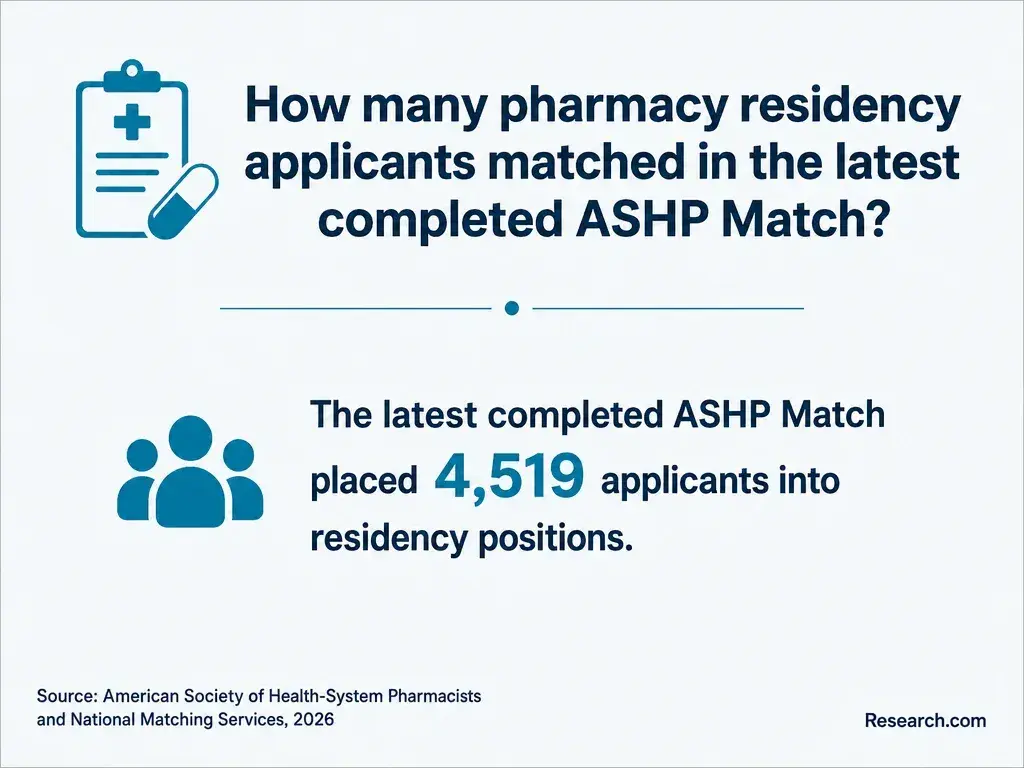
No. A pharmacy residency is postgraduate training, not a general NAPLEX prerequisite. Confirm exam eligibility and licensure requirements with NABP and your state board, separately from any residency plans.
- The Predictive Value of Full-length Practice Exams for... - PMC https://pmc.ncbi.nlm.nih.gov/articles/PMC7780194/
- ADA Requirements: Testing Accommodations https://www.ada.gov/resources/testing-accommodations/
- Studying 101: Study Smarter Not Harder - The Learning Center https://learningcenter.unc.edu/tips-and-tools/studying-101-study-smarter-not-harder/
- Commonly Utilized Accommodations - Educational Equity | Plone site https://equity.psu.edu/offices/student-disability-resources/faculty/common-accommodations
- Five-Day Study Plan | Learning Strategies Center https://lsc.cornell.edu/how-to-study/studying-for-and-taking-exams/the-five-day-study-plan/
- The Seven-Day Test Prep Plan | pitt.edu https://www.asundergrad.pitt.edu/study-lab/study-skills-tools-resources/seven-day-test-prep-plan
- Help Students Retain, Organize and Integrate Knowledge | mit.edu https://tll.mit.edu/teaching-resources/how-to-teach/help-students-retain-organize-and-integrate-knowledge/
- NAPLEX Content Outline | NAPLEX Competency Statements https://nabp.pharmacy/news/blog/the-naplex-content-outline-a-forward-focused-format-change/
- National Association of Boards of Pharmacy (NABP) | pearsonvue.com https://www.pearsonvue.com/us/en/nabp.html


