
Pharmacist Job Postings: Most Requested Skills

Co-Founder and Chief Data Scientist
Pharmacist job postings can look like competing checklists: one emphasizes dispensing accuracy, another patient care, and a third leadership or specialty experience. For prospective Pharm.D. students and career changers, the useful question is which requirements to build first - and which belong to a particular practice setting.
This guide separates recurring skills from licenses and employer preferences, then connects those expectations to pharmacy school, clinical training, and career choices. You can use it to evaluate programs and prepare for the jobs you actually want.
Key Things You Should Know
- Across pharmacist settings, medication safety, clinical judgment, patient communication, and accurate documentation are recurring skill themes; their relative importance depends on the job.
- A Pharm.D. is the standard U.S. educational route, but graduation alone does not authorize practice: employers generally require an active pharmacist license in the relevant jurisdiction.
- The Bureau of Labor Statistics reports $140,910 in median annual pay for pharmacists in May 2025 and projects 5% employment growth from 2025-2035; neither figure predicts an individual offer.
What skills do pharmacist job postings most commonly request?
There is no single verified national ranking of skills across all pharmacist postings. Wording and priorities change with the employer, setting, and state. Still, postings commonly combine a legal requirement - an active pharmacist license - with requests for medication expertise, safe workflow management, communication, and documentation. Do not treat a preferred skill as though it were a licensing requirement.
The table groups common posting language by the work it describes. Use it to identify which experience to seek, rather than counting keyword mentions as proof that every employer values a skill equally.
| Skill theme | What an employer may ask you to do | Especially relevant in |
| Medication safety and dispensing | Review orders, identify problems, verify medications, and follow controlled-substance procedures | Community, hospital, and specialty pharmacy |
| Clinical judgment | Assess medication regimens, monitor therapy, and communicate recommendations | Hospitals, ambulatory care, and clinical services |
| Patient and team communication | Counsel patients, resolve concerns, and coordinate with prescribers and staff | Every patient-facing setting |
| Systems and operations | Document care, use pharmacy software, manage workflow, and supervise according to policy | High-volume and supervisory roles |
If your goal is medication preparation or dispensing support rather than licensed pharmacist practice, investigate affordable short pharmacy programs with care: a shorter credential may support a pharmacy-adjacent role, but it does not replace a Pharm.D. and pharmacist licensure.
How do you become a pharmacist in the United States?
For a U.S.-educated applicant, the usual route is to complete a school's pre-professional prerequisites, earn a Doctor of Pharmacy (Pharm.D.) from a program accredited by the Accreditation Council for Pharmacy Education (ACPE), satisfy applicable supervised-training requirements, and meet the state board's examination and licensing rules.
Pre-pharmacy courses are preparation for admission, not the professional degree itself. Internationally educated pharmacists follow a different eligibility process and should check the National Association of Boards of Pharmacy (NABP) and the board where they intend to practice.
Career changers should compare completed coursework with individual schools' prerequisites before estimating a timeline. A guide to pharmacy education after a pre-pharmacy track can help frame that comparison, but the receiving school decides which prior courses satisfy its rules.
What degree and accreditation are required for pharmacist jobs?
U.S. pharmacist postings generally expect a Pharm.D. and an active license; employers may also specify a particular state license or a deadline for obtaining one. ACPE accredits professional pharmacy programs, not individual pharmacists. Institutional accreditation is a separate review of the college or university, while state authorization for distance education addresses where a school may enroll students. None of those statuses, by itself, grants permission to practice.
Check a program's current ACPE status and your intended state board's eligibility rules before enrolling. If considering Doctor of Pharmacy programs with online coursework, also verify required in-person labs and rotations, placement arrangements, and authorization for your location. "Online coursework" does not mean the professional degree can be completed entirely from home.
Pharmacists need to interpret medication orders, recognize interactions and dosing concerns, use drug information, document decisions, and respond appropriately to medication errors. Clinical roles may place greater weight on evaluating evidence, monitoring treatment, and making recommendations to a care team. Community and operations-heavy roles may emphasize prescription verification, immunization services where authorized, inventory controls, and dependable workflow under pressure.
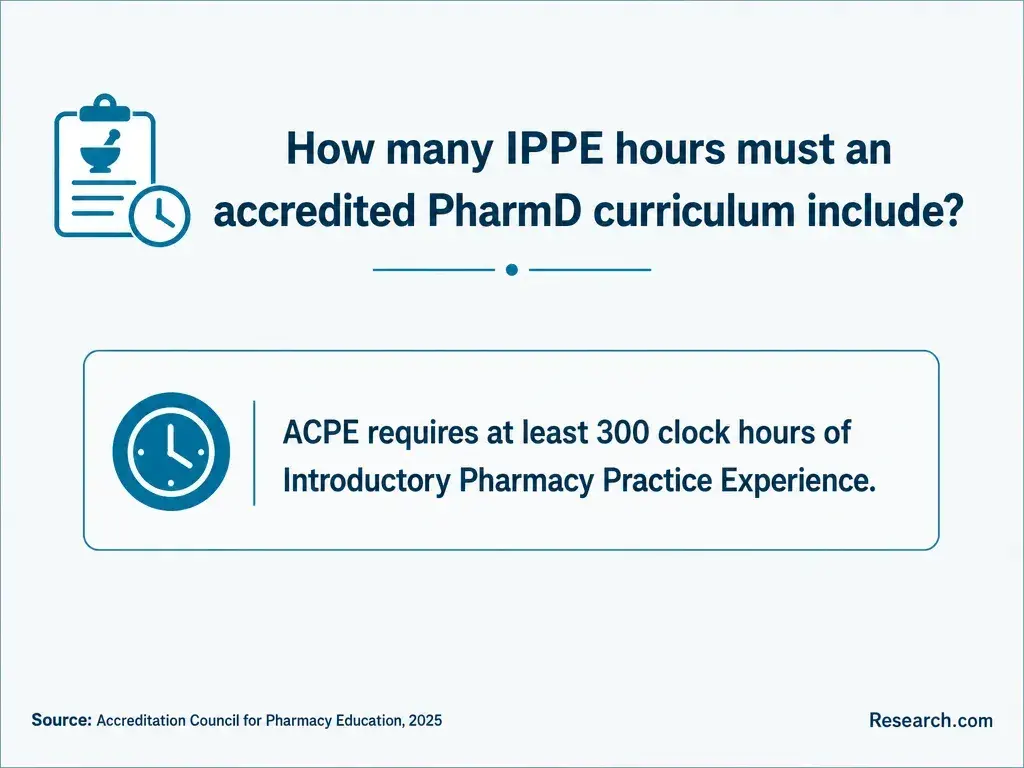
Software experience can help, but knowing one dispensing system does not establish proficiency with another employer's tools. Look for postings that name an electronic health record, pharmacy platform, or specialty workflow, then seek supervised exposure through coursework, introductory pharmacy practice experiences (IPPEs), and advanced pharmacy practice experiences (APPEs). Be cautious when comparing pharmacy programs with shorter completion times: short training may build a discrete skill, but it cannot substitute for the professional Pharm.D. curriculum or supervised practice.
Communication is a safety skill. Pharmacists must explain medication use in language patients understand, confirm understanding, contact prescribers when an order needs clarification, and give colleagues information they can act on. Interviewers may look for examples of how an applicant handled a difficult conversation - not simply a résumé claim of being a "good communicator."
Leadership matters most where pharmacists coordinate technicians, improve procedures, train colleagues, or manage a service. These responsibilities vary by employer and do not automatically require a management title. If leadership is your long-term goal, compare the time commitment of the pharmacist pathway with other graduate routes before assuming the degrees are interchangeable; general information about online doctorate time to completion cannot establish whether a program qualifies you for pharmacist licensure. Choose the Pharm.D. when the work you want specifically requires being a pharmacist.
The professional Pharm.D. curriculum connects biomedical and pharmaceutical science to pharmacotherapy, calculations, medication safety, law and ethics, patient counseling, and practice operations. IPPEs introduce supervised practice earlier in the program; APPEs provide more advanced supervised experience across required and elective settings. School curricula and placement arrangements differ, so a course title alone does not show how much hands-on practice a student receives.
To judge whether a program develops skills relevant to your target postings, examine its rotation settings, opportunities for patient interaction, and how it evaluates clinical reasoning and communication. If time is a major constraint, review how accelerated Pharm.D. programs work alongside each school's actual schedule. A faster academic sequence may leave less room for outside work while still requiring in-person experiential training.
Requirements vary by school. Applicants typically need specified prerequisite coursework, often including sciences, plus transcripts and any program-required application materials or interview. Some schools admit students without a completed bachelor's degree; others have different academic expectations. Minimum grades or GPA thresholds establish eligibility, not a promise of admission. The Pharmacy College Admission Test was retired in January 2024 and should not be treated as a current routine admissions step.
Compare each school's current prerequisite list, laboratory policies, course-age rules, and deadlines using its admissions materials and, when applicable, the PharmCAS directory. Not every school uses PharmCAS, and a school may require additional materials. A guide to pharmacy program applicant requirements can help you organize questions, but confirm every requirement directly with the programs on your list.
The professional Pharm.D. commonly takes several years after the required pre-professional coursework; exact schedules differ, including at accelerated programs. The meaningful timeline is the time you need to finish missing prerequisites, complete the professional curriculum and rotations, and become eligible for licensure. Compare that full timeline before assuming a shorter advertised program length saves time.
Published tuition is not the full cost of attendance. Budget for mandatory fees, supplies, transportation or housing for rotations, and licensing expenses, and ask schools how clinical placements could affect your ability to work. When comparing affordable online Pharm.D. programs, request current program-specific tuition and fee schedules rather than relying on a headline price. Federal loan rules changed for many new graduate and professional borrowers beginning July 1, 2026; confirm your own eligibility and limits with financial aid staff before building a borrowing plan.
Licensure is issued by the relevant state or jurisdictional board, not by a pharmacy school. U.S.-educated candidates generally must meet board eligibility and supervised-training rules and pass the North American Pharmacist Licensure Examination (NAPLEX). Jurisprudence requirements differ: a jurisdiction may use the Multistate Pharmacy Jurisprudence Examination (MPJE), the Uniform MPJE (UMPJE), another assessment, or a different process. Some jurisdictions began transitioning to the UMPJE in 2026. Check current NABP and board instructions for the place you intend to work; passing an exam alone does not issue a license.
Prior credits may reduce the coursework needed before pharmacy school if a program accepts them, but they do not replace licensing requirements. When exploring pharmacy programs that accept transfer credits, ask whether the school means undergraduate prerequisites or transfer into the professional curriculum - two different decisions.
What pharmacist careers, salaries, and job outlook can graduates expect?
Pharmacists work in community pharmacies, hospitals, ambulatory clinics, specialty services, industry, and other settings. The Bureau of Labor Statistics reports median annual pay of $140,910 in May 2025, projects 5% pharmacist employment growth from 2025-2035, and projects about 12,500 openings per year. These occupation-wide figures are useful for context, not forecasts for a particular specialty, location, or new graduate.
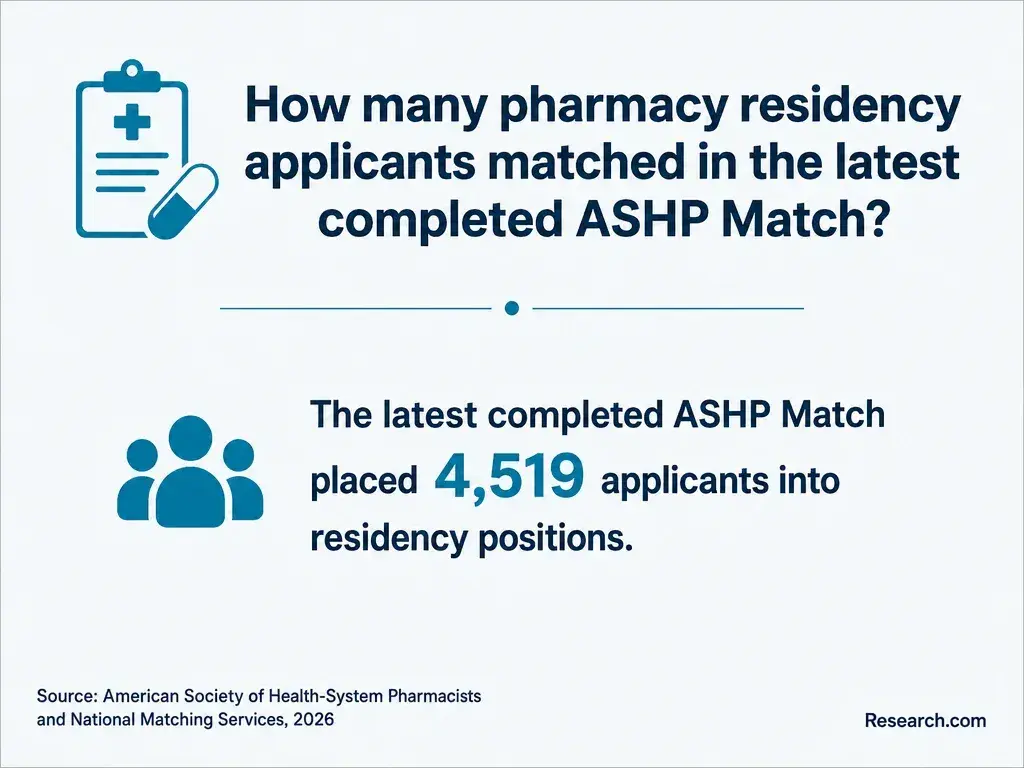
Choose a target setting before investing in optional training. A pharmacy residency provides structured postgraduate practice - often a first postgraduate year (PGY1) followed, for some goals, by a specialty second year (PGY2). Fellowships commonly emphasize other focused training, while Board of Pharmacy Specialties certification is a separate credential with its own eligibility rules. None replaces state licensure, and not every pharmacist position requires one. Compare actual postings to see whether your preferred employers require, prefer, or simply mention postgraduate experience.
If you are still deciding whether to enter the profession, use pharmacy program admission planning to identify missing prerequisites before committing to tuition or a job change. A practical final check is whether the postings you want require a pharmacist license, which skills their setting emphasizes, and whether prospective programs offer credible ways to practice those skills.
Other Things You Should Know About PharmD
Use the employer's terminology when it accurately describes your experience, but support each important skill with a specific example. Do not claim independent clinical duties performed only under student supervision.
Describe relevant coursework, supervised rotations, projects, and patient interactions. State your role clearly, including what a preceptor reviewed or authorized.
Some do, especially when rapid onboarding matters. Others accept experience with comparable systems. Read whether the named platform is required or preferred, and be honest about what you have used.
They can build familiarity with workflow, teamwork, and medication terminology. Technician experience does not replace pharmacist education or authorize clinical decisions reserved for a licensed pharmacist.
- ONC - Office of the National Coordinator for Health IT https://healthit.gov/
- Competencies for Public Health Professionals | cdc.gov https://www.cdc.gov/infrastructure/training-professional-development/competencies-for-public-health-professionals.html
- What Do Pharmacists Do? Roles, Skills & Career Paths | MCPHS https://www.mcphs.edu/admission-and-aid/blog/what-do-pharmacists-do
- Pharmacist - Explore Healthcare Careers | Mayo Clinic College of Medicine and Science https://college.mayo.edu/academics/explore-health-care-careers/careers-a-z/pharmacist/
- What Are the Different Types of Pharmacist Careers? | University of Findlay https://pharmdonline.findlay.edu/blog/what-are-different-types-pharmacist-careers
- 29-1051.00 - Pharmacists https://www.onetonline.org/link/summary/29-1051.00


