
Pharmacist Salary by State: How to Compare Wages

Co-Founder and Chief Data Scientist
A higher pharmacist salary in another state may not leave you with more money after housing, taxes, and student loan payments. If you are choosing a pharmacy school, evaluating a job offer, or considering relocation, state wage figures are a starting point - not a verdict.
This guide explains how to compare reliable salary estimates, adjust for local costs and work settings, and account for the education and licensing steps that can affect when and where you can practice.
Key Things You Should Know
- The national median pay for pharmacists was $140,910 in May 2025, according to the Bureau of Labor Statistics (BLS). A state average is a different measure and should not be compared with that median as though they were equivalent.
- For a useful state comparison, weigh wages alongside local living costs, taxes, job availability, benefits, and any costs of obtaining a license in the destination state.
- A Doctor of Pharmacy (Pharm.D.) degree is the usual U.S. education route, but graduation does not confer a license; state licensing requirements can change the cost and timing of a move.
What is the average pharmacist salary by state?
There is no single national figure that answers what pharmacists earn in every state. The BLS Occupational Employment and Wage Statistics (OEWS) program publishes state-level pharmacist wage estimates, including mean annual wages - the arithmetic average. Its Occupational Outlook Handbook reports a national median annual wage of $140,910 in May 2025: half of pharmacists earned more and half earned less. These measures describe different things.
For an accurate state-to-state comparison, use the same occupation, OEWS release, and wage measure for every state. Check whether an estimate covers the entire state or a particular metro area, and remember that an average does not describe every opening or experience level. Students comparing likely earnings with the time needed to qualify should also distinguish a professional Pharm.D. from other credentials when reading about how long online doctoral programs take; a shorter doctorate is not necessarily a route to pharmacist licensure.
Which states pay pharmacists the highest salaries?
The highest-paying states depend on the OEWS release and whether "highest" means mean wage, median wage, or an actual offer. Check the current BLS pharmacist state estimates and sort mean annual wage from highest to lowest; do not treat a ranking from an older release as current. Then inspect metro-area estimates within the states that interest you. A statewide average can conceal substantial differences between cities and smaller communities.
A high-paying state is not automatically the best place to begin a career. Openings, employer mix, living costs, and licensing expenses matter too. If you are entering pharmacy from another science field, compare pharmacy degree options for science majors against the cost of qualifying; a prior science degree alone does not qualify someone to practice as a pharmacist or secure a higher wage.
How do pharmacist wages compare with the cost of living by state?
Compare purchasing power, not just gross salary. The Bureau of Economic Analysis publishes regional price parities that help show how overall prices differ across states and metro areas. That broad measure is useful for screening locations, but your own housing, transportation, childcare, and debt payments may differ substantially from the regional average.
The categories below show why two offers with different salaries can reverse order once you examine what you keep and spend.
| Comparison category | Why it can change the decision |
| Gross pay and hours | An annual figure may reflect a different schedule, overtime arrangement, or employment status. |
| Taxes and benefits | Take-home pay and employer contributions can differ even when posted salaries match. |
| Local expenses | Housing and commuting costs can outweigh a nominal pay increase. |
| Career costs | Loan payments, relocation, and licensing expenses affect the value of a move. |
Request written offers that specify hours, benefits, and location, then build a budget for each location. For prospective students, compare that budget with total education expenses rather than advertised tuition alone; online Doctor of Pharmacy tuition may be only part of the cost when travel and in-person rotations are required.
State averages reflect the jobs located there, not a pay rate set by the state. Employer type, local competition, staffing needs, experience, shift requirements, supervisory duties, and specialized responsibilities can all influence an offer. State practice rules can also affect the services pharmacists provide, although broader scope of practice does not guarantee higher pay.
Separate earning potential from return on your education. Two graduates who accept similar salaries may face very different loan balances or relocation costs. If you already have college coursework, investigate pharmacy programs that accept transfer credits, but confirm with the receiving school whether credits satisfy prerequisites or apply to the professional curriculum. Prior credits do not themselves change a pharmacist's wage.
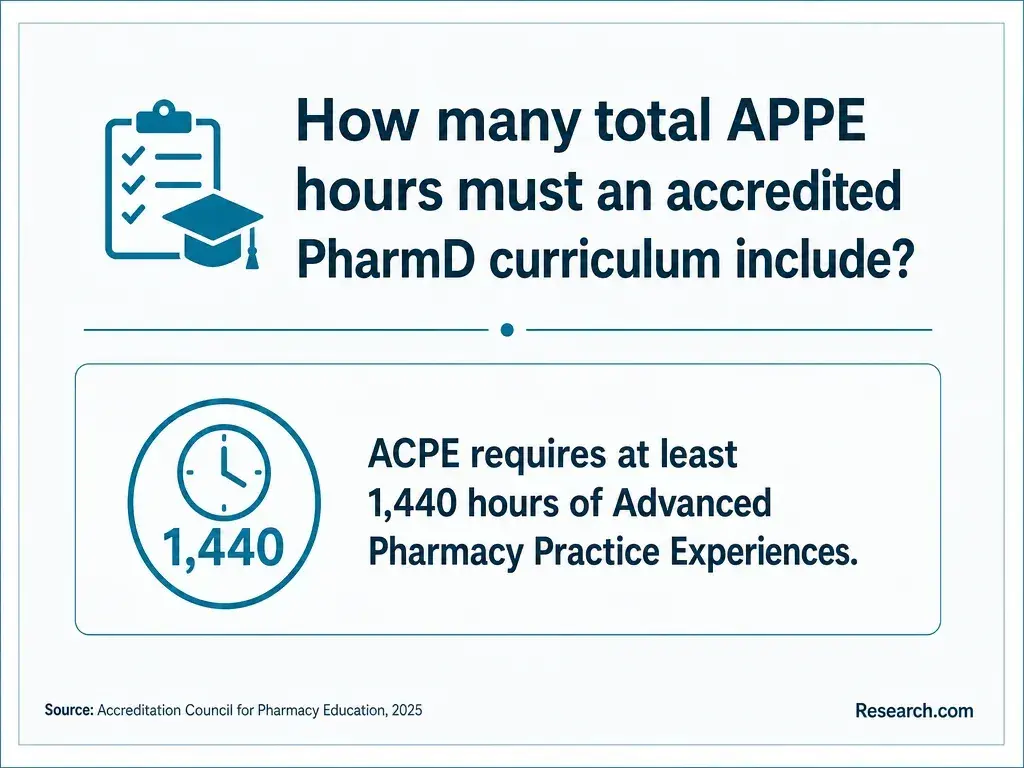
The usual U.S. route is to complete a professional Pharm.D. program after meeting that school's undergraduate, or pre-pharmacy, prerequisites. Those prerequisites are not the same as the professional curriculum. Schools differ on required courses, laboratory work, grades, and whether applicants need a completed bachelor's degree. The Pharm.D. includes classroom learning and supervised pharmacy practice experiences; a pharmaceutical sciences or pharmacy technician credential is not a substitute for the professional degree.
If you are estimating how soon you could earn a pharmacist salary, check your eligibility before projecting an entry date. Start with each school's current requirements and understanding pharmacy school admissions; meeting a minimum requirement does not guarantee admission. Internationally educated pharmacists may have a different credential-evaluation and licensing pathway set by the relevant authorities.
The Accreditation Council for Pharmacy Education (ACPE) accredits professional pharmacy degree programs, not individual pharmacists. When comparing schools as routes to a future salary, verify the program's current status in ACPE's official directory and check the licensing rules for the state where you hope to practice. Do not confuse professional-program accreditation with a university's institutional accreditation or its authorization to enroll online students in a particular state.
Delivery format needs a separate check. Use an online pharmacy program comparison to identify questions about campus sessions, hands-on training, and clinical placements, then confirm the answers with each school. Online instruction does not mean the professional degree can be completed entirely remotely, and accreditation does not itself issue a license.
Pharm.D. completion and pharmacist licensure are separate milestones. U.S. graduates generally must satisfy the destination board of pharmacy's eligibility and application rules, pass the North American Pharmacist Licensure Examination (NAPLEX), and meet any applicable state law-exam and experiential requirements. Jurisprudence testing varies: a board may use the Multistate Pharmacy Jurisprudence Examination (MPJE), the Uniform Multistate Pharmacy Jurisprudence Examination (UMPJE), another process, or no comparable exam. Passing an exam alone does not issue a license.
Before accepting an out-of-state offer, confirm the destination board's current requirements, processing steps, fees, and whether your existing license can be transferred. Applicants still working through prerequisites should not confuse pharmacy schools and prerequisite completion with licensure eligibility: permission to apply or enroll before finishing certain courses is not permission to practice.
The timeline depends on the prerequisites you have completed and the program's professional sequence; individual schools may offer different schedules. Budget for more than tuition: required fees, materials, equipment, background checks, immunizations, rotation travel or housing, and licensing expenses may all matter. Time spent in prerequisites and required in-person training can also limit paid work.
Ask schools for a current, itemized cost of attendance and a schedule showing classroom, campus, and clinical commitments. Be cautious when reading about how quickly can an online pharmacy degree be completed: confirm that any advertised timeline refers to an entry-to-practice Pharm.D., includes your remaining prerequisites, and accounts for required experiential education. If borrowing, obtain current aid guidance for your start date; federal rules for many new graduate and professional borrowers changed beginning July 1, 2026.
Pharmacists work in settings including community pharmacies, hospitals, ambulatory care, industry, and specialty pharmacy. Responsibilities and hiring requirements differ, so no setting guarantees the highest offer. Compare current BLS industry wage estimates with actual postings for the roles and locations you could enter; an industry average may include experienced staff and positions unavailable to a new graduate.
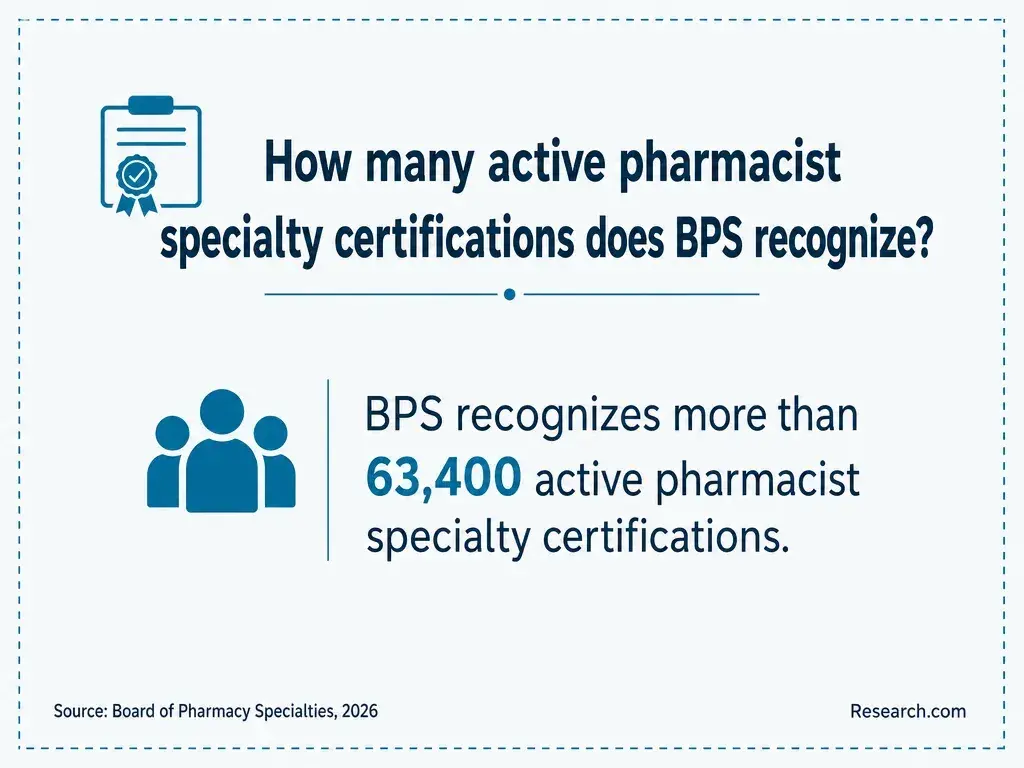
Clinical roles may favor postgraduate residency training, while some industry paths use fellowships. A residency or fellowship is training, not a state license. Board certification is a separate specialty credential and is not universally required. If an employer advertises a higher-paying role that requires experience or additional training, account for the time and compensation during that transition. Likewise, pharmacy education with shorter completion time should be evaluated against the specific job's required credential - not assumed to lead to pharmacist wages. Pharmacy technicians are a separate occupation and do not ordinarily need a Pharm.D.
What is the job outlook for pharmacists by state?
BLS projects 5% growth in pharmacist employment from 2025 to 2035 and about 12,500 openings per year nationally. These are U.S.-wide projections, not promises of openings in a particular state or specialty. For a location decision, consult that state's current occupational projections and compare them with recent local postings, employer requirements, and the number of positions accessible at your experience level.
A practical final check is to compare locations in this order: available jobs you qualify for, written compensation and benefits, local expenses, and the time and cost of licensure. If you are still selecting a school, accelerated pharmacy school options may change your entry timeline, but only if you meet the prerequisites and can manage the program's schedule and total cost. A faster route does not make a weak local job market stronger.
Other Things You Should Know About PharmD
Published occupational wages and most advertised salaries are generally gross pay, before taxes and employee deductions. Use the terms of a written offer to estimate take-home pay.
Yes, an employer may negotiate, but the state average is not an entitlement. Relevant experience, schedule, location, and documented responsibilities provide a stronger basis for discussing an offer.
No. A sign-on bonus is separate from recurring base pay and may have repayment conditions. Read those conditions before using it to compare offers.
Use the measure that matches how you will be paid. For an hourly offer, confirm expected paid hours and whether they are guaranteed before comparing it with an annual salary.
- Pockets of Inequality in the Distribution of U.S. Pharmacists' Wages and Salaries: A Gender Comparison - PMC https://pmc.ncbi.nlm.nih.gov/articles/PMC7643700/
- More Than 60% of U.S. Pharmacists Were Women but They Earned Less Than Their Male Counterparts | Census.gov https://www.census.gov/library/stories/2024/10/american-pharmacists-month.html
- Geographic Cost of Living Differences: In Brief | congress.gov https://www.congress.gov/crs-product/R47037
- How Much Do Pharmacists Make? | MCPHS https://www.mcphs.edu/admission-and-aid/blog/how-much-do-pharmacists-make
- How Much Do Pharmacists Make? Salary, Pay and Career Outlook | PCOM https://www.pcom.edu/pharmacy/news/how-much-do-pharmacists-make.html
- What is a living wage and how is it estimated? | mit.edu https://livingwage.mit.edu/pages/methodology
- 20 Types of Pharmacists [+ Required Skills & Salary] | Marshall University https://www.marshall.edu/blog/types-of-pharmacists/
- How to Become a Pharmacist: Education, Job Description & Salary | Touro University California https://tu.edu/news--events/stories/all-stories/how-to-become-a-pharmacist.php
- How Pharmacy Work Stopped Being So Great | nytimes.com https://www.nytimes.com/2022/08/20/business/economy/pharmacists-job-inflation.html
- Pharmacists and Pharmacy Technicians | ncsl.org https://www.ncsl.org/health/pharmacists-and-pharmacy-technicians


