Pharmacy residency salary and benefits guide

Co-Founder and Chief Data Scientist
A pharmacy residency can open a path to specialized clinical work, but it usually means postponing a full pharmacist salary. For Pharm.D. students and licensed pharmacists weighing PGY1 or PGY2 training, the decision depends on more than the advertised stipend. Benefits, living costs, loan payments, licensing deadlines, and the jobs a program prepares you for all matter. This guide explains what residents are paid, how to compare offers, and when the training may - or may not - justify the financial trade-off.
Key Things You Should Know
- Pharmacy residents receive a program-specific stipend, not a standardized national salary. Compare written offers using take-home pay, benefits, required expenses, and local living costs.
- PGY1 generally adds one year of postgraduate training; a subsequent PGY2 generally adds another. Neither residency nor a Pharm.D. alone grants a pharmacist license.
- The Bureau of Labor Statistics reports median pharmacist pay of $140,910 in May 2025. That occupation-wide figure is not a resident salary or a guaranteed post-residency offer.
What is a pharmacy residency, and how do PGY1 and PGY2 programs differ?
A pharmacy residency is structured, supervised postgraduate training for pharmacists. Postgraduate year one (PGY1) builds broad practice skills after the Doctor of Pharmacy (Pharm.D.) degree. Postgraduate year two (PGY2) usually follows PGY1 and concentrates on an area such as ambulatory care, oncology, critical care, or infectious diseases. Specific PGY2 eligibility rules and any alternative entry routes depend on the program and applicable accreditation standards.
The distinction matters financially: pursuing both years generally means two years of resident stipends rather than moving directly into a full-time pharmacist role. A residency is also different from a research-oriented or industry fellowship, and neither is the same as Board of Pharmacy Specialties (BPS) certification. For students still choosing how to earn the professional degree, accelerated Pharm.D. programs address an earlier decision; a faster degree does not replace postgraduate training.
The table shows the training focus behind each year. Individual programs may differ in rotations, staffing, research, and teaching expectations.
| Path | Typical focus | Main financial implication |
| PGY1 | Broad, supervised development in patient care and pharmacy practice | One year on a program-specific resident stipend |
| PGY1 followed by PGY2 | Broad training followed by specialty-focused training | A second year on a resident stipend and another year before seeking many full-time roles |
| Direct employment | Employer-specific pharmacist responsibilities and on-the-job development | Potential to start earning an offered pharmacist salary sooner, without residency-specific training |
How much do pharmacy residents earn during PGY1 and PGY2 programs?
There is no single U.S. pharmacy residency salary. Programs set and publish their own annual stipends, and PGY2 pay is not automatically higher than PGY1 pay at a different employer. Because stipends change by program and appointment year, use the current offer or program listing - not an undated national average - to answer what a particular position pays.
Ask whether the stated stipend covers the full appointment, when pay begins, and whether the resident is classified as an employee for benefits. Then compare estimated take-home pay after taxes and benefit premiums with rent, transportation, loan payments, and any required professional expenses. A higher stipend in a costly city can leave less usable income than a lower stipend elsewhere.
The Bureau of Labor Statistics (BLS) reports median annual pay of $140,910 in May 2025 for pharmacists. That figure covers the occupation broadly, not new graduates, residents, a particular specialty, or an offer you could obtain instead. If you are still planning how to finance the Pharm.D., lower-cost online Pharm.D. pathways may affect the debt you bring into residency; confirm in-person requirements and total costs before relying on an advertised price.
What benefits do pharmacy residency programs typically provide?
Benefits vary considerably. Programs may offer medical coverage, paid time off, retirement-plan access, professional development funds, conference support, or reimbursement for licensing and membership expenses. An offer may provide access to a benefit without paying its full cost, so the written employee benefits summary matters more than a brief recruitment description.
The following categories show why two offers with similar stipends can have different practical value.
| Benefit or expense | Difference that can affect an offer's value |
| Health coverage | Premiums, deductibles, dependent coverage, and the coverage start date |
| Paid leave | Available days and rules for holidays, illness, interviews, and unused leave |
| Retirement benefits | Eligibility, employer contributions, and vesting rules |
| Professional development | Whether conference registration, travel, lodging, and presentation costs are funded |
| Required credentials | Whether the employer reimburses licensing, background-check, or certification-related expenses |
Residency is generally an in-person clinical commitment even if part of a resident's earlier education used online instruction. Readers exploring pharmacy doctorate programs with distance learning should not assume that degree format predicts a residency's location, schedule, or benefits.
Applicants generally need a Pharm.D. from a pharmacy education program accredited by the Accreditation Council for Pharmacy Education (ACPE), or another educational background accepted under the particular residency's eligibility rules. ACPE accredits professional pharmacy programs; it does not license pharmacists. Undergraduate pre-pharmacy courses are preparation for applying to a Pharm.D. program, not a substitute for completing its professional curriculum. Graduates entering from other fields can review pharmacy school for biology and chemistry graduates while planning that earlier step.
Residents must meet the program's pharmacist licensure requirements, often by a stated deadline after the start date. State boards, not residency programs, issue licenses. U.S.-educated applicants should check the relevant board's requirements for the North American Pharmacist Licensure Examination (NAPLEX), any applicable jurisprudence examination, and other conditions. Do not assume every jurisdiction uses the Multistate Pharmacy Jurisprudence Examination (MPJE); some jurisdictions began transitioning to the Uniform Multistate Pharmacy Jurisprudence Examination (UMPJE) in 2026. Internationally educated pharmacists may face additional credentialing and eligibility steps.
Before ranking a program, confirm its licensure deadline and what happens if exam scheduling or score reporting delays your license. PGY2 applicants must also confirm the program's PGY1 completion and specialty-specific eligibility rules.
Many U.S. pharmacy residencies use the Pharmacy Online Residency Centralized Application Service (PhORCAS) and the ASHP Match administered by National Matching Services. Participating programs publish their own application requirements and deadlines. Applicants typically submit materials, interview if selected, and rank programs; a Match result creates a commitment under the applicable Match rules. Some positions use different processes, so verify each listing rather than assuming every residency participates.
A practical application sequence is important because missed requirements can eliminate an otherwise suitable option:
- Confirm each program's accreditation status, eligibility rules, stipend, benefits, application deadline, and participation in the Match.
- Prepare the required application materials and request references early enough for the program's deadline.
- Use interviews to test the program's workload, supervision, learning opportunities, and total compensation against your goals.
- Review current Match rules before submitting rankings, and rank only programs where you would accept the position.
PharmCAS is a separate application service used by many pharmacy schools for Pharm.D. admission; it is not the residency Match. If you have not entered pharmacy school yet, admission pathways for pharmacy students concern an earlier stage of this timeline.
Residency training combines supervised practice experiences with longitudinal responsibilities that may include medication-use evaluation, research or quality improvement, teaching, presentations, and staffing. PGY1 rotations usually span multiple practice areas; PGY2 experiences concentrate more heavily on a specialty. The actual learning plan, project scope, staffing shifts, and on-call duties are program-specific.
These requirements affect the value of a stipend. A position with strong preceptor feedback, protected project time, and relevant rotations may better support a clinical goal than one whose title sounds appealing but offers limited experience in the work you want to do. Conversely, extensive evenings or weekends can make a nominally attractive stipend less appealing.
Shorter educational options serve different goals. Quickest online pharmacy study routes may help readers explore other pharmacy-related work, but a short program is not a substitute for the Pharm.D., pharmacist licensure, or residency training.
A PGY1 residency typically lasts about one year; completing PGY1 and then PGY2 typically means about two years of postgraduate training. Check exact start and end dates because appointment terms vary. Residents receive a stipend rather than paying residency tuition, but training still has costs: application and interview expenses, relocation, licensing, health premiums, conference expenses not reimbursed by the program, and the opportunity cost of delaying a potential full-time pharmacist salary.
To estimate your financial position, subtract expected taxes, benefit premiums, housing, transportation, loan payments, and uncovered professional costs from the offered stipend. Compare the result with an actual employment offer if you have one - not with a national median. For prospective students calculating the longer education-to-employment timeline, pharmacy program tuition and length belong in the separate Pharm.D. budget, alongside later residency expenses.
Borrowers should confirm current repayment options and aid eligibility with their loan servicer or financial aid office. Federal borrowing rules changed for many new graduate and professional borrowers beginning July 1, 2026; older descriptions of loan availability should not be used to plan a new Pharm.D. budget.
PGY1 can support applications for clinical and health-system pharmacist roles, while PGY2 can strengthen preparation for positions focused on a particular patient population or practice area. Depending on employer requirements, graduates may pursue hospital, ambulatory care, specialty, medication safety, teaching, or leadership roles. Completing a residency does not guarantee any specific job, and some pharmacists enter these settings through direct employment and experience.
BPS specialty certification is a separate credential with its own eligibility and examination rules; it is not a pharmacist license and does not automatically follow residency completion. If your target is research, industry, or a non-pharmacist occupation, a fellowship, direct-entry job, or different degree might align better with the work. Shorter online doctorate pathways may suit some non-pharmacist goals, but they do not replace the professional Pharm.D. required for the usual U.S. pharmacist licensure pathway.
Residency may improve a candidate's fit for jobs that request postgraduate clinical training, particularly specialized positions. It does not create an automatic salary premium: pay depends on the role, employer, location, experience, and competing applicants. The strongest financial case is usually access to work you are unlikely to obtain as readily through direct employment, not an assumed increase in every future paycheck.
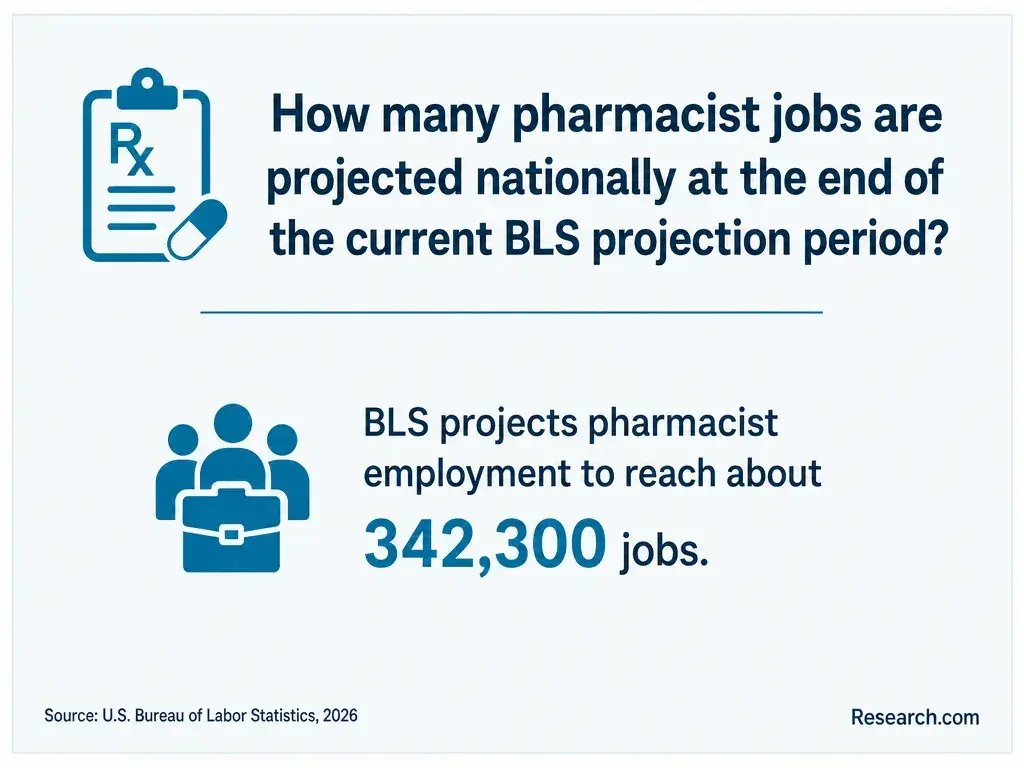
BLS projects 5% growth for pharmacists from 2025 to 2035, with about 12,500 openings per year. Those occupation-wide projections indicate a continuing market for pharmacists, but they do not forecast openings for residency graduates or any one specialty. Compare recent program graduate destinations with the jobs you actually want, and weigh those possibilities against one or two years of forgone higher pay.
For readers still completing prerequisite education, applying prior college credits to pharmacy programs may change the cost and time needed to reach the Pharm.D. stage. The receiving school decides whether credits apply; transfer savings should not be assumed when calculating the overall return on a residency path.
How can applicants compare accredited pharmacy residency programs?
Start with the ASHP residency directory to check a program's current accreditation status and stated training focus, then confirm details directly with the program. ASHP residency accreditation is distinct from ACPE accreditation of the Pharm.D. program that educated you. An accredited residency may still be a poor fit if its rotations, location, or finances conflict with your goals.
Before accepting or ranking offers, use the same questions for every program:
- What are the current annual stipend, appointment dates, pay schedule, and written benefit terms?
- Which licensing costs, conferences, travel, and required professional expenses are reimbursed?
- What are the rotation schedule, staffing obligations, project expectations, supervision arrangements, and recent graduate destinations?
- What is the licensure deadline, and what happens if a resident cannot meet it?
- After estimating local living costs and loan payments, is the remaining income workable without relying on an unconfirmed benefit or future job?
Favor PGY1 or PGY2 when its documented training closely matches a target role and the budget works for the full appointment. Favor direct employment when the offered job already provides a credible route to that goal or the residency's financial burden is too high. If pharmacy school is still ahead of you, resolve prerequisites separately using pharmacy program admission planning; admission flexibility does not alter a residency's degree and licensure requirements.
Other Things You Should Know About PharmD
Possibly, but program policies, scheduling, licensure, and fatigue considerations may restrict outside work. Get written approval before counting on extra income.
Resident compensation is generally subject to applicable taxes. Check your employment documents and consult a qualified tax professional about your circumstances rather than treating the advertised stipend as take-home pay.
It may, if the employer and your loans qualify and you meet the program's other requirements. Residency status alone does not establish eligibility; verify the employer and current federal rules.
Often, yes: pharmacists may work after PGY1 and apply to PGY2 later. A future program may have specific eligibility or experience requirements, and admission is not guaranteed.
- Applicants' Self-Reported Priorities in Selecting a Residency Program - PMC https://pmc.ncbi.nlm.nih.gov/articles/PMC4507921/
- Residency Salary and Benefits | Retzky College of Pharmacy | University of Illinois Chicago https://pharmacy.uic.edu/programs/residency-and-fellowship/residency-benefits/
- Salary & Benefits | ucsf.edu https://pharmacyresidencyprograms.ucsf.edu/salary-benefits
- Pharmacy Residencies - Stipend and Benefits | Mayo Clinic College of Medicine and Science https://college.mayo.edu/academics/health-sciences-education/pharmacy-residencies/stipend-and-benefits/
- Pharmacy Residency Programs: Application & Benefits Guide | UWorld RxPrep Pharmacy https://pharmacy.uworld.com/blog/pharmacy-residency-programs/
- From PGY1 Pharmacy Resident to PGY2 Specialty Resident | ashp.org https://careers.ashp.org/career-resources/on-the-job-3/from-pgy1-pharmacy-resident-to-pgy2-specialty-resident-a-health-system-pharmacy-career-path-103
- Factors That Influence Family Medicine Residency Selection | stfm.org https://www.stfm.org/familymedicine/vol48issue4/Wright279