Pharmacy School Pathway After Completing a Bachelor's Degree

Co-Founder and Chief Data Scientist
A bachelor's degree can put pharmacy school within reach, but it does not necessarily satisfy every admission prerequisite - or shorten the professional program. If you are deciding whether to pursue a Doctor of Pharmacy (Pharm.D.), the useful questions are what coursework you still need, how much time and money the pathway requires, and whether pharmacist work matches your goals. This guide separates undergraduate preparation from the Pharm.D., licensure, and optional postgraduate training so you can identify your next step before committing to a program.
Key Things You Should Know
- A bachelor's degree is not universally required for Pharm.D. admission, and having one does not waive a school's required science courses or labs.
- After any missing prerequisites, the professional Pharm.D. typically takes three or four years; graduation alone does not grant a pharmacist license.
- Compare the full cost and time to licensure, not tuition alone. The median annual pay for pharmacists was $140,910 in May 2025, but that occupational figure is not a starting-salary or return-on-investment promise.
What is the pharmacy school pathway after completing a bachelor's degree?
The U.S. pathway is to satisfy a school's pre-professional prerequisites, enter a professionally accredited Pharm.D. program, complete its classroom and supervised practice requirements, and meet the licensing rules of the state where you intend to work. Your bachelor's major matters less than whether your transcript meets the particular school's course, lab, grade, and recency rules.
AACPE - the Accreditation Council for Pharmacy Education - accredits professional Pharm.D. programs, not individual pharmacists. Check the current ACPE status of each program you consider. Also confirm the institution's accreditation; that is a separate matter from professional-program accreditation.
If you want to build on prior biology or chemistry coursework, request a course-by-course prerequisite review rather than assuming that a science degree meets every requirement. A non-science graduate may also be eligible after completing the missing courses. In either case, prior undergraduate credit usually addresses entry requirements, not years of professional Pharm.D. coursework.
Do you need a bachelor's degree to enter a Pharm.D. program?
No. Some Pharm.D. programs admit students who complete the required pre-professional college coursework without earning a bachelor's degree; others may require or favor a completed degree. A bachelor's can demonstrate academic preparation, but admission depends on the program's published rules and review of your application.
For a graduate, the immediate decision is whether to apply now or take additional prerequisites first. Compare your transcript with each school's current requirements, including labs and minimum acceptable grades, and ask admissions staff to resolve unclear substitutions in writing. Guides to pharmacy program preparation requirements can help you frame that review, but a school determines whether unfinished courses may remain in progress when you apply and when they must be completed.
What are the admission requirements for pharmacy school after college?
Requirements vary by program, but an applicant generally needs eligible prerequisite coursework, transcripts, and the materials specified by the school. Depending on the program, those materials may include recommendations, an interview, experience descriptions, a supplemental application, or a deposit after acceptance. A published minimum GPA establishes eligibility, not a guarantee of admission.
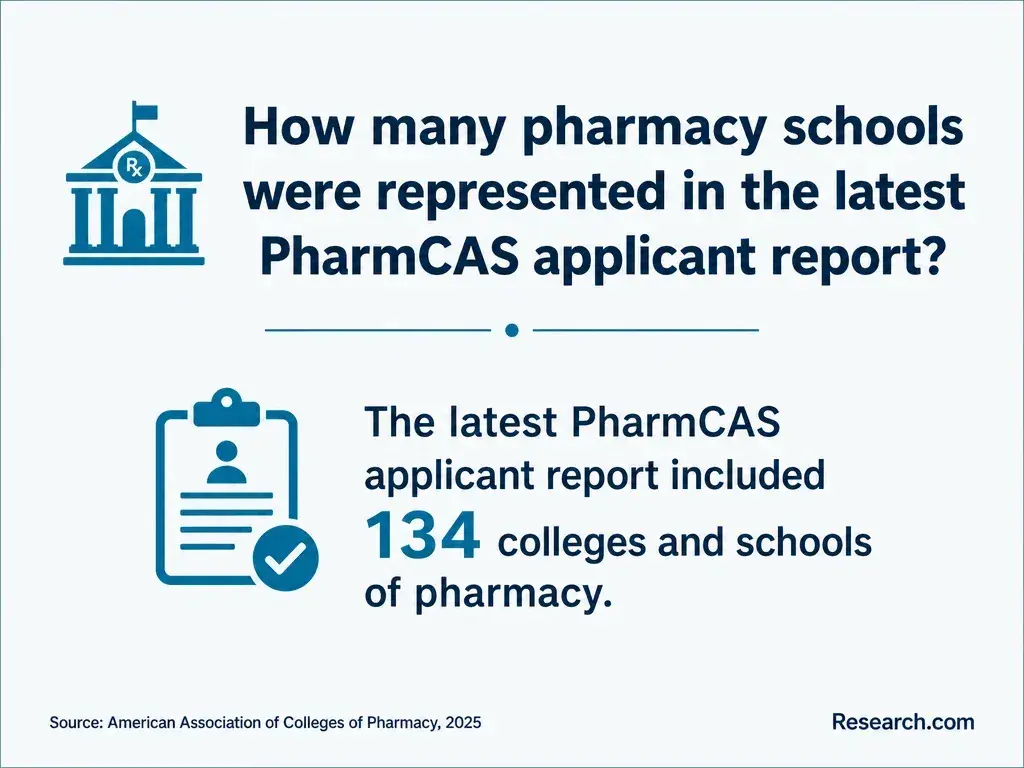
Many schools use the Pharmacy College Application Service (PharmCAS), while applicants must still follow each school's own instructions and deadlines. Confirm whether your target school uses PharmCAS, which transcripts and recommendations it requires, and whether it considers planned coursework. The Pharmacy College Admission Test (PCAT) was retired in January 2024; do not budget for it as a current admissions exam.
When evaluating how competitive is pharmacy school admission, look beyond an advertised minimum. Ask whether your completed courses qualify, how the school assesses repeated coursework, and what its interview evaluates. Strong academic preparation and relevant patient-facing or pharmacy experience may help you explain your fit, but neither substitutes for a required course.
Common pre-professional subjects include general and organic chemistry, biology, mathematics, and communication or other general education coursework. Schools differ on the exact subjects, credits, laboratories, acceptable substitutions, minimum grades, and how recently a course must have been taken. There is no single national prerequisite checklist for every Pharm.D. program.
Your bachelor's transcript may cover much of this work, but course titles alone may not settle equivalency. The receiving school decides whether community-college, AP or IB, online-lab, repeated, transfer, or international coursework satisfies its prerequisites. Credit accepted toward prerequisites is also different from credit transferred into the professional Pharm.D. curriculum.
To avoid taking an unnecessary course - or missing an application deadline - compare your transcript against the current catalog for each target school. If you hope to transfer coursework toward pharmacy prerequisites, send the school the course description or syllabus and ask for its evaluation before enrolling in a replacement.
Once prerequisites are complete, a traditional professional Pharm.D. commonly takes four academic years; some programs use an accelerated, year-round schedule that takes about three. Your bachelor's degree does not automatically reduce either curriculum. Missing prerequisites add time, and graduation is followed by the remaining steps required for state licensure.
The comparison below separates the school calendar from the full pathway. It can help you assess an accelerated offer against work, travel, and borrowing plans.
| Pathway component | Time implication | Decision point |
| Missing prerequisites | Varies with your transcript and course availability | Can required labs fit before matriculation? |
| Traditional Pharm.D. | Commonly four academic years | Does the calendar permit the work or family commitments you have? |
| Accelerated Pharm.D. | Often about three years, with a denser schedule | What breaks, campus attendance, and rotation periods are required? |
| Licensure after graduation | Depends on examination and state-board processing | What must be completed before you may practice? |
Explore accelerated pharmacy education options if entering practice sooner outweighs the cost of a more intensive schedule and potentially less time for paid work. Confirm each program's actual calendar; "accelerated" does not mean fewer required clinical experiences or immediate licensure.
An online or hybrid Pharm.D. may deliver some instruction remotely, but pharmacy education still requires supervised, in-person practice. Programs differ in scheduled live classes, on-campus labs or immersions, assessments, and where students can complete clinical rotations. "Online" does not mean fully remote or self-paced.
The format comparison highlights scheduling questions that matter more than the delivery label. Ask each program for its current attendance calendar and clinical placement policy before assuming you can remain at your job or in your home city.
| Feature | Online or hybrid program | Campus-based program |
| Didactic classes | Some instruction is remote; live sessions may be required | Instruction is primarily on campus |
| Hands-on training | May require campus travel; clinical experiences are in person | Labs are typically on campus; clinical experiences occur at practice sites |
| Location planning | State authorization and placement access need separate checks | Commute, relocation, and rotation travel still matter |
When comparing top online pharmacy doctorate programs, verify each Pharm.D. program's ACPE status, the institution's authorization to enroll students in your state, and the school's ability to approve clinical placements where you intend to train. Those are distinct questions; distance-learning authorization alone does not establish licensure eligibility or secure a nearby rotation.
The professional curriculum builds on prerequisite science and teaches students to assess medication therapy, use drug information, calculate and prepare medications safely, communicate with patients and care teams, and apply pharmacy law and professional standards. Programs use coursework, skills labs, assessments, and supervised experiential education; the exact sequence varies.
Introductory pharmacy practice experiences (IPPEs) expose students to supervised practice earlier in the program. Advanced pharmacy practice experiences (APPEs) provide more extensive rotations later, potentially across community, health-system, and other settings. The school coordinates or approves sites and preceptors under its policies, but students may need intern registration, immunizations, background checks, travel, and availability during assigned hours. Neither a preferred location nor a substitution of current employment for a rotation should be assumed.
If your goal is a pharmacy-adjacent job rather than pharmacist licensure, shorter online pharmacy study options may warrant comparison. They do not replace the professional Pharm.D. curriculum required for the usual U.S.-educated pharmacist pathway.
There is no useful single price for a bachelor's-degree holder: tuition differs by school and residency classification, while missing prerequisites and living costs depend on your circumstances. Request each program's 2026-27 cost-of-attendance estimate and compare costs over its full calendar, not just one term or its advertised tuition.
Build a budget that includes mandatory fees, books and clinical references, technology, lab supplies, background checks and immunizations, campus travel, rotation transportation or temporary housing, and eventual exam and license fees. Also account for earnings you may give up during required classes and rotations. A faster program may shorten time away from work without necessarily costing less.
Federal aid eligibility depends on the student, program, and aid year. Borrowing rules changed for many new graduate and professional borrowers beginning July 1, 2026, so ask each school's financial aid office which limits and any transitional provisions apply to you; do not assume Grad PLUS availability or an older borrowing limit. Use the same full-cost approach when comparing Doctor of Pharmacy programs with manageable tuition. A lower tuition figure loses some of its advantage if it requires costly travel or offers unsuitable rotation logistics.
A Pharm.D. graduate must obtain a pharmacist license from the jurisdiction where they plan to practice. For U.S.-educated applicants, boards generally require graduation from an eligible professional program, the North American Pharmacist Licensure Examination (NAPLEX), and fulfillment of other jurisdiction-specific conditions, which may include intern registration or experience, background screening, and a law examination.
Check the relevant state board and the National Association of Boards of Pharmacy (NABP) for current eligibility and exam instructions. Do not assume the Multistate Pharmacy Jurisprudence Examination (MPJE) applies everywhere: jurisdictions differ, and some began transitioning to the Uniform Multistate Pharmacy Jurisprudence Examination (UMPJE) in 2026. Passing an exam - or completing the degree - does not itself issue a license. Internationally educated pharmacists may face a different certification and licensing route.
Before paying a program deposit, confirm that its education and placements support the licensing jurisdiction you intend to enter. In contrast, lower-cost online pharmacy degree programs leading to other credentials should not be mistaken for a route to pharmacist licensure.
What careers, salaries, and job outlook can pharmacists expect?
Licensed pharmacists work in settings that can include community pharmacies, hospitals, ambulatory care, and specialty pharmacy. Duties and hiring preferences differ: some positions emphasize dispensing and patient counseling, while others involve medication management with a care team. State law and employer policies govern what an individual pharmacist may do.
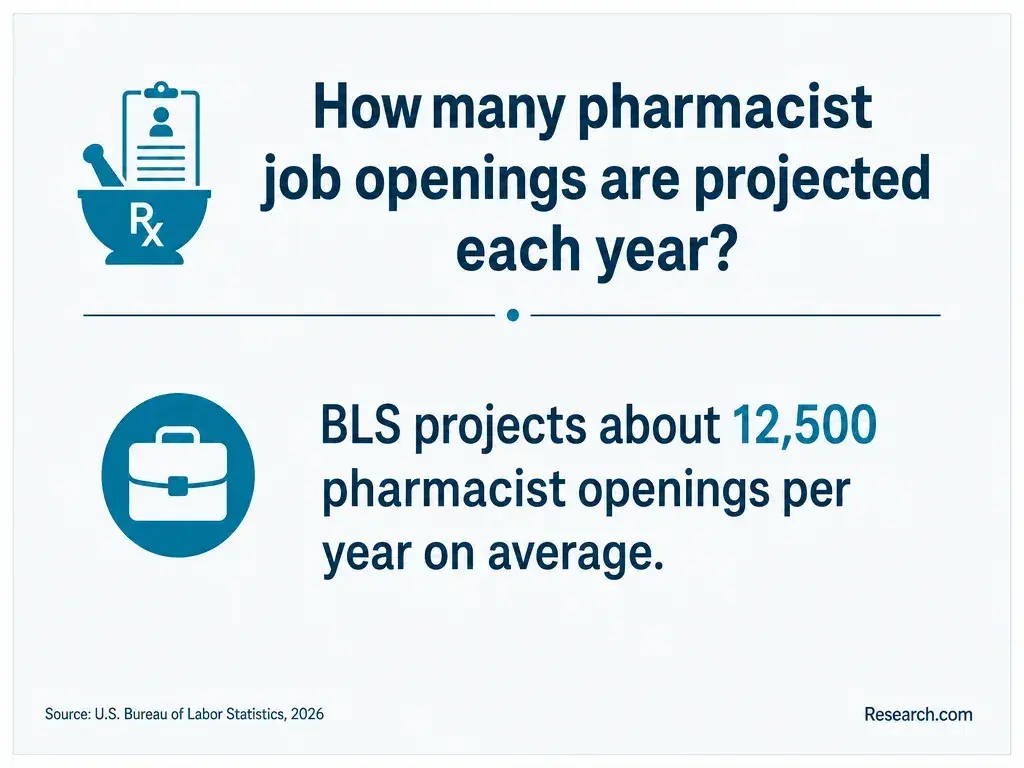
The U.S. Bureau of Labor Statistics reports median annual pay of $140,910 in May 2025 for pharmacists and projects 5% job growth, 2025-2035, with about 12,500 openings per year. These are occupation-wide figures, not predictions for a new graduate, a particular location, or a specialty role.
Direct employment after licensure is one route. A postgraduate year one (PGY1) residency offers structured general practice training; a postgraduate year two (PGY2) residency provides more focused training, typically after PGY1. Fellowships generally emphasize areas such as research or industry and are distinct from residencies. Board certification is a separate specialty credential with its own eligibility rules - not a substitute for a state license. Check a prospective employer's requirements before treating any of these options as mandatory. You can also explore accelerated online doctoral education if you need a shorter timeline to meet the requirements for licensure.
If you want to work with medications but not perform the responsibilities of a licensed pharmacist, compare the Pharm.D. with another role before taking on its cost. Pharmacy technician work, for example, is a separate occupation that does not ordinarily require a Pharm.D. Your best next decision is to identify the work you want, then confirm whether its legal and hiring requirements justify the professional degree.
Other Things You Should Know About PharmD
Do not assume it does. Technician experience can inform your career choice and application, but the Pharm.D. program decides how students meet its supervised experiential requirements.
Possibly. Schools set their own rules for international transcripts, course evaluation, and English-language documentation. Ask each admissions office which evaluation it accepts before ordering one.
No. A Pharm.D. is the professional pharmacy degree used in the usual U.S.-educated pharmacist pathway. A Ph.D. is a research degree and does not, by itself, qualify its holder for pharmacist licensure.
Yes, if you meet each school's application rules. Track program-specific prerequisites, supplemental materials, interviews, and deadlines separately, even when the schools use PharmCAS.
- Cost of Attendance (Budget) | 2025-2026 Federal Student Aid Handbook https://fsapartners.ed.gov/knowledge-center/fsa-handbook/2025-2026/vol3/ch2-cost-attendance-budget
- Pharmacist Licensure by Exam - Texas State Board of Pharmacy https://www.pharmacy.texas.gov/applicants/pharmacist-exam.asp
- Pharmacists | Kansas Board of Pharmacy https://www.pharmacy.ks.gov/licensing-registration/pharmacists
- Are Prerequisite Courses Barriers to Pharmacy Admission or the Keys to Student Success? - PMC https://pmc.ncbi.nlm.nih.gov/articles/PMC10159397/
- Pharmacist Licensure Guide | Department of State https://www.pa.gov/agencies/dos/resources/professional-licensing-resources/licensure-processing-guides-and-timelines/pharmacist-guide
- PharmD Program Prerequisites - Temple School of Pharmacy https://pharmacy.temple.edu/pharmdprereqs
- Prospective Students | Ernest Mario School of Pharmacy https://pharmacy.rutgers.edu/info-for/prospective-students/
- Pharmacy Admissions | University of Health Sciences and Pharmacy in St. Louis https://www.uhsp.edu/admissions/pharmd-admissions/
- How to Apply to the PharmD Program | Texas A&M University Irma Lerma Rangel College of Pharmacy https://pharmacy.tamu.edu/pharmd/apply.html
- Pharmacy Admissions | Albany College of Pharmacy and Health Sciences https://www.acphs.edu/admissions-aid/pharmacy-admissions/