
Pharmacist Salary by Degree and Certification

Co-Founder and Chief Data Scientist
A pharmacist's salary depends on more than the letters after their name. Practice setting, location, experience, and specialty responsibilities can matter as much as an additional credential. If you are weighing pharmacy school against its cost - or deciding whether postgraduate training or certification is worth pursuing - this guide separates the credentials required to practice from those that may expand your job options. You'll find a reliable salary benchmark, the limits of degree-by-degree pay comparisons, and practical criteria for deciding whether further education is likely to serve your career goals.
Key Things You Should Know
- The median annual pay for U.S. pharmacists was $140,910 in May 2025, according to the Bureau of Labor Statistics (BLS). That figure is for the occupation, not a guaranteed Pharm.D. starting salary or a certified-pharmacist salary.
- A Doctor of Pharmacy (Pharm.D.) is the standard professional degree for new U.S. pharmacists. State licensure is also required; a residency, fellowship, or specialty certification is not universally required.
- No single national pay figure establishes how much a board certification raises a pharmacist's salary. Compare the jobs it could make you eligible for with training time, fees, and any income you would give up.
What Is the Average Pharmacist Salary by Degree and Certification?
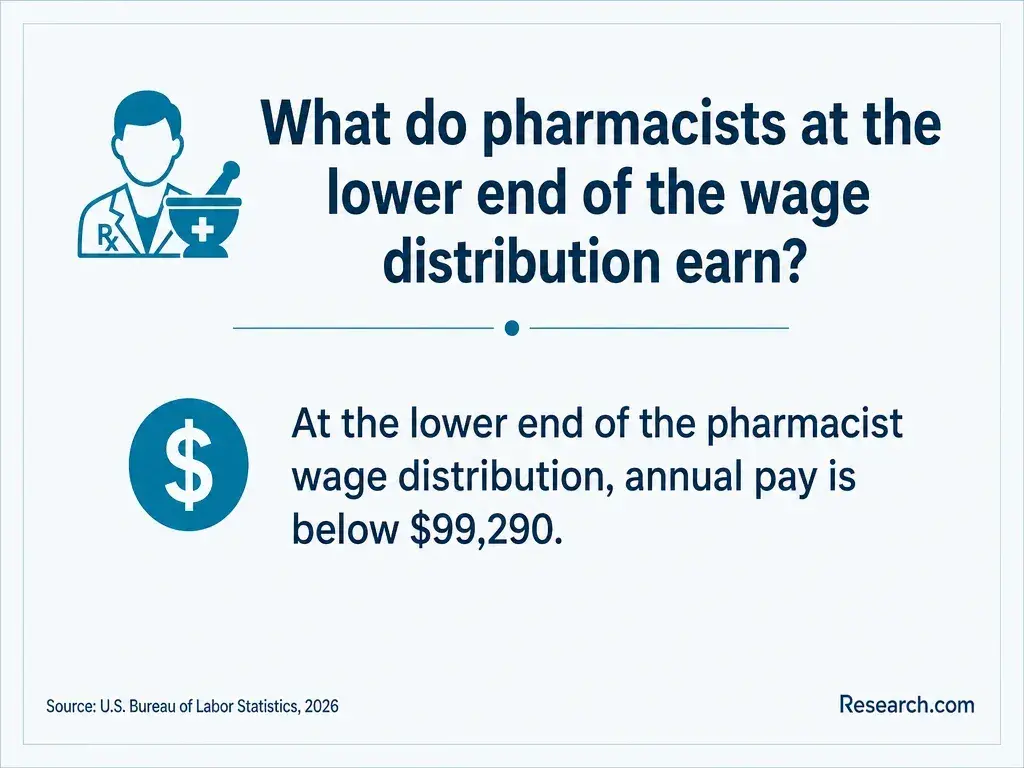
The best national benchmark is occupational pay, not a degree or certification premium. BLS reports median annual pay of $140,910 in May 2025 for pharmacists. A median means half of pharmacists earned more and half earned less; it combines workers across settings, experience levels, and credentials.
The comparison below shows what each credential can establish - and what the national salary figure cannot tell you.
| Education or credential | Relationship to pharmacist work | What the salary data can establish |
| Pharm.D. plus state license | Standard entry route for newly trained U.S. pharmacists | The BLS pharmacist median describes the occupation, not pay immediately after graduation. |
| Pharm.D. plus residency or fellowship | Additional training that may support specialized positions | The occupational median does not isolate a postgraduate-training premium. |
| Licensed pharmacist plus specialty board certification | Recognition of qualifying specialty expertise | There is no universal national raise attributable to certification alone. |
| Pharmacy technician education or certification | Preparation for a different occupation | Technician pay should not be presented as pharmacist pay. |
For a personal return-on-investment estimate, compare actual offers for the roles you could pursue before and after training. Include required fees, travel, and lost earnings - not just advertised tuition. An online pharmacy degree cost comparison can help organize costs, but confirm that any program under consideration leads to the credential your target job requires.
How Much Do Pharmacists Earn With a PharmD Degree?
A Pharm.D. graduate who obtains a pharmacist license enters the occupation for which BLS reports the $140,910 median annual pay in May 2025. That is not an entry-level Pharm.D. salary: the figure includes experienced pharmacists and does not separate graduates by degree, certification, employer, or location. It also cannot predict an individual offer.
Compare prospective jobs on base pay and the conditions attached to it. Evening or weekend schedules, management duties, clinical responsibilities, and local labor markets can change the value of an offer.
A higher salary may not compensate for substantially greater educational debt or a schedule you cannot sustain. Before enrolling, compare a school's full cost of attendance with plausible local job offers; online Doctor of Pharmacy tuition is only one component of that calculation.
Which Pharmacy Certifications Increase Pharmacist Earning Potential?
No pharmacist certification reliably increases pay by a fixed amount across employers. A credential is most valuable when it helps you qualify for a specific role, take on responsibilities an employer compensates, or compete for advancement.
Board of Pharmacy Specialties (BPS) credentials include specialties such as pharmacotherapy, ambulatory care, geriatrics, and oncology; eligibility rules differ by specialty and can involve practice experience or postgraduate training. Check the current BPS requirements before paying for preparation or an examination.
Board certification is distinct from a short course certificate, a pharmacy residency, and a pharmacist license. A postgraduate year one (PGY1) residency develops broader practice skills; a postgraduate year two (PGY2) residency focuses on a specialty.
A fellowship generally emphasizes a defined area such as research or industry. None automatically awards board certification, and certification does not authorize unlicensed practice.
Choose the position first, then examine its actual hiring criteria. If employers near you prefer a BPS credential for the work you want, ask whether they reimburse examination and renewal expenses or provide a pay differential. If the goal is a pharmacist role, be cautious with pharmacy degree programs with accelerated schedules: a short pharmacy-related credential is not necessarily a Pharm.D. or a route to pharmacist licensure.
For someone beginning U.S. pharmacist education today, the standard route is an Accreditation Council for Pharmacy Education (ACPE)-accredited professional Pharm.D. program, followed by satisfaction of state licensing requirements.
Some pharmacists hold older bachelor's-level professional pharmacy degrees and remain licensed under the rules that applied to their training; that history does not make a current bachelor's degree in pharmaceutical sciences, pharmacology, or pre-pharmacy a substitute for the Pharm.D.
Pre-pharmacy courses prepare applicants for the professional curriculum. A completed bachelor's degree may be useful, but whether it is required depends on the school. Review each program's pharmacy degree eligibility requirements, including prerequisite courses, labs, and minimum grades; meeting a published minimum does not guarantee admission.
ACPE accredits professional pharmacy programs, not individual pharmacists. Institutional accreditation and authorization to enroll an online student in a particular state are separate matters. Verify all three issues where relevant, along with the program's eligibility implications for the state in which you intend to seek a license.
The timeline has two parts: prerequisite undergraduate study and the professional Pharm.D. curriculum. Students commonly spend roughly two to four years completing prerequisites before entering a Pharm.D. program that typically takes three to four years, depending on its calendar and structure.
A prior bachelor's degree may satisfy some prerequisites, but a school must evaluate the actual courses and credits.
After graduation, licensure processing - and any optional residency or fellowship - adds time before a particular career move. An accelerated Pharm.D. schedule may shorten the academic calendar without reducing clinical requirements or making the workload easier to combine with paid work.
When comparing online doctoral study duration, confirm that the credential is specifically a professional Pharm.D.; the length of an unrelated doctorate says little about pharmacist eligibility.
Licensing requirements are set by the state or jurisdiction where you plan to practice. U.S.-educated applicants generally need an eligible pharmacy education, required practical experience, a passing North American Pharmacist Licensure Examination (NAPLEX) result, and any additional examinations and application steps their board requires. The NAPLEX tests pharmacy knowledge; passing it does not itself issue a license.
Jurisprudence requirements vary. A jurisdiction may use the Multistate Pharmacy Jurisprudence Examination (MPJE), the newer Uniform MPJE (UMPJE), another assessment, or different requirements.
Check the current state board and National Association of Boards of Pharmacy instructions rather than assuming one exam applies everywhere. Internationally educated applicants have a distinct eligibility pathway, which may include foreign-graduate certification.
Before paying a program deposit, confirm that its graduates can pursue licensure in your intended jurisdiction and whether you must register as an intern before experiential training. If you are still completing prerequisites, distinguish pharmacy program preparation requirements from licensing requirements: admission to a school and eligibility for a pharmacist license are separate decisions made by different authorities.
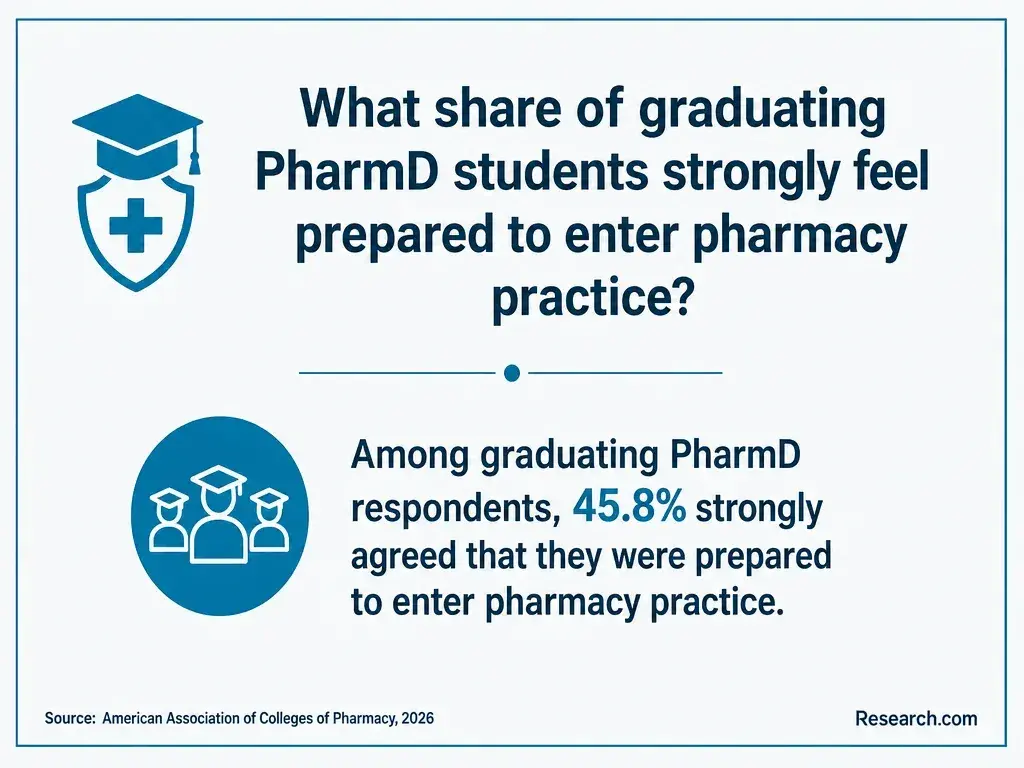
Professional Pharm.D. curricula build on prerequisite sciences and cover how medicines work, how they are prepared and used safely, patient assessment, therapeutics, communication, and the legal and ethical aspects of pharmacy practice.
Supervised introductory pharmacy practice experiences (IPPEs) introduce students to practice settings; advanced pharmacy practice experiences (APPEs) provide more extensive rotations later in the program. Coursework and simulations develop skills, but students practice within their training and supervision - not as independently licensed pharmacists.
Curriculum fit matters if you already have substantial undergraduate study. Ask the receiving school which transfer credits for pharmacy school it will apply to prerequisites or, where permitted, the professional curriculum. Prior science credits do not automatically replace Pharm.D. courses or rotations.
Some professional Pharm.D. programs deliver portions of instruction online or in a hybrid format. "Online" does not mean fully remote or self-paced: hands-on activities, assessments, campus visits, IPPEs, and APPEs may require attendance at specified times and locations. Placement arrangements, travel costs, and permission to use a local site depend on the program and applicable state rules.
When reviewing Doctor of Pharmacy distance learning programs, confirm current ACPE professional-program accreditation, authorization to enroll students in your state, the in-person schedule, who approves rotation sites, and licensure eligibility where you intend to work. State authorization for online study is not the same as approval for a clinical placement or a pharmacist license.
Once licensed, pharmacists may seek positions in community pharmacies, hospitals and health systems, ambulatory care, long-term care, specialty pharmacy, and other settings.
Responsibilities differ: a community role may center on dispensing, counseling, and medication access, while a hospital or clinic role may involve closer collaboration with care teams. Employers determine whether a particular position calls for experience, residency training, specialty certification, or neither.
New graduates should compare job postings before committing to optional training. If you are transitioning into a Doctor of Pharmacy program from a science background, assess whether your target job actually requires pharmacist licensure.
Research, regulatory, and other pharmacy-adjacent work may have different entry routes; a Pharm.D. is a substantial investment if the role you want does not require it. Pharmacy technician work is also a separate occupation, not a lower-paid pharmacist position.
What Is the Job Outlook for Pharmacists?
BLS projects 5% growth in pharmacist employment from 2025 to 2035 and about 12,500 openings per year over that period. Openings include positions arising from workers leaving the occupation as well as growth. These national projections do not establish demand for a particular specialty, city, or new graduate.
Use the outlook alongside local evidence: recent postings, required credentials, available rotation settings, and compensation for schedules you would accept. Pharm.D. programs for a faster path may reduce time away from earnings, but compare their total cost, workload, and clinical-placement logistics before treating speed as a financial advantage.
For a salary-driven decision, obtain the full cost and expected completion timeline from each school, then compare them with real positions in your intended market. Pursue residency or certification when target employers value it - not because a national pharmacist median appears to promise a return.
Other Things You Should Know About PharmD
Often, but employer pay structures vary. Compare the complete offer and use relevant experience, schedule demands, and local job alternatives to support a specific request.
No. A one-time bonus is different from recurring base pay. Check when it is paid, whether it must be repaid if you leave, and how benefits affect the overall offer.
Not automatically. Licensure is jurisdiction-specific, and a pharmacist seeking another state license must meet that board's current requirements. A specialty certification does not replace the new license.
Some employers reimburse examination, renewal, or preparation costs, but policies differ. Ask for the terms in writing, including any employment commitment tied to reimbursement.
- Role of Pharmacy Residency Training in Career Planning - PMC https://pmc.ncbi.nlm.nih.gov/articles/PMC4319808/
- How Much Do Pharmacists Make? Salary, Pay and Career Outlook | PCOM https://www.pcom.edu/pharmacy/news/how-much-do-pharmacists-make.html
- Survey Results Highlight Value of Experience, Certifications for Pharmacist Salaries | Pharmacy Times https://www.pharmacytimes.com/view/survey-results-highlight-value-of-experience-certifications-for-pharmacist-salaries
- Frequently Asked Questions About Board Certification | accp.com https://www.accp.com/careers/boardFAQ.aspx
- About BPS | bpsweb.org https://bpsweb.org/about-bps/


