PharmD tuition planning for the 2026-2027 academic year

Co-Founder and Chief Data Scientist
A pharmacy school tuition quote rarely tells you what you will need to pay - or borrow - to become a pharmacist. Prerequisites, required fees, clinical rotations, and the time away from paid work can change the comparison between programs. Federal borrowing rules also changed for many new graduate and professional students beginning July 1, 2026. This guide is for prospective Doctor of Pharmacy (Pharm.D.) students comparing 2026-2027 offers. It shows you how to build a full-cost estimate, test whether your funding plan is workable, and avoid paying for a pathway that does not meet your licensing goals.
Key Things You Should Know
- Compare each school's 2026-2027 total cost of attendance and remaining program cost, not tuition alone; rotation travel, fees, and prerequisite courses can change which offer costs less.
- Federal borrowing rules changed for many new graduate and professional students beginning July 1, 2026. Confirm your classification, eligibility, and any transitional exception with each school's financial aid office before relying on loans.
- Verify the specific Pharm.D. program's ACPE status before committing. A degree alone does not grant a pharmacist license, so include postgraduation licensing costs and time in your plan.
What Does PharmD Tuition Typically Include?
Published tuition generally pays for instruction in the professional Pharm.D. curriculum. It does not necessarily include mandatory university or program fees, books, clinical-reference subscriptions, a computer, lab supplies, or testing charges. Ask whether the quoted rate is per credit, per term, or per academic year and whether summer enrollment is billed separately.
Budget separately for undergraduate prerequisite courses completed before professional admission. Schools may also require background checks, immunizations, intern registration, and travel or temporary housing for in-person clinical rotations. These costs can change as students move from classroom learning to practice sites. If you plan to take prerequisites online, compare online pharmacy course completion timelines with each Pharm.D. program's prerequisite and lab-acceptance rules before paying for courses.
How Much Does a PharmD Program Cost?
There is no single defensible national tuition price for a 2026-2027 Pharm.D. applicant: a school may charge by credit or term, offer different residency rates, or require a different number of remaining terms. The most useful comparison is each applicant's projected remaining cost through graduation, using the school's current published charges and a written estimate for later years. Future tuition increases are uncertain.
Use this comparison sheet for every offer. Enter the school's 2026-2027 figures, mark later-year figures as estimates, and keep living expenses separate from school charges so you can see what is driving the difference.
| Cost field | Program A | Program B |
| Tuition basis and residency rate | ________ | ________ |
| Remaining terms and expected tuition | ________ | ________ |
| Mandatory fees, materials, and technology | ________ | ________ |
| Prerequisites still needed | ________ | ________ |
| Rotation, campus, and licensing expenses | ________ | ________ |
| Living expenses and foregone earnings | ________ | ________ |
| Confirmed grants and scholarships | ________ | ________ |
| Amount still to fund | ________ | ________ |
A lower advertised rate may lose its advantage if it requires extra terms or substantial travel. Use a low-cost online pharmacy doctorate comparison as a starting point, then request an individualized cost estimate from each school; an online label does not eliminate in-person requirements.
How Can Students Pay for PharmD Tuition?
Start with the school's financial aid offer, then separate money that does not need repayment from borrowing. Scholarships, institutional aid, employer assistance, savings, and federal or private loans have different eligibility rules and risks. Filing the Free Application for Federal Student Aid (FAFSA) allows a school to assess federal aid eligibility; it does not establish that every expense can be borrowed.
Federal loan rules changed for many new graduate and professional borrowers beginning July 1, 2026, including changes affecting Grad PLUS access and borrowing limits. Eligibility can depend on the student's status and applicable transitional provisions. Ask the financial aid office which rules apply to you, what it classifies as allowable cost of attendance, and whether its projected aid covers each remaining year. Do not fill a funding gap with a private loan until you have compared its terms and repayment protections.
Prior coursework can also reduce the amount you need to fund, but the receiving school decides whether credit applies. Confirm pharmacy degree credit transfer policies in writing before treating previously earned credits as savings.
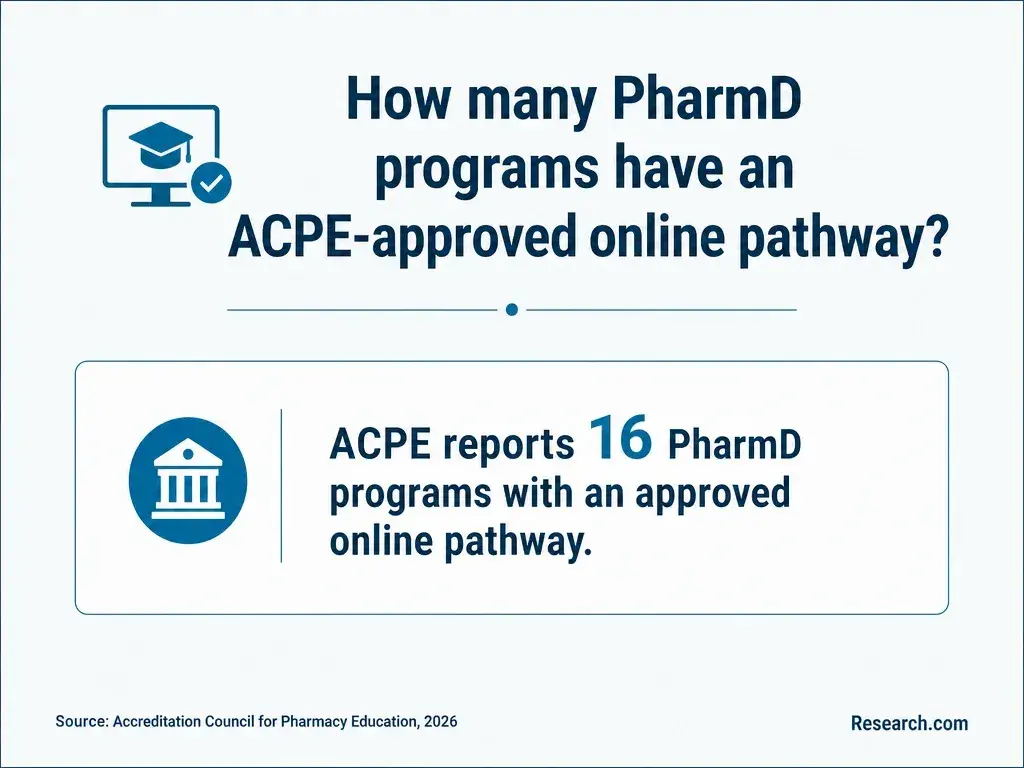
The Accreditation Council for Pharmacy Education (ACPE) accredits professional Pharm.D. programs. Because status belongs to a specific program and can change, check ACPE's current program directory for every school on your shortlist, including the listed status and location. Do not substitute a school's institutional accreditation for Pharm.D. program accreditation.
For an online or hybrid option, make three separate checks: ACPE professional-program status, the school's authorization to enroll a student in your state, and whether your intended licensing jurisdiction will accept your educational and experiential pathway. Compare online Pharm.D. schools to compare against those checks and the full-cost worksheet, rather than assuming a remote format is less expensive or available everywhere.
Pharm.D. applicants generally complete specified undergraduate prerequisites before entering the professional curriculum, but schools set their own course, lab, grade, credit, and degree requirements. A completed bachelor's degree is not universally required. Check whether courses may still be in progress when you apply and when all requirements must be finished; apply to pharmacy school while finishing prerequisites only if the program permits it.
Some schools use the Pharmacy College Application Service (PharmCAS); others set their own processes. Compare transcript, recommendation, interview, supplemental-application, deposit, and deadline requirements for your intended entry cycle. The Pharmacy College Admission Test (PCAT) was retired in January 2024, so do not budget for it as a current entrance exam. From a tuition perspective, the key admissions question is how many additional courses you must pay for before your professional-program aid package begins.
Time depends on prerequisites already completed and the program's professional-course sequence. A conventional professional curriculum commonly spans four academic years after prerequisites; accelerated schedules may compress the calendar by using additional terms. A shorter calendar does not necessarily mean fewer courses, a lower total bill, or more opportunity to work.
When comparing faster Doctor of Pharmacy routes, ask for the term-by-term calendar, summer charges, rotation schedule, and realistic work-hour expectations. Include the earnings you might give up during an intensive term. Choose an accelerated route only if its verified time savings outweigh its added scheduling and financing pressure.
The professional curriculum builds on undergraduate science prerequisites rather than replacing them. Pharm.D. students study topics such as pharmacology, pharmacotherapy, medication safety, patient assessment, pharmacy law, and communication, then apply that learning in supervised practice. Introductory pharmacy practice experiences (IPPEs) and advanced pharmacy practice experiences (APPEs) have different purposes and may create different travel and scheduling costs.
Read a prospective school's actual curriculum and fee schedule to see which labs, learning resources, and practice experiences carry separate charges. Shorter online pharmacy education options may suit someone seeking a different pharmacy-related role, but a short course or technician credential does not replace the professional Pharm.D. pathway to pharmacist licensure.
Online or hybrid Pharm.D. instruction is available, but "online" does not mean fully remote, self-paced, or free of location costs. Programs can require scheduled live classes, campus labs, in-person assessments, and supervised IPPEs and APPEs. Clinical sites may require travel, schedule changes, immunizations, background checks, or state intern registration.
If you are considering online Pharm.D. options for science graduates, ask who finds and approves rotations, whether placements are possible near your home, and what happens if a site falls through. Confirm state authorization and your intended board's licensure requirements separately. An online delivery format does not itself establish licensing eligibility.
For U.S.-educated graduates, the North American Pharmacist Licensure Examination (NAPLEX) is a major examination in the state licensing process. Jurisprudence requirements differ by jurisdiction: a board may require the Multistate Pharmacy Jurisprudence Examination (MPJE), the Uniform Multistate Pharmacy Jurisprudence Examination (UMPJE), another assessment, or a different process. Some jurisdictions began transitioning from MPJE to UMPJE in 2026. Confirm current requirements, fees, intern-hour rules, and application steps with the board where you intend to practice.
Graduation and exam passage do not, by themselves, issue a pharmacist license. When estimating how long online doctoral programs take, leave room after the academic calendar for licensing applications and examinations - and budget their costs separately from tuition.
What Careers, Salaries, and Job Outlook Follow a PharmD?
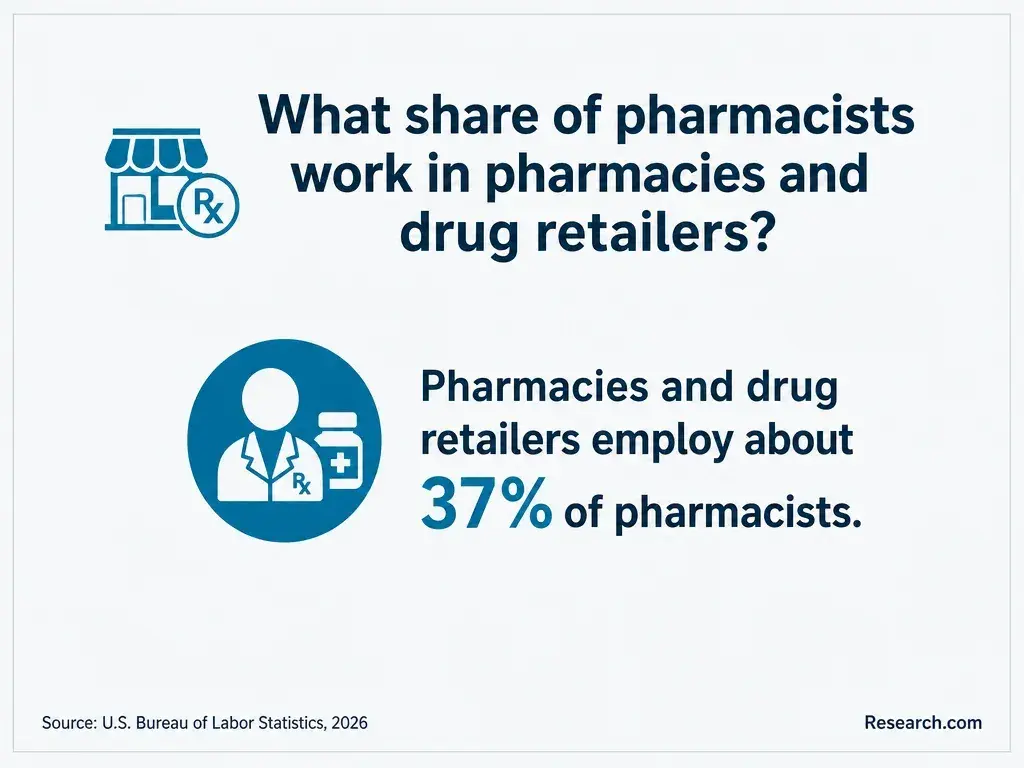
Licensed pharmacists work in settings that include community pharmacies, hospitals, ambulatory care, and specialty pharmacy. The Bureau of Labor Statistics reports $140,910 in May 2025 as the median annual pay for pharmacists and projects 5% growth, 2025-2035, with about 12,500 openings per year. These occupation-wide figures are context for a long-term investment, not a prediction of an individual graduate's starting pay or ability to repay loans.
Some roles favor postgraduate training. A residency is supervised practice training; a fellowship typically emphasizes a specialized area such as research or industry. Board certification is a separate credential, not a pharmacist license. None is universally required for pharmacist employment, and each can affect the time before you reach your intended role.
If your goal is pharmacist practice, compare the complete Pharm.D.-to-licensure cost with your likely financing and preferred work setting. If you want a pharmacy-adjacent role instead, investigate whether a less extensive credential meets that goal. Start with understanding pharmacy school admissions only after deciding that the pharmacist pathway - not simply working in a pharmacy - is the one you need.
Other Things You Should Know About PharmD
Check the deposit deadline and refund policy first. If aid details are pending, request a written estimate and ask whether the school can extend your decision deadline; do not assume the deposit is refundable.
Only if its written terms say so and you continue to meet them. Check renewal criteria, award duration, and whether the amount changes during clinical years.
Ask the school when residency is determined and whether a change would affect later tuition bills. Do not budget a future in-state rate without written confirmation of the applicable rules.
No. Each school builds its own estimate, and your housing, transportation, and rotation arrangements may differ. Use consistent personal assumptions alongside each school's published allowances.
- One Big Beautiful Bill Act - Important Definitions https://studentaid.gov/announcements-events/big-updates/definitions
- Cost of Attendance (Budget) | 2026-2027 Federal Student Aid Handbook https://fsapartners.ed.gov/knowledge-center/fsa-handbook/2026-2027/vol3/ch2-cost-attendance-budget
- 2026-2027 Pharmacy (Pharm. D.) Tuition and Fees | Bursar's Office https://bursar.uconn.edu/tuition-fees/undergraduate/2026-2027/pharmacy-pharm-d/
- Pharmacy (PharmD) - Bouvé College of Health Sciences https://bouve.northeastern.edu/programs/pharmacy-pharmd/
- Cost of Attendance | wisc.edu https://financialaid.wisc.edu/cost-of-attendance/
- Cost of Attendance - Financial Aid and Scholarships | The University of Utah https://financialaid.utah.edu/tuition-and-fees/cost-of-attendance.php
- Residency For Tuition Purposes - Registrar's Office | Western Washington University https://registrar.wwu.edu/residency-tuition-purposes
- FAQ | OSU College of Pharmacy - Oregon State University https://pharmacy.oregonstate.edu/programs-admissions/pharm-d/faq
- Key Changes to Federal Student Loans | MUSC https://education.musc.edu/admissions-aid/financial-aid/student-loans/key-changes-federal-student-loans
- Experiential Education - Albany College of Pharmacy and Health Sciences https://www.acphs.edu/pharmacy/doctor-of-pharmacy-pharmd/experiential-education/