
Pediatric Pharmacist Career Path and Training

Co-Founder and Chief Data Scientist
Becoming a pediatric pharmacist takes more than an interest in children's health: you need a path to pharmacist licensure and, for many specialized jobs, additional clinical training. If you are comparing pharmacy schools or considering a move into pediatric practice, the distinctions between a Pharm.D., residency, and board certification matter. This guide explains what each step does, how long the path can take, where pediatric pharmacists work, and which costs and program details to check before committing.
Key Things You Should Know
- The standard U.S. route is prerequisite coursework, a professional Pharm.D. degree, and state pharmacist licensure; there is no separate pediatric pharmacist license.
- A pediatric residency can strengthen an application for specialized clinical roles, but it is not required for every pediatric pharmacy job. Board certification is a separate, optional credential.
- The Bureau of Labor Statistics reports $140,910 in May 2025 as the median annual pay for pharmacists overall - not specifically pediatric pharmacists.
What does a pediatric pharmacist do?
A pediatric pharmacist helps ensure medication therapy is appropriate for infants, children, and adolescents. Depending on the setting, the work can include reviewing weight-based doses, checking formulations and interactions, monitoring treatment, advising care teams, and explaining medicines to patients and caregivers. Children's changing size and development make careful calculations and age-appropriate communication especially important.
Some positions involve direct participation in hospital rounds; others focus on dispensing, medication safety, specialty therapies, or outpatient counseling. A pharmacy technician may assist with preparing and distributing medicines under applicable supervision but does not have a pharmacist's clinical or legal responsibilities. If your goal is a support role rather than pharmacist licensure, compare shorter online pharmacy education options without assuming they qualify you to practice as a pharmacist.
What education is required to become a pediatric pharmacist?
You generally need a Doctor of Pharmacy (Pharm.D.) from a program that meets your state's licensure requirements. Before entering the professional curriculum, applicants complete school-specific undergraduate prerequisites. These pre-pharmacy courses are not themselves a Pharm.D., and a completed bachelor's degree is not universally required.
The Pharm.D. teaches medication science and patient care and includes supervised introductory and advanced pharmacy practice experiences, commonly called IPPEs and APPEs. Pediatric electives, projects, or rotations can help you test your interest, but their availability varies. Compare each school's current pharmacy program applicant requirements, including science courses, labs, grades, and application deadlines. The PCAT was retired in January 2024 and is not a current admissions exam.
How do you become a licensed pediatric pharmacist?
There is no separate U.S. pediatric pharmacist license. After qualifying through a Pharm.D. program, a graduate applies to a state board of pharmacy, satisfies its experiential and other requirements, and completes the required examinations. The North American Pharmacist Licensure Examination (NAPLEX) assesses pharmacy practice knowledge; a jurisdiction may also require a law examination, such as the MPJE or UMPJE, or use another process. Requirements vary by jurisdiction, and passing an exam alone does not issue a license.
Check the board where you intend to practice before selecting a school or planning rotations, particularly if you may need intern registration in another state. If missing prerequisites delay your application, pharmacy application eligibility pathways may be worth exploring - but an admissions pathway never waives licensure requirements. Internationally educated pharmacists should check the separate certification and state-board rules that apply to them.
Look for an Accreditation Council for Pharmacy Education (ACPE)-accredited professional Pharm.D. program, rather than a degree advertised as a separately accredited "pediatric pharmacy" program. Confirm the specific program and its current status in ACPE's directory. A university's institutional accreditation is different from ACPE professional-program accreditation; neither automatically establishes authorization to enroll an online student in another state.
For a pediatric focus, compare verified opportunities within eligible Pharm.D. programs: pediatric rotations, faculty expertise, children's hospital partnerships, and whether students must compete for limited placements. The receiving school decides whether prior coursework applies, so investigate pharmacy school credit transfer options before paying a deposit. Postgraduate pediatric residencies have a separate ASHP accreditation process; they are not Pharm.D. degree programs.
The professional Pharm.D. foundation typically covers pharmacology, therapeutics, pharmacokinetics, calculations, medication safety, and patient communication. Pediatric-focused learning applies those skills to developmental differences, age-appropriate formulations, caregiver counseling, and conditions encountered in children. The exact course names, elective access, and rotation assignments depend on the school.
A biology or chemistry background may help with the science prerequisites, but it does not replace professional clinical training. When comparing online pharmacy programs for science-background students, inspect the published curriculum and ask how pediatric cases, supervised practice, and pediatric rotation requests are handled. A pediatric lecture or simulation is useful preparation, not a substitute for treating patients under appropriate supervision.
Timing depends on the prerequisites you have already completed, the Pharm.D. program's calendar, and whether you pursue residency. The stages below separate the route to licensure from optional specialty preparation.
| Stage | Typical duration | What it contributes |
| Pre-pharmacy prerequisites | Varies by school and prior credit | Eligibility to apply to a Pharm.D. program |
| Professional Pharm.D. | Often four academic years; some programs use accelerated calendars | Professional classroom and supervised practice education |
| Licensure process | Varies by jurisdiction and applicant | Legal eligibility to practice once all board requirements are met |
| Optional PGY1, then pediatric PGY2 residency | Generally one year at each level | Progressively focused clinical training |
A PGY1 is a first-year postgraduate residency; a pediatric PGY2 is a second-year specialty residency. Neither is automatically necessary for every position. Compare pharmacy doctorate program length against total cost, breaks, rotation scheduling, and time available for work - not just the advertised graduation date.
Some Pharm.D. programs offer online or hybrid classroom instruction, but professional pharmacy education still includes hands-on requirements and in-person clinical experiences. "Online" does not necessarily mean self-paced: scheduled classes, campus sessions, assessments, and rotations may limit your ability to keep a full-time job.
For any online Pharm.D. program options, verify ACPE status, authorization for your location, required campus visits, and how the school arranges or approves IPPE and APPE sites. Ask whether pediatric placements are available, competitive, or likely to require travel. State authorization to enroll, approval of a clinical site, and eligibility for pharmacist licensure are separate questions.
A pharmacist seeking intensive clinical training may pursue a PGY1 residency followed by a pediatric PGY2. ASHP-accredited residencies have program-specific eligibility and application rules; participating programs may use PhORCAS and the ASHP Match. Direct employment can also provide pediatric experience, so compare actual job postings before treating residency as mandatory.
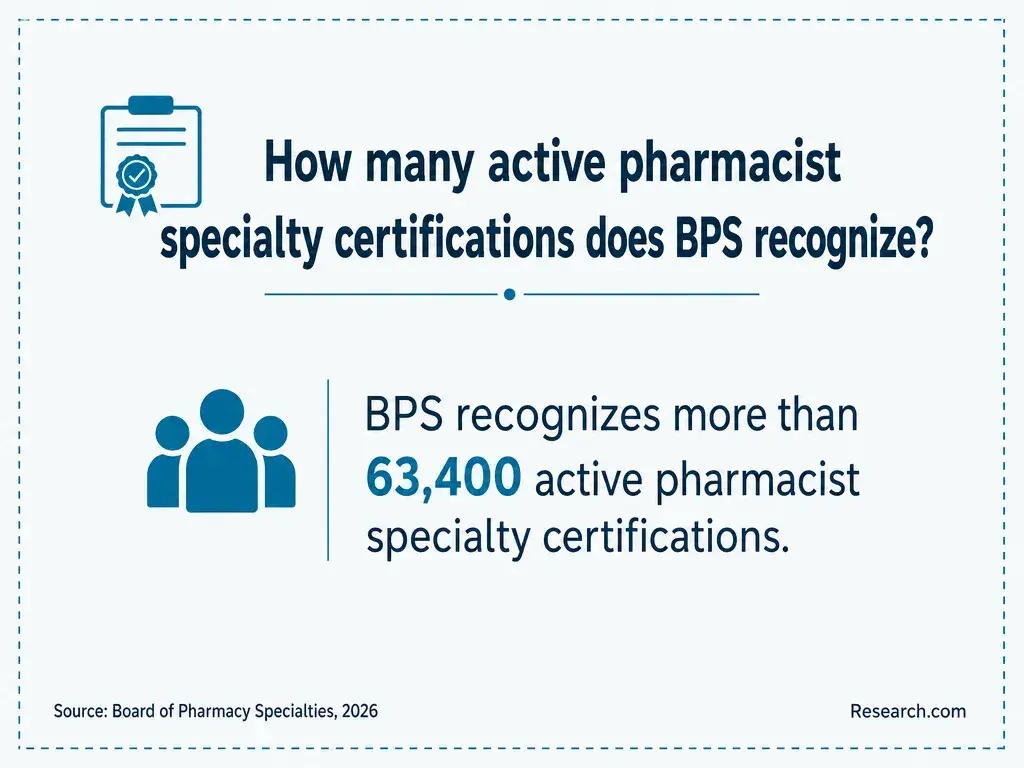
The Board of Pharmacy Specialties offers Board Certified Pediatric Pharmacy Specialist (BCPPS) certification to pharmacists who meet its current eligibility and examination requirements. Certification documents specialty knowledge; it does not replace state licensure. A fellowship generally emphasizes research or another defined area and is not interchangeable with a clinical residency. Claims about online pharmacy education duration should not be mistaken for a shortcut through Pharm.D. education, licensure, or pediatric specialty training.
Potential settings include children's hospitals, neonatal and pediatric intensive care units, general hospital pharmacies, outpatient clinics, community pharmacies, and specialty pharmacies serving children. Responsibilities and hiring expectations differ: an intensive care clinical position may favor pediatric residency training, while another role may accept a licensed pharmacist with relevant experience.
Read postings for required licensure, preferred residency or BCPPS status, patient-care duties, and scheduling demands. If you are exploring adjacent work in research or pharmaceutical science instead, fast online doctoral study should be judged against that career's requirements - not treated as an alternative credential for a licensed pediatric pharmacist position.
How much do pediatric pharmacists earn, and what is their job outlook?
The Bureau of Labor Statistics reports median annual pay of $140,910 in May 2025 for pharmacists overall. That figure is useful context, not a pediatric-specific salary or a prediction of an individual offer. Employer, location, experience, duties, and training can affect compensation.
BLS projects 5% growth for pharmacists from 2025-2035, with about 12,500 openings per year. Those projections cover the broader occupation, so they do not establish how many pediatric specialty positions will be available. Before accepting the cost of a program or residency path, use Pharm.D. tuition planning to compare tuition with fees, rotation travel, living costs, and time away from paid work. Check current financial-aid terms for your enrollment date; federal borrowing rules changed for many new graduate and professional borrowers beginning July 1, 2026.
Other Things You Should Know About PharmD
Ask to shadow pharmacists in more than one pediatric setting, if available. Notice how much time they spend checking orders, communicating with caregivers, and working with other clinicians - not only interacting directly with children.
Yes, depending on the position. Relevant experience, continuing education, mentorship, and supervised exposure may help; some specialized employers prefer or require residency training.
They use continuing education, clinical literature, workplace training, and professional resources. State license-renewal requirements vary, and maintaining an optional board certification has separate rules.
Prescribing or modifying therapy depends on state law, the practice setting, and any applicable collaborative-practice agreement or other authorization. A pediatric specialty title alone does not grant prescribing authority.
- Medication Dispensing Errors and Prevention - NCBI - NIH https://www.ncbi.nlm.nih.gov/books/NBK519065/
- NYS Pharmacy: License Requirements - Office of the Professions https://www.op.nysed.gov/professions/pharmacist/license-requirements
- Pharmacist Licensure by Exam - Texas State Board of Pharmacy https://www.pharmacy.texas.gov/applicants/pharmacist-exam.asp
- Pharmacist's Role in Medication Safety | PSNet https://psnet.ahrq.gov/primer/pharmacists-role-medication-safety
- Pharmacist Licensure Guide | Department of State https://www.pa.gov/agencies/dos/resources/professional-licensing-resources/licensure-processing-guides-and-timelines/pharmacist-guide
- What Is Pediatric Pharmacy? How to Become a Pediatric Pharmacist | PCOM https://www.pcom.edu/pharmacy/news/what-is-pediatric-pharmacy.html
- Pediatrics | Retzky College of Pharmacy - Chicago | Rockford https://pharmacy.uic.edu/programs/residency-and-fellowship/pgy2-residency-programs/pgy2-pediatrics/
- PGY2 Pediatrics - OU College of Pharmacy https://pharmacy.ouhsc.edu/academics-programs/residency-and-fellowship-programs/pgy2-programs/pediatrics
- minimum educational qualification standards for pharmacists | ashp.org https://www.ashp.org/Pharmacy-Practice/policy-positions-database/2019/1918
- PGY2 Pediatric Pharmacy Residency | Texas Children's https://www.texaschildrens.org/health-professionals/education-and-training/fellowships-and-residencies/pharmacy-residency-1


