Informatics Pharmacist Career Path and Skills

Co-Founder and Chief Data Scientist
Pharmacy informatics can be a strong fit if you want to improve medication use through technology rather than spend every shift dispensing or providing direct care. But the path depends on your goal: designing clinical medication workflows as a pharmacist is different from supporting pharmacy software in a nonpharmacist role. This guide explains the education, license, experience, and technical skills employers may expect, along with the costs and career trade-offs to weigh before committing to a Pharm.D. or additional training.
Key Things You Should Know
- An informatics pharmacist typically combines a Pharm.D., an active pharmacist license, medication-use experience, and the ability to improve electronic systems; residency is valuable for some jobs but not universally required.
- A typical U.S. Pharm.D. professional curriculum takes four years after required pre-pharmacy coursework; an optional postgraduate year one (PGY1) residency and PGY2 informatics residency add further training time.
- The Bureau of Labor Statistics reports median pay of $140,910 in May 2025 for pharmacists and projects 5% growth from 2025-2035. Those figures cover pharmacists broadly, not informatics positions specifically.
What does a pharmacy informatics pharmacist do?
A pharmacy informatics pharmacist applies clinical pharmacy knowledge to the systems that support medication prescribing, verification, dispensing, administration, and monitoring.
Depending on the employer, the job may involve configuring medication records in an electronic health record (EHR), testing clinical decision-support alerts, maintaining formulary data, investigating medication-related system errors, or training staff before a software change.
The work is collaborative: pharmacists translate clinical requirements for analysts and developers, then check whether the resulting workflow is safe and usable for prescribers, nurses, technicians, and pharmacy staff.
An informatics pharmacist may also analyze medication-use data, but a system change generally needs organizational review and approval rather than one employee's clinical judgment alone.
Decide whether you want the pharmacist's responsibilities or primarily the technology work. Pharmacy analysts, application specialists, and technicians can contribute to these systems without qualifying to practice as pharmacists.
If that distinction changes your education decision, compare low-cost and shorter pharmacy degree programs carefully: a shorter credential is not a substitute for a licensable Pharm.D.
How do you become a pharmacy informatics pharmacist?
There is no single mandatory informatics track. Most pharmacist-level routes begin with an Accreditation Council for Pharmacy Education (ACPE)-accredited professional Pharm.D. program, followed by the requirements for a pharmacist license in the intended state. Relevant practice experience helps because employers need someone who understands where medication workflows can fail.
The steps below show where you can build informatics experience without assuming that residency is the only entry point:
- Complete the prerequisites required by your chosen Pharm.D. programs and earn the professional degree, including its supervised practice experiences.
- Meet your state board's pharmacist licensure requirements, which generally include the NAPLEX and may include a jurisdiction-specific law examination or other requirements.
- Seek medication-safety, EHR, automation, or data-quality projects during rotations or pharmacist employment; document your contribution and the review process.
- Compare direct-entry informatics jobs with PGY1 training followed by a PGY2 pharmacy informatics residency, considering each employer's actual hiring requirements.
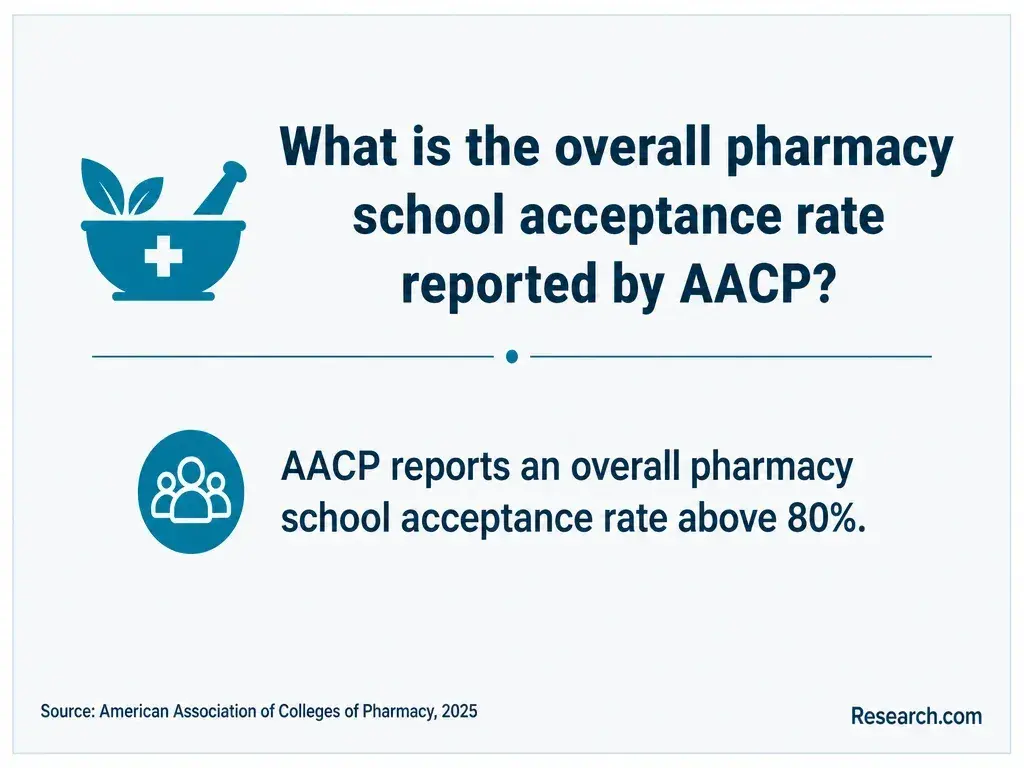
If you have not entered pharmacy school, compare admission pathways for pharmacy students against each school's current prerequisites and application rules. A prior science or technology degree can strengthen an application but does not replace the professional pharmacy degree for pharmacist licensure.
What degree is required for pharmacy informatics careers?
For a position that requires someone to practice or be hired as a pharmacist, plan on a licensure-qualifying pharmacy education and state pharmacist licensure. U.S.-educated candidates ordinarily earn an ACPE-accredited Pharm.D.; internationally educated pharmacists have a separate credential-evaluation and licensure pathway. Informatics jobs that do not require pharmacist status may accept other degrees or relevant experience.
This comparison separates the credential needed for pharmacist practice from education that can support a technology career.
| Education route | Potential fit | Key limitation |
| Professional Pharm.D. | Pharmacist-level medication workflow and clinical informatics roles | Degree completion alone does not grant a pharmacist license |
| Pharm.D. plus informatics residency or graduate study | Roles seeking deeper implementation, research, or leadership experience | Extra time and expense do not guarantee a specialist job |
| Information systems, health informatics, or related degree | Analyst and technology roles that do not require pharmacist practice | Does not independently qualify a graduate for pharmacist licensure |
Pre-pharmacy courses are undergraduate preparation, not the professional Pharm.D. curriculum; a bachelor's degree is not universally required for Pharm.D. admission. Students with a prior science degree can compare online pharmacy programs for science-background students, while checking each school's actual prerequisite and transfer policies.
An informatics job title does not create a separate nationwide pharmacist license. If the position requires pharmacist licensure, the relevant state board determines eligibility, examinations, application steps, and any ongoing renewal requirements.
The North American Pharmacist Licensure Examination (NAPLEX) tests pharmacy practice knowledge; passing it alone does not issue a license. Jurisprudence requirements vary: a jurisdiction may use the MPJE, the newer UMPJE, another process, or no separate law exam.
Check the board for the state where you intend to practice and read the job posting's license language. This matters particularly for remote positions: working from home does not automatically remove state licensing or employer restrictions.
If comparing leading online pharmacy degree programs, verify ACPE professional-program accreditation and intended-state licensure eligibility separately from the school's permission to enroll distance learners.
The strongest candidates connect clinical judgment with careful system design. They can explain why a medication order, alert, or dispensing workflow matters to patient safety and can test whether a proposed change works in practice. Technical fluency helps, but familiarity with an EHR is not the same as demonstrated proficiency configuring or evaluating one.
Look for opportunities to develop evidence in these skill areas, rather than collecting software names on a résumé:
- Medication-use knowledge: prescribing, dispensing, administration, clinical verification, and error prevention.
- Workflow analysis: mapping how different professionals use a system and identifying unintended consequences of changes.
- Data and testing: checking data quality, interpreting reports, documenting test cases, and validating results before implementation.
- Communication and governance: translating clinical needs into specifications, training users, and escalating safety concerns through the proper review process.
Prior experience in biology, coding, analytics, or project management can transfer, but it does not replace pharmacy-specific clinical preparation for pharmacist roles. Applicants with previous college coursework should investigate pharmacy admissions for students with prior credits rather than assume those skills waive missing prerequisites.
A Pharm.D. supplies the clinical foundation through subjects such as pharmacology, therapeutics, medication safety, pharmacy law, and supervised patient-care experiences. Informatics preparation may come through electives, projects, residency training, or separate graduate coursework.
Topics can include health data standards, clinical decision support, database concepts, workflow design, quality improvement, privacy, and implementation evaluation.
Course titles alone are a weak measure of career preparation. Ask whether students actually test medication workflows, analyze appropriately protected data, work with clinical users, and receive feedback on a completed project. Also distinguish introductory pharmacy practice experiences (IPPEs) and advanced pharmacy practice experiences (APPEs) from an optional postgraduate residency.
If prior coursework could shorten your route, request a school-specific pharmacy prerequisite credit evaluation. Acceptance of undergraduate prerequisites does not mean the school will award credit within its professional Pharm.D. curriculum.
Accreditation depends on the credential, not whether some classes are online. ACPE accredits professional pharmacy degree programs; institutional accreditation applies to the college or university. A separate informatics master's degree or certificate should not be described as an ACPE-accredited Pharm.D. just because it is offered by a pharmacy school.
An online or hybrid Pharm.D. may still require scheduled classes, in-person labs, campus visits, and supervised IPPE and APPE placements.
State authorization to enroll an online student is also distinct from ACPE accreditation, approval of clinical placements, and eligibility for pharmacist licensure in a particular state. Compare those requirements before treating short online doctorate programs as interchangeable with professional pharmacy education.
A traditional professional Pharm.D. curriculum generally takes four years after required pre-pharmacy coursework, although school pathways vary. A PGY1 residency and a subsequent PGY2 pharmacy informatics residency typically add a year each. Direct employment may avoid that additional training period, but candidates still need to demonstrate relevant skills; a graduate informatics program adds its own schedule and costs.
Without a specific school and academic year, there is no reliable single price for this career path. Compare total educational cost - not advertised tuition alone - including prerequisite courses, mandatory fees, equipment, travel for in-person requirements and rotations, living expenses, and potential earnings forgone during training. Residency positions generally pay a stipend, but the amount and living costs vary by program.
Use an affordable route to a Pharm.D. as a starting point for comparison, then obtain each school's current cost of attendance and clinical-placement details. If borrowing, confirm current federal aid eligibility with the financial aid office; rules affecting many new graduate and professional borrowers changed beginning July 1, 2026.
No single informatics certification substitutes for a pharmacist license, and certification is not universally required for an informatics pharmacist job. Training certificates can demonstrate completion of coursework; professional certifications generally require an application and an eligibility review, examination, or both. Employers may value documented EHR implementation experience more than a certificate without applied work.
Examples to investigate include health-information-management credentials offered by HIMSS, such as CPHIMS, and clinical informatics credentials offered by the American Medical Informatics Association where the applicant meets current eligibility rules.
The Board of Pharmacy Specialties (BPS) offers pharmacist board certifications in defined practice specialties, but it does not offer a general pharmacy informatics board certification. Check each credentialing organization's current criteria, fees, and renewal obligations before paying for preparation.
For a student still choosing a degree, accelerated pharmacy education options may change the time to graduation; they do not substitute for licensure or the experience a later certification may require.
What salary and job outlook can informatics pharmacists expect?
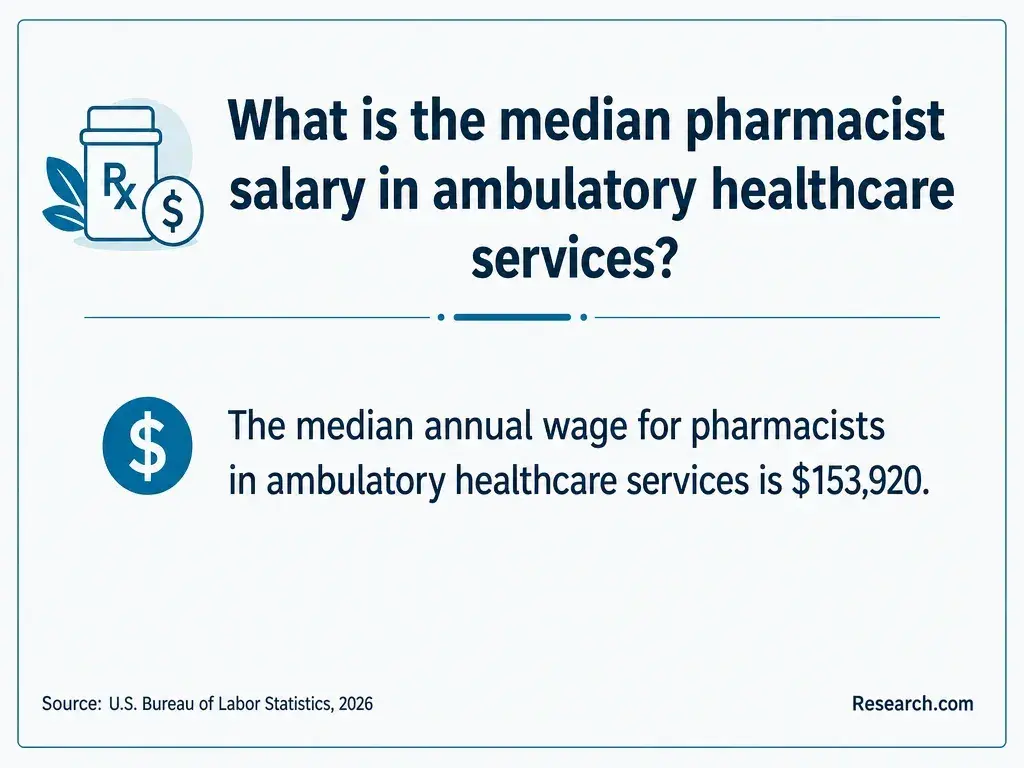
The Bureau of Labor Statistics reports a $140,910 median annual wage in May 2025 for pharmacists, with 5% projected employment growth from 2025-2035 and about 12,500 openings per year.
These are figures for pharmacists across practice settings, not an informatics-only salary or hiring forecast. An individual offer can vary with employer, location, clinical duties, technical responsibilities, and experience.
For a return-on-investment decision, compare actual job postings' license and experience requirements with the cost and time of the route you would take. A pharmacist who already holds a license may be able to build informatics experience through internal projects before paying for another degree.
Someone seeking a nonclinical systems role should also compare options against online pharmacy education duration: a short program may support a different job, but it cannot compress a licensure-qualifying Pharm.D. into a brief certificate.
Other Things You Should Know About PharmD
Some positions permit remote or hybrid work, but system go-lives, training, meetings, and employer policies may require on-site time. Confirm location and licensing expectations in the specific posting.
Often, but obtain employer approval and remove protected health information, confidential configurations, and proprietary materials. A permitted, de-identified description of the problem, your role, and the evaluated result may be more appropriate than screenshots.
Some employers combine informatics and clinical duties; others hire for dedicated systems roles. Ask how time is divided and whether maintaining clinical competency is part of the position.
Usually not alone. Alert design and changes commonly involve pharmacy, medical, nursing, safety, and technology stakeholders under an organization's approval process. Responsibilities differ by employer.
- Clinical Decision Support - ONC https://healthit.gov/clinical-quality-and-safety/clinical-decision-support/
- Pharmacy Informatics: Where Medication Use and Technology Meet - PMC https://pmc.ncbi.nlm.nih.gov/articles/PMC6699873/
- Clinical Decision Support Systems | PSNet https://psnet.ahrq.gov/primer/clinical-decision-support-systems
- The Core Competencies Needed for Health Care Professionals | nih.gov https://www.ncbi.nlm.nih.gov/books/NBK221519/
- Pharmacist - Explore Healthcare Careers | Mayo Clinic College of Medicine and Science https://college.mayo.edu/academics/explore-health-care-careers/careers-a-z/pharmacist/
- Where Medication Use and Technology Meet | cjhp-online.ca https://www.cjhp-online.ca/index.php/cjhp/article/download/2919/4010
- How Advanced Technology Is Reshaping Medication Safety and Pharmacy Practice | Pharmacy Times https://www.pharmacytimes.com/view/how-advanced-technology-is-reshaping-medication-safety-and-pharmacy-practice
- Pharmacy Informatics | bpsweb.org https://bpsweb.org/pharmacy-informatics/