
PharmD Admissions Checklist for First-Generation Students

Co-Founder and Chief Data Scientist
Applying to pharmacy school can mean coordinating courses, recommendations, deadlines, and finances without a family member who has navigated a professional degree. This guide gives first-generation students a usable checklist for comparing U.S. Doctor of Pharmacy (Pharm.D.) programs and preparing an application. It also separates admission requirements from later clinical training and pharmacist licensure, so you can identify missing steps before you spend money on applications or commit to a school.
Key Things You Should Know
- Build a separate requirement sheet for each school: a bachelor's degree, specific prerequisite credits, labs, minimum grades, and application deadlines are not uniform.
- Confirm Accreditation Council for Pharmacy Education (ACPE) professional-program accreditation before applying; neither institutional accreditation nor an online format establishes pharmacist-licensure eligibility.
- Compare total attendance costs and funding, not tuition alone. The Bureau of Labor Statistics reports pharmacist median pay of $140,910 in May 2025, but that figure does not predict an individual graduate's earnings or ability to repay debt.
What is a PharmD admissions checklist for first-generation students?
It is a school-by-school record of what you must complete, submit, verify, and pay before entering a professional Pharm.D. program. "First-generation" definitions differ among colleges and scholarship providers; the checklist is useful regardless of whether an application formally asks about that status.
Start with your end goal. A professional Pharm.D. is the pharmacy degree used in the U.S.-educated pharmacist pathway; online doctorate programs with shorter timelines are not interchangeable with it. Copy this comparison sheet for every school on your shortlist, then replace the blanks with answers from its current admissions materials.
| Decision field | School A | School B |
| Program and ACPE status | _____ | _____ |
| Remaining prerequisites and labs | _____ | _____ |
| Application and document deadlines | _____ | _____ |
| Tuition, fees, and expected travel | _____ | _____ |
| Clinical-placement responsibilities | _____ | _____ |
| Admissions contact and unanswered questions | _____ | _____ |
Keep written answers or links to the school's current policy with your sheet. That record is especially valuable when an adviser's informal answer appears to conflict with published requirements.
What education pathways lead to a Doctor of Pharmacy degree?
Applicants generally complete required pre-professional undergraduate coursework before the professional Pharm.D. curriculum. Some enter after prerequisites without a bachelor's degree; others apply after earning one. A pre-pharmacy major is not itself a Pharm.D., and a pharmaceutical sciences or pharmacy technician credential does not automatically qualify its holder for pharmacist licensure.
Pathways differ in how prerequisites and professional study are sequenced. Direct-entry or early-assurance arrangements may offer a defined route into a university's Pharm.D. program, but progression conditions still apply. Accelerated pharmacy school options may compress the calendar, not eliminate required professional training or clinical experiences. Compare any shorter schedule against its course intensity, work-hour constraints, and total cost.
What are the admission requirements for PharmD programs?
Each school sets its own combination of prerequisite coursework, grades or GPA thresholds, application materials, and interview rules. A published minimum establishes eligibility to be considered, not a promise of admission. A bachelor's degree is required by some programs but not all; do not pay to complete one solely because you assume every pharmacy school requires it.
For each program, check the current admissions page and PharmCAS school directory, if the school participates. Pharmacy programs for nontraditional applicants can be a starting point for comparison, but the school's current policy controls. Ask admissions staff to assess unusual coursework or a gap in enrollment before the deadline. The Pharmacy College Admission Test (PCAT) was retired in January 2024, so it is not a current test to schedule.
Schools commonly evaluate science, mathematics, and general education coursework, but exact subjects, credits, laboratories, minimum grades, and course-age limits vary. Your first task is a course-by-course match between each school's published requirements and your transcript - not a generic pre-pharmacy course list.
Use this sequence to identify gaps before registering for another term:
- Record each required course, lab, minimum grade, and completion deadline from the school's current policy.
- Match it to a course on an official or unofficial transcript, noting the institution, term, grade, and credits.
- Flag AP/IB, community-college, online-lab, repeated, international, or older coursework for a written school-specific eligibility decision.
- Confirm whether unfinished prerequisites may be in progress when you apply and when they must be completed for enrollment.
If you plan to build on prior biology or chemistry coursework, request a prerequisite review rather than assuming a matching course title means credit will count. Acceptance toward admission is also different from transfer into the professional Pharm.D. curriculum; the receiving school decides both.
Use ACPE's current professional-program directory to confirm a school's Pharm.D. accreditation status, then check the school's own curriculum and admissions information. ACPE accredits professional pharmacy education programs, not individual pharmacists. Institutional accreditation, although important, answers a different question and does not replace ACPE verification.
Narrow your list using criteria that could change your decision: prerequisite fit, published total costs, required campus attendance, clinical-placement support, and the state where you intend to seek licensure. If prior study matters, review pharmacy degree credit transfer policies and obtain the receiving program's decision in writing. For a distance pathway, separately confirm state authorization to enroll, any restrictions on local clinical placements, and your intended licensing board's requirements.
Requirements often include transcripts, recommendations, written responses, and an interview, but the destination and deadline for each item depend on the program. Schools using the Pharmacy College Application Service (PharmCAS) may also require a separate supplemental application or fee; other schools use their own application process.
Make a submission tracker for each school. These checks prevent an apparently complete application from missing a separate requirement:
- Record the application platform, school deadline, and any earlier deadline needed for transcript processing or verification.
- List every required transcript, recommendation, essay or response, supplemental form, and interview step.
- Ask recommenders early, provide the correct submission instructions, and check whether their materials were received.
- Track post-offer conditions, including final prerequisite grades, a response deadline, and any deposit.
For pharmacy admission pathways for nontraditional students, distinguish permission to apply with courses in progress from permission to enroll without completing them. Confirm that distinction directly with each school.
Online instruction can reduce routine commuting, but it does not make a professional Pharm.D. entirely remote or necessarily self-paced. Programs may schedule live classes, hands-on labs, campus visits, in-person assessments, introductory pharmacy practice experiences (IPPEs), and advanced pharmacy practice experiences (APPEs). Campus-based students also need to plan for clinical placements that may be away from their usual classroom location.
Use an online pharmacy program comparison to shortlist formats, then request each program's current attendance calendar and placement policy. Ask who finds and approves rotation sites, whether placements near home are possible, and what travel, intern registration, health checks, or schedule changes you would manage. If you must keep a job or provide family care, judge the actual weekly and rotation schedule - not the word "online" in a program description.
The timeline depends on prerequisites already completed and the professional program's calendar. Compare time until eligibility to enter separately from time in the Pharm.D. A shorter professional calendar can mean a heavier course load and less time for paid work.
For a meaningful cost comparison, obtain each school's current cost-of-attendance estimate and identify what it excludes. Budget for prerequisites, tuition, mandatory fees, supplies, campus visits, clinical-rotation travel or housing, and later licensing expenses. To reduce the cost of pharmacy school, compare net costs after confirmed aid rather than relying on advertised tuition.
Request a financial aid explanation for your specific start date and student classification. Federal borrowing rules changed for many new graduate and professional borrowers beginning July 1, 2026; older descriptions of Grad PLUS access or loan limits may not apply to you. Before accepting an offer, ask the aid office which current rules and any transitional provisions govern your package, and compare the amount you would need to borrow with the schedule's effect on your ability to work.
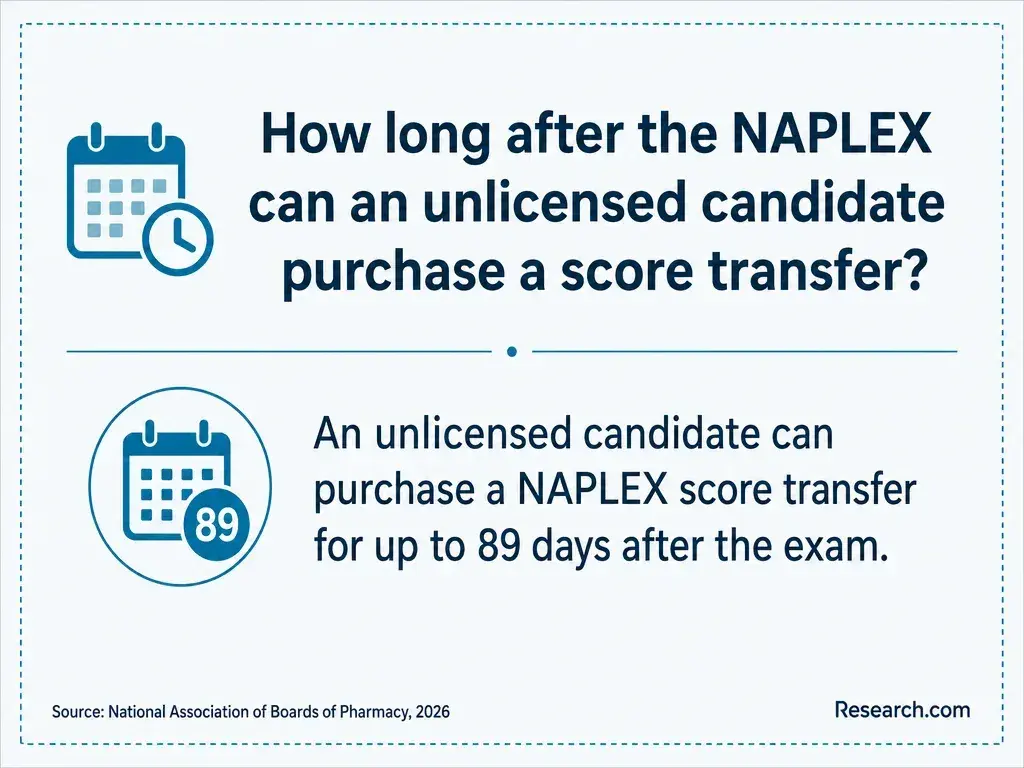
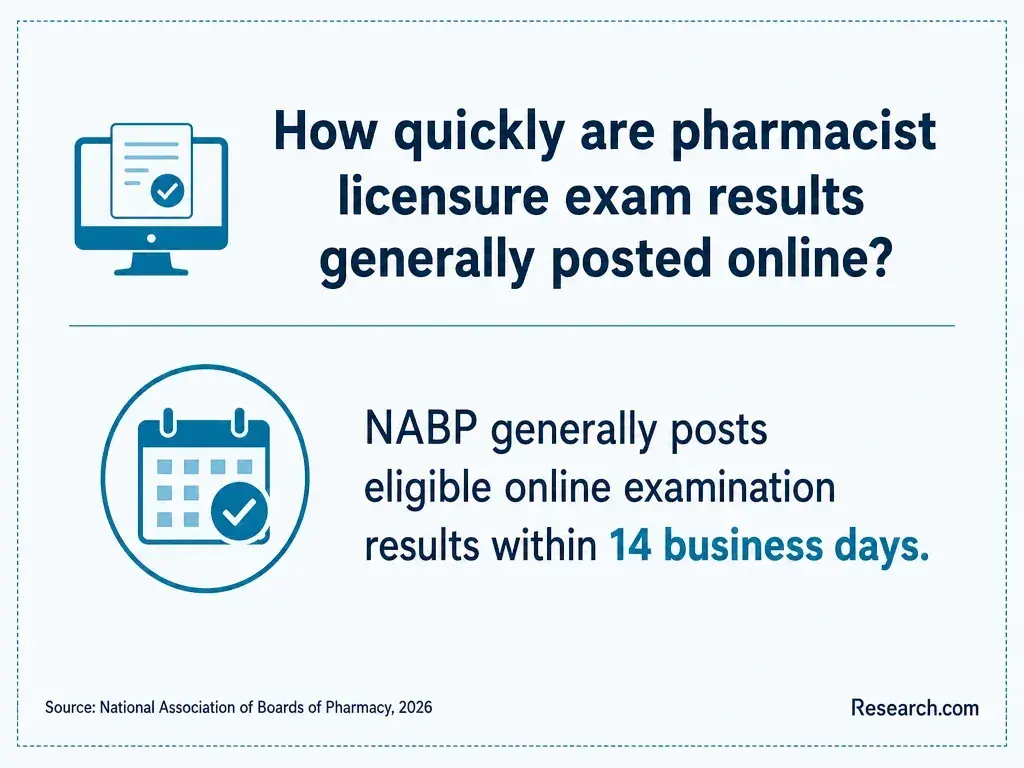
Graduating from a Pharm.D. programs with an accelerated format does not itself issue a pharmacist license. A U.S.-educated applicant generally must meet the intended state board's education and practical-training conditions, pass the North American Pharmacist Licensure Examination (NAPLEX), satisfy any applicable law-exam requirement, and complete the board's application and other checks. Requirements for intern registration and credit for experiential hours also vary by jurisdiction.
Check the board where you expect to practice before choosing a school or placement. Do not assume every jurisdiction requires the Multistate Pharmacy Jurisprudence Examination (MPJE): law-exam arrangements vary, and some jurisdictions began transitioning to the Uniform Multistate Pharmacy Jurisprudence Examination (UMPJE) in 2026. Passing an exam alone does not grant a license. Internationally educated pharmacists have a separate eligibility pathway and should check the relevant board and National Association of Boards of Pharmacy requirements.
What careers, salaries, and job outlook follow a PharmD degree?
Licensed pharmacists work in settings such as community pharmacies, hospitals, ambulatory care, and other medication-related services. Duties and additional hiring preferences differ by employer. The Bureau of Labor Statistics reports median annual pay for pharmacists of $140,910 in May 2025, with 5% projected job growth, 2025-2035 and about 12,500 openings per year. Those occupation-wide figures do not establish a new graduate's starting salary, local prospects, or return on a particular school's tuition.
Some roles favor postgraduate residency or fellowship experience; these are distinct from optional specialty board certification and are not universally required to work as a pharmacist. If your goal is a pharmacy-adjacent job rather than pharmacist practice, compare its actual credential requirement before committing to a Pharm.D. Pharmacy technician work, for example, is a separate occupation that does not ordinarily require the degree.
Judge an affordable route through pharmacy education against the job you actually want. A lower-cost alternative may make sense when pharmacist licensure is unnecessary; if licensure is the goal, verify ACPE status, your likely total borrowing, and the licensing pathway before accepting a seat.
Other Things You Should Know About PharmD
No. Schools and scholarship providers may define it differently, often by a parent's or guardian's educational history. Follow the definition given on each form; if your circumstances are unclear, ask the organization administering it.
Availability and eligibility depend on the application service and individual school. Check their current policies before submitting or paying, because a fee waiver from one organization may not cover another's fee.
Yes, when they help explain your preparation, choices, or relevant skills. Give specific examples of what you accomplished and avoid assuming reviewers will infer the demands on your time.
Request feedback if the school offers it. Before reapplying, identify whether the issue was eligibility, academic preparation, application timing, or interview performance, then confirm which materials must be resubmitted in the next cycle.
- Types of Financial Aid: Grants, Work-Study, and Loans | studentaid.gov https://studentaid.gov/understand-aid/types
- NYS Pharmacy: License Requirements - Office of the Professions https://www.op.nysed.gov/professions/pharmacist/license-requirements
- Are Prerequisite Courses Barriers to Pharmacy Admission or the Keys to Student Success? - PMC https://pmc.ncbi.nlm.nih.gov/articles/PMC10159397/
- Pharmacy Interest Guide 2026-2027 | Academic Advising Center https://advisingcenter.uiowa.edu/pre-health/pharmacy-interest/guide
- Academic Prerequisites - Admissions | ucsf.edu https://pharmd.ucsf.edu/admissions/reqs/academic
- PharmD FAQs - UNC Eshelman School of Pharmacy https://pharmacy.unc.edu/education/pharmd/pharmd-admissions-faqs/
- PharmD Pharmacy Admissions Process | Pharmacy & Health Sciences https://cphs.campbell.edu/academic-programs/pharmacy/doctor-of-pharmacy/requirements/
- Program: Pharmacy, PharmD | south.edu https://catalog.south.edu/preview_program.php
- Admitted Student Information - School of Pharmacy https://pharmacy.wisc.edu/pharmd/admitted-students/
- Requirements for Incoming and Enrolled PharmD Students | umn.edu https://www.pharmacy.umn.edu/doctor-pharmacy/current-students/requirements-incoming-and-enrolled-pharmd-students


