
PharmD Scholarship Renewal Requirements to Verify

Co-Founder and Chief Data Scientist
A Pharm.D. scholarship can make one school look affordable - until an unclear renewal condition puts later awards at risk. If you are comparing Doctor of Pharmacy offers, the amount matters less than the amount you can realistically keep throughout the professional curriculum.
This guide explains the academic, enrollment, conduct, and financial aid terms to check, including what happens after a leave or missed requirement. Use it to request written answers, compare offers on equal terms, and budget for costs the scholarship may not cover.
Key Things You Should Know
- Confirm whether the award covers one year or can renew throughout the professional Pharm.D. curriculum; an initial offer is not a promise of future funding.
- Get the exact GPA measure, academic-progress standard, enrollment definition, review date, and appeal policy in writing. These rules vary by scholarship.
- Compare the award with your remaining cost and borrowing options for the 2026-27 aid year; a renewable award may still leave fees, rotation travel, or other expenses uncovered.
What are the most common PharmD scholarship renewal requirements?
Most renewable Pharm.D. awards depend on continued academic eligibility, required enrollment, satisfactory progress through the professional curriculum, and compliance with school policies. Some also require an annual application, a donor report, demonstrated financial need, or continued participation in a particular program. "Renewable" does not mean automatic: ask whether the school reviews eligibility each term or each academic year and whether funding is available for every eligible year.
Separate the conditions for receiving an offer from those for keeping it. For example, a school may let an applicant apply to pharmacy school while finishing prerequisites, but that admission policy does not establish the scholarship's renewal rules. Request the award agreement rather than relying on an admissions email or a general scholarship webpage.
How do GPA and academic progress affect PharmD scholarship renewal?
Ask which GPA counts: cumulative institutional GPA, professional Pharm.D. GPA, annual GPA, or a combination. Also confirm how repeated courses, pass/fail grades, remediation, withdrawals, and incomplete grades affect the calculation. A scholarship's GPA threshold may differ from the school's minimum for remaining enrolled, and meeting one standard does not necessarily satisfy the other.
Academic progress can involve more than grades. Required course sequencing and eligibility for introductory or advanced pharmacy practice experiences - IPPEs and APPEs - may affect whether a student progresses with the cohort. Prior undergraduate pre-pharmacy coursework is distinct from the professional curriculum; even if you build on prior biology or chemistry coursework, confirm when the scholarship's GPA calculation begins. Ask for a worked example if the agreement uses terms such as "good academic standing" without defining them.
What enrollment status is required to renew a PharmD scholarship?
Many awards require full-time enrollment, but the definition may change during experiential terms. Verify the minimum credits or school-designated status for classroom terms, summer courses, IPPEs, and APPEs. Ask whether a delayed rotation, reduced course load, or approved accommodation preserves the award - and whether the scholarship pays during a term with a different tuition structure.
Scheduling deserves particular attention if you are considering accelerated pharmacist education. A compressed calendar can leave less room to repeat a course without changing cohort status. Compare the award agreement against the program calendar, not just its advertised completion time.
The Accreditation Council for Pharmacy Education (ACPE) accredits professional pharmacy programs, not individual pharmacists. A school-funded scholarship may require enrollment in that school's Pharm.D. program; an external award may specify an ACPE-accredited program or another eligibility standard. Check the award's wording and the program's current status in ACPE's official program records before accepting an offer.
ACPE professional-program accreditation is different from an institution's accreditation and from state authorization for distance education. If you compare online Doctor of Pharmacy programs, verify all relevant statuses separately, along with required in-person labs and clinical rotations. Neither accreditation nor a scholarship guarantees pharmacist licensure; state boards determine licensing requirements.
Some awards require students to remain in good disciplinary or professional standing. Pharmacy programs may evaluate conduct in classrooms and clinical settings, including confidentiality, attendance, documentation, and compliance with site requirements. Ask whether an allegation, a formal finding, probation, or a rotation-site removal triggers review; those are different events and should not be treated as interchangeable.
Entry standards and continuing eligibility are separate decisions. A page explaining pharmacy degree eligibility requirements cannot substitute for the school's current student handbook and your award agreement. Find out who makes a scholarship decision, when you receive notice, and whether you can respond or appeal before funding changes.
Need-based awards may require a new Free Application for Federal Student Aid (FAFSA) and a fresh eligibility review each year. Other awards are merit-based but still must be coordinated with the school's financial aid package. Ask whether outside awards reduce school grants, loans, or unmet cost first, and whether the scholarship is restricted to tuition rather than fees or living expenses.
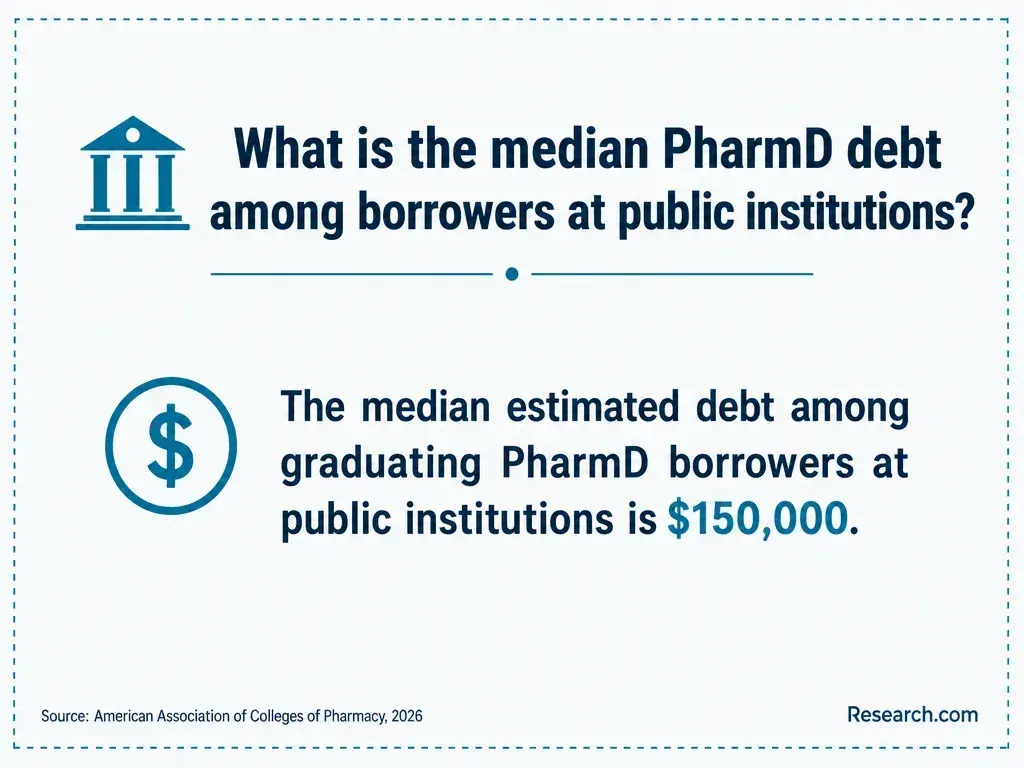
For the 2026-27 aid year, verify your borrowing eligibility directly with the financial aid office under current Federal Student Aid rules. Federal borrowing rules changed for many new graduate and professional borrowers beginning July 1, 2026, and transition provisions depend on individual circumstances. Do not assume an older loan-limit example or Grad PLUS availability applies to you. Compare the award against pharmacy doctorate tuition and fees while also budgeting for required supplies, background checks, rotations, and possible travel.
The consequences depend on the agreement: an award might end immediately, stop at the next review, enter a probation period, or become eligible for appeal. Loss of a scholarship is not necessarily dismissal from the Pharm.D. program, and academic aid rules may have a separate review process. Ask whether reinstatement is possible and whether any previously paid amount could be owed back after withdrawal or a status change.
If a requirement becomes difficult to meet, take these steps before assuming the award is lost:
- Read the award agreement and identify the exact unmet condition and review date.
- Request a written determination from the scholarship administrator and ask about probation, appeal deadlines, and documentation.
- Ask financial aid for a revised cost and aid estimate if the award is reduced or discontinued.
Switching to one of the shortest online doctoral programs is not an interchangeable way to finish pharmacist education: other doctorates generally do not replace the professional Pharm.D. needed for the U.S.-educated pharmacist licensure pathway.
Possibly, but never assume an approved leave automatically protects an award. Ask whether the school can pause the scholarship, for how long, and whether you must reapply on return. Confirm what happens after a medical leave, change to part-time status, repeated year, campus or pathway change, or delayed rotation. A school's permission to return and a donor's permission to renew may require separate approvals.
A transfer requires an additional check: institutional scholarships usually do not follow a student to another school. If you are considering pharmacy degree programs for transfer students, obtain written decisions on both professional-course credit and new-school scholarship eligibility. The receiving program decides which credits apply; accepted credit alone does not secure funding or the same graduation date.
Compare offers using the same fields and the same academic year. This worksheet separates an award's stated value from conditions that could change what you receive; fill it from written school responses, not estimates.
| Comparison field | Program A | Program B |
| Award per term or year; years potentially covered | _____ | _____ |
| GPA measure, minimum, and review date | _____ | _____ |
| Required enrollment and rotation-term treatment | _____ | _____ |
| FAFSA, need, conduct, or other conditions | _____ | _____ |
| Leave, remediation, appeal, and reinstatement rules | _____ | _____ |
| Estimated tuition and required costs not covered | _____ | _____ |
Then ask each scholarship administrator for the complete agreement and a written answer to any blank field. Compare pharmacy program tuition and length only after confirming that both figures refer to the professional Pharm.D. pathway and include comparable costs. Favor the offer with a sustainable net cost and clear renewal terms over a larger first-year award whose later availability is uncertain.
What career and licensing factors should PharmD students consider beyond scholarships?
A scholarship should support a viable route to your goal, not determine that goal by itself. Completing a Pharm.D. does not issue a pharmacist license: graduates must meet the relevant state board's requirements, which generally include the NAPLEX and may include a jurisdiction-specific law examination and other conditions. A residency or fellowship is postgraduate training, while board certification is a separate credential; none replaces state licensure.
The Bureau of Labor Statistics reports pharmacist median annual pay of $140,910 in May 2025. That occupation-wide figure is useful context, not a prediction of an individual graduate's earnings or a reason to ignore debt and time out of the workforce. Likewise, an online pharmacy degree time to completion comparison may include credentials that do not qualify graduates for pharmacist licensure. Confirm the exact degree, ACPE status, clinical requirements, and licensing pathway before valuing a scholarship against future career plans.
Other Things You Should Know About PharmD
Disbursement varies by award and school. Ask whether it posts to your student account each term or is paid by an outside organization, and when any remaining balance becomes due.
Only if its terms allow it. Many awards begin after entry into the professional Pharm.D. program, so check coverage before enrolling in undergraduate prerequisites.
Often, but each award may have stacking restrictions. Report outside scholarships to financial aid so the school can determine how they affect your package.
Tax treatment depends on how funds are used and your circumstances. Under IRS rules, amounts used for qualified tuition and required educational expenses may be treated differently from amounts used for living expenses. Keep the award terms and expense records, and seek qualified tax guidance if needed.
- Staying Eligible | Federal Student Aid https://studentaid.gov/understand-aid/eligibility/staying-eligible
- School-Determined Requirements - FSA Partner Connect https://fsapartners.ed.gov/knowledge-center/fsa-handbook/2026-2027/vol1/ch1-school-determined-requirements
- Maintain Financial Aid Eligibility | St. John's University https://www.stjohns.edu/admission/tuition-and-financial-aid/apply-aid/maintain-eligibility
- Types of Financial Aid | Long Island University https://liu.edu/post/enrollment-services/financial-aid/types-of-financial-aid
- Scholarship Renewal Criteria | The University of Utah https://financialaid.utah.edu/policies/scholarship-renewal.php
- Scholarships, Grants & Loans | Albany College of Pharmacy and Health Sciences https://www.acphs.edu/admissions-aid/tuition-aid/scholarships-grants-loans/
- Pharmacy Program Financial Aid | Fairleigh Dickinson University https://www.fdu.edu/academics/colleges-schools/pharmacy/about-pharmd-pharmacy/financial-aid/
- Satisfactory Academic Progress Policy for Pharmacy Students | KU https://services.ku.edu/TDClient/818/Portal/KB/Article/21373/Satisfactory-Academic-Progress-Policy-for-Pharmacy-Students
- Scholarships and Grants | nyu.edu https://www.nyu.edu/admissions/financial-aid-and-scholarships/types-of-aid/scholarships-and-grants.html
- Enrollment Requirements - Financial Aid - Georgia Tech https://finaid.gatech.edu/manage-aid/enrollment-requirements


