Online PharmD versus traditional pharmacy school

Co-Founder and Chief Data Scientist
An online Pharm.D. may let you study without relocating, but it will not eliminate hands-on training or the steps required for pharmacist licensure. If you are choosing between a hybrid Doctor of Pharmacy program and a campus-based school, the consequential differences are often scheduling, clinical placements, travel, and total cost - not the name of the degree. This guide shows prospective U.S. pharmacy students what to compare, which claims to verify, and when each route is the more practical choice.
Key Things You Should Know
- An online Pharm.D. is generally a hybrid professional degree: expect in-person skills training and supervised clinical rotations, not an entirely remote route to licensure.
- Check Accreditation Council for Pharmacy Education (ACPE) professional-program accreditation, distance-education authorization, and your intended state's licensing rules separately; none substitutes for the others.
- Compare the full cost of attendance and required time away from work, not tuition alone. The pharmacist median was $140,910 in May 2025, but that figure does not predict an individual graduate's earnings.
What is an online PharmD program compared with traditional pharmacy school?
Both routes lead to a Doctor of Pharmacy (Pharm.D.), the professional degree used in the U.S. pharmacist-licensure pathway. A traditional program delivers most scheduled instruction on campus. An "online" Pharm.D. typically delivers some lectures and discussions remotely while still requiring in-person skills activities and supervised pharmacy practice experiences.
Online does not necessarily mean self-paced. Live classes, examinations, campus visits, and rotations can occupy fixed hours. Compare the published schedules of online Pharm.D. program options against the time you can actually devote to school, rather than assuming remote lectures will fit around full-time employment.
Neither format replaces undergraduate pre-pharmacy prerequisites with professional coursework. Likewise, a pharmaceutical sciences degree or pharmacy technician credential is not interchangeable with a Pharm.D. for the usual U.S. pharmacist-licensure route.
Are online PharmD programs accredited and accepted for pharmacist licensure?
An online or hybrid delivery format does not, by itself, prevent a Pharm.D. from meeting educational requirements for licensure. What matters is the standing of the specific professional program with ACPE, along with the requirements of the state board where you intend to seek a license. Verify the program's current status in ACPE's directory, including whether it holds accreditation or a preaccreditation status, rather than relying on a school-wide claim.
Institutional accreditation concerns the college or university; ACPE accreditation concerns its professional pharmacy program. Distance-education state authorization addresses whether the school may enroll you where you live. Authorization does not guarantee that your state will approve a clinical placement or issue you a pharmacist license. These distinctions also matter when evaluating Pharm.D. completion pathways: confirm the credential awarded and its licensing relevance, not just the word "Pharm.D." in a program description.
After completing the degree, a U.S.-educated applicant ordinarily must meet state board requirements that can include intern experience and examinations. The North American Pharmacist Licensure Examination (NAPLEX) assesses pharmacy practice knowledge; jurisprudence requirements vary by jurisdiction, including whether a board uses the MPJE, the UMPJE, or another approach. Passing an exam does not itself issue a license.
How do online and traditional PharmD programs differ?
The comparison below focuses on differences that could change your day-to-day schedule or budget. Neither delivery format is inherently easier, cheaper, or better preparation for practice.
| Decision factor | Online or hybrid Pharm.D. | Traditional campus Pharm.D. |
| Class schedule | Remote instruction may reduce commuting, but live sessions and cohort deadlines may apply. | More instruction occurs on campus at scheduled times. |
| Hands-on learning | May require concentrated campus visits or other approved in-person sessions. | Skills sessions are usually integrated into the campus schedule. |
| Clinical training | In-person rotations remain necessary; location and travel depend on placements. | In-person rotations remain necessary; a nearby campus does not ensure nearby placements. |
| Budget pressure | Technology, immersion travel, and temporary housing may offset commuting savings. | Commuting or relocation and campus living costs may be substantial. |
Choose the hybrid route if its verified meeting times, campus requirements, and placement network make your location workable. Choose a campus program if regular face-to-face instruction and access to campus skills facilities are worth its commuting or relocation demands. Be cautious with lists of online doctorate programs with shorter timelines: a shorter doctorate in another field does not replace the professional Pharm.D. and its experiential requirements.
Professional Pharm.D. study commonly integrates pharmacology, medicinal chemistry, pharmacotherapy, drug information, calculations, medication safety, and patient communication. Students use that knowledge in cases and supervised skills work - for example, evaluating a medication regimen and communicating a recommendation. Schools sequence and name courses differently, so inspect the current curriculum rather than assuming identical classes across programs.
Prerequisite biology or chemistry taken before admission is different from the professional curriculum. If you have prior college credit, ask which courses satisfy admission prerequisites and which, if any, can transfer into the Pharm.D. itself. A receiving school makes that determination; lists of pharmacy programs that accept transfer credits cannot establish how your particular credits will apply.
Virtual patient cases and simulations can support learning, but they do not replace required hands-on assessment or supervised care. Request a curriculum map that identifies which skills must be demonstrated in person.
Expect school-specific undergraduate prerequisites, often involving laboratory sciences, plus transcripts and an admissions review that may include recommendations and an interview. A completed bachelor's degree is not universally required. Minimum grades, course-age rules, accepted online labs, and whether unfinished prerequisites are allowed at application or must be completed before enrollment all vary.
Some schools use the Pharmacy College Application Service (PharmCAS); others have different application processes or additional school-specific steps. The Pharmacy College Admission Test (PCAT) was retired in January 2024, so an old page listing it should not guide your application. Use current school policies when comparing pharmacy admissions criteria, and do not treat a minimum GPA as a prediction of admission.
Before applying, obtain a written prerequisite review if your coursework includes community-college classes, online labs, international study, or older science courses. That can prevent you from committing to a program before discovering an unmet matriculation requirement.
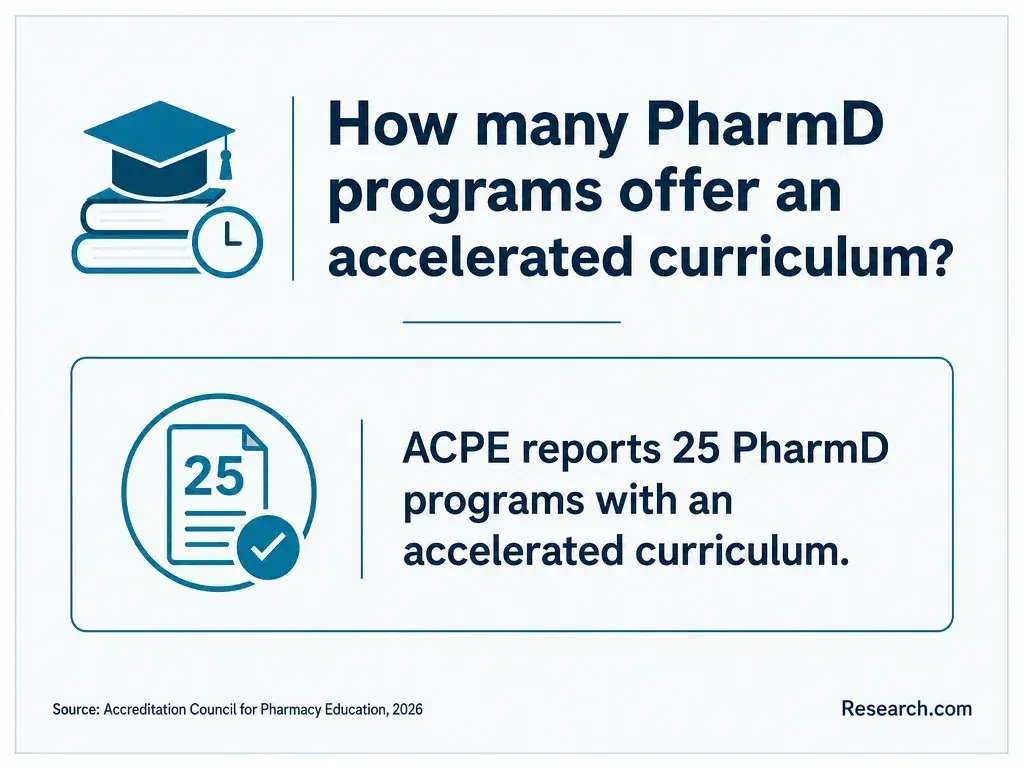
Completion time depends on your remaining prerequisites and the program's professional-course sequence. Remote delivery does not shorten the required clinical training. An accelerated calendar may compress breaks or increase weekly demands; it is not evidence that a student can skip rotations.
To compare a campus offer with a low-cost online pharmacy doctorate, request each school's current cost-of-attendance estimate and a term-by-term schedule. The following costs may sit outside an advertised tuition figure:
- Mandatory fees, books, clinical-reference resources, and required technology.
- Campus-immersion travel, lodging, and time away from paid work.
- Background checks, immunizations, rotation travel or housing, and licensing-related expenses.
- Prerequisite courses you must finish before entering the professional program.
Compare the same period and student status for each offer. Federal aid eligibility and borrowing options depend on the student and program; federal rules changed for many new graduate and professional borrowers beginning July 1, 2026. Ask each financial aid office which rules apply to your enrollment rather than relying on an older assumption about Grad PLUS borrowing.
Schools typically combine remote academic work with in-person skills sessions and supervised practice. Introductory pharmacy practice experiences (IPPEs) introduce students to practice settings; advanced pharmacy practice experiences (APPEs) provide more extensive rotations later in the professional curriculum. An online student still needs approved sites and qualified supervision.
Ask the school who secures sites and preceptors, whether it has placements available near your home, and what happens if a local site falls through. Confirm the frequency and location of campus sessions, plus requirements for intern registration, background checks, immunizations, and travel. Your current pharmacy job should not be assumed to count as a rotation. Likewise, descriptions of pharmacy degree programs with accelerated schedules should not be read as permission to bypass Pharm.D. experiential education.
A flexible lecture schedule offers limited practical flexibility if rotations require full workdays or temporary relocation. Get those commitments in writing before deciding whether you can remain employed.
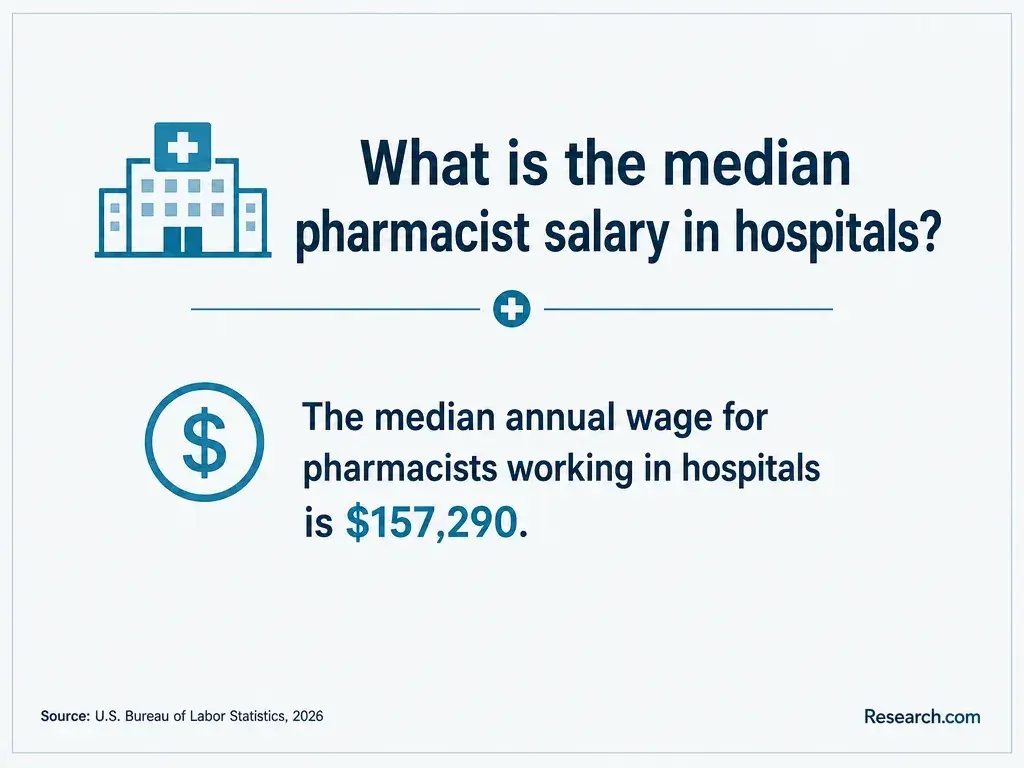
After meeting state licensure requirements, pharmacists may work in community pharmacies, hospitals, ambulatory care, specialty pharmacy, or other settings. Responsibilities differ by employer and state law, but can include evaluating prescriptions, advising patients and clinicians, and helping prevent medication errors. The delivery format of your Pharm.D. matters less to this decision than your preparation, supervised experience, licensure, and the position's hiring criteria.
Some clinical roles favor postgraduate training. A postgraduate year one (PGY1) residency provides broad practice training; a PGY2 residency generally develops a specialty focus. Fellowships often emphasize areas such as research or industry work. Board of Pharmacy Specialties certification is a separate professional credential, not a state license, and its eligibility rules depend on the specialty. None of these pathways is universally required for pharmacist employment.
If you are coming from a science major, pharmacy doctorate options after chemistry are worth comparing only if you want the pharmacist role; chemistry preparation does not remove the need for professional training and licensure. For a pharmacy-adjacent job that does not require pharmacist authority, a less extensive credential may be the better use of time and tuition.
The U.S. Bureau of Labor Statistics reports median annual pay of $140,910 in May 2025 for pharmacists. It projects 5% growth from 2025 to 2035 and about 12,500 openings per year. These occupation-wide figures are useful for considering the profession, but they do not isolate online-program graduates, entry-level offers, particular specialties, or your local job market.
Use pharmacy degree planning for cost and time as a starting point, then calculate your own likely tuition, living costs, borrowing, and income you may forgo during rotations. A high occupational median does not make a costly program a good financial choice for every student.
How can you choose a reputable online PharmD program?
Make the final choice using documents for the exact program and entry term, not a general claim that a school is flexible or accredited. The checks below target the problems most likely to disrupt enrollment, clinical training, or licensure plans:
- Verify the professional program's current ACPE status and identify the degree it awards.
- Confirm your state's distance-enrollment rules with the school and ask the intended licensing board about its educational and intern requirements.
- Obtain the live-class, campus-visit, skills-assessment, and rotation schedules, along with a written explanation of placement support.
- Request an individual prerequisite and transfer-credit evaluation; confirm remaining conditions and application deadlines.
- Compare current total cost estimates, applicable aid rules, published NAPLEX outcomes where available, and the support offered to students preparing for licensure.
A red flag is any suggestion that "fully online" means no in-person practice, that institutional accreditation alone establishes pharmacist-licensure eligibility, or that admission is assured despite outstanding requirements. If your record is unusual, explore pharmacy application requirement flexibility, but get the school's conditions for enrollment in writing. The better program is the one whose verified requirements you can complete at a sustainable cost - not necessarily the one with the most convenient advertising.
Other Things You Should Know About PharmD
Diploma wording is an institutional policy. Ask the registrar for a sample diploma and transcript if the distinction matters to you.
No. Licensure is jurisdiction-specific. Ask the destination state board about its license-transfer process, examinations, and other requirements before planning a move.
Not automatically. Admission to a U.S. program and eligibility under a state's foreign-graduate licensing pathway are separate questions. Confirm the appropriate route with the program and intended state board.
Requirements vary by school and clinical site. Ask whether coverage is provided, what it includes, and whether you must purchase additional coverage before rotations.
- Factors That Influence Students' Selection of Advanced... - PMC https://pmc.ncbi.nlm.nih.gov/articles/PMC7092785/
- Pharmacist Licensure by Exam - Texas State Board of Pharmacy https://www.pharmacy.texas.gov/applicants/pharmacist-exam.asp
- Doctor of Pharmacy (Pharm.D.) Traditional Pathway | Texas Tech University Health Sciences Center https://www.ttuhsc.edu/programs/doctor-pharmacy-pharmd-traditional-pathway
- What Happens in Pharmacy Clinical Rotations? | Chapman Blogs https://blogs.chapman.edu/pharmacy/2026/04/22/what-happens-in-pharmacy-clinical-rotations/
- Experiential Education Site Selection Policy | ucsf.edu https://pharmd.ucsf.edu/policies/site-selection
- Graduation & Licensure | Washington State University https://pharmacy.wsu.edu/pharmd/experiential-services/graduation-licensure/
- Earn an Online Pharm.D. Degree at St. John Fisher University https://onlinepharmd.sjf.edu/
- Can You Really Earn a Pharm.D. Online? Here's What to Expect - Lake Erie College of Osteopathic Medicine https://lecom.edu/can-you-really-earn-a-pharm-d-online-heres-what-to-expect/
- Do All Pharmacy Programs Offer Experiential Education? | Belmont University https://www.belmont.edu/stories/articles/2024/pharmacy-program-experiential-education.html
- Doctor of Pharmacy - On Campus & Online Hybrid | Extended & Distance Education https://www.su.edu/admissions/graduate-students/pharmacy-application-information/doctor-of-pharmacy/