Economics prerequisites for PharmD programs

Co-Founder and Chief Data Scientist
An economics class may be the last course standing between you and a Doctor of Pharmacy (Pharm.D.) application - or an unnecessary expense if your target schools do not require it. Economics prerequisites vary by program, and even schools that accept the subject may differ on course type, credits, grades, and online delivery. This guide helps prospective U.S. pharmacy students decide whether to take economics, choose a course that is likely to qualify, and get confirmation before paying tuition or submitting an application.
Key Things You Should Know
- Economics is not a universal Pharm.D. admission prerequisite. Check each target school's current requirements rather than relying on another school's course list.
- An introductory economics course commonly carries 3 semester credits, but the receiving school decides whether its subject, credit value, format, and grade meet its rule.
- Get written course-equivalency confirmation before enrolling when a requirement names a particular economics course or your transcript uses a different title.
What economics courses are required for PharmD program admission?
When a Pharm.D. program requires economics, its admissions materials should identify the acceptable subject and any minimum credit requirement. A school may specify introductory microeconomics, introductory macroeconomics, either course, or a broader social-science requirement that economics can fulfill. A recommendation to take economics is different from a required prerequisite.
Read the wording alongside the school's other pharmacy schools and entry standards. For example, "economics required" calls for a qualifying course; "economics or another social science" gives you a choice. Do not assume that a course with "business," "finance," or "healthcare" in its title counts as economics without the school's approval.
Do all PharmD programs require an economics prerequisite?
No. Pharm.D. prerequisites are set by individual programs, not by a nationwide economics rule. Some schools name economics, some allow it within a general education category, and others do not list it. Requirements can also change between application cycles.
Build your school list before buying a course. If none of your target programs requires economics, another unmet prerequisite may deserve your time and tuition first. If one school does require it, ask whether the course must be finished before application or only before enrollment. Policies on pharmacy degree options without every prerequisite completed differ; permission to apply with a course in progress is not permission to skip it.
Can microeconomics or macroeconomics satisfy PharmD prerequisites?
Either might, but neither is automatically interchangeable with the other. Microeconomics examines decisions by individuals and organizations; macroeconomics examines economy-wide issues. If a school explicitly names one, take that course or obtain approval for an alternative before enrolling.
The distinctions below can help applicants, including those exploring pharmacy school for biology and chemistry graduates, compare courses already on their transcripts. They describe course content, not any school's transfer ruling.
| Course | Typical focus | Prerequisite implication |
| Introductory microeconomics | Consumers, firms, incentives, and markets | May fit a microeconomics or flexible economics requirement |
| Introductory macroeconomics | Inflation, employment, and economic policy | May fit a macroeconomics or flexible economics requirement |
| Health economics | Economic questions specific to healthcare | May not replace an introductory course unless approved |
A syllabus is particularly useful when a course has an unusual title or combines microeconomics and macroeconomics.
Economics can give future pharmacists a framework for understanding incentives, resource limits, insurance, medication access, and healthcare spending. Those concepts provide context for decisions about pharmacy services and the healthcare system. A prerequisite course is not a substitute for the professional Pharm.D. curriculum's clinical, patient-care, and experiential training.
Economics can also help applicants assess their own education costs. The online Doctor of Pharmacy price range is only a starting point: compare required fees, prerequisite tuition, travel, and potential time away from work, not advertised tuition alone. If economics is optional at your target schools, its potential value must be weighed against the cost and time needed for a required course.
Match the credit amount stated by each school. An introductory economics class commonly awards 3 semester credits, but that does not establish a national Pharm.D. minimum. A school may evaluate quarter credits, combined courses, or a course embedded in a larger general education sequence differently.
Check both the credit value and what the course covers before choosing a shorter or accelerated offering. The availability of accelerated Pharm.D. degree options does not reduce a program's stated admissions prerequisites. If your transcript uses quarter credits or your proposed course awards fewer credits than the requirement, request an equivalency decision rather than assuming the title is enough.
They can if the receiving Pharm.D. program accepts the course, the institution awarding credit meets its policies, and the course otherwise satisfies the subject, credit, and grade rules. Acceptance of online lecture courses does not establish a school's policy for online science laboratories.
Ask admissions to evaluate the specific course and institution before registering. Also distinguish an online prerequisite from the delivery of the professional degree: Doctor of Pharmacy distance learning programs may still require scheduled classes, in-person activities, and supervised clinical experiences. Online instruction alone does not make a Pharm.D. fully remote.
Use the minimum published by each program. Some schools require a letter grade at or above a stated threshold for every prerequisite; others apply different rules to particular courses or calculate prerequisite grades separately. Meeting a minimum grade does not guarantee admission.
If you earned a low grade, repeated economics, or received pass/fail credit, ask how that school evaluates both attempts and whether the credit meets its prerequisite policy. Guides to pharmacy programs for students with prior coursework can help you frame the question, but the receiving school determines how previous credit applies. Acceptance as general transfer credit does not necessarily mean acceptance as an economics prerequisite.
Start with the current admissions page and academic catalog for each school, then compare them with its entry in the Pharmacy College Application Service (PharmCAS) directory if the school participates. PharmCAS is a shared application service, not the authority that sets every school's prerequisites. Verify the professional Pharm.D. program's accreditation status through the Accreditation Council for Pharmacy Education (ACPE); institutional accreditation and, for distance study, state authorization address different questions.
Use this sequence to resolve a course choice before spending money or missing a deadline:
- Record each school's exact economics wording, credits, minimum grade, and completion deadline for your application cycle.
- Compare those rules with the proposed course's catalog description, syllabus, credit system, delivery format, and transcript-issuing institution.
- Email admissions with those documents and ask whether the course satisfies the specific prerequisite; retain the response.
- Recheck the school's rules before applying, including how in-progress courses must be reported and when final transcripts are due.
When comparing pharmacy programs balancing cost and time, include any extra prerequisite semester in your comparison. The cheapest-looking program may take longer or cost more for an applicant who must first complete additional coursework.
Programs commonly evaluate prior study in sciences, mathematics, and general education, but exact courses, laboratory components, credits, grades, and course-age limits vary. Check each school's current list rather than assuming that a biology degree - or an economics course - covers every requirement. Some pathways admit students without a completed bachelor's degree; others have different degree or credit expectations.
Prerequisites are undergraduate, pre-professional coursework, not the professional Pharm.D. curriculum. Likewise, the shorter credentials discussed in online pharmacy course completion timelines should not be mistaken for completion of a Pharm.D. or eligibility for pharmacist licensure. Prioritize required courses with strict sequences or labs when planning your schedule; confirm whether the receiving school accepts community-college or other previously earned credit.
What education and licensing steps follow PharmD prerequisite completion?
Completing prerequisites makes you eligible to be evaluated for admission; it does not award a pharmacy degree. After admission, students complete a professional Pharm.D. curriculum that includes supervised pharmacy practice experiences. ACPE accredits professional programs, not individual pharmacists. Graduates must then meet the applicable state board's requirements for licensure, generally including the North American Pharmacist Licensure Examination (NAPLEX) and any jurisdiction-required law examination or other conditions. The required jurisprudence exam varies by jurisdiction; do not assume every state uses the MPJE.
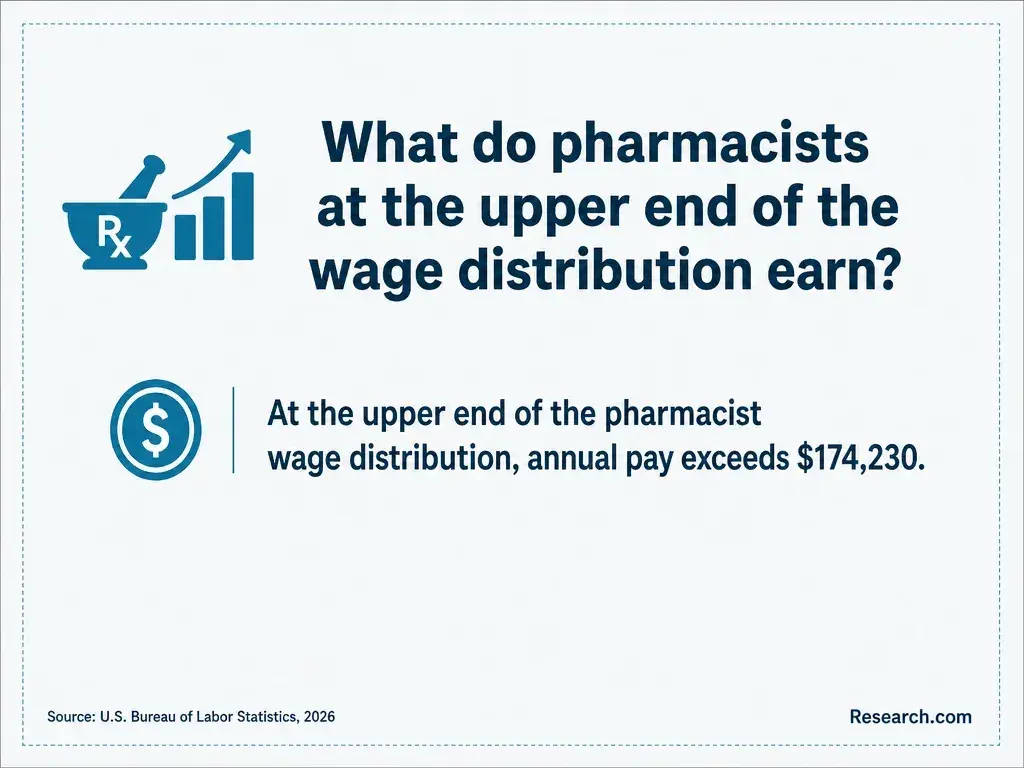
Unlike some doctoral programs with flexible timelines, a Pharm.D. includes sequenced professional and experiential requirements. A residency or fellowship may follow graduation for particular career goals, while board certification is a separate credential; none replaces state licensure. For career context, the U.S. Bureau of Labor Statistics reports pharmacist median annual pay of $140,910 in May 2025. That occupational median is not a starting-salary promise or a reason to take an unnecessary prerequisite.
Other Things You Should Know About PharmD
Possibly. The pharmacy school must accept AP credit for that requirement, and your college transcript may need to show the awarded credit. Ask the school how it evaluates the specific exam and credit.
No. A required economics course, where applicable, is not a requirement to major in economics. Applicants can come from different academic backgrounds if they meet the program's admissions rules.
The Pharmacy College Admission Test (PCAT) was retired in January 2024 and is not a currently available admissions exam. Check each school's current application instructions for its other requirements.
It may count if the receiving Pharm.D. program accepts the college credit and the course meets its economics requirement. Provide the official college transcript and ask for a prerequisite-specific evaluation.
- FAQ | OSU College of Pharmacy - Oregon State University https://pharmacy.oregonstate.edu/programs-admissions/pharm-d/faq
- Prerequisite Coursework | School of Pharmacy https://www.pharmacy.pitt.edu/academics/doctor-pharmacy/apply-pharmd-program/prerequisite-coursework
- Academic Prerequisites - Admissions | ucsf.edu https://pharmd.ucsf.edu/admissions/reqs/academic
- Admissions: USC Mann PharmD Program https://mann.usc.edu/program/doctor-of-pharmacy-pharmd/admissions/
- Pharm.D. Prerequisites | Pharmacy Advising Center - UConn https://advising.pharmacy.uconn.edu/academics/pharmd-prerequisites/
- Prerequisites - College of Pharmacy - University of Minnesota https://www.pharmacy.umn.edu/doctor-pharmacy/admissions/how-apply/prerequisites
- PharmD FAQs - UNC Eshelman School of Pharmacy https://pharmacy.unc.edu/education/pharmd/pharmd-admissions-faqs/
- PharmD Preprofessional Requirements | Ernest Mario School of Pharmacy https://pharmacy.rutgers.edu/pharmd-preprofessional-requirements/
- Prerequisite Information - UW School of Pharmacy https://sop.washington.edu/pharmd/admissions/prerequisite-info/