Pharmacy school outcome data sources for applicants

Co-Founder and Chief Data Scientist
A pharmacy school's advertised outcomes can look impressive without telling you how many students were counted, when they graduated, or what happened to those who left the program. For prospective Doctor of Pharmacy (Pharm.D.) students, those gaps can affect decisions about tuition, training, and the path to pharmacist licensure. This guide identifies the most useful U.S. data sources, explains what each measures, and gives you a way to check competing schools' claims before you apply.
Key Things You Should Know
- Start with the Accreditation Council for Pharmacy Education (ACPE) program record and National Association of Boards of Pharmacy (NABP) school-level NAPLEX results; neither source alone establishes graduation, employment, or licensure outcomes.
- Compare the same graduating years and ask for the number of students behind every graduation, job-placement, and residency-match rate. A rate without its denominator can be misleading.
- Use cost and career data alongside school outcomes: the Bureau of Labor Statistics reports pharmacist median annual pay of $140,910 in May 2025, but that national figure does not predict a particular graduate's earnings.
What Pharmacy School Outcome Data Sources Should Applicants Use?
No single database provides a complete pharmacy school scorecard. Use ACPE for professional-program accreditation, NABP for school-level North American Pharmacist Licensure Examination (NAPLEX) results, and each school's published disclosures for graduation, employment, and debt. Add residency match information if postgraduate training is a goal. PharmCAS and school admissions pages answer a different question: what it takes to enter the program.
The table separates sources by the decision each can inform. It also shows why a favorable figure from one source cannot stand in for evidence from another.
| Source | Most useful for | Important limit |
| ACPE program directory and public records | Checking professional-program accreditation and status | Accreditation is not a ranking or an individual licensure decision. |
| NABP school-level reports | Comparing reported NAPLEX performance | Exam takers are not necessarily the entire entering class. |
| School disclosures and institutional research | Graduation, employment, costs, and debt | Definitions and response rates may differ by school. |
| ASHP Match materials and school reports | Evaluating residency opportunities | Match figures may exclude graduates who did not seek residency. |
| PharmCAS directory and school admissions pages | Confirming application and prerequisite rules | Admissions measures are not graduate outcomes. |
Keep professional Pharm.D. results separate from undergraduate pre-pharmacy results and other pharmacy-related credentials. When considering online Doctor of Pharmacy degree options, also check whether published outcomes cover that pathway specifically or combine it with campus students.
Where Can Applicants Find Pharmacy School NAPLEX Pass Rates?
Find NABP's school-level NAPLEX performance reports on its examinations and performance-reporting pages, then check the school's own outcomes page for the same reporting year. The NAPLEX assesses knowledge used in pharmacist licensure, but passing it does not itself issue a license. State boards determine the remaining requirements, which can include other examinations and supervised experience.
Compare first-time pass rates with first-time rates, not with rates that include repeat attempts. Note the reporting year, number of examinees, and whether the school reports a particular campus or pathway separately. Ask the school how many members of the graduating class took the exam and whether it has a consistent series of recent results. A small group or a single unusual year is a weak basis for a decision.
If you hope to complete a Pharm.D. on an accelerated schedule, do not assume a school-wide NAPLEX rate describes that schedule. Request pathway-specific results when available, and confirm how the school prepares students and supports those who need another attempt.
How Can Applicants Compare Pharmacy School Graduation and Employment Outcomes?
Start with an entering-cohort graduation rate of students who began the professional Pharm.D. curriculum together, how many finished, and within what time? Ask schools to distinguish on-time completion from eventual completion and to explain whether transfers, leaves, and withdrawals appear in the denominator. This is more informative than counting degrees awarded in a year.
Employment figures need similar scrutiny. A school might report employment among survey respondents, among graduates seeking work, or among all graduates; those are different populations. Ask whether results separate licensed pharmacist roles, residency, fellowship, further education, and other work. A graduate who has accepted a job may still need to satisfy state licensure requirements before practicing as a pharmacist.
Use school-level professional-program records rather than assuming a federal institution-wide graduation rate describes the Pharm.D. cohort. Likewise, comparisons with online doctorate programs with shorter timelines cannot establish a pharmacy school's completion rate: the credentials and required clinical training may differ. For each school, compare the same entering-cohort definition and completion window.
If residency is part of your plan, review ASHP and National Matching Services materials for how the ASHP Match works, then request each school's recent residency outcomes. Ask for both the number of graduates who sought a position and the number who matched. A "match rate" among applicants does not show what share of the entire graduating class entered residency.
Ask schools to separate postgraduate year one (PGY1) from postgraduate year two (PGY2) positions and to identify any positions obtained outside the match rather than folding unlike outcomes together. Pharmacy fellowships and direct employment are different paths and may not appear in residency match totals. Residency is postgraduate training, not a pharmacist license or a Board of Pharmacy Specialties certification; its value depends on the role you want.
For applicants comparing Doctor of Pharmacy pathways for career transitions, ask how early students can explore residency, find mentors, and obtain relevant clinical experiences. Those opportunities may matter more to a future residency applicant than a school-wide match percentage alone.
Search ACPE's official program directory for the specific professional Pharm.D. program, campus, and current status. Read any available public accreditation actions and check the date before relying on a school's description. Accreditation helps establish whether a program meets professional education standards; it does not measure your likelihood of passing the NAPLEX, securing a job, or receiving a license.
Do not confuse ACPE professional program accreditation with an institution's accreditation or its authorization to enroll students in a particular state. For an online or hybrid option, ask the school separately about state authorization, required in-person activities, clinical placements, and eligibility to pursue licensure where you intend to practice. Confirm licensure requirements with that state's board of pharmacy.
This distinction matters when comparing a Pharm.D. with shorter online pharmacy study options. A pharmacy technician or other pharmacy-related credential is not a substitute for an ACPE-accredited professional Pharm.D. program if your goal is the U.S.-educated pharmacist licensure pathway.
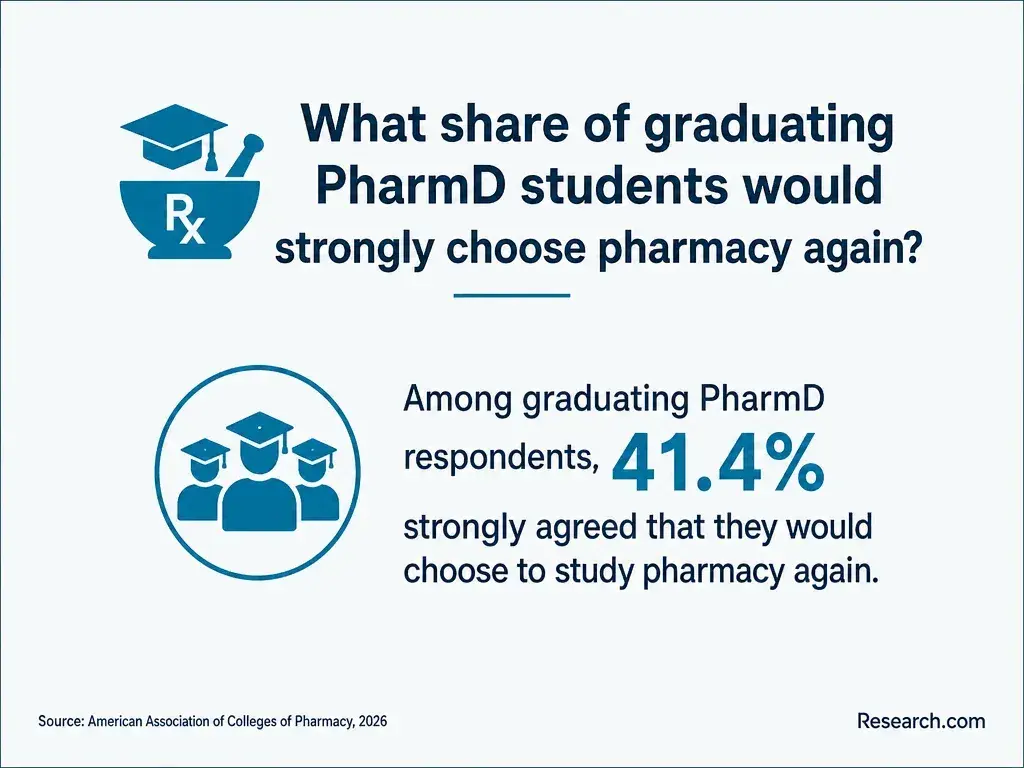
Use the current PharmCAS school directory for participating programs, then confirm requirements, deadlines, and enrollment information on each school's admissions pages. Not every school uses PharmCAS. The American Association of Colleges of Pharmacy also publishes pharmacy education information, but a national trend cannot tell you your chances at an individual school.
Distinguish an admissions minimum from the profile of students who actually enroll. Ask a school for its entering-class size and recent academic profile, whether it publishes them, and whether figures include every pathway. Check its specific undergraduate prerequisite courses, labs, grades, and degree requirements: pre-pharmacy coursework is not the professional Pharm.D. curriculum, and a bachelor's degree is not universally required. The Pharmacy College Admission Test was retired in 2024, so old references to PCAT results should not guide a current application.
Use pharmacy school prerequisite expectations as a starting point for questions, not as a substitute for the school's current requirements. A published minimum GPA or course threshold does not guarantee admission.
Before comparing two percentages, check that they measure the same event, population, and period. A NAPLEX rate for first-time examinees, a graduation rate for an entering class, and employment among survey respondents each has a different denominator. None should be presented as a single "student success rate."
Use this sequence when a statistic looks decisive:
- Identify the outcome's definition and the cohort or reporting year.
- Find the number eligible, the number counted, and any survey response rate.
- Check whether campuses, accelerated pathways, or online students are combined.
- Compare several recent cohorts and ask the school to explain substantial changes or missing years.
Selection effects matter. Students who reach the NAPLEX have already completed the degree; graduates who apply for residency are a subset of the class. Similarly, a school's admissions pathway can affect who enters its reported cohorts. If you are considering pharmacy schools and prerequisite completion, confirm when every remaining prerequisite must be finished rather than assuming a flexible application policy predicts an easier professional curriculum.
Request each school's current tuition and mandatory fees for the entire professional program, with your residency classification stated. Then compare its published cost of attendance and ask what it includes: prerequisite coursework, supplies and technology, background checks, immunizations, campus visits, introductory and advanced pharmacy practice experiences, rotation travel or housing, and licensing expenses can change the amount you need to finance.
Debt figures also need a denominator. Ask whether an average includes only borrowers, whether it covers undergraduate borrowing, and whether it reflects debt at graduation or a later point. Compare estimated borrowing with likely repayment obligations, not with advertised tuition alone. Federal borrowing rules changed for many new graduate and professional students beginning July 1, 2026; verify your classification, eligibility, and applicable loan options with the financial aid office and Federal Student Aid rather than relying on an older borrowing-limit example.
When reviewing pharmacy program tuition options, put prices in the same units and account for time away from paid work. Also ask whether previously completed coursework satisfies prerequisites; a lower tuition figure can lose its advantage if it requires extra courses or extensive travel.
Use the Bureau of Labor Statistics Occupational Outlook Handbook for national career context, and use school disclosures for what happened to a particular program's graduates. BLS reports median annual pay for pharmacists of $140,910 in May 2025 and projected employment growth of 5%, 2025-2035. Those occupation-wide figures do not establish a school's placement rate, starting salary, local opportunities, or return on tuition.
For a desired specialty or practice setting, ask the school how it defines relevant placements and whether its career survey reports location, job type, and response rate. Check actual employer requirements separately: a Pharm.D., state pharmacist licensure, residency, fellowship, and optional specialty certification serve different purposes. Residency is not required for every pharmacist job.
If your goal is pharmacy support work rather than pharmacist practice, compare shorter online pharmacy education options against that goal instead of treating a Pharm.D. as the automatic choice. Pharmacy technicians are a separate occupation that does not ordinarily require a Pharm.D.; their career statistics should not be mixed into pharmacist outcomes.
How Can Applicants Verify Pharmacy School Outcome Data Before Applying?
Build a short comparison file for each school and save dated copies of the figures you use. An admissions presentation can be useful, but decisions involving years of study and substantial borrowing deserve figures you can trace to their source.
Use these checks before submitting an application or deposit:
- Confirm the specific Pharm.D. program and its current status in ACPE's official directory.
- Find NABP's school-level NAPLEX report and record the year, first-time result, and examinee count.
- Request written cohort definitions and counts for graduation, employment, and—if relevant—residency results.
- Ask whether outcomes cover your intended campus or pathway and request an explanation if they do not.
- Obtain a current, itemized cost estimate and confirm aid eligibility with the financial aid office.
- Check admissions rules with the school and future licensure requirements with the relevant state board.
If prior college credit affects your budget or start date, ask the receiving school to evaluate how you can transfer coursework toward pharmacy prerequisites. Do not assume that accepted prerequisite credit transfers into the professional curriculum. If a school cannot explain a prominent outcome claim or provide its denominator, treat that as a reason to seek clarification before committing—not as evidence that the claim is false.
Other Things You Should Know About PharmD
Not until graduates have taken the exam and results are available for reporting. For a new program, place more weight on its current ACPE record, curriculum, student support, and written plans for reporting outcomes.
No. A school may publish combined results. Ask whether it tracks the pathways separately and whether their students follow the same curriculum and assessment policies.
Schools may not publish detailed withdrawal data. Ask for entering-cohort counts, the number who completed, and how leaves, transfers, and withdrawals were classified.
Not necessarily. Ask whether the placement required pharmacist licensure and whether the school verified licensure status or relied on a graduate survey.
- Undergraduate Retention and Graduation Rates - COE https://nces.ed.gov/programs/coe/indicator/ctr/undergrad-retention-graduation
- Cost of Attendance (Budget) | 2025-2026 Federal Student Aid Handbook https://fsapartners.ed.gov/knowledge-center/fsa-handbook/2025-2026/vol3/ch2-cost-attendance-budget
- Cost of Attendance " Pharm.D. Admissions " | ufl.edu https://admissions.pharmacy.ufl.edu/financial-aid/anticipated-expenses/
- PharmD Outcomes Data | University of the Pacific https://www.pacific.edu/pharmacy/outcomes-data
- Pharmacy School Interest Rises as Applications Jump 6% | AACP https://www.aacp.org/article/pharmacy-school-interest-rises-applications-jump-6
- PharmD Program Accreditation | Accreditation Council for Pharmacy Education https://www.acpe-accredit.org/program/pharmd-program-accreditation/
- Application Instructions - After You Submit | PharmCAS https://www.pharmcas.org/application-instructions/after-you-submit
- Pharmacy Residency Programs | NAPLEX Pass Rate https://nabp.pharmacy/news/blog/preceptors-and-residency-directors-can-help-pharmacy-students-pass-the-naplex/