PharmD Immunization Training Requirements

Co-Founder and Chief Data Scientist
A Pharm.D. program may teach you to give vaccines, but completing that training does not automatically authorize you to immunize patients. If you are choosing a pharmacy school or preparing for clinical placements, you need to know which skills the program teaches, what proof of training you will receive, and what your intended state requires.
This guide separates education from certification and legal authority so you can compare programs and plan your route into immunization practice without assuming one school's requirements apply everywhere.
Key Things You Should Know
- Pharm.D. students generally learn immunization assessment, vaccine safety, administration, and patient counseling, but schools may document those skills differently.
- A degree or immunization certificate alone does not authorize vaccination. Pharmacists must be licensed and meet the applicable state's training, registration, protocol, and continuing-education rules.
- Before enrolling, ask when hands-on vaccine training occurs, whether it meets your intended state's rules, and whether you can complete required clinical placements there.
What are PharmD immunization training requirements in the United States?
There is no single nationwide immunization certificate that every Pharm.D. student must earn. Accredited professional pharmacy education develops the knowledge and patient-care skills relevant to vaccination. A school determines where immunization instruction and assessment fit in its curriculum; state law determines what a student or licensed pharmacist may do in practice.
Training typically combines vaccine science, screening and counseling, injection technique, emergency response, documentation, and supervised practice. The practical question is not simply whether a program mentions vaccines, but whether it provides documented, hands-on training that satisfies the rules where you hope to administer them. Short online pharmacy course completion timelines should not be mistaken for a route to pharmacist licensure or automatic immunization authority.
Does an accredited PharmD program include vaccine administration training?
Accreditation Council for Pharmacy Education (ACPE) professional-program accreditation addresses the quality of the Pharm.D. education as a whole, including preparation for patient care. It does not mean every school uses the same vaccine-administration course, certificate, lab schedule, or assessment. Review the current curriculum and ask when students practice injections and how the school verifies competency.
Experiential education can offer additional exposure. Introductory pharmacy practice experiences (IPPEs) occur during the professional program; advanced pharmacy practice experiences (APPEs) provide later, more intensive rotations. Whether a student administers vaccines at a particular site depends on supervision, site policy, and applicable law. Even at online Pharm.D. schools to compare, hands-on assessments and clinical placements may require in-person attendance. Confirm those logistics rather than assuming online instruction makes vaccine training fully remote.
What licensing requirements must pharmacists meet to administer vaccines?
A pharmacist generally needs an active license in the jurisdiction of practice and must satisfy that jurisdiction's immunization rules. Depending on the state, these can address approved training, cardiopulmonary resuscitation (CPR) or emergency-response credentials, registration, an authorized protocol or standing order, patient age, vaccine type, recordkeeping, and continuing education. Employers can impose additional requirements.
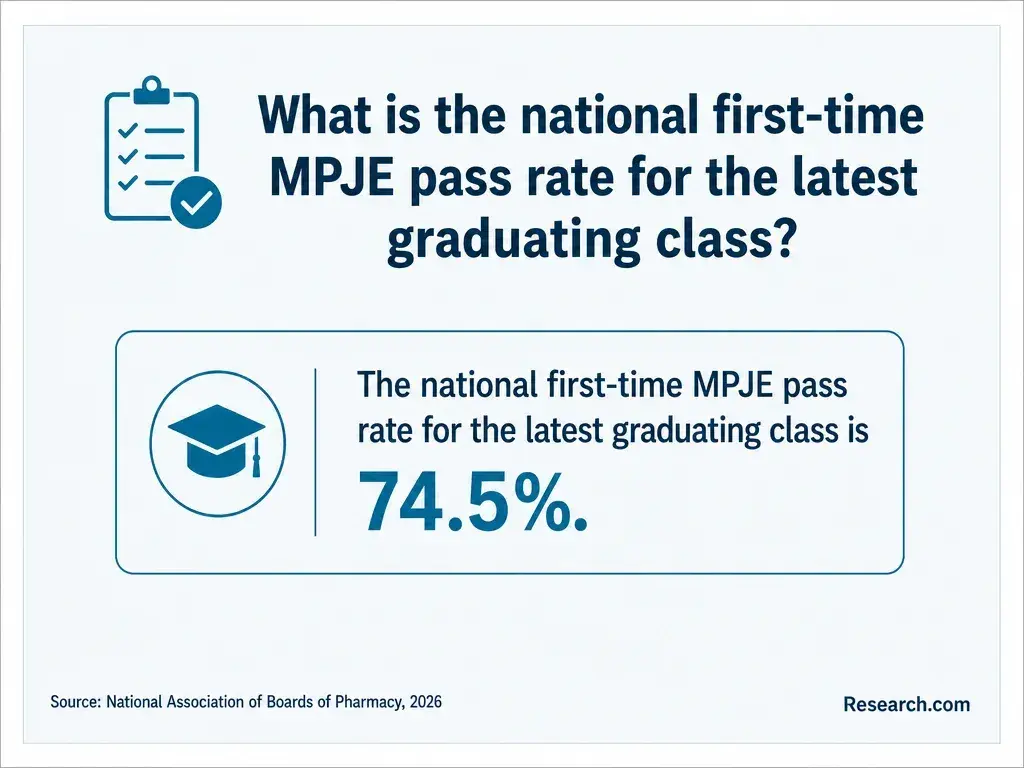
Graduating from a Pharm.D. program is separate from obtaining a license. Applicants generally must meet state board requirements and pass the North American Pharmacist Licensure Examination (NAPLEX); any jurisprudence exam requirement is jurisdiction-specific, including whether a state uses the MPJE, UMPJE, or another process.
Neither passing an exam nor holding a training certificate issues a license by itself. If you change schools or states, use pharmacy transfer planning to clarify which coursework a new program accepts, then separately ask the destination board whether your training and supervised experience satisfy its rules.
Students generally study how vaccines produce an immune response, how to evaluate recommendations and contraindications, and how to explain benefits and risks in language patients can use. Skills-based instruction may cover screening, consent, product selection and handling, injection technique, sharps safety, recognition and response to adverse events, and documentation or reporting. Schools differ in how they teach and assess each skill.
Strong prior biology or chemistry coursework can help with the underlying science, but undergraduate pre-pharmacy credits are not a substitute for professional training and supervised patient care. If you are considering pharmacy programs for students with science credits, ask how prerequisite credits apply to admission and where hands-on immunization training appears in the Pharm.D. curriculum.
Not universally. A school may award a course-completion certificate, require an external immunization-training program, or embed and document the required skills within its curriculum. A rotation site or state board may specify particular proof of training. "Certified to immunize" can therefore describe different documents; it is not a substitute for checking the governing rule.
Before paying for a separate course, ask the school what training is included, when you receive proof of completion, whether that proof meets your intended state's rules, and whether you need it before an IPPE or APPE. If you are still applying, include that question in your pharmacy school application readiness checks. Do not assume an admissions requirement, a clinical-site requirement, and a pharmacist's post-licensure requirement are the same.
States can differ in who may vaccinate, which vaccines they may give, the ages they may serve, and the legal authority under which they act. Rules can also differ for students and licensed pharmacists. The following comparison shows why the intended practice state matters more than a general claim that a program "qualifies" graduates to immunize.
| Rule to compare | Possible state-level difference | Why it matters |
| Authority | A protocol, standing order, prescription, or another permitted mechanism may apply. | Training alone may not permit administration. |
| Patients and products | Minimum ages and permitted vaccines may differ. | A pharmacist's authority may not cover every patient or vaccine. |
| Training and records | Boards may specify training evidence, emergency preparation, reporting, or continuing education. | School documentation may need to meet a particular rule. |
| Student participation | Intern status, supervision, and site conditions may differ. | A student eligible at one rotation site may not be eligible at another. |
Check the current state board of pharmacy rules and relevant public-health requirements before relying on a school's description. For a distance-learning option, compare affordable online Pharm.D. programs on more than tuition: permission to enroll from your state, approval of local clinical placements, and eventual licensure eligibility are separate questions.
Immunization training is usually part of the professional Pharm.D. pathway, not a separate admissions track. Schools set their own prerequisite undergraduate coursework, laboratory and grade rules, application materials, interviews, and deadlines. Some admit students without a completed bachelor's degree; meeting minimum requirements does not guarantee admission.
Use the current school admissions page and, where applicable, its PharmCAS listing to verify pharmacy school prerequisites. Then ask when vaccine training begins and whether students need intern registration, CPR training, or other clearance before participating in clinical activities. The Pharmacy College Admission Test (PCAT) was retired in January 2024 and should not be treated as a current exam to schedule.
Many professional Pharm.D. curricula take four academic years after prerequisite study; some accelerated formats use a shorter, more intensive schedule. Immunization instruction is ordinarily one component of that curriculum, not additional years of schooling. Compare accelerated Pharm.D. degree options by their actual course calendar, required campus sessions, clinical placements, and opportunities to complete hands-on training - not duration alone.
There is no reliable nationwide price for "a Pharm.D. with immunization training." For each school, request its current tuition and mandatory-fee schedule and ask whether an external vaccine course is included. Budget separately for prerequisite study, supplies, background checks, CPR training, rotation travel or housing, and eventual licensure costs. Financial-aid eligibility and federal borrowing rules depend on the student and aid year; confirm current terms with the school's aid office rather than assuming loans will cover the full cost.
Immunization skills can be useful in community pharmacies, health systems, clinics, and public-health work, often alongside medication counseling and other patient-care duties. The Bureau of Labor Statistics reports median annual pay of $140,910 in May 2025 for pharmacists, with 5% projected growth, 2025-2035 and about 12,500 openings per year. Those figures cover the broader pharmacist occupation, not immunizing pharmacists specifically; they do not predict an individual graduate's pay or job prospects.
Vaccination is not, by itself, a reason to pursue postgraduate training. Some clinical roles may favor a residency, while research or industry routes may value a fellowship; specialty board certification is another distinct credential and does not replace state licensure. If vaccination-related work is your main goal, compare the full cost of becoming a pharmacist with the duties you want to perform. Pharmacy programs that may offer strong value still need to be evaluated for accreditation, clinical access, and licensure fit - not just advertised price.
How should students choose a PharmD program for immunization practice?
Start with the state where you expect to train and work. Check the program's current ACPE professional-program accreditation, then compare its documented immunization instruction against that state's board rules. Institutional accreditation, permission to enroll online from your location, and eligibility to complete local clinical placements are separate checks. A fast doctorate in another field is not an alternative route to pharmacist licensure; keep that distinction in mind when reviewing doctoral programs with accelerated timelines.
Ask each Pharm.D. program the same questions so that its answers are comparable:
- When do students practice injections, and how is their competency assessed and documented?
- Is a separate immunization course required or included, and will its documentation meet my intended state's rules?
- Who arranges or approves IPPE and APPE sites, and could required placements involve travel or time away from work?
- What is the current total educational cost, including required in-person training and likely rotation expenses?
A program is a stronger fit if it can answer those questions clearly for your intended location and schedule. Treat vague promises of automatic certification, fully remote clinical training, or guaranteed authority to vaccinate in every state as reasons to investigate further before committing.
Other Things You Should Know About PharmD
Possibly, under applicable state rules and appropriate supervision. Student or intern status, training, and the clinical site's policies all matter. Enrollment alone is not permission to vaccinate.
Not automatically. A school, rotation site, or state board may require pharmacy-specific training and its own documentation, even if you have clinical experience in another profession.
You may need to renew it before a clinical placement or before vaccinating at work. Check the credential issuer's renewal terms and the requirements of your board, school, and site.
Not necessarily. Internationally educated pharmacists may face separate credential-evaluation and licensure requirements. They must also meet the immunization rules of the state where they intend to practice.
- Vaccinations - California State Board of Pharmacy - CA.gov https://www.pharmacy.ca.gov/about/vaccinations.shtml
- NYS Pharmacy: Administration of Immunizations | nysed.gov https://www.op.nysed.gov/professions/pharmacist/administration-immunizations
- Immunization Training Online Courses | cdc.gov https://www.cdc.gov/immunization-training/hcp/courses/index.html
- Pharmacy Intern Involvement in COVID-19 Immunization Practices in New York State - PMC https://pmc.ncbi.nlm.nih.gov/articles/PMC10031270/
- Immunization Statewide Protocol - Iowa Board of Pharmacy https://dial.iowa.gov/media/7017/download
- Section 318:16-b Pharmacist Administration of Vaccines. | nh.gov https://gc.nh.gov/rsa/html/xxx/318/318-16-b.htm
- Immunization Delivery for Pharmacists - College of Pharmacy https://www.pharmacy.umn.edu/degrees-programs/continuing-professional-development/immunization-delivery-pharmacists
- 3 CCR 719-1-19.00.00 - ADMINISTRATION | State Regulations | LII / Legal Information Institute https://www.law.cornell.edu/regulations/colorado/3-CCR-719-1-19.00.00
- Immunization Certificate FAQ - Continuing Pharmacy Education https://cpe.pharmacy.ufl.edu/resources/frequently-asked-questions/immunization-certificate-faq/
- Administration of the COVID-19 Vaccine | ncsl.org https://www.ncsl.org/scope-of-practice-policy/practitioners/pharmacists/administration-of-the-covid-19-vaccine