Pharm.D. Cost Beyond Tuition: Fees, Books, Travel, and Housing

Co-Founder and Chief Data Scientist
A Pharm.D. tuition quote can leave out costs that change which school you can afford: required fees, clinical rotation travel, housing, and months when your schedule limits paid work. This guide is for prospective U.S. pharmacy students comparing offers or building a borrowing plan.
This article shows what to include in a full-cost estimate, which expenses to confirm with each school, and how to weigh that estimate against program format, financial aid, and the path to pharmacist licensure.
Key Things You Should Know
- Compare total cost through graduation, not annual tuition alone: include mandatory fees, supplies, living expenses, clinical travel, and any remaining prerequisite coursework.
- Ask each school for its current cost-of-attendance budget and an itemized estimate for rotations; a nearby campus can cost less overall than a lower-tuition program requiring relocation or frequent travel.
- Build a separate plan for postgraduation licensing expenses and verify your borrowing eligibility under rules affecting new professional students beginning July 1, 2026.
What does PharmD cost beyond tuition?
Beyond tuition, a Doctor of Pharmacy (Pharm.D.) student may pay mandatory university and professional-program fees, books and clinical references, equipment, housing, food, transportation, rotation-related travel, and licensing expenses. Prerequisite undergraduate coursework comes before the professional Pharm.D. curriculum and may add another term or more to a student's personal total.
Use the same time span for every school you compare. This worksheet separates recurring costs from costs that arise at particular stages; enter figures from each school's current disclosures and your own likely locations rather than assuming its published living allowance matches your spending.
| Cost category | When to count it | School A estimate | School B estimate |
| Mandatory fees, books, supplies, technology | Each applicable term or year | _____ | _____ |
| Housing, food, local transportation | Every month through completion | _____ | _____ |
| Campus visits and clinical placements | Required travel, lodging, or relocation periods | _____ | _____ |
| Prerequisites and application costs | Before enrollment, if applicable | _____ | _____ |
| Exams and initial licensure | Near or after graduation | _____ | _____ |
For each school, add the entries to its tuition over the entire expected pathway, then subtract grants and scholarships you are reasonably likely to receive. Keep borrowing costs and foregone earnings visible separately: neither disappears simply because it is absent from a tuition bill. An online pharmacy degree cost comparison can help generate options, but confirm that every credential compared is actually a Pharm.D. if pharmacist licensure is your goal.
How much do PharmD books, supplies, and program fees cost?
There is no dependable nationwide add-on price for these items. Schools bundle costs differently: one may include electronic references or equipment in a professional fee, while another bills them separately. Request the current, itemized fee schedule and required-materials list for each year of the program, including clinical years.
Check particularly for lab and compounding supplies, a laptop meeting program specifications, testing or software charges, immunizations, background checks, drug screening, and required liability coverage. Ask whether any charge is refundable or whether a required resource is already included in tuition. Before enrollment, assess the price of unfinished prerequisites as well; a school decides whether prior courses satisfy its requirements. Guidance on transfer credits for pharmacy school is a starting point, not a substitute for a written evaluation from the receiving program.
How much do housing, food, transportation, and travel add to PharmD costs?
These expenses depend more on location and placement rules than on the degree's advertised price. A school's cost-of-attendance budget is an aid-planning allowance, not a promise that you can rent housing or complete rotations for that amount. Compare an actual monthly budget with the months you expect to be enrolled, including summers and periods when paid work may be difficult.
Introductory pharmacy practice experiences (IPPEs) and advanced pharmacy practice experiences (APPEs) are supervised, in-person training. Ask who assigns sites, how far students may be sent, whether a placement can require a temporary move, and what transportation or lodging students must arrange themselves. Also price required campus visits for hybrid programs. When reviewing cost-conscious online Pharm.D. choices, compare those expenses with the housing costs you might avoid - not just tuition.
The professional Pharm.D. curriculum commonly spans four academic years after required pre-pharmacy coursework, although program calendars and accelerated pathways vary. A bachelor's degree is not universally required for entry. Remaining prerequisites, a fixed course sequence, or a delayed rotation can change your personal completion date and, with it, your total living costs.
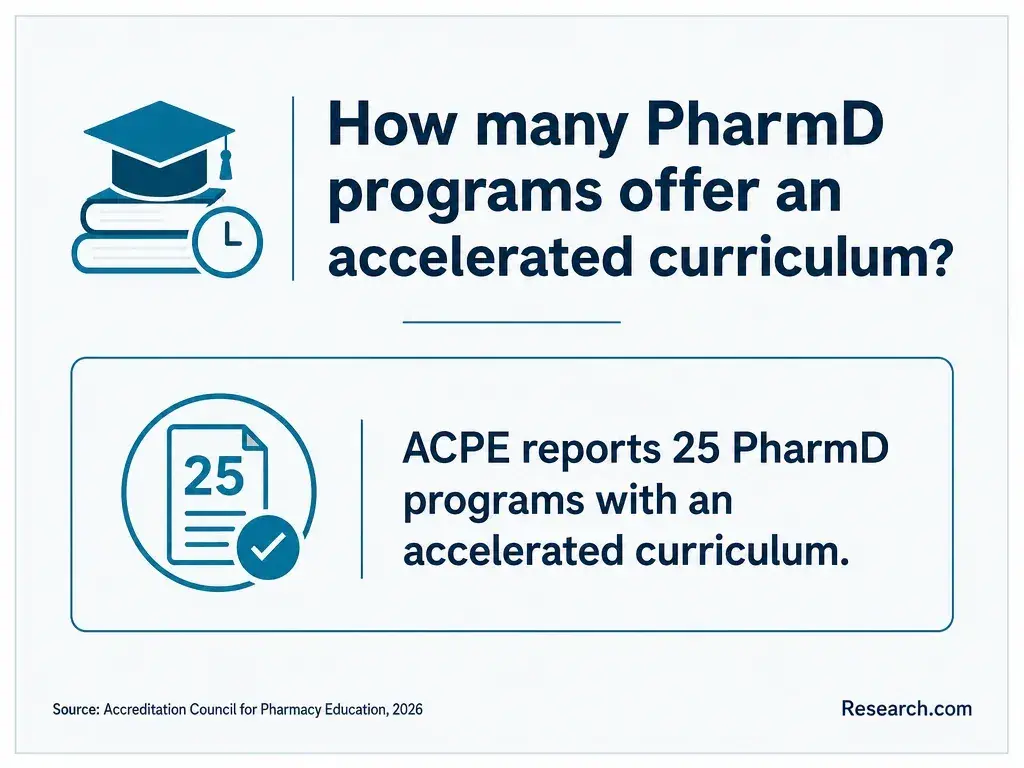
An accelerated pharmacist education pathway may reduce months of living expenses or time away from earnings, but a compressed schedule can limit opportunities to work while enrolled. Compare each option's actual start and graduation dates, required summer terms, and total charges rather than assuming that fewer calendar years means a lower bill.
Requirements vary by school. Compare prerequisite subjects and labs, minimum grades, application materials, interviews, and the date all coursework must be complete. A stated minimum does not guarantee admission. The Pharmacy College Admission Test (PCAT) was retired in January 2024, so it should not appear in a current expense plan as a routine test to take.
Some schools use the centralized PharmCAS application; others have their own process, and school-specific supplemental steps may add costs. Check current pharmacy program applicant requirements against each school's admissions page before paying application fees. If you have missing coursework, also ask whether it can be completed before matriculation and include its tuition, lab fees, and living costs in your comparison.
Online instruction can reduce routine commuting or allow a student to remain in their current home, but it does not make a Pharm.D. fully remote or self-paced. Hybrid programs may require live classes, campus labs or assessments, and in-person IPPEs and APPEs. A campus-based program may involve more regular commuting yet make some hands-on requirements easier to plan around.
For leading online pharmacy degree programs, obtain a calendar of required visits and written clinical-placement expectations before estimating savings. Confirm whether the school can enroll you in your state, whether placements are available and approved where you live, and whether the schedule permits the paid work your budget assumes. Distance-education authorization is separate from professional accreditation and pharmacist licensure eligibility.
For the usual U.S.-educated route toward pharmacist licensure, verify the professional Pharm.D. program's current status with the Accreditation Council for Pharmacy Education (ACPE) and check the requirements of the state where you intend to practice. Institutional accreditation concerns the university; it does not replace ACPE professional-program accreditation. Internationally educated pharmacists follow a distinct eligibility process.
A less expensive pharmacy-related certificate or shorter degree is not interchangeable with a Pharm.D. For example, online pharmacy programs under two years may suit other education or career goals, but do not assume they qualify a graduate for the U.S.-educated pharmacist licensing route. Check program accreditation before making a deposit or borrowing for enrollment.
Graduation does not itself grant a pharmacist license. State boards set eligibility rules, which can include an application, supervised experience or intern-registration conditions, the North American Pharmacist Licensure Examination (NAPLEX), a jurisprudence requirement, and fees. Jurisprudence rules differ: a jurisdiction may use the Multistate Pharmacy Jurisprudence Examination (MPJE), the Uniform Multistate Pharmacy Jurisprudence Examination (UMPJE), another assessment, or a different process. Verify the current board and National Association of Boards of Pharmacy instructions for your intended state.
Budget for required applications and exams separately from school charges, including possible retake costs without assuming you will need a retake. If you are considering pharmacy degree entry requirements, keep the two checkpoints distinct: meeting a school's admission conditions does not waive later state licensing conditions. Passing an exam alone does not issue a license.
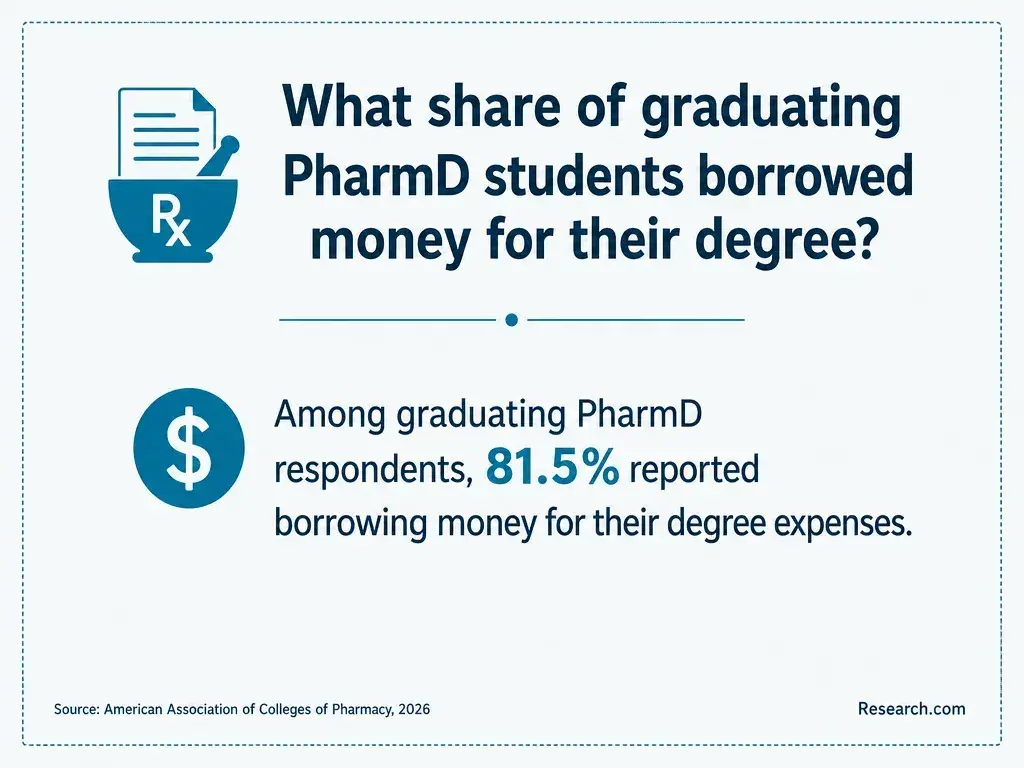
School scholarships, outside awards, employer support, and federal aid may help, depending on eligibility. A school's approved cost of attendance generally frames how much aid can cover tuition and allowable living expenses, but it is not an automatic loan offer or a reimbursement of every actual expense.
Federal borrowing rules changed for many new graduate and professional borrowers beginning July 1, 2026, including changes affecting Grad PLUS access and borrowing limits. Transitional eligibility and a student's classification matter. Ask each financial aid office for a written, year-by-year aid estimate under the rules that apply to you; do not plan on an older borrowing limit or assume a gap can be financed later. If considering doctoral programs with flexible timelines, check how a longer or part-time schedule changes aid eligibility and the number of months of living expenses.
What pharmacist salaries and job opportunities can PharmD graduates expect?
The Bureau of Labor Statistics reports median annual pay of $140,910 in May 2025 for pharmacists and projects 5% growth, 2025-2035, with about 12,500 openings per year. Those are occupation-wide figures, not starting-pay or job-offer estimates for a particular graduate. Compare your likely borrowing and local employment options with realistic early-career pay rather than treating the median as a guaranteed return.
A Pharm.D. can support entry into pharmacist practice after state licensure; some roles may favor additional training. Residencies and fellowships are postgraduate training paths, while specialty board certification is a separate credential - not a substitute for licensure or a universal hiring requirement. If you are moving from a science major, pharmacy doctorate options after biology can help frame the education choice. Choose the pharmacist route if its licensed patient-care work justifies the full pathway cost for you; otherwise, compare less extensive pharmacy-adjacent routes before committing.
Other Things You Should Know About PharmD
If possible, yes. An unexpected move, car repair, or delay in aid can disrupt attendance or a clinical placement. Keep any reserve separate from money already committed to required charges.
It depends on the award's terms and your school's aid policies. Ask whether the scholarship is restricted to tuition and fees before counting it toward living expenses.
No. Tax treatment depends in part on how the funds are used and your circumstances. Keep award records and seek qualified tax advice rather than assuming an amount used for living expenses is tax-free.
Some schools permit a waiver if existing coverage meets their requirements. Check the waiver deadline and coverage criteria before removing the charge from your estimate.
- Types of Financial Aid: Grants, Work-Study, and Loans | studentaid.gov https://studentaid.gov/understand-aid/types
- Cost of Attendance (Budget) | 2025-2026 Federal Student Aid Handbook https://fsapartners.ed.gov/knowledge-center/fsa-handbook/2025-2026/vol3/ch2-cost-attendance-budget
- Introductory Practice (IPPE) and Advanced Practice (APPE) | utexas.edu https://pharmacy.utexas.edu/programs/pharmd/experiential/ippe-appe
- Financial Aid Terms You Need to Know | University of Health Sciences and Pharmacy in St. Louis https://www.uhsp.edu/financial-aid-terms-you-need-to-know/
- Students - Experiential | College of Pharmacy | University of Houston https://uh.edu/pharmacy/about-us/administration/experiential-programs/students/
- Costs for Doctor of Pharmacy - Downers Grove | Midwestern University https://www.midwestern.edu/admissions/paying-college/cost-attendance/downers-grove-campus-budgets/costs-doctor-pharmacy-downers-grove
- Tuition, Fees, & Other Costs | MCPHS https://www.mcphs.edu/admission-and-aid/cost-and-aid/tuition-and-fees
- Health and Safety Requirements | maricopa.edu https://www.maricopa.edu/degrees-certificates/healthcare-education/health-safety-requirements
- Background Checks / Insurance / Immunizations | Emory & Henry https://www.emoryhenry.edu/live/profiles/3490-background-checks-insurance-immunizations
- Student Cost of Attendance - Financial Aid - UCSF https://finaid.ucsf.edu/application-process/student-coa