
How Military Coursework May Apply to PharmD Prerequisites

Co-Founder and Chief Data Scientist
A military transcript may show substantial health care and science training, but it does not tell you which Doctor of Pharmacy (PharmD) prerequisites a school will accept. That distinction can change the courses you need, your application timeline, and your costs. This guide is for service members and veterans deciding whether to apply now or complete more undergraduate coursework first. It explains how credit review works, where science labs create obstacles, and how to get a school-specific answer before committing to a PharmD program.
Key Things You Should Know
- Military coursework can satisfy a PharmD prerequisite only when the receiving school accepts the credit and applies it to a specific requirement; an American Council on Education (ACE) recommendation is not an admission decision.
- Request separate rulings on science lectures and labs. A general science elective or recorded military training may not satisfy a required biology or chemistry course with an in-person lab.
- Compare schools using written course-by-course decisions, remaining credits, course availability, and total cost - not the number of credits shown on a military transcript.
How can military coursework satisfy PharmD prerequisite requirements?
PharmD prerequisites are undergraduate courses completed before entry into the professional pharmacy curriculum. A school may apply accepted military learning to a general education requirement, an elective, or - if the content and documentation match - a particular prerequisite. Acceptance as college credit is not the same as satisfaction of a required course.
The receiving institution decides how credit applies. For example, military training evaluated as introductory health sciences might help meet an elective requirement but not a specified human anatomy course.
A college may also award credit on its own transcript without the pharmacy school accepting that credit as equivalent to its prerequisite. This distinction matters when researching pharmacy degree programs for transfer students.
A useful first request to an admissions office is: "For each course on my military and college transcripts, which prerequisite would it satisfy, and what additional evidence do you need?" Ask whether the answer is preliminary or binding and whether a particular grade, course level, or completion date is required.
Which military courses commonly transfer toward PharmD prerequisites?
There is no nationwide list of military courses that automatically fulfill PharmD requirements. Training in medical terminology, anatomy-related topics, mathematics, communication, or health care operations may be relevant, but its usefulness depends on the school's required subjects and its evaluation of the documented learning outcomes.
Applicants whose academic records already include college chemistry or biology should evaluate those courses separately; guidance on pharmacy doctorate options after biology may help frame that comparison.
The table distinguishes potential credit from the prerequisite decision you actually need. It describes possibilities, not guaranteed equivalencies.
| Documented military learning | Possible application | Likely point of review |
| Health care or pharmacy-related training | Elective or introductory health course | Whether it matches a named science prerequisite |
| Technical mathematics or data training | Math or elective credit | Whether its content matches the required math level |
| Communication, leadership, or instruction | General education or elective credit | Whether the school requires a particular writing or speaking course |
| Previously completed college science courses | Specific science prerequisites, if approved | Lecture and lab content, grades, and course age |
A course title alone is weak evidence of equivalency. Keep descriptions and learning outcomes available, especially when a military course appears to overlap with biology, chemistry, or mathematics.
How do PharmD programs evaluate military transcripts and ACE recommendations?
A Joint Services Transcript (JST) records eligible military training and experience and may include ACE college-credit recommendations. ACE evaluates learning and recommends credit; it does not award college credit or require a pharmacy school to accept a recommendation.
Air Force applicants may have a Community College of the Air Force transcript instead of, or in addition to, other records. Schools also consider transcripts from colleges where the applicant actually completed courses.
Typically, admissions staff or a designated evaluator compares the records with the program's prerequisite list. A recommendation for credit in a subject does not necessarily establish a grade, a laboratory component, or equivalence to a named course.
The school may request a syllabus or refer the question to a science department. Its answer may differ from another school's, which is why general descriptions of admission pathways for pharmacy students cannot substitute for an individual credit evaluation.
Ask for the result in writing and identify the exact entry requirement it addresses. Also confirm whether the school reviews military learning directly, requires it to appear as awarded credit on an accredited college transcript, or applies different rules to those two forms of evidence.
Some schools may review documented military laboratory learning, but applicants should not assume it satisfies a PharmD science-lab prerequisite.
A required lab may have specific experiments, supervised contact, assessment, and transcript expectations that technical or clinical training does not demonstrate. Schools can also differ on whether they accept online labs or require an in-person lab.
Have the school evaluate the lecture and lab separately. If it rejects the lab but accepts the lecture, ask whether you may take a stand-alone lab or must repeat the combined course.
If the required lab cannot be completed before the application deadline, check the school's policy on courses in progress and the date by which they must be finished. Lists of pharmacy schools and prerequisite completion can help identify questions to ask, but only the program can confirm your eligibility.
Start with the application instructions for each school: a preliminary review and a formal application may call for different records. Gather the following materials so an evaluator can identify both the learning completed and the credit actually awarded.
- Order the applicable JST or Community College of the Air Force transcript and official transcripts from every college attended, following the school's and, where applicable, PharmCAS's delivery instructions.
- Collect course descriptions, syllabi, training outlines, and lab documentation for any military course you want matched to a specific prerequisite.
- Request a written prerequisite evaluation showing accepted courses, unresolved equivalencies, missing labs, minimum-grade issues, and the deadline for finishing remaining work.
- Keep copies of the decision and ask when it must be updated if you change schools, take another course, or apply in a later admissions cycle.
Do not rely solely on a degree audit from a previous college: it shows how that college used your credit, not necessarily how a PharmD admissions office will use it. Resolving documentation early is especially important when comparing online doctoral program duration; an advertised program timeline does not account for prerequisites you still need.
Compare each school against the same proposed course plan, rather than comparing broad statements that it "accepts military credit." The most useful result is a written list of what remains before matriculation.
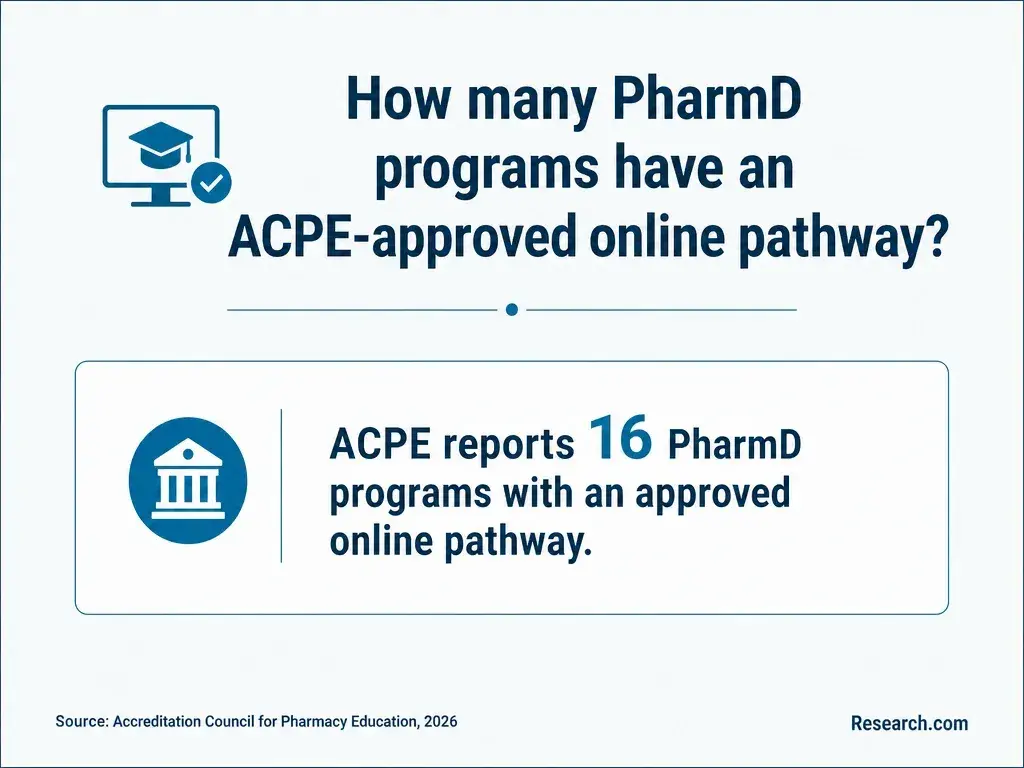
If delivery format matters, a guide to choose an online Pharm.D. program can help narrow options, but online instruction does not make prerequisite or credit policies uniform.
Use this comparison as a record of each school's response. Leave an item unresolved until the school identifies an acceptable course or substitution.
| Decision criterion | School A | School B |
| Military credit applied to named prerequisites | Record approved matches | Record approved matches |
| Science lecture and lab decisions | Record each separately | Record each separately |
| Remaining courses and required grades | Record details | Record details |
| Course-age and in-progress rules | Record deadlines | Record deadlines |
| Available course format and estimated completion date | Record options | Record options |
Favor the school that accepts credit toward requirements you would otherwise have to complete - not merely the school that awards more elective credits. Recheck its current admissions rules before enrolling in a replacement course.
Often, but acceptance is school-specific. A school may accept an online lecture while imposing a different rule on its lab, or it may require the course to come from an appropriately accredited college. Confirm the exact institution, course number, lab format, and term with the PharmD program before paying tuition. Online also does not necessarily mean self-paced.
Choose a course sequence that leaves time for labs and any required follow-on courses. Claims about ways to finish an online pharmacy degree sooner should not be read as a promise that an entry-level PharmD or its outstanding prerequisites can be completed on that schedule. The professional program has its own curriculum and supervised, in-person pharmacy practice requirements.
Accepted prerequisites are only one part of admission. Depending on the school, applicants may need a minimum number of undergraduate credits, specified grades or GPA, recommendations, an interview, and application materials submitted through PharmCAS or the school's own system.
Some schools require a bachelor's degree; others do not. Confirm whether outstanding prerequisites may still be in progress when you apply and when final grades must arrive.
Military health care experience can strengthen an application when you explain what you did and learned, but it does not waive published academic requirements unless the school expressly says so.
The Pharmacy College Admission Test (PCAT) was retired in January 2024; it should not be treated as a current exam to schedule. Applicants considering accelerated online pharmacy programs should also verify that their prior coursework meets that program's entry rules; an accelerated format is not automatic credit for military service.
The answer depends on the school's credit decision and the courses left on your plan. A single missing lab may be less disruptive than an uncompleted science sequence, but course scheduling can extend either path.
Calculate your cost using tuition and mandatory fees for each remaining course, plus books, lab materials, travel, and any income lost while attending. Then compare that prerequisite cost with the separate cost of the professional PharmD program.
Military or veterans' education benefits may reduce out-of-pocket costs if the student, school, and courses meet the applicable benefit rules; confirm eligibility before enrollment. For the PharmD itself, compare full attendance costs and current aid eligibility rather than advertised tuition alone.
Federal borrowing rules changed for many new graduate and professional borrowers beginning July 1, 2026, so do not build a plan around an assumed Grad PLUS option or an old loan limit. Research on cost-conscious online Pharm.D. choices is most useful after you have the school's written prerequisite decision and a current cost estimate.
What licensing and career outcomes follow a PharmD degree?
Prerequisite credit leads to eligibility for consideration for admission, not to pharmacist practice. An entry-level PharmD should be earned through a professional program accredited by the Accreditation Council for Pharmacy Education (ACPE).
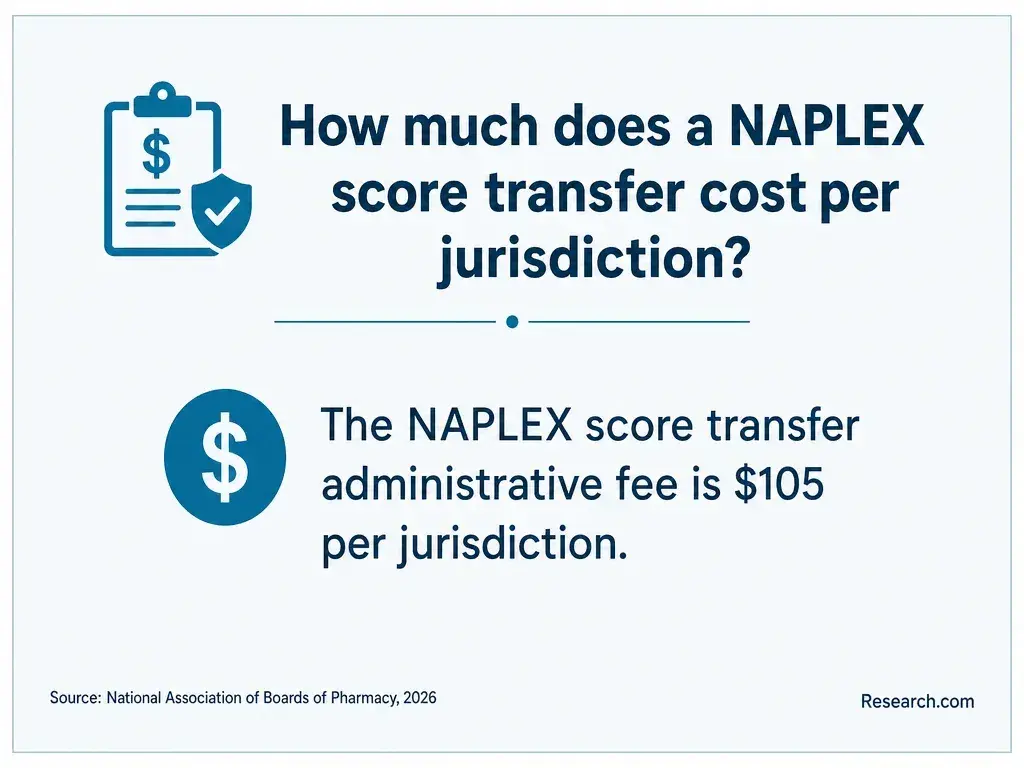
After graduation, pharmacist licensure is issued by a state board and involves its applicable examination and other requirements, including the NAPLEX and, where required, a jurisprudence assessment. Requirements vary by jurisdiction; neither the degree nor passing one exam alone issues a license.
The U.S. Bureau of Labor Statistics reports median annual pay of $140,910 in May 2025 for pharmacists and projects 5% employment growth from 2025-2035. Those occupation-wide figures are context for the investment, not a predicted outcome for an individual graduate.
Pharmacy technician work is a separate route that does not ordinarily require a PharmD. If your goal does not require pharmacist licensure, compare that opportunity cost with low-cost and shorter pharmacy degree programs before taking on professional-degree costs.
Some pharmacists pursue a residency, fellowship, or later specialty board certification, depending on their career goals. These are distinct from state licensure and are not universally required for pharmacist jobs.
Other Things You Should Know About PharmD
Possibly, if the pharmacy school accepts the exam credit for that specific requirement. Ask about its exam-score policy before testing; science labs are particularly unlikely to be resolved by exam credit alone.
You may be able to submit an application, but confirm document deadlines and whether the school offers an interview format you can attend. Also check when any unfinished courses must be completed.
Coverage depends on the benefit, your eligibility, and whether the course and enrollment are certifiable under applicable rules. Ask the school's veterans benefits certifying official to review your specific plan before enrolling.
Yes, when requested in the application. Describe responsibilities and skills accurately, but do not present unrelated service training as equivalent to a science prerequisite without the school's evaluation.
- Military Training Evaluation Program (MTEP) | dantes.mil https://www.dantes.mil/credit4training/
- How Do I Get College Credits For My Military Service? | Veterans Affairs https://www.va.gov/resources/how-do-i-get-college-credits-for-my-military-service/
- How to Prepare for Military Course Reviews | acenet.edu https://www.acenet.edu/Programs-Services/Pages/Credit-Transcripts/Military-Course-Reviews.aspx
- Prerequisite Course Requirements at the College of Pharmacy | UNT Health Fort Worth https://www.unthealth.edu/college-of-pharmacy/faqs/prerequisite-course-requirements.html
- Doctor of Pharmacy (PharmD) - Prospective Students https://www.pharmacy.umaryland.edu/academics/pharmd/prospective-students/
- Admission Requirements | ufl.edu https://admissions.pharmacy.ufl.edu/steps-to-apply/application-requirements/
- PharmD Admissions - R. Ken Coit College of Pharmacy https://www.pharmacy.arizona.edu/academics/pharmd/admissions
- Admissions Requirements | Prospective Students | UTHSC https://www.uthsc.edu/pharmacy/prospective-students/requirements.php
- Credit from Military Experience | Undergraduate Admissions | The Pennsylvania State University https://www.psu.edu/admission/undergraduate/credit/military-experience
- PharmCAS Admission Requirements | buffalo.edu https://pharmacy.buffalo.edu/admissions/doctor-of-pharmacy--pharmd-/pharmcas/pharmcas-requirements.html


